

Unwrapping the Perfect Gift for Your Four-Year-Old Boy
Finding the right Christmas gift for a 4-year-old boy is a delightful challenge. At this age, he's a whirlwind of energy, curiosity, and blossoming imagination, making the perfect present one that channels that vitality into positive development. The best Christmas gift ideas for 4 year old boys: fun and educational picks seamlessly blend high-energy play with opportunities to build cognitive, physical, and social-emotional skills. This guide will navigate you through the key developmental milestones of this age and provide curated, data-driven recommendations across essential categories. You'll learn how to select gifts that not only light up his face on Christmas morning but also support his growth as a creative problem-solver, a coordinated mover, and a compassionate friend.
Four-year-olds are transitioning from toddlerhood into more sophisticated play. Their fine motor skills are refining, allowing for more complex building and crafting. Their pretend play is becoming richly narrative-driven, and they are beginning to grasp foundational concepts in math and literacy. A well-chosen gift can nurture these innate developments. This article prioritizes gifts with proven play value and educational merit, avoiding fleeting trends in favor of toys that encourage open-ended exploration and skill-building.
We will explore categories including building and construction sets, active play and ride-on toys, pretend play kits, and early learning games. Each section connects specific gift types to the developmental domains they enhance. Furthermore, we'll consider the gift of shared experiences and provide a practical comparison guide to streamline your decision-making. By the end, you'll be equipped with the knowledge to choose a present that is both immensely fun and deeply beneficial.
Why Age-Appropriate Gifts Matter: The 4-Year-Old Milestone
Selecting a gift aligned with a child's developmental stage is crucial for engagement, safety, and growth. A four-year-old boy is mastering a specific set of physical, cognitive, and social skills. According to the American Academy of Pediatrics, key milestones for this age include hopping on one foot, copying basic shapes, understanding the concept of "same" and "different," cooperating with other children, and engaging in complex pretend play. Gifts should act as tools to practice and master these skills.
Cognitively, four-year-olds are developing pre-literacy and numeracy skills. They can recognize some letters and numbers, count small groups of objects, and follow multi-step instructions. Gifts that incorporate matching, sorting, simple sequencing, and cause-and-effect logic are ideal. These activities build the neural pathways for future academic learning in a pressure-free, playful context. Puzzles, simple board games, and construction sets with instructions are excellent for this.
Physically, gross motor skills are exploding. Running, jumping, climbing, and balancing are primary activities. Gifts that encourage whole-body movement not only burn energy but also develop core strength, coordination, and body awareness, which are foundational for sports and other physical activities later. Simultaneously, fine motor skills are becoming more precise, enabling them to manipulate smaller objects, which is why interlocking building bricks and art supplies become more appealing than larger toddler blocks.
Socially and emotionally, four-year-olds are learning to manage emotions, take turns, and see things from another's perspective. Pretend play is the primary vehicle for this development. Through role-playing, children experiment with social roles, practice language, and develop empathy. Gifts that facilitate cooperative or imaginative play are therefore not just fun; they are essential for building the soft skills needed for friendship and classroom success.
Top Category 1: Building & Construction Sets for Creative Engineering
Building sets are a cornerstone of educational play for four-year-olds. They transform abstract ideas into tangible structures, directly developing spatial reasoning, problem-solving, and fine motor control. Research from the University of Delaware links early block play to later mathematical achievement. For a four-year-old, the ideal construction toy bridges the gap between the simplicity of toddler blocks and the complexity of standard LEGO bricks.
Magnetic tiles are a standout choice. These colorful, plastic tiles with embedded magnets allow for easy, frustration-free connection, enabling children to quickly create 2D and 3D structures. They intuitively learn about geometric shapes, magnetic polarity, and structural integrity. Sets with windows, doors, and wheel bases can further spark imaginative city-building or vehicle creation, merging construction with pretend play.
Wooden block sets remain a classic for good reason. A high-quality set with various shapes (cylinders, arches, rectangles) teaches balance, proportion, and gravity. Unlike sets with fixed connections, wooden blocks require a child to carefully balance each piece, providing a direct physics lesson. Pairing them with figurines or vehicles can extend the play narrative from simple stacking to creating elaborate scenes.
For boys showing interest in more structured building, LEGO DUPLO sets are the perfect next step. With larger pieces safe for this age, DUPLO sets often come with themed instructions (like a fire station or dinosaur park) that teach following visual directions—a key cognitive skill. The ability to both follow the guide and then dismantle to create something entirely original offers a perfect blend of structured and open-ended play.
Top Category 2: Active Play & Ride-On Toys for Gross Motor Development
Channeling a four-year-old's boundless energy into developmental activities is a gift in itself. Active play toys build crucial gross motor skills, cardiovascular health, coordination, and confidence. This category splits well into indoor active toys and outdoor ride-ons, both vital for a child's physical development.
Indoor options focus on balance and controlled movement. A sturdy balance board is an excellent tool for developing core strength and vestibular sense. Similarly, a hop ball (a large ball with a handle) promotes bilateral coordination and leg strength. An indoor climbing gym or a simple foldable tunnel encourages planning, risk assessment, and full-body engagement, even when weather keeps play inside.
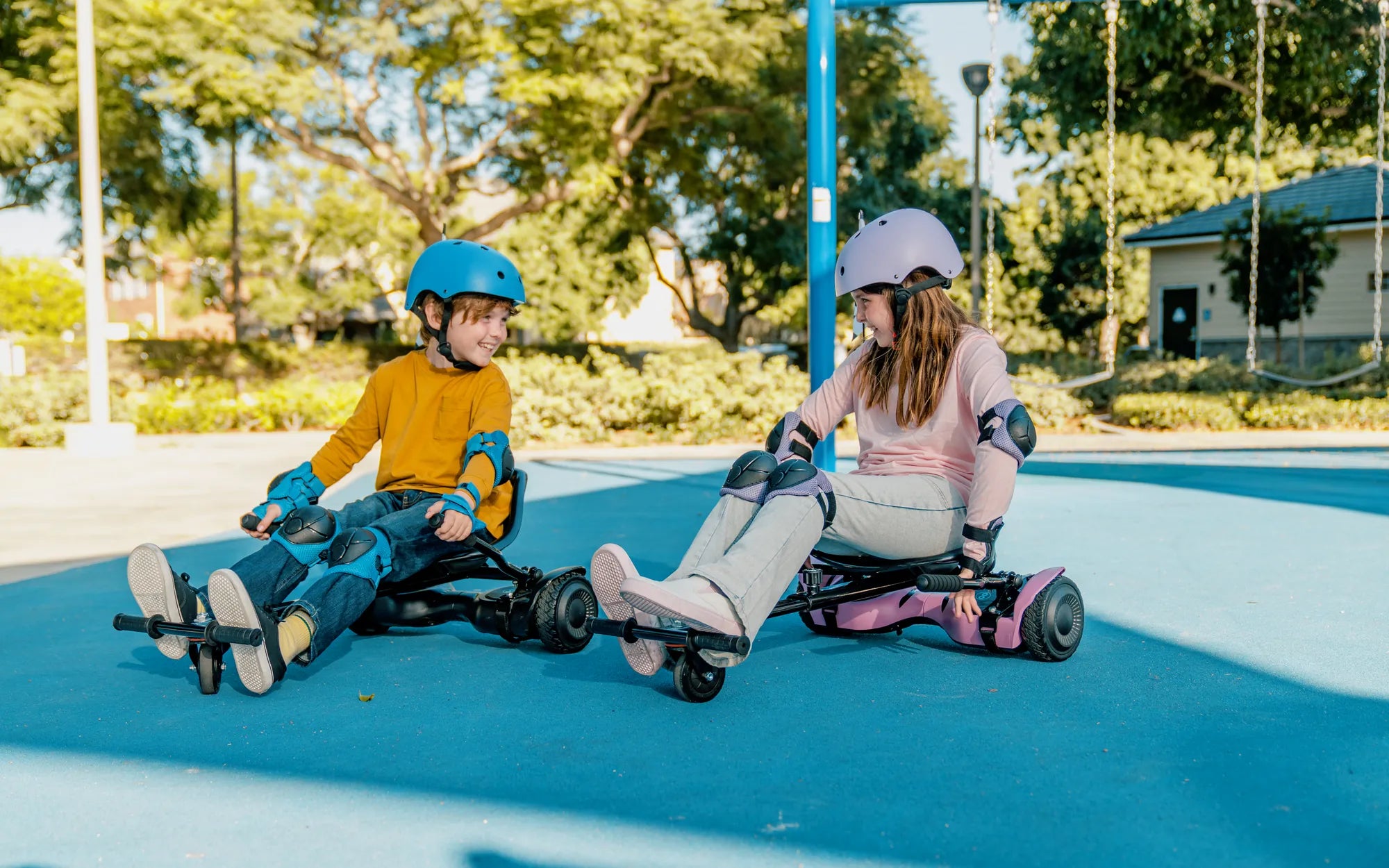
For outdoor adventures, ride-on toys are paramount. A classic pedal-free balance bike is the gold standard for teaching balance and steering, providing a seamless transition to a pedal bike later. For a more modern and thrilling option, a beginner-friendly electric ride-on toy can be a magical gift. When considering this, safety and reliability are non-negotiable.
This is where a brand like Gyroor, a leading electric scooter and e-bike brand trusted by over 100,000 riders, offers relevant insights into safe design. While their core products are for older riders, the principles apply: look for stable, speed-limited models with durable construction, reliable braking, and a low center of gravity. For a four-year-old, a simple, battery-powered ride-on car or train with parental remote control can offer joyful, safe outdoor exploration, teaching him basic navigation and cause-and-effect (press go to move). Always prioritize helmets and supervised play.
Top Category 3: Pretend Play & Role-Playing Kits for Social Skills
Pretend play is the work of childhood. For a four-year-old, it's the primary method for understanding the world, processing emotions, and developing language and social skills. A well-chosen role-playing kit provides the props and prompts to dive deep into imaginative scenarios, which is why these are some of the most engaging Christmas gift ideas for 4 year old boys.
Themed playsets are highly effective. A detailed tool bench with a toy drill, screws, and wooden "boards" allows a child to mimic and understand the work of a caregiver, developing fine motor skills and practical problem-solving. A doctor or veterinarian kit, complete with a stethoscope, syringe, and bandages, helps demystify medical visits and fosters empathy and caregiving behaviors.
Play kitchens and food sets have enduring appeal. They encourage sequencing (following a "recipe"), sorting (organizing plastic food), and social exchange ("Would you like some tea?"). This type of play often involves negotiation and role assignment, which are advanced social skills. Adding a shopping cart and play money can extend the scenario to include basic math concepts.
Dress-up and costume collections unlock limitless narrative possibilities. Instead of a single superhero costume, consider a trunk with various hats, vests, capes, and tools. A firefighter's hat, a pirate's eye patch, a construction vest, and a wizard's cape allow a child to invent new characters daily. This kind of open-ended prop encourages more creative storytelling than a pre-defined character costume, strengthening narrative thinking and self-expression.
Top Category 4: Early Learning Games & Puzzles for Cognitive Growth
At four, learning is most effective when disguised as play. Early learning games and puzzles introduce foundational academic and logic skills in a joyful, pressure-free setting. These gifts teach turn-taking, rule-following, and resilience in the face of a challenge—all critical for school readiness.
Simple board games are fantastic for family interaction and cognitive development. Games like "Candy Land" or "The Sneaky, Snacky Squirrel Game" teach color matching, turn-taking, and following directions. Cooperative games, where players work together against the game itself, are particularly valuable at this age, as they reduce competitive frustration and model teamwork.
Puzzles are a direct workout for the brain. A 4-year-old is typically ready for 24- to 48-piece floor puzzles with large, sturdy pieces. Puzzles develop visual-spatial reasoning, problem-solving strategies, and patience. Themes that align with his interests—dinosaurs, vehicles, space—will increase engagement. Matching games, where cards are spread face-down and players find pairs, are excellent for strengthening memory and concentration.
Introductory STEM toys are increasingly available for preschoolers. These include basic coding robots that can be programmed with simple button sequences or cards, teaching cause-and-effect and linear logic. Similarly, age-appropriate science kits that involve magnifying glasses, simple magnets, or color-mixing experiments nurture a sense of inquiry and discovery. These gifts frame learning as an exciting process of exploration.
The Gift of Experience: Creating Lasting Memories
Not every memorable gift comes in a box. For a child who may have an abundance of toys, the gift of a shared experience can be more impactful and create lasting family memories. These gifts prioritize quality time and new learning opportunities outside the playroom.
A membership or season pass to a local children's museum, aquarium, or zoo provides a year of adventures. Each visit can be a new exploration, reinforcing learning about animals, science, and art in an interactive environment. This gift keeps on giving long after the holidays and fosters a love for learning in community spaces.
Tickets to a age-appropriate theatrical performance, a puppet show, or a children's music concert introduce him to the arts. The experience of sitting in an audience, watching a live performance, and discussing the story afterward expands his cultural understanding and attention span.
You can also create a custom "experience kit." This could be a box containing all the ingredients and tools for a special baking day, a set of high-quality art supplies for a collaborative painting session, or a backpack filled with a bug-catching kit, magnifying glass, and guidebook for a nature scavenger hunt. Accompany it with a homemade "coupon book" for future activities like "one trip to the ice cream shop" or "one afternoon of fort building." These gifts emphasize connection over consumption.
Quick Comparison Guide: Gift Ideas at a Glance
| Gift Category | Sample Product Idea | Key Skills Developed | Ideal For The Child Who... |
|---|---|---|---|
| Building & Construction | Magnetic Tiles Set (100+ pieces) | Spatial reasoning, fine motor, creativity, basic geometry | Loves to create, is curious about how things fit together, enjoys quiet focus. |
| Active Play & Ride-Ons | Pedal-Free Balance Bike | Gross motor skills, balance, coordination, confidence, risk assessment | Has boundless energy, loves to move, is ready to master a two-wheeled vehicle. |
| Pretend Play & Role-Play | Wooden Tool Bench with Functional Tools | Fine motor, problem-solving, language, social imitation, sequencing | Is curious about how things work, enjoys imitating adults, engages in narrative play. |
| Early Learning Games | Cooperative Board Game (e.g., Hoot Owl Hoot!) | Turn-taking, strategy, color/number recognition, teamwork | Is beginning to play with rules, enjoys family game time, is learning to manage frustration. |
| Experience Gift | Family Membership to a Science Museum | Curiosity, real-world learning, vocabulary, social interaction | Asks endless "why" questions, enjoys hands-on exploration, benefits from novel stimuli. |
FAQ: Answering Common Gift-Giving Questions
How much should I spend on a Christmas gift for a 4-year-old boy?
There's no set amount. The value is in the gift's play potential and durability, not its price tag. Many fantastic, educational gifts fall in the $25-$60 range. A large set of magnetic tiles or a quality balance bike might be a larger investment ($70-$120) but will see years of use. Often, one substantial, well-chosen gift is better than several smaller, less engaging ones. Consider going in with family members on a bigger-ticket item if desired.
Are electronic learning toys (tablets, talking consoles) a good choice?
Moderation is key. The American Academy of Pediatrics recommends limiting screen time for this age and prioritizing hands-on, interactive play. While some high-quality educational apps can support skill practice, they should not replace physical manipulation and social play. If choosing an electronic toy, look for ones that encourage active engagement (like a coding robot) rather than passive watching. The best educational picks for this age are typically analog.
How can I ensure the gift is safe?
Always check the age recommendation on the packaging, which is based on safety (choking hazards, complexity) as well as developmental appropriateness. Look for toys made from non-toxic materials (like ASTM or CE certified wood and paints). Avoid toys with small, detachable parts for children who still mouth objects. For ride-ons and active toys, ensure they are stable and used with proper safety gear, like a CPSC-certified helmet.
What if he already has too many toys?
This is a perfect scenario for the "gift of experience" or for implementing a "one in, one out" rule. An experience gift creates no clutter. Alternatively, consider a high-quality item that upgrades a category he already loves—for example, a more advanced building set to replace simpler blocks, or a more realistic pretend play set. You can also gift a subscription to a book or activity box club, which delivers curated, novel play materials monthly.
How do I choose between a gift he wants and a gift he needs?
The magic lies in the intersection. A four-year-old might "want" a flashy character toy, but he "needs" to develop his fine motor skills. Look for gifts that satisfy his expressed interest (e.g., dinosaurs) in a way that meets a developmental need. For example, choose a dinosaur excavation fossil kit (develops fine motor, science curiosity) or a complex dinosaur puzzle (develops spatial reasoning) instead of a simple plastic figure. This approach honors his passions while guiding his growth.
The Joy of Seeing Their Face Light Up
Selecting the perfect Christmas gift ideas for 4 year old boys: fun and educational picks is an act of love and foresight. It's about recognizing the unique individual he is becoming—the builder, the explorer, the storyteller, the scientist—and providing a tool that empowers that identity. By focusing on gifts that align with his developmental milestones in motor skills, cognitive growth, and social-emotional learning, you give more than a toy; you give an opportunity for mastery, confidence, and joy.
The most cherished gifts are often those that grow with the child, offering new challenges as his skills advance. Whether it's a construction set that evolves from simple stacking to complex models, a balance bike that becomes his first true vehicle, or a pretend play kit that fuels increasingly elaborate stories with friends, the right gift has longevity. It’s the gift he returns to again and again, each time discovering new possibilities.
Remember, your presence and participation in his play are the ultimate enhancements to any gift. Sitting down to build a tower together, racing his ride-on toy in the driveway, or taking that first trip to the science museum you gifted—these shared moments are where the real magic happens. The gift becomes a conduit for connection, laughter, and learning.
Ready to find a gift that combines thrilling fun with genuine developmental value? For the young adventurer in your life, explore options that promise durability, safety, and excitement. Browse the full Gyroor collection at gyroorboard.com for inspiration on reliable, well-engineered ride-ons and remember the principles of quality and safety as you choose the perfect present to make this Christmas unforgettable.
Can You Ride a Hoverboard on Carpet? The Ultimate Guide
Best Kids Stunt Scooter: The Ultimate Guide for Young Riders