



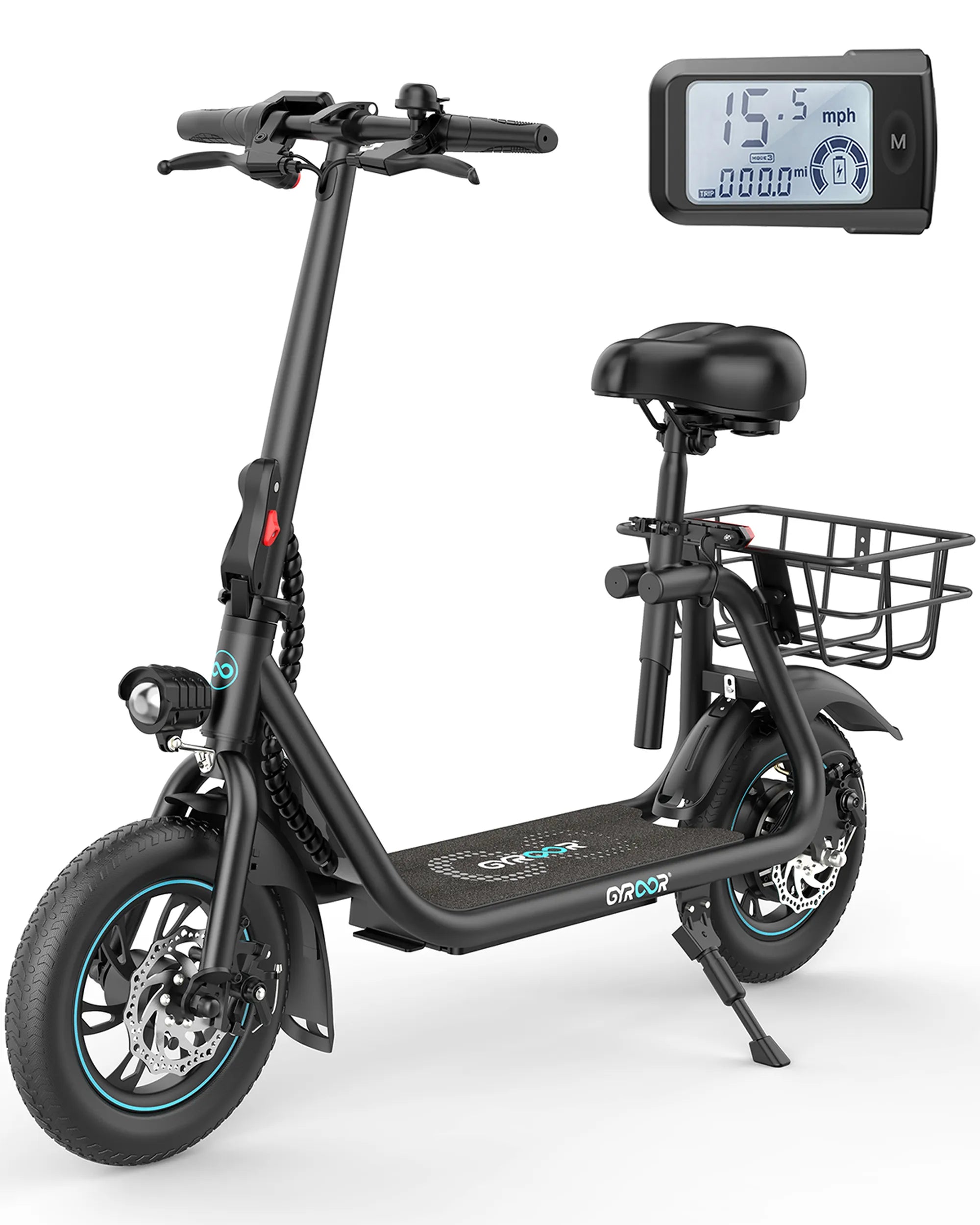
Introduction to Class 3 Folding E-Bikes
The class 3 folding ebike represents the pinnacle of practical urban electric transportation. It merges the high-performance capability of a Class 3 electric bicycle, legally defined by a maximum assisted speed of 28 miles per hour, with the space-saving convenience of a foldable frame. This unique combination addresses two major pain points for city commuters and active individuals: the need for faster travel to reduce commute times and the challenge of storing a full-sized bicycle in apartments, offices, or on public transit.
Unlike slower Class 1 and 2 e-bikes, a class 3 folding ebike is engineered for efficiency. It allows riders to keep pace with urban traffic flow, significantly cutting down travel time over distances of 5 to 15 miles. The integrated folding mechanism transforms this capable vehicle into a compact package, often in under 30 seconds, solving the "last-foot" storage problem that deters many from cycling. For a leading brand like Gyroor, trusted by over 100,000 riders, engineering such a product requires a focus on robust safety and durability to handle the demands of high-speed, frequent folding and unfolding.
The core appeal is a car-replacement tool that is faster than traffic during rush hour, cheaper to operate than a vehicle, and portable enough to bring inside. This article provides a comprehensive, data-driven look at why the class 3 folding ebike category is growing rapidly, what features are non-negotiable for safety and performance, and how to select a model that delivers reliable, long-term value. You will learn the key benefits, critical technical specifications, and how to assess if this powerful form of micro-mobility is the right solution for your daily needs.
Why Choose a Class 3 Folding E-Bike? Key Benefits
Choosing a class 3 folding ebike is an investment in time, space, and versatility. The primary benefits stem from its dual identity as a high-speed commuter vehicle and an ultra-portable asset. For urban and suburban residents, this translates directly into tangible improvements in daily logistics, health, and transportation costs. The 28 MPH top speed is not just a number; it's a functional upgrade that redefines what is possible with bicycle commuting.
From a financial perspective, the cost savings are substantial when compared to car ownership, ride-sharing, or public transit passes. There are no gas, parking, or insurance costs, and electricity to charge the battery is minimal. The folding capability eliminates parking fees and anxieties, as the bike can be secured indoors. Furthermore, the ability to combine cycling with buses, trains, or carpools makes longer or more complex commutes feasible, expanding where you can live and work efficiently.
From a lifestyle and health standpoint, a class 3 folding ebike promotes consistent physical activity with adjustable effort. The electric assist makes hills and headwinds manageable, encouraging more frequent use than a traditional bike. The folding feature means it can easily be stored in a small apartment, under a desk, in a coat closet, or even in an RV or boat, making it accessible for a wider range of living situations. This accessibility ensures the bike gets used regularly, integrating exercise seamlessly into your routine.
Speed Meets Convenience: The Urban Commuter's Dream
The 28 MPH capability of a class 3 folding ebike directly targets urban inefficiency. In city traffic with frequent stops, the average car speed often falls below 20 MPH. A class 3 ebike can legally use bike lanes and often maintain a higher average speed, door-to-door, than a car. This turns a 45-minute car commute into a 25-minute bike ride, reclaiming hours per week. The folding mechanism is the critical companion to this speed, as it allows the rider to bring the bike into a building, eliminating the risk of theft at outdoor racks—a major deterrent for using expensive e-bikes.
This combination is transformative for multi-modal commuting. A rider can cycle at high speed to a train station, fold the bike in seconds, board the train during peak hours (where full-sized bikes are often banned), and then unfold it for a quick final leg to the office. This flexibility makes the class 3 folding ebike a master key for navigating complex urban transit systems, providing a reliable and predictable schedule independent of traffic jams or transit delays.
Unmatched Versatility for Diverse Lifestyles
The utility of a class 3 folding ebike extends far beyond the daily work commute. It becomes a primary tool for weekend adventures, grocery runs, visiting friends, and exploring local trails. The electric assist opens up longer recreational routes, while the folding frame allows it to be tossed in a car trunk for a trip to a distant trailhead or a vacation home. For apartment dwellers, condo owners, or those with limited garage space, the ability to store it vertically in a corner or closet is a game-changer, protecting the investment from the elements and theft.
It also serves unique niches. RV and boat owners appreciate having full transportation that stows compactly. Students can navigate large campuses quickly and store the bike in a dorm room. Urban delivery couriers can use the speed for efficiency and the fold to secure the bike during pick-ups. This versatility ensures the bike is not a single-purpose tool but a central part of an active, efficient lifestyle, providing value every day of the week.
Critical Features to Look for in a Class 3 Folder
Not all class 3 folding ebikes are created equal. The combination of high speed and mechanical folding places unique stresses on the frame and components. Therefore, specific features are non-negotiable for safety, performance, and longevity. A focus on quality engineering in these areas separates reliable, daily-use vehicles from disappointing or potentially unsafe products. Key areas to scrutinize include the drive system, battery safety, braking performance, frame integrity, and the folding mechanism itself.
A high-performance class 3 folding ebike requires a robust foundation. The frame material—typically aluminum alloy—must be engineered with reinforced hinges and locking mechanisms to handle the dynamic loads of 28 MPH riding and repeated folding. The welding and finish should be clean and robust. The folding process should be intuitive, require minimal force, and result in a secure, locked folded position that won't accidentally unfold when carried. A poorly designed hinge is a critical point of failure.
Beyond the frame, component quality is paramount. This includes durable, double-walled rims to handle urban potholes, wide puncture-resistant tires for stability and comfort, and bright, reliable lighting systems for visibility at high speeds. An intuitive control display that shows speed, battery level, and assist mode is essential. Given the portable nature, the overall weight is also a key consideration, balancing durability with liftability, typically ranging from 50 to 70 pounds.
Motor Power and Battery Performance
Sustaining a 28 MPH speed, especially on inclines or against wind, demands a powerful motor. Look for a continuous-rated hub or mid-drive motor of at least 500 watts, with 750 watts being a common sweet spot for class 3 folding ebike models. Peak power output will be higher. Motor torque, measured in Newton-meters (Nm), is crucial for acceleration and hill-climbing; 60 Nm or more provides confident performance. The motor should operate smoothly and relatively quietly.
The battery is the heart of the system. At high speeds, energy consumption increases, so capacity is critical. Seek a battery with a rating of at least 500Wh (Watt-hours), with 600Wh or more being ideal for a reliable 20-40 mile range at mixed assist levels. The most critical factor is battery safety and certification. Insist on a UL-certified battery pack, like those used by Gyroor, which have undergone rigorous testing for fire and electrical safety. This certification is non-negotiable for a device you will charge indoors. The battery should also be securely integrated or removable for convenient charging.
Build Quality, Safety, and Portability
Safety at 28 MPH is dependent on one primary system: the brakes. Mechanical disc brakes are a minimum, but hydraulic disc brakes are strongly recommended for their superior stopping power, modulation, and lower maintenance. They provide consistent, strong braking in all weather conditions, which is essential for a class 3 folding ebike. The brake rotors should be of ample size (e.g., 160mm or larger) for effective heat dissipation.
The folding mechanism must inspire confidence. It should use robust latches or locking pins, preferably with a secondary safety lock to prevent accidental release while riding. The handlebar and seat post folding systems should be quick-release but secure. For all-weather reliability, look for an IP water resistance rating for the electrical components. An IPX5 rating, as found on Gyroor models, means the bike can withstand water jets from any direction, making it safe to ride in the rain. Finally, consider the folded dimensions and weight. A good class 3 folder should be compact enough to fit in a car trunk and have built-in carrying handles or wheels to aid transport when folded.
Gyroor's Approach to Class 3 Folding E-Bikes
Gyroor enters the class 3 folding ebike segment by applying its core engineering principles developed across a lineup of 20+ electric mobility models. The focus is on integrating proven reliability and safety features into a high-speed, portable platform. For Gyroor, building a class 3 folding ebike isn't just about hitting a speed metric; it's about creating a trustworthy vehicle that riders can depend on for daily high-speed commuting, backed by clear support and warranty structures.
The foundation of this approach is a commitment to certified safety components. Every Gyroor e-bike utilizes UL-certified battery packs, tested for over 500 charge cycles and built with high-quality lithium-ion cells and advanced Battery Management Systems (BMS) to prevent overcharging, overheating, and short circuits. This is coupled with IPX5 water-resistant design for the electrical systems, ensuring the bike can handle wet commutes without performance degradation or safety risks. These features directly address the top concerns of e-bike buyers: battery safety and all-weather usability.
Furthermore, Gyroor emphasizes a holistic ownership experience. A class 3 folding ebike is a mechanical and electrical system that will require occasional adjustment or service. Gyroor supports this with a comprehensive 1-year warranty on the frame, motor, battery, and controller, providing significant peace of mind. This warranty, alongside accessible customer service, underscores the brand's commitment to being a long-term partner in mobility, not just a point-of-sale retailer.
Engineering for Confidence at High Speed
Gyroor's engineering for class 3 speed focuses on stability, control, and consistent power delivery. The frame geometry is designed to remain stable and predictable at 28 MPH, with a wheelbase and rider position that balance agility with high-speed confidence. The folding joints are over-engineered with reinforced aluminum and high-strength locking pins to ensure there is no flex or play, which could be dangerous at speed.
The power system is calibrated for the class 3 experience. A high-torque motor provides smooth, rapid acceleration to merge with traffic safely, while the pedal-assist sensors offer seamless power delivery without jarring surges. The integration of high-performance hydraulic disc brakes ensures riders have immediate, controllable stopping power. By focusing on the synergy of these systems—frame, motor, battery, brakes—Gyroor aims to deliver a class 3 folding ebike that feels solid, responsive, and safe, whether unfolded on a busy street or folded in an elevator.
The Gyroor Ownership Promise: Warranty and Support
The value of a class 3 folding ebike extends beyond the initial purchase. Gyroor's 1-year comprehensive warranty covers defects in materials and workmanship for the core electrical and structural components. This is a critical differentiator, as it protects the owner's investment during the most intensive period of use. Knowing that the motor, battery, and frame are backed allows riders to use the bike to its full potential without undue worry.
Support is structured to be practical. With a network serving over 100,000 riders in North America and Europe, Gyroor provides accessible troubleshooting guides, video tutorials, and customer service to handle questions about assembly, maintenance, and operation. For a product that combines mechanical folding with electrical systems, this support infrastructure is essential. It empowers owners to perform basic upkeep and understand their bike, ensuring years of reliable service and maximizing the return on their mobility investment.
Making the Decision: Is a Class 3 Folding E-Bike Right for You?
Deciding to invest in a class 3 folding ebike requires a practical assessment of your needs, environment, and local regulations. It is an ideal solution for many, but not for everyone. A data-driven comparison with other e-bike types and an honest self-assessment of your primary use cases will lead to the best decision. Consider your typical trip distances, storage options at home and destination, the terrain of your commute, and local laws governing e-bike speed and where they can be ridden.
The class 3 folding ebike excels in specific scenarios: medium-distance urban/suburban commuting (5-15 miles), areas with hills or strong winds, living situations with limited secure storage (apartments, condos), and a need to combine cycling with other transit modes. It is less ideal for those who only need very short trips (under 2 miles), have ample secure garage space and no need to bring the bike inside, or live in regions where Class 3 e-bikes are restricted from bike paths, limiting their route options.
Your physical ability to lift and carry the folded bike is also a factor. While the folding mechanism aids portability, a 60-pound object still requires some strength to lift into a car trunk or carry up a flight of stairs. Many models include rolling wheels to mitigate this. Ultimately, the decision hinges on whether the premium for high speed and foldability solves significant problems in your daily life.
Comparison: Class 3 Folder vs. Other E-Bike Types
The following table provides a clear, data-driven comparison to highlight where a class 3 folding ebike fits within the broader e-bike ecosystem.
| Feature / Type | Class 1/2 Non-Folding | Class 3 Non-Folding | Class 3 Folding (Subject) |
|---|---|---|---|
| Max Assisted Speed | 20 MPH (Class 2 has throttle) | 28 MPH | 28 MPH |
| Portability & Storage | Low. Requires bike rack or large space. | Low. Requires bike rack or large space. | Very High. Fits in trunks, closets, under desks. |
| Multi-Modal Use | Difficult on crowded transit. | Difficult on crowded transit. | Excellent. Easy on buses, trains, in cars. |
| Theft Risk | High (left outside). | High (left outside). | Very Low (brought inside). |
| Ideal Use Case | Recreation, short flat commutes with secure parking. | Longer, faster commutes with secure parking at both ends. | Urban commuting, apartment living, mixed transit, space-constrained users. |
| Typical Weight | 50-65 lbs | 55-70 lbs | 55-70 lbs |
Assessing Your Needs: A Quick Checklist
Answer these questions to determine if a class 3 folding ebike aligns with your lifestyle:
- Commute Distance & Terrain: Is your regular commute between 3 and 15 miles? Does it include hills where extra power is valuable?
- Storage Security: Do you lack a secure, covered area to lock a bike at home or work? Is bringing the bike inside a major advantage?
- Multi-Modal Travel: Do you plan to use the bike in combination with buses, trains, ferries, or a personal car?
- Local Laws: Are Class 3 e-bikes permitted on your planned routes (e.g., bike lanes, roads)? Are they prohibited on certain paths?
- Speed Requirement: Would a 28 MPH capability meaningfully reduce your commute time compared to a 20 MPH e-bike?
- Physical Ability: Can you comfortably lift and carry a 55-70 pound object in its folded state, potentially with the aid of wheels?
Frequently Asked Questions (FAQ)
Q1: Where are Class 3 e-bikes legally allowed to ride?
A1: Laws vary by state and municipality. Generally, in the United States, Class 3 e-bikes are allowed on roads and street-adjacent bike lanes. They are often prohibited on natural surface trails and sometimes on multi-use paths designated for lower-speed traffic. It is crucial to check your local and state regulations. They typically require riders to be 16 or older and mandate helmet use.
Q2: How heavy is a typical class 3 folding ebike, and is it easy to carry?
A2: Weight ranges from approximately 55 to 70 pounds, depending on frame size, battery capacity, and motor power. While not lightweight, a good folding design will include a central carrying handle or allow the folded bike to be tilted and rolled on its wheels, much like wheeled luggage. This makes transporting it up curbs, through buildings, and into vehicles manageable for most adults.
Q3: Does the folding mechanism make the bike less stable at high speed?
A3: A well-engineered class 3 folding ebike from a reputable brand is designed with stability at high speed as a priority. The folding joints use robust locking mechanisms that, when engaged for riding, create a rigid frame comparable to a non-folding bike. There should be no noticeable flex or play. Always ensure the primary frame latch is fully secured before riding.
Q4: What is the real-world range I can expect on a single charge?
A4>Range is highly variable based on rider weight, terrain, wind, tire pressure, and assist level. At the highest assist level (maintaining 28 MPH), expect 20-25 miles from a 500Wh battery. Using lower assist levels for flats and reserving high power for hills can extend range to 35-45 miles or more. A larger 600Wh+ battery will proportionally increase these distances.
Q5: How do I maintain a class 3 folding ebike?
A5>Regular maintenance is similar to a standard bike but with electrical care. Key tasks include: keeping the battery charged between 20-80% for longevity, checking tire pressure weekly, ensuring brake pads are not worn and brakes are adjusted, lubricating the chain, and periodically checking that all folding mechanism bolts and latches are tight. Wipe down the bike after wet rides and avoid high-pressure sprays on electrical components.
Conclusion: The Future of Urban Mobility is Foldable
The class 3 folding ebike is more than a niche product; it is a logical evolution of urban transportation. It successfully decouples mobility from traffic congestion, high costs, and parking scarcity. By delivering car-competitive speeds in a package that can be stored anywhere, it solves the practical barriers that have limited bicycle commuting for decades. For the modern urbanite, it represents freedom, efficiency, and a sustainable choice that directly improves quality of life.
Choosing the right model is paramount. Prioritize safety certifications like UL for the battery, reliable hydraulic disc brakes, a robust folding mechanism, and a clear warranty from an established brand. These factors ensure your investment is protected and your rides are secure. As cities continue to evolve and prioritize sustainable infrastructure, the class 3 folding ebike is poised to become a cornerstone of personal mobility, offering a compelling alternative for a significant portion of daily trips.
Explore how a high-performance, portable e-bike can transform your commute and expand your horizons. For a range of electric mobility solutions built with a focus on safety, reliability, and rider support, browse the full Gyroor collection at gyroorboard.com.
Youth E Dirt Bike: The Ultimate Guide to Electric Off-Road Adventure
750W E-Bike: The Ultimate Guide to the Versatile Power Sweet Spot