



Redefining the Urban Commute
The way we move through cities is undergoing a fundamental shift. **Community electric scooters: the future of urban mobility** is not just a slogan; it's a reality unfolding on streets worldwide. These shared, dockless e-scooter networks represent a direct response to chronic urban challenges: traffic gridlock, air pollution, and the frustrating 'last-mile' gap between transit stops and final destinations.
This model transcends simple vehicle rental. It creates an on-demand, app-based mobility layer integrated into the urban fabric. For millions, the daily calculation of whether to drive, walk, or wait for a bus now includes a faster, cheaper, and more enjoyable alternative. The proliferation of these programs signals a move toward accessibility and sustainability as core urban planning principles.
The success of community scooter systems hinges on a simple premise: right-sizing the vehicle to the trip. Data shows a significant portion of urban car trips are under three miles, a distance perfectly suited for electric scooters. By providing a convenient alternative for these short journeys, cities can reduce congestion and emissions almost immediately.
This article will dissect the rise, impact, and future of shared e-scooter ecosystems. We will examine their core benefits, address safety and logistical challenges, and explore the specialized engineering from manufacturers like Gyroor that makes large-scale fleets possible. The goal is to provide a comprehensive, data-driven look at why this mode of transport is here to stay.
The Rise of the Shared E-Scooter Ecosystem
The modern shared e-scooter phenomenon exploded onto the scene around 2017, but its roots are in broader trends of smartphone ubiquity, GPS precision, and a growing appetite for sustainable services. Companies deployed fleets of sturdy, GPS-enabled scooters in city centers, allowing users to locate, unlock, and ride via a mobile app, then leave the scooter responsibly at their destination.
Initial reactions from cities ranged from curiosity to outright bans, citing clutter and safety concerns. However, the clear user demand prompted a rapid evolution toward regulated partnerships. Today, major cities typically license a limited number of operators, establishing rules for fleet sizes, parking, data sharing, and equity requirements, transforming a disruptive startup model into a formalized part of the public transit portfolio.
The driver of adoption is a compelling value proposition. For the user, it's ultimate convenience with no maintenance, insurance, or charging hassle. For the city, it's a privately-funded mobility solution that expands transportation options without massive capital investment in infrastructure like new rail lines. Data-sharing agreements now provide cities with invaluable insights into trip patterns to guide future planning.
How Community Scooters Differ from Personal Ownership
Choosing between a shared scooter service and purchasing your own is a decision based on usage patterns and priorities. The shared model operates on a pay-per-minute or per-trip basis, eliminating a large upfront cost. It is ideal for occasional users, tourists, or those testing the waters of micro-mobility without commitment. The primary benefit is flexibility and freedom from maintenance or theft concerns.
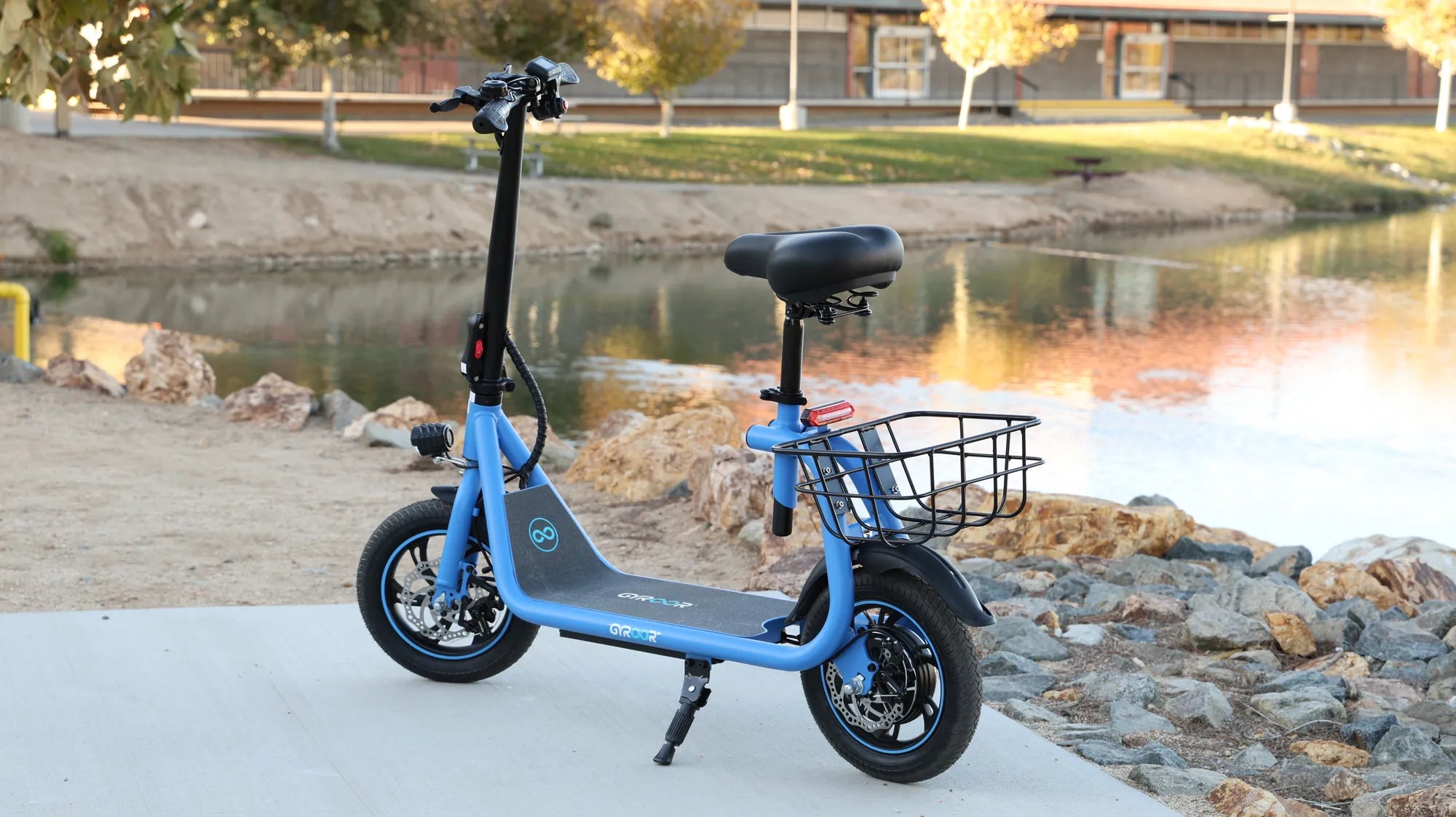
Personal ownership, exemplified by brands like Gyroor, requires an initial investment but offers long-term cost savings for frequent riders. A daily commuter will find owning a scooter more economical within months. Ownership also guarantees access to a specific model with preferred performance features, comfort, and range, and it is always available at your doorstep without needing to locate a nearby rental.
The experience differs significantly. Personal scooters are often more powerful, with longer range and higher-quality components, as they are designed for an owner who will care for them. Shared scooters are built for maximum durability and simplicity to withstand constant public use. The table below outlines the key distinctions.
| Factor | Community/Shared Scooter | Personally Owned Scooter (e.g., Gyroor) |
|---|---|---|
| Cost Model | Pay-per-minute/ride (e.g., $1 unlock + $0.30/min) | One-time purchase ($300 - $1000+) |
| Best For | Occasional trips, tourists, multi-modal journeys | Daily commuters, enthusiasts, predictable routes |
| Maintenance & Charging | Handled by operator; no user responsibility | User responsibility; requires home storage/charging |
| Availability & Consistency | Subject to fleet location/battery; variable models | Always available; consistent performance/feel |
| Performance & Range | Standardized, often limited for fleet management | Wide variety; high-performance models available |
| Primary Advantage | Maximum flexibility, zero upkeep | Cost-effective long-term, personalized experience |
Core Benefits: Why Cities and Citizens Are Embracing Shared Scooters
The rapid adoption of community electric scooter programs is driven by a powerful confluence of benefits for individual riders, urban communities, and the environment. These systems deliver tangible value by addressing specific pain points in modern city life, moving beyond novelty to become a legitimate utility. Their success is measured in reduced car trips, increased transit connectivity, and improved access to opportunity.
Cities are embracing them as a tool for achieving climate action and sustainability goals, often at minimal public cost. The data generated helps planners understand neighborhood connectivity gaps and prioritize infrastructure investments. For citizens, the benefit is immediate: a faster, more affordable, and often more enjoyable way to navigate daily routines.
Environmental Impact and Sustainability
The most cited benefit is environmental. When an e-scooter trip replaces a car trip, it directly reduces carbon emissions, local air pollutants, and traffic congestion. Studies, such as one from North Carolina State University, have found that shared e-scooters can have a lower life-cycle greenhouse gas impact per passenger mile compared to a personal car, especially when they displace rideshare vehicles.
The sustainability equation includes the full lifecycle: manufacturing, operations, and end-of-life. Leading operators are improving this by using swappable battery systems, allowing efficient collection and charging using renewable energy in central hubs. They are also designing scooters for greater durability and easier recycling. The goal is a closed-loop system where the operational emissions from charging and collection are minimized.
Furthermore, the physical footprint is tiny. A parked scooter uses a fraction of the space of a parked car, and moving scooters dramatically increase the person-throughput of existing road space. This efficient use of public right-of-way is a critical advantage in dense, space-constrained urban centers.
Solving the "Last-Mile" Problem
The "last-mile" problem describes the inconvenient gap between a public transit stop and a rider's final destination. This gap is a major deterrent to using buses and trains. Community electric scooters are arguably the most elegant solution yet devised, effectively expanding the catchment area of every transit station by a 10-15 minute radius.
This creates a seamless, multi-modal journey: train or bus for the long haul, then a quick scooter ride for the final leg. It makes car-free living genuinely practical for more people, reducing household reliance on a personal vehicle. Transit agencies are increasingly integrating scooter locations and unlocks directly into their own apps, formally acknowledging this symbiotic relationship.
For cities, this means higher utilization of existing, high-capacity transit infrastructure. It makes transit-oriented development more viable and can reduce the need for expensive park-and-ride lots by providing a dynamic, space-efficient connection from home to station.
Economic Accessibility and Equity
Shared scooters lower the barrier to entry for electric mobility. Not everyone can afford a car, a personal e-scooter, or even a bike-share annual membership. The pay-per-ride model requires only a smartphone and a credit/debit card, opening access to a broader demographic, including younger populations and those in service industries.
Progressive cities are mandating equity provisions in operator contracts. These often include:
- Reduced-Fare Programs: Discounted rates for low-income residents or those on government assistance.
- Service Area Requirements: Mandating that a percentage of the fleet be distributed in underserved neighborhoods, not just dense downtown cores.
- Cash/Payment Options: Exploring alternatives for users without bank accounts or smartphones.
While not perfect, these measures aim to ensure the benefits of new mobility are distributed fairly and do not exacerbate existing transportation inequities. The economic benefit also extends to reduced personal transportation costs, freeing up household income.
Navigating Challenges and Safety Concerns
No innovation arrives without growing pains, and community electric scooters are no exception. Honest assessment of challenges is crucial for their sustainable integration. The primary issues revolve around public safety, sidewalk clutter, and regulatory friction. These are not inherent flaws but rather implementation problems that are being actively addressed through technology, infrastructure, and education.
The narrative has matured from outright opposition to collaborative problem-solving. Cities that have moved from ad-hoc bans to structured permitting report better outcomes. The path forward requires acknowledging these challenges as part of a continuous improvement cycle involving riders, operators, manufacturers, and city officials.
Safety First: Rider Education and Infrastructure
Safety is the paramount concern. Incidents often involve first-time riders, sidewalk riding conflicting with pedestrians, or interactions with cars on busy streets. The solution is threefold: education, enforcement, and infrastructure.
Education: Operator apps now include mandatory in-app safety tutorials, helmet-use reminders, and rules of the road. Many cities run public awareness campaigns. Enforcement: Cities are ticketing riders for sidewalk riding and imposing speed limits in pedestrian-heavy zones using geo-fencing. Infrastructure: This is the most critical long-term solution. The presence of dedicated, protected bike and scooter lanes dramatically improves safety and rider confidence. Data shows injury rates plummet when riders have separated space from fast-moving vehicle traffic.
Manufacturers play a key role by building stable, reliable scooters with good lighting, effective brakes, and intuitive controls. A well-maintained fleet is a safer fleet, which is why durability engineering is a safety feature in itself.
Clutter, Parking, and Public Space Management
The image of scooters knocked over on sidewalks or blocking ramps fueled early backlash. The industry's response has been technological and operational. Geo-fencing is now standard: GPS creates virtual "parking corrals" where riders must end their trip, often in designated sidewalk zones or bike racks.
Some systems use photo verification, requiring the user to submit a picture showing the scooter is parked correctly. Operators have also improved their logistics for rebalancing fleets (moving scooters from low-demand to high-demand areas) and collecting improperly parked units more quickly. Cities are designating specific micro-mobility parking areas, clarifying expectations and reducing conflict over the use of public space.
This evolution shows a shift from a purely user-convenient model to a community-responsible one, balancing accessibility with orderly integration into the urban landscape.
The Gyroor Perspective: Engineering for Shared Mobility Demands
The rigorous demands of a shared scooter fleet are far beyond those of personal use. A fleet scooter might be used for dozens of short trips per day, by riders of varying skill levels, and be subject to constant exposure to the elements and minor impacts. This requires a specific engineering philosophy focused on durability, safety, and total cost of ownership for the operator.
As a leading manufacturer trusted by over 100,000 riders, Gyroor's design principles align closely with the needs of high-utilization fleets. The focus is on robust components, safety-certified systems, and weather-resistant construction that ensures reliability and minimizes downtime—the key to a profitable and safe fleet operation.
Built to Last: Durability for High-Utilization Fleets
Fleet scooters need a reinforced frame, often using aircraft-grade aluminum or high-tensile steel, to withstand the stress of constant use and occasional curb jumps. Components like the stem folding mechanism, deck, and handlebars are over-engineered for extra cycles.
Tires are a critical point of failure. While personal scooters may use air-filled tires for comfort, fleet models often prioritize solid or honeycomb puncture-proof tires to eliminate flats and the maintenance they require. The motor and electronic controllers are selected for consistent performance under heavy load and are housed in sealed, shock-resistant enclosures. This durability-first approach extends the scooter's operational life, directly improving the sustainability and economics of the shared model.
The Critical Role of Battery Safety and Reliability
Battery safety is non-negotiable. A shared scooter's battery undergoes more charge cycles in a month than a personal scooter might in a year. Using uncertified or low-quality battery packs poses a significant fire risk and liability.
This is why **UL-certified lithium-ion battery packs are the industry standard for reputable operators and manufacturers**. Gyroor utilizes these certified packs, which undergo rigorous testing for thermal stability, overcharge protection, and short-circuit prevention. For a fleet operator, this means predictable performance, reduced hazard, and lower long-term costs from battery failures. The safety of riders, pedestrians, and the technicians who handle the scooters depends on this fundamental component choice.
Weather Resistance and Consistent Performance
Fleet scooters cannot be fair-weather vehicles. They must operate reliably after a rain shower or on damp city streets. An **IPX5 water-resistant rating** is essential, indicating the scooter can withstand water jets from any direction, protecting critical electronics in the deck and stem.
This rating ensures that the scooter's controller, battery connections, and display are sealed against moisture ingress. Consistent performance also requires reliable braking systems—often dual mechanical or hydraulic disc brakes—that maintain stopping power in wet conditions. By engineering for all-weather resilience, manufacturers ensure higher fleet availability and rider trust, rain or shine.
The Road Ahead: Integration and Smart City Synergy
The future of community electric scooters lies in deeper integration, both technologically and physically. The vision is of a seamless **Mobility-as-a-Service (MaaS)** ecosystem where a single app plans, books, and pays for a trip involving a train, a bus, and a scooter, with real-time data on connections and availability.
Technological trends include the standardization of swappable battery systems across operators to streamline logistics. Enhanced IoT connectivity will provide real-time diagnostics on fleet health, predicting maintenance needs before a scooter breaks down. Cities will use aggregated, anonymized trip data to dynamically manage curb space and optimize traffic signal timing for micro-mobility.
Physically, the integration means dedicated, protected lanes becoming a standard part of street redesigns, not an afterthought. We will also see more dedicated charging and parking infrastructure, like solar-powered docking stations, built into the urban environment. The scooter transitions from a disruptive outsider to a fully networked component of smart city infrastructure.
FAQ: Your Questions on Community E-Scooters, Answered
1. How do I find, unlock, and pay for a community scooter?
Download the operator's app (e.g., Lime, Bird, Spin). The app's map shows available scooters nearby. Walk to one, scan its QR code with your phone's camera in the app to unlock it. Payment is automatic via the credit/debit card linked to your account. You are charged a small unlock fee plus a per-minute rate until you end the ride in the app.
2. Where am I allowed to ride? What are the rules?
Rules vary by city but generally: Ride in the street or in a bike lane, not on sidewalks. Obey all traffic laws (stop signs, traffic lights). Do not ride under the influence. Most cities require riders to be 18+. Helmet use is strongly recommended and often legally required. Always check your local regulations in the app before your first ride.
3. What happens if I have an accident or the scooter malfunctions?
Immediately end the ride in the app and contact the operator's customer support through the app. They will guide you. Most operators provide some level of liability insurance for third-party damage, but it is crucial to understand the terms of service. For personal injury, your own health insurance would typically be primary. Always report mechanical issues so the scooter can be taken out of service.
4. How are scooters maintained and charged?
Operators employ teams of field technicians. Some are staff employees, while others are independent contractors ("Juicers" or "Chargers") who collect low-battery scooters at night, charge them at home, and redeploy them in the morning. Technicians also perform regular inspections and repairs for tires, brakes, and other wear items. High-quality components from manufacturers like Gyroor are essential to reduce this maintenance burden.
5. Is it cheaper than rideshare or owning my own scooter?
For single, short trips (1-2 miles), a scooter is almost always cheaper than a rideshare (Uber/Lyft). For daily commuting, owning a scooter like a Gyroor model becomes more economical within a few months. The break-even point depends on your local per-minute rates and frequency of use. The shared model's value is in flexibility and avoiding upfront cost.
A Collaborative Path Forward
The evidence is compelling: community electric scooters have secured their place as a vital piece of the urban mobility puzzle. They offer a pragmatic, scalable solution to congestion and pollution while expanding transportation access. Their long-term success, however, is not guaranteed by technology alone. It requires a sustained, three-way partnership.
Riders must embrace responsibility—following rules, parking thoughtfully, and wearing helmets. Cities must commit to building the protected infrastructure that ensures safety and order. Manufacturers must continue to prioritize safety and durability, engineering fleet vehicles that stand up to real-world demands and earn public trust.
Brands like Gyroor, with their commitment to UL-certified batteries, IPX5 water-resistant designs, and a reliable **1-year comprehensive warranty backed by US-based customer support**, exemplify the engineering rigor this partnership needs. Whether you're a city planner, a daily rider, or simply a curious citizen, the journey toward more livable cities is accelerating on two wheels. The future of urban mobility is shared, electric, and already here.
Ready to explore personal electric mobility? Browse the full Gyroor collection of durable, high-performance electric scooters and e-bikes at gyroorboard.com.
Electric Scooters Fresno: The Ultimate Guide to Eco-Friendly Commuting
Cheapest Electric Scooters 2025: Affordable and Efficient Rides for Everyone