



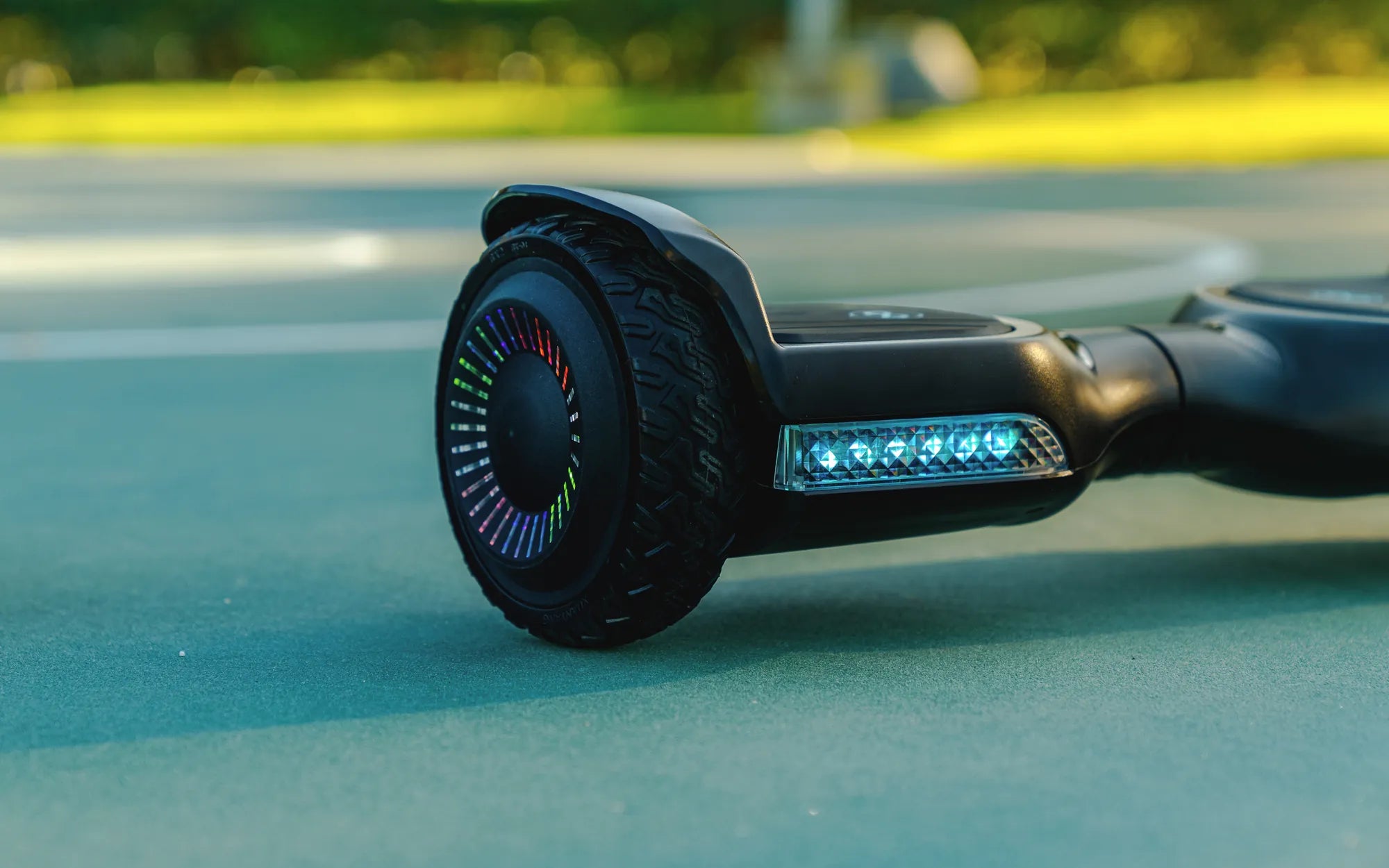
The Rise of the Self-Balancing Scooter
Personal transportation is undergoing a quiet revolution. The cool real self balancing scooter has evolved from a novelty gadget into a legitimate, efficient, and exhilarating mode of urban mobility. This transformation is driven by advancements in gyroscopic stabilization, battery technology, and durable design, making these devices a practical solution for millions.
For commuters, students, and urban explorers, the appeal is multifaceted. It combines the fun of intuitive, hands-free riding with the serious utility of covering short distances quickly and without emissions. The "cool" factor is no longer just about aesthetics; it's about smart engineering that delivers reliability and safety where earlier models failed.
Brands like Gyroor have been instrumental in this shift. By focusing on UL-certified battery safety, IP-rated water resistance, and robust warranties, they have helped redefine the category from a risky toy to a trusted personal transport device. This article will dissect what makes a quality self-balancing scooter, the technology behind it, and its role in the future of how we move.
What Makes a Scooter "Self-Balancing"? The Tech Explained
The magic of a self-balancing scooter lies in a sophisticated feedback system that mimics human balance. At its core are three critical components: gyroscopic sensors, a high-speed microprocessor, and electric motors housed within each wheel. This trio works in concert hundreds of times per second to keep the rider upright.
Gyroscopic sensors and tilt sensors constantly measure the board's angle relative to the ground. When you lean forward, these sensors detect the pitch change almost instantly. This data is sent to the central microprocessor, which calculates the precise amount of power needed to drive the wheels forward and restore equilibrium.
The electric motors then execute this command, accelerating the wheels to match your lean. To slow down or stop, you simply lean back. Steering is achieved through differential wheel speed—leaning your weight slightly to the left or right causes one wheel to spin faster than the other, initiating a smooth turn.
This lean-to-steer, intuitive control scheme is what makes the learning curve relatively short for most people. The machine's intelligence handles the complex physics of balance, allowing the rider to focus on direction and enjoy the ride. It’s a seamless fusion of human intention and robotic precision.
Beyond the Gimmick: Practical Benefits for Daily Life
The practical applications of this technology extend far beyond recreational fun. For the urban commuter, a self-balancing scooter is the ultimate last-mile solution. It seamlessly bridges the gap between public transit stations and your final destination, eliminating the frustration of short walks or waiting for buses.
On college campuses and large corporate parks, these devices are transformative. They allow for swift, effortless movement between classes, meetings, or dormitories without breaking a sweat. Their compact size and portability make them ideal for carrying into buildings or storing under a desk.
From an environmental and economic standpoint, the benefits are clear. Charging costs are minimal compared to fueling a car, and the zero-local-emissions operation contributes to cleaner air. For short trips to the grocery store, coffee shop, or a friend's house, it presents a carbon-conscious alternative to starting a car engine.
Furthermore, the act of riding engages your core muscles and improves coordination. While not a vigorous workout, it promotes better posture and balance, offering a subtle physical benefit alongside its primary function as a efficient transport tool.
Key Features to Look for in a Quality Self-Balancing Scooter
Not all self-balancing scooters are created equal. The market is flooded with options, making it crucial to distinguish between cheaply made imitations and quality-engineered vehicles. Key differentiators lie in safety certifications, build quality, and performance specifications that directly impact reliability and the riding experience.
A high-quality scooter should feel substantial and well-constructed. Check the weight capacity to ensure it supports your size, and examine the deck and frame materials. Aluminum alloy frames offer a good balance of strength and lightness. The quality of the foot pads and overall finish are also indicators of manufacturing standards.
Performance specs like motor wattage and battery capacity are not just numbers on a box. They dictate real-world usability—how well you can climb a hill, what your top speed will be, and how far you can travel on a single charge. Ignoring these details can lead to disappointment and a device that fails to meet your daily needs.
Finally, consider the brand's reputation and post-purchase support. A company that stands behind its product with a clear warranty and accessible customer service is investing in your long-term satisfaction. This is where established brands with proven track records, trusted by over 100,000 riders like Gyroor, separate themselves from fly-by-night manufacturers.
Safety First: UL-Certification and Reliable Batteries
The most critical component in any electric personal transporter is its battery pack. Lithium-ion batteries are powerful and efficient but require rigorous safety standards during manufacturing. This is where UL (Underwriters Laboratories) certification becomes non-negotiable.
A UL-certified battery, like those used in all Gyroor models, has undergone extensive testing for electrical, mechanical, and environmental safety. It ensures protection against overcharging, short-circuiting, and thermal runaway—the primary cause of the fires associated with early, uncertified models. This certification is your foremost guarantee of safety for both the rider and your home.
Beyond safety, a quality battery pack determines the scooter's lifespan and consistency. Gyroor's UL-certified packs are rated for 500+ charge cycles while maintaining significant capacity. This translates to years of reliable service before any noticeable reduction in range, making the device a true investment rather than a disposable gadget.
Always prioritize models that explicitly advertise UL-certification for their battery system. It is the single most important feature for ensuring peace of mind and long-term value, effectively making the cool real self balancing scooter a safe and reliable companion.
Built to Last: Water Resistance and Durability
Real-world riding means encountering puddles, wet pavement, and the occasional light drizzle. A scooter without water resistance is a fair-weather device with a limited lifespan, as moisture can quickly corrode electronics and cause motor failure. An IP (Ingress Protection) rating defines a device's resilience.
An IPX5 rating, a standard feature on Gyroor scooters, means the unit is protected against water jets from any direction. In practical terms, this allows you to confidently ride through urban puddles, wet streets after rain, and in light precipitation without fear of immediate damage. It significantly expands the scooter's utility and daily reliability.
Durability also encompasses tire choice and suspension. Solid rubber tires are puncture-proof and low-maintenance, ideal for smooth urban surfaces. Air-filled (pneumatic) tires offer better shock absorption and traction on uneven terrain like brick paths or packed dirt, providing a smoother ride at the cost of potential flats.
When combined with a robust frame and proper sealing, water resistance transforms a delicate piece of electronics into a hardy transportation tool. It ensures that your investment is protected from the elements, making the cool real self balancing scooter a truly all-weather, practical asset for daily commuting.
Power & Performance: Motor Wattage and Range
Understanding motor power and battery capacity is key to matching a scooter to your lifestyle. Motor wattage, typically ranging from 300W to 500W per motor (600W-1000W total), directly influences acceleration, top speed, and hill-climbing ability. Higher wattage provides more torque, making it easier to tackle inclines and carry heavier riders.
Battery capacity, measured in Watt-hours (Wh) or Amp-hours (Ah), is the fuel tank of your scooter. A larger capacity directly correlates to a longer range. However, real-world range is affected by rider weight, terrain, temperature, and riding style. Manufacturers' maximum range figures are often best-case scenarios.
The following table provides a realistic comparison of how different specifications translate to performance for a typical rider (approx. 160 lbs / 73 kg) on mixed terrain:
| Specification | Entry-Level | Mid-Range | High-Performance |
|---|---|---|---|
| Total Motor Power | 300W - 400W | 500W - 700W | 800W+ |
| Battery Capacity | ~4.0 Ah (≈ 150 Wh) | ~4.4 Ah (≈ 165 Wh) | ~5.0 Ah+ (≈ 190 Wh+) |
| Max Speed | 6-8 mph | 9-11 mph | 12-15 mph |
| Real-World Range | 6-9 miles | 10-13 miles | 14-18 miles |
| Ideal For | Light use, smooth paths | Daily commuting, mild hills | Longer commutes, varied terrain |
Choosing the right combination ensures your scooter won't leave you stranded or struggling on hills. A model with a 500W dual-motor system and a 4.4Ah battery, for instance, strikes an excellent balance for most urban commuters, offering ample power and range for daily trips.
The Gyroor Advantage: Engineered for Confidence
In a market saturated with vague promises, Gyroor establishes trust through a clear, engineering-first philosophy. Their approach bundles the critical features of safety, durability, and support into a cohesive package designed for rider confidence. This foundation turns the concept of a cool real self balancing scooter into a dependable reality.
The commitment begins with the mandatory use of UL-certified battery packs across their entire lineup. This isn't an optional upgrade; it's a baseline standard that eliminates the biggest safety concern associated with personal electric mobility devices. It reflects a brand priority that places customer safety above cost-cutting.
Complementing this is the IPX5 water-resistant rating integrated into their designs. By building resilience against the elements from the outset, Gyroor scooters are prepared for the unpredictability of daily use. This durability is backed by a robust 1-year warranty on the scooter and a 6-month warranty on the battery, supported by a US-based customer service team.
This triad—certified safety, environmental protection, and strong warranty support—creates a virtuous cycle. It allows riders to fully enjoy the freedom and fun of their scooter without the underlying anxiety about reliability or failure, solidifying Gyroor's position as a leader for thoughtful consumers.
Model Comparison: Finding Your Perfect Gyroor Fit
Gyroor's diverse range caters to different rider profiles and environments. Understanding the distinctions helps you select the model that best aligns with your primary use case, whether it's sleek urban navigation or more adventurous off-path exploration.
For the Urban Commuter & Student: Models like the Gyroor S8 emphasize portability and sleek design. They often feature solid rubber tires for minimal maintenance on pavement, a lighter frame for easy carrying, and a balanced motor/battery combo (e.g., 500W total, 4.4Ah) perfect for campus or city streets. Their focus is on efficiency and style for daily short trips.
For the Off-Road Enthusiast: The Gyroor H20 or similar off-road variants are built with larger, air-filled (pneumatic) tires that provide superior traction and shock absorption on grass, dirt, and gravel. They boast higher wattage motors (700W+) for tackling steep, uneven inclines and have more aggressive tread patterns. These are for riders who see paths as suggestions rather than limits.
For the Balanced All-Rounder: Mid-range models often offer the best of both worlds. They may feature a combination of a powerful motor, a larger battery for extended range, and either hybrid tires or excellent suspension to handle a variety of surfaces comfortably. This category is ideal for riders with mixed-use needs who want one versatile device for both city commuting and weekend park adventures.
The Future of Personal Transport: Where Do Self-Balancing Scooters Fit?
The future of urban mobility is multimodal, electric, and connected. Self-balancing scooters are poised to be a fundamental component of this ecosystem. As cities become denser and prioritize reducing car traffic and emissions, compact, efficient personal electric vehicles (PEVs) offer a compelling solution for short-distance travel.
We can expect continued technological integration. Future models may feature smart connectivity via Bluetooth apps for firmware updates, ride statistics, and anti-theft tracking. Advanced driver-assistance systems, like automatic lights and proximity sensors, could enhance safety. Battery technology will improve, offering longer ranges and faster charging times.
Infrastructure will also adapt. We may see more dedicated micro-mobility lanes and secure charging/parking hubs at transit stations. This formal integration into the urban fabric will further legitimize devices like the cool real self balancing scooter as standard commuting tools, not just recreational items.
Ultimately, their role is to fill the critical gap in the 1-5 mile journey—a distance too short to drive efficiently yet too long to walk comfortably. By doing so reliably, safely, and enjoyably, they contribute to decongesting roads, lowering pollution, and increasing individual freedom of movement in our cities.
Frequently Asked Questions (FAQ)
Q: Are self-balancing scooters difficult to learn?
A: Most adults and older children can learn the basics within 30-60 minutes. The key is to start in a safe, open area, use a support (like a wall or railing) to mount, and focus on small, gentle leans. The gyroscopic system does the hard work of balancing; you primarily control speed and direction with your body weight. Confidence builds quickly with practice.
Q: How safe are they compared to e-bikes or e-scooters?
A> Safety is comparable when proper precautions are taken. All personal electric vehicles require protective gear (at minimum a helmet), situational awareness, and obeying local traffic laws. The lower center of gravity on a self-balancing scooter can feel very stable at speed. The primary safety differentiator is the quality of the device itself—specifically, a UL-certified battery, which mitigates the most significant inherent risk.
Q: What is the real-world range I can expect?
A> Always plan for 20-30% less than the manufacturer's stated maximum range. For a typical 165 Wh (4.4Ah) battery, a 160 lb rider on flat pavement with moderate stops can expect 10-13 miles. Factors that reduce range include heavier rider weight, frequent hills, cold weather, aggressive acceleration, and lower tire pressure.
Q: Can I ride a Gyroor scooter in the rain?
A> Yes, with caution. Thanks to their IPX5 water-resistant rating, Gyroor scooters are designed to handle wet conditions like riding through puddles and on damp roads after rain. However, they are not submersible. Avoid deep standing water, heavy downpours, and submerging any part of the unit. Always dry the scooter after riding in wet conditions.
Q: What does the Gyroor warranty cover?
A> Gyroor offers a comprehensive 1-year warranty on the scooter's main components (frame, motors, electronics) and a 6-month warranty on the battery pack against manufacturing defects. This warranty is supported by their US-based customer service team. It does not cover damage from accidents, misuse, neglect, or unauthorized modifications. Always register your product and keep your proof of purchase.
Embracing a Smarter, Cooler Way to Move
The cool real self balancing scooter represents more than just a fun gadget; it is a testament to how intelligent engineering can solve everyday mobility challenges. By mastering the physics of balance, these devices offer an intuitive, efficient, and environmentally friendly way to navigate the spaces of modern life. The key to a positive experience lies in choosing a product built with integrity.
Prioritizing UL-certified batteries, water-resistant construction, and reputable brand support—exemplified by Gyroor's approach—transforms potential risk into reliable performance. This ensures that your investment enhances your daily routine for years, providing not just transportation, but a sense of freedom and enjoyment.
As urban landscapes evolve to embrace micro-mobility, adopting a device like this positions you at the forefront of a more sustainable and agile way of living. It’s a choice for practicality, for reducing your carbon footprint, and for reclaiming time lost in traffic or waiting for transit.
Ready to experience the future of personal transportation? Explore a range engineered for safety, durability, and performance. Browse the full Gyroor collection at gyroorboard.com and find the perfect model to start your journey.
Best Electric Scooter for 10 Year Old for Kids: A Parent's Ultimate Guide
Two Wheel Electric Self Balancing Scooter: The Future of Urban Mobility