



Introduction to 125cc Dirt Bikes: Power, Performance, and Potential
For riders worldwide, the 125cc dirt bike represents the quintessential gateway into the sport. It's a class beloved for its balance of manageable power and thrilling performance, serving as the perfect platform for skill development. The question of a dirt bike 125cc top speed is a common and critical metric, but the answer is far from a single number. It hinges on a complex interplay of engineering, physics, and rider input. This guide moves beyond speculation to deliver a data-driven exploration of what determines velocity in this iconic category, providing riders with the knowledge to understand and optimize their machines.
Understanding your bike's potential is the first step toward riding it effectively and safely. Whether you're on a trail, track, or open field, knowing the factors that influence speed allows for better planning and more confident control. We will dissect every variable, from engine strokes to sprocket teeth, to give you a complete picture. This isn't just about how fast it can go; it's about understanding why it goes that fast and how you can ride it to its full, safe potential.
Understanding the 125cc Dirt Bike Engine: The Heart of the Machine
At its core, the 125cc designation refers to the engine's displacement—the total volume of air and fuel mixture the engine can draw in during one cycle. This 125-cubic-centimeter size creates a powerband that is accessible for beginners yet capable enough for experienced riders to exploit. The engine's internal design, however, is the primary dictator of its character and performance ceiling. The two fundamental architectures are the 4-stroke and the 2-stroke, each with distinct advantages that directly impact acceleration and top speed.
A 4-stroke engine completes a power cycle in four piston movements: intake, compression, power, and exhaust. This design typically produces a broader, more linear power delivery with stronger low-end and mid-range torque. For a rider, this translates to controllable power that is easier to manage, especially in technical sections or for learning. The trade-off is often a higher weight and a power curve that may not rev as aggressively to its peak as a 2-stroke.
In contrast, a 2-stroke engine combines these events into just two piston movements, firing once every revolution instead of every other. This results in a lighter engine with a more explosive, peaky powerband. The power comes on suddenly in a high-RPM "hit," which can deliver exhilarating acceleration but requires more skill to manage. This high-revving nature and superior power-to-weight ratio are key reasons why a 2-stroke 125cc often achieves a higher potential top speed than its 4-stroke counterpart.
The Role of Engine Type: 4-Stroke vs. 2-Stroke
The choice between a 4-stroke and a 2-stroke fundamentally shapes the riding experience and performance envelope. A modern 4-stroke 125cc, like a Honda CRF125F, builds speed progressively. Its power is more tractable, making it excellent for learning throttle control and for situations where smooth power is key, such as climbing hills or navigating muddy ruts. Its top speed is achieved through torque and gearing, often feeling more stable and planted at higher velocities.
A 2-stroke 125cc, such as a KTM 125 SX, is a different beast. It demands that the rider keep the engine in its narrow, high-RPM powerband to access its full potential. This requires active use of the clutch and precise gear selection. When kept "on the pipe," the acceleration can be startling, and the lighter weight allows the bike to carry more speed through corners and over jumps. On a long straight with proper gearing, this combination of low weight and high-RPM power output allows it to reach a higher peak speed than most 4-strokes of the same displacement.
Key Factors That Determine Your 125cc Dirt Bike's Top Speed
While engine displacement and type set the baseline, a motorcycle's top speed is a solution to an equation with many variables. These factors determine the balance between the engine's power output and the forces working against it. By understanding these elements, you can diagnose why your bike performs the way it does and make informed decisions about modifications or riding technique to influence its performance.
Every component, from the rider to the rear sprocket, plays a role. It's a system where changing one variable affects the entire performance profile. The pursuit of a higher dirt bike 125cc top speed isn't just about adding more power; it's often about reducing losses or optimizing the delivery of the power you already have. The most effective modifications address the biggest bottlenecks first.
Rider Weight and Aerodynamics
Physics dictates that accelerating a heavier mass requires more force. A rider's weight is a significant load on a 125cc engine. A difference of 50 pounds (23 kg) between riders can result in a noticeable variance in acceleration and the ability to reach peak speed, especially on uphill sections or soft terrain. Lighter riders will consistently achieve higher speeds all else being equal.
Aerodynamics, though less critical than on a street bike, still plays a role. At speeds approaching 60 mph, wind resistance becomes a major force. A rider who sits upright creates a large frontal area and drag. Tucking in, by lowering the torso close to the fuel tank and bringing elbows in, can reduce this drag significantly. This streamlined position allows the engine to push the bike to a higher terminal velocity before the force of drag equals the engine's driving force.
Gearing: Sprocket Ratios and Final Drive
Gearing is one of the most powerful and cost-effective tools for tailoring a bike's performance. The final drive ratio, determined by the number of teeth on the front (countershaft) and rear sprockets, acts as a multiplier for the engine's power. A lower numerical ratio (taller gearing) is achieved by adding teeth to the front sprocket or removing teeth from the rear.
This taller gearing reduces engine RPM at a given road speed, allowing for a higher potential top speed. However, it can make the bike feel sluggish off the line. Conversely, a higher numerical ratio (shorter gearing) from a smaller front or larger rear sprocket increases acceleration and improves low-end response but reduces top speed, as the engine hits its rev limiter sooner in each gear. For example, dropping one tooth on the front sprocket is a common mod for tighter tracks, while adding two teeth to the rear sprocket can significantly boost top-end pull for desert riding.
Terrain and Environmental Conditions
The surface you ride on has a profound impact. Hard-packed clay or pavement offers minimal rolling resistance, allowing the engine's power to translate efficiently into forward motion. Loose sand, deep mud, or tall grass creates immense drag, sapping power and limiting top speed dramatically. The bike may be working at maximum effort just to maintain 30 mph in sand where it could reach 55 mph on hardpack.
Environmental conditions are equally important. Air density decreases with altitude and increases in cold weather. A 125cc engine at 10,000 feet is trying to breathe thin air, which can reduce power output by 30% or more, crippling top speed. Conversely, a cold, dense morning air provides more oxygen for combustion, often making the bike feel more responsive and potentially allowing for a slightly higher peak speed. Inclines are a direct fight against gravity; even a slight uphill grade can prevent a bike from reaching its maximum velocity.
Real-World 125cc Dirt Bike Top Speed Data and Comparisons
Theoretical maximums are less useful than realistic estimates based on specific bike categories. The following table provides data-driven dirt bike 125cc top speed estimates for popular model types under optimal conditions (hard, flat terrain, ~160 lb rider, proper gearing). These figures account for factory tuning intended for the bike's primary use case.
| Model Type / Example | Estimated Top Speed | Primary Factors Influencing Speed |
|---|---|---|
| Motocross 4-Stroke (e.g., Honda CRF125R) | 50-58 mph | Aggressive cam timing for mid-range punch; close-ratio transmission optimized for acceleration between jumps, not ultimate top end. |
| Trail/Playbike 4-Stroke (e.g., Yamaha TT-R125LE) | 55-60 mph | Softer, more linear power delivery; slightly taller gearing than MX bikes for connecting trails. Weight is a limiting factor. |
| 2-Stroke Motocross (e.g., KTM 125 SX, Husqvarna TC 125) | 60-75+ mph | Exceptional power-to-weight ratio and peaky, high-RPM powerband. With tall gearing, can achieve the highest speeds in the class. |
| Dual-Sport 4-Stroke (e.g., Honda XR125L) | 65-70 mph | Tall, road-oriented gearing, less aggressive state of tune for reliability, and design for sustained higher speeds. |
It is crucial to view these numbers as benchmarks, not guarantees. A heavily modified 2-stroke with porting, a high-compression head, and perfect gearing could potentially touch 80 mph, while a poorly maintained bike in sand will struggle to hit 40 mph. The table highlights the clear performance advantage of the 2-stroke architecture for pure speed and the design intent behind different 125cc models.
Safety and Legality: Speed with Responsibility
Pursuing a higher dirt bike 125cc top speed must be inextricably linked to a commitment to safety and legal compliance. The thrill of speed is a core part of motorcycling, but it must be managed with mature respect for the risks involved. Proper safety gear is non-negotiable and is your primary defense in a fall, regardless of speed.
This means a full-face DOT/SNELL or ECE-certified helmet, motocross or off-road boots with ankle support, goggles, durable gloves, and body armor (chest protector, knee/shin guards). Jeans and a t-shirt offer zero protection. At higher speeds, the consequences of a crash increase exponentially; your gear is the best investment you can make.
Legally, the vast majority of 125cc dirt bikes are not street-legal. They lack lights, mirrors, turn signals, and licensing required for public roads. Attempting to achieve top speed on public property is dangerous and illegal. High-speed runs should only be conducted in controlled, private environments such as closed courses, sanctioned tracks, or wide-open private land with clear sight lines and no unexpected obstacles. Always ride within your personal skill limit and for the conditions.
Maintaining Performance for Consistent Speed
Peak performance is impossible without consistent maintenance. A poorly maintained bike will not only be slower but also unreliable and unsafe. Performance starts with a healthy engine breathing clean air, burning fuel efficiently, and expelling exhaust freely. A clogged air filter is one of the most common performance killers, starving the engine of oxygen.
Follow a strict maintenance schedule. Key tasks that directly affect power and top speed include: replacing the air filter regularly (and oiling it properly for foam filters), changing the engine oil and filter at manufacturer-recommended intervals, ensuring the chain is correctly tensioned and lubricated to minimize drivetrain loss, and replacing the spark plug. A fouled or worn spark plug can cause misfires, robbing power across the entire RPM range. For 2-strokes, maintaining the correct fuel/oil premix ratio and ensuring the power valve (if equipped) is clean and functioning is critical.
Beyond Top Speed: Why the 125cc Class Excels
While this guide focuses on the dirt bike 125cc top speed, it's vital to recognize that velocity is just one metric. The 125cc class excels for reasons that often have little to do with maximum mph. Its greatest strength is its role as a teaching tool. The lightweight chassis and manageable power allow new riders to learn fundamental skills—body positioning, braking, cornering, and clutch control—without being intimidated.
For experienced riders, a 125cc demands precision. It rewards momentum, smooth lines, and proper technique because it lacks the brute horsepower of a 450cc to cover mistakes. This makes you a faster, smarter rider on any bike. Furthermore, the cost of ownership is generally lower. Tires, chains, sprockets, and engine parts are less expensive than those for larger bikes, and the engines are famously durable when maintained. The fun factor is immense; riding a slow bike fast is often more engaging than riding a fast bike slow.
Frequently Asked Questions (FAQs)
Q: What is the fastest 125cc dirt bike you can buy?
A: Straight from the showroom floor, modern 2-stroke motocross bikes like the KTM 125 SX or Husqvarna TC 125 are typically the fastest in the 125cc class due to their exceptional power-to-weight ratios and high-revving engines. With stock gearing on a flat surface, they are capable of reaching speeds in the low 70s mph.
Q: Can I make my 125cc dirt bike faster?
A: Yes, through a hierarchy of modifications. First, ensure perfect maintenance and experiment with sprocket gearing (most effective per dollar). Next, consider bolt-ons like a less restrictive aftermarket exhaust system, a high-flow air filter, and jetting the carburetor (or remapping the ECU on fuel-injected models) to match. More involved modifications include installing a high-compression piston, having the cylinder head ported and polished, or even a big-bore kit to increase displacement (e.g., to 134cc or 144cc).
Q: Is a 125cc dirt bike fast enough for an adult beginner?
A> Absolutely. In fact, it is highly recommended. A 125cc provides ample speed (50-70+ mph potential) to be exciting and capable on trails and tracks, while its power delivery is forgiving enough to build confidence. It teaches proper technique without overwhelming the rider, making skill development the focus rather than managing excessive power.
Q: How does the top speed of a 125cc dirt bike compare to a 125cc scooter or e-bike?
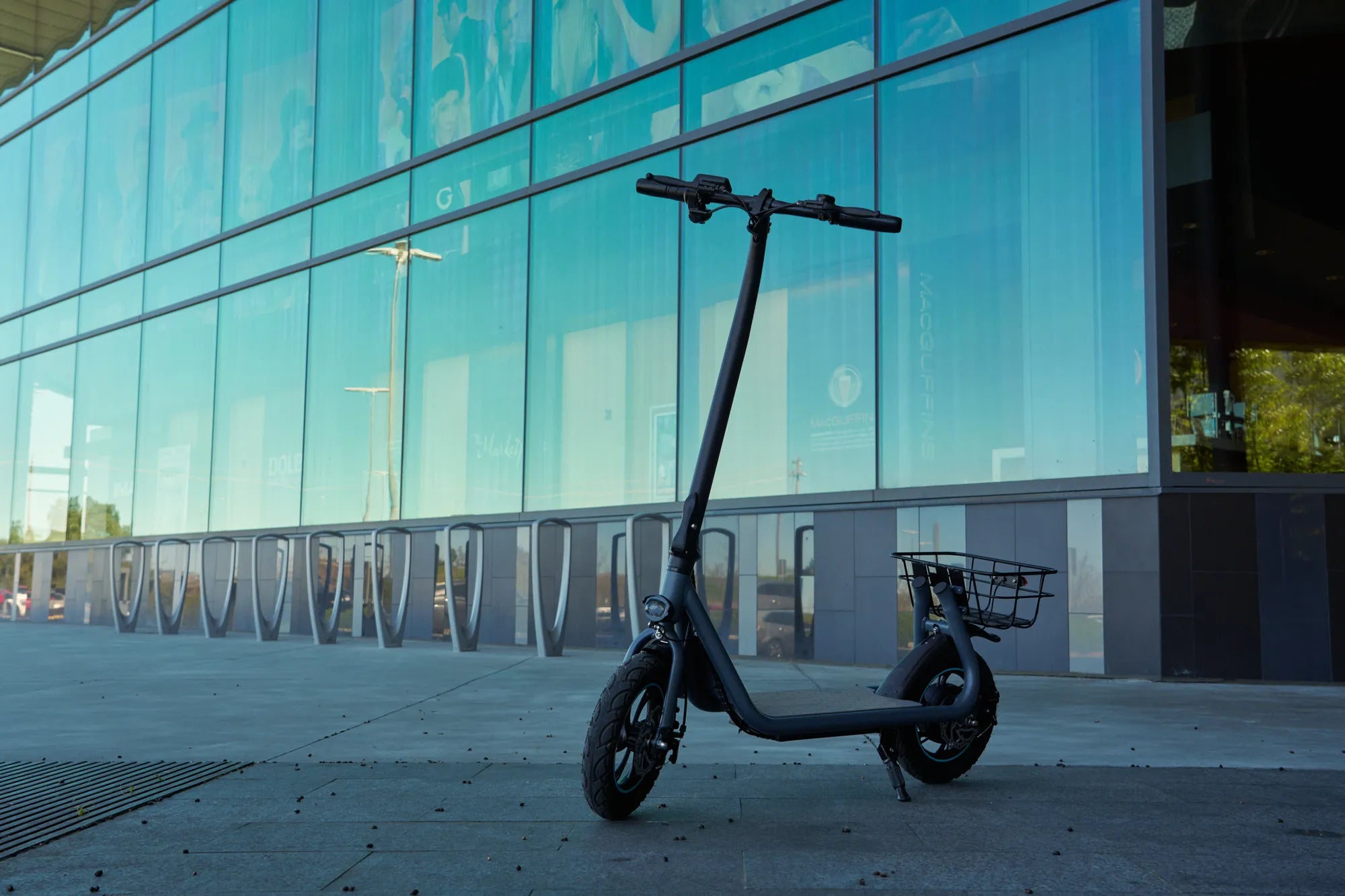
A> The comparison highlights different design philosophies. A gas-powered 125cc dirt bike is engineered for off-road performance, with a top speed often between 55-75 mph. In contrast, urban electric vehicles prioritize different metrics. A commuter electric scooter, like those from Gyroor, focuses on practicality with features like UL-certified lithium-ion batteries tested for 500+ cycles for safety, IPX5 water-resistant designs for all-weather reliability, and instant torque for city traffic. Their top speeds are typically governed to 25-40 mph for safety and legality on paved roads, serving a completely different transportation need.
Q: Why does my 125cc feel slow and not reach its expected top speed?
A> Diagnose systematically. First, check maintenance basics: a dirty air filter, old spark plug, or incorrect carburetor jetting (especially if you've changed altitude or exhaust). Next, inspect drivetrain drag: a overtightened chain or dragging brakes. Finally, consider riding conditions: soft terrain, uphill grades, high altitude, or a strong headwind will all drastically reduce perceived speed and maximum velocity.
Conclusion: The True Measure of a 125cc
The pursuit of a dirt bike 125cc top speed is a fascinating technical exploration, revealing how mechanics, physics, and rider skill converge. However, the true value of a 125cc dirt bike is not captured by a single number on a speedometer. Its legacy is built on accessibility, its role as the ultimate teacher, and the sheer, unadulterated fun of riding a lightweight, responsive machine to its limits. Mastery of this class builds a foundation of skills that translates directly to larger, more powerful motorcycles, making you a safer and more competent rider for life.
Focus on developing smooth control, precise technique, and consistent maintenance. The speed will follow as a natural byproduct of your growing skill and a well-tuned machine. Whether your goal is conquering local trails, learning to jump, or simply enjoying the freedom of riding, the 125cc dirt bike remains one of the most rewarding platforms in motorcycling. For those whose primary riding is urban and who value the quiet, clean, and practical benefits of electric power, explore a different kind of two-wheeled freedom. Browse the full Gyroor collection of UL-certified, reliable electric scooters and e-bikes at gyroorboard.com.
Best Scooter for 12 Year Old Girl: The 2024 Safety & Performance Guide
Boy Riding Scooter: The Ultimate Guide to Safety, Selection, and Skill