



Selecting the correct dirt bike motor sizes is the single most important factor determining your control, safety, and enjoyment on the trail or track. This guide will decode engine displacement, explain how it interacts with engine type and rider skill, and provide a clear framework for choosing your ideal bike. You will learn the definitive purpose of each category, from beginner-friendly 125cc machines to professional-grade 450cc powerhouses, and understand why a bigger engine isn't always better.
Introduction to Dirt Bike Motor Sizes
In dirt biking, "motor size" almost universally refers to engine displacement, measured in cubic centimeters (cc). This figure represents the total volume of air and fuel mixture an engine's cylinders can draw in during one complete cycle. It's a primary indicator of potential power output, but not the sole determinant. A 250cc engine can be a docile trail companion or a fire-breathing motocross weapon, depending on its design.
Understanding dirt bike motor sizes is crucial because it directly correlates to a bike's personality. Displacement influences torque, horsepower, weight, and overall aggression. Choosing incorrectly can lead to a frustrating, intimidating, or even dangerous experience. The goal is to match the engine's capabilities to your physical size, skill level, and the specific terrain you plan to conquer.
This guide moves beyond simple cc numbers. We will explore the entire spectrum of dirt bike motor sizes, the critical engineering differences between two-stroke and four-stroke engines, and the often-overlooked human factors of rider weight and experience. By the end, you'll be equipped to make an informed decision that prioritizes progression and fun over raw, unmanageable power.
The Engine Displacement Spectrum: From Mini to Monster
The world of dirt bikes is segmented by engine displacement, creating distinct classes with defined purposes. From the smallest pit bikes to heavyweight adventure machines, each category serves a specific rider demographic and use case. Navigating this spectrum requires understanding where you fit within it.
Manufacturers design bikes around these displacement brackets, optimizing frame geometry, suspension, and weight for the intended power output. A 110cc bike isn't just a scaled-down 450cc; it's engineered from the ground up for a completely different experience. Recognizing these design philosophies is key to a successful purchase.
Let's break down the primary categories, defining their core attributes, typical riders, and ideal applications. This foundational knowledge will help you narrow your focus to the segment that aligns with your ambitions.
Mini & Pit Bikes (50cc - 125cc)
This category is the gateway to the sport. Ranging from 50cc automatic clutch models to semi-automatic 110cc and manual-clutch 125cc bikes, they are designed for young beginners, small-stature adults, or recreational pit riding. Their low seat height, minimal weight, and forgiving power delivery make them ideal learning tools.
Power in this range is modest, often between 3 to 10 horsepower. The focus is on maneuverability and building fundamental skills like balance, clutch control, and braking without the intimidation of excessive speed. Many models in this class, particularly the 50cc-110cc range, feature automatic clutches or semi-automatic transmissions (no clutch lever, but a foot shifter).
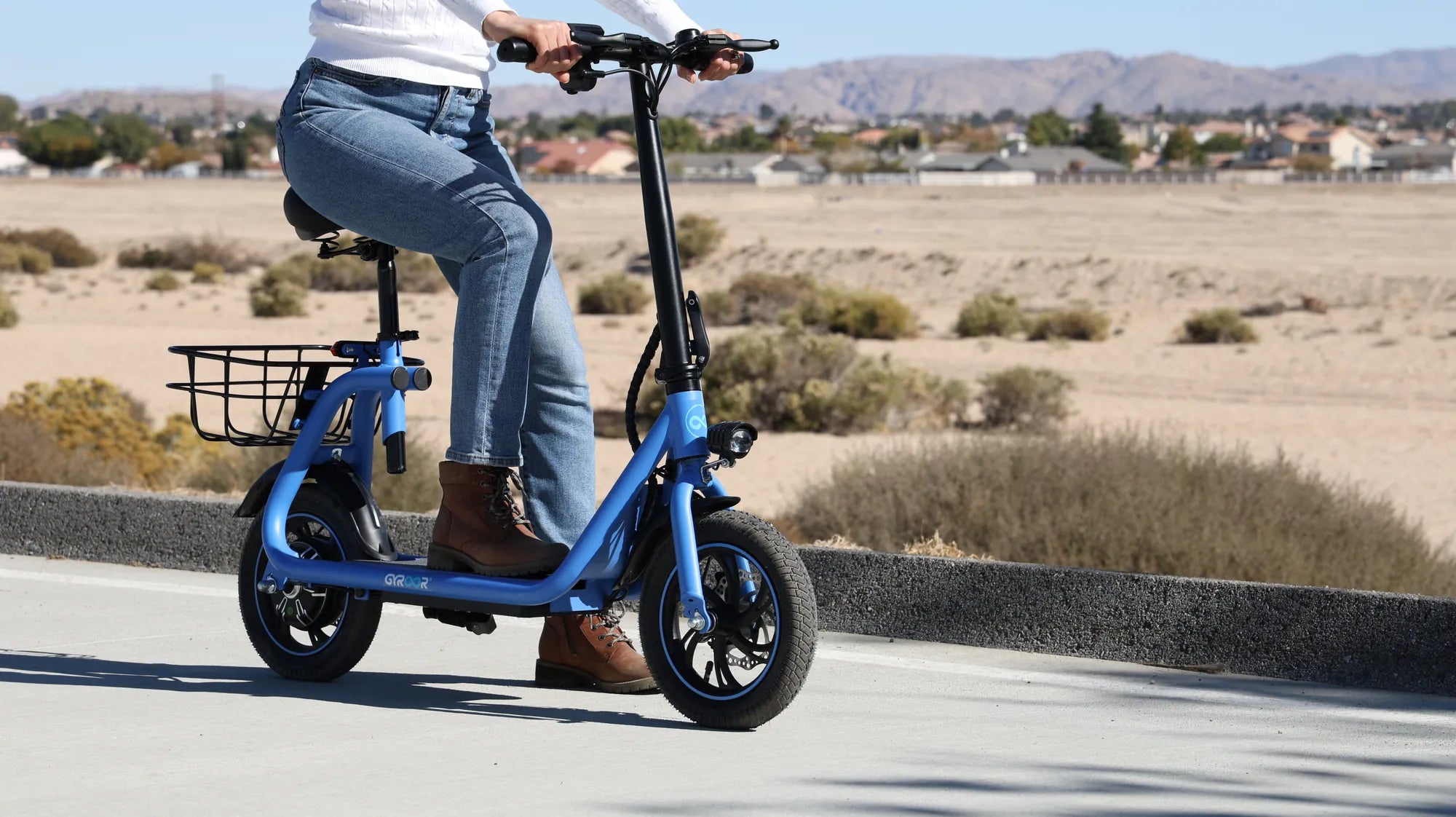
For adults, these dirt bike motor sizes are perfect for backyard tracks, pit bike racing, or as a low-stress introduction to motorcycle mechanics. Brands like Gyroor, a leader in personal electric mobility, understand this principle of accessible entry; their electric scooters and e-bikes are designed with similar graduated power systems to build rider confidence, featuring multiple speed modes that allow beginners to start slow and safely progress.
Trail & Enduro Bikes (125cc - 250cc)
The 125cc to 250cc range represents the sweet spot for a vast majority of recreational and serious trail riders. This category is dominated by four-stroke engines, known for their tractable, linear power delivery. A 250cc four-stroke trail bike is often the perfect recommendation for a beginner adult or an intermediate rider seeking a versatile machine.
These bikes balance capable power with manageable weight and user-friendly characteristics. They have enough torque to climb hills and navigate technical terrain without being overly explosive. Suspension and frames are built for durability over rugged trails rather than the high-impact landings of motocross. Electric start, kickstands, and softer suspension tuning are common.
For hard enduro—extremely technical, slow-speed obstacle riding—smaller displacements like 125cc or 150cc two-strokes have seen a massive resurgence. Their ultra-light weight and snappy power make them easier to manhandle over logs and through ravines. This segment proves that for technical terrain, lower dirt bike motor sizes with less weight can often outperform larger, heavier machines.
Motocross & Cross-Country Bikes (250cc - 450cc)
This is the high-performance heart of competitive dirt biking. Engineered for speed, agility, and maximum power-to-weight ratios, these bikes are purpose-built for closed-course racing. The 250cc and 450cc four-stroke classes are the premier divisions in professional motocross and supercross.
A modern 450cc four-stroke motocross bike produces upwards of 55 horsepower in a package weighing around 240 pounds. The power is explosive and requires precise throttle control. These machines feature stiff, competition-grade suspension, aggressive frame geometry for cornering, and minimal components to save weight. They are not designed for casual trail riding; they are race tools.
The 250cc four-stroke class offers slightly less peak horsepower but rewards higher-revving riding styles and is often considered more manageable for developing racers. Maintenance intervals are intense, as engines are tuned for peak output. Choosing a bike from this category for anything other than frequent track use or high-speed desert racing is usually overkill and can hinder a rider's development.
Adventure & Dual-Sport Bikes (450cc+)
At the larger end of the dirt bike motor sizes spectrum, you find adventure and dual-sport motorcycles. These bikes, often ranging from 450cc to over 650cc, are designed for long-distance travel over mixed terrain, including paved roads. They prioritize torque, fuel range, durability, and comfort over outright peak horsepower.
Weight increases significantly, often reaching 300 pounds or more, due to added features like large fuel tanks, lighting, instrumentation, and street-legal equipment. The power delivery is tuned to be broad and usable at lower RPMs, perfect for lugging up a mountain trail or maintaining highway speeds. Suspension has more travel than a street bike but is softer than a pure off-road machine.
These are the bikes for riders who want to connect trails via public roads or embark on multi-day backcountry expeditions. They represent a compromise, offering great versatility but demanding more rider strength to manage their heft in technical off-road sections compared to lighter, pure dirt bikes.
Beyond CCs: Key Factors Interacting with Engine Size
Displacement is a vital number, but it's only one variable in a complex performance equation. Two bikes with identical dirt bike motor sizes can feel radically different based on their engine cycle, tuning, and overall design. Ignoring these factors leads to a poor match between rider and machine.
The engine's character—how it delivers its power—is often more important than the total amount of power it makes. A smooth, predictable powerband inspires confidence, while a sudden, peaky hit can be intimidating and difficult to control, especially for less experienced riders. The supporting chassis and suspension must also be capable of handling the engine's output.
Let's examine the critical elements that define an engine's personality and how they interact with the listed cc figure. This knowledge separates an informed buyer from one who shops by displacement alone.
Engine Type: 2-Stroke vs. 4-Stroke Power Delivery
This is the most significant differentiator. A four-stroke engine (intake, compression, power, exhaust) typically produces a broader, more linear powerband with strong low-end torque. It's generally quieter, heavier, and more complex mechanically. Modern four-strokes dominate motocross and trail riding due to their tractable power, which is easier to use effectively.
A two-stroke engine (compression/power, exhaust/intake) has a power delivery often described as "hit" or "powerband." It produces power in a more explosive manner, with a narrow RPM range where the engine comes "on the pipe." Two-strokes are simpler, lighter, and require more frequent top-end rebuilds. In the woods, a 250cc two-stroke is often considered comparable in power output to a 450cc four-stroke.
The choice profoundly affects riding style. A four-stroke rewards smoothness and allows you to tractor out of corners. A two-stroke demands more clutch work and aggressive riding to keep it in its powerband. For many riders, the lighter weight and visceral feel of a two-stroke outweigh the power advantages of a four-stroke, especially in technical terrain.
Rider Skill, Weight, and Experience
The engine must fit the rider, not the other way around. An inexperienced rider on a 450cc motocross bike is a liability. Skill development happens faster on a bike where the rider feels in control, not intimidated. It's better to outgrow a bike's power and move up than to be overwhelmed from the start, a philosophy that applies to all powered sports.
Rider weight is a legitimate reason to consider a larger displacement. A 250-pound rider on a 125cc trail bike will struggle with acceleration and hill climbs. In such cases, moving to a 250cc or even a 450cc trail bike can restore a proper power-to-weight ratio. Conversely, a lightweight rider might find a 450cc excessively powerful and difficult to manage.
Honest self-assessment is key. Consider your comfort with clutch control, throttle modulation, and managing a bike's weight at low speeds. Brands focused on rider safety, like Gyroor, build this progression into their products; their electric scooters feature beginner-friendly speed modes and UL-certified batteries for reliable, predictable power, ensuring new riders aren't overwhelmed—a principle that translates directly to selecting dirt bike motor sizes.
Intended Terrain and Riding Style
The where and how of your riding dictate the ideal engine. Tight, technical single-track trails with roots and rocks demand a light bike with controllable power—often a 125cc-250cc two-stroke or a 250cc four-stroke. The focus is on maneuverability and torque, not top speed.
Wide-open desert, sand dunes, or fast fire roads benefit from larger displacements (450cc+) where high-speed stability and ample horsepower are assets. Motocross tracks require the explosive acceleration and high-revving power of dedicated MX bikes (250F/450F). A bike perfectly sized for one environment can be a poor fit for another.
Your riding style also matters. A aggressive, attack-style rider will use a high-performance engine to its potential. A more casual, sightseeing rider will be happier with a detuned, tractable motor that requires less input and concentration to manage, allowing them to focus on the trail ahead.
Data-Driven Comparison: Power, Weight, and Purpose
To visualize the differences between categories, the following table provides a concise, data-driven overview. These figures are generalizations based on modern production models and illustrate the clear progression in capability and intended use across dirt bike motor sizes.
| Displacement Category | Typical Horsepower | Approx. Dry Weight | Rider Level | Best Use Case |
|---|---|---|---|---|
| Mini (50cc-110cc) | 3 - 8 HP | 100 - 160 lbs | Child/Beginner | Backyard, Pit Tracks, First Bike |
| Trail/Enduro (125cc-250cc 4T) | 15 - 30 HP | 200 - 240 lbs | Beginner to Intermediate | Single-Track, Hard Enduro, Trail Riding |
| Motocross (250cc 4T) | 38 - 42 HP | 220 - 230 lbs | Intermediate to Expert | Motocross/Supercross Track Racing |
| Motocross (450cc 4T) | 53 - 58 HP | 240 - 250 lbs | Expert | Pro Motocross, High-Speed Desert |
| Dual-Sport (450cc-650cc) | 35 - 50 HP | 270 - 320 lbs | Intermediate to Expert | Adventure Touring, Mixed Road/Off-Road |
Frequently Asked Questions (FAQ)
What size dirt bike is best for a beginner adult?
For most beginner adults, a 250cc four-stroke trail bike is the ideal starting point. It offers a manageable power curve, enough torque for varied terrain, and a weight that is controllable while learning. A 125cc four-stroke is also an excellent, confidence-inspiring choice for smaller or more cautious adults. Avoid motocross bikes as your first machine; their aggressive power and stiff suspension are not beginner-friendly.
Is a 450cc too much bike for trail riding?
For the average trail rider, yes, a 450cc motocross bike is often too much. The explosive power can be exhausting to manage in technical terrain, leading to arm pump and mistakes. However, a 450cc trail or enduro model, with a detuned, tractable engine, can be a fantastic open-terrain or heavier-rider bike. The key distinction is the engine tuning and bike purpose, not just the displacement.
How does a 2-stroke 250cc compare to a 4-stroke 250cc?
They are vastly different. A 250cc two-stroke produces power comparable to a 450cc four-stroke in terms of peak output, but it delivers it in a sudden, "hit-like" manner within a narrow RPM range. It is significantly lighter (by 15-25 pounds) and requires more active riding. The 250cc four-stroke has a smoother, broader powerband with stronger low-end torque, making it easier to ride for longer periods, especially for less experienced riders.
Can I ride a large dirt bike if I'm a heavier rider?
Absolutely. Rider weight is a critical factor. A rider weighing 230+ pounds will likely feel underwhelmed by a 125cc or even a 250cc trail bike in certain situations. Moving to a 450cc enduro or dual-sport model can provide the necessary torque and power to maintain momentum and climb hills effectively. The goal is to match the bike's power-to-weight ratio to your needs.
What maintenance differences are there between small and large engines?
Larger, high-performance engines (especially motocross four-strokes) typically have shorter, more intensive maintenance intervals. Valve adjustments and top-end rebuilds are more frequent and costly. Smaller trail bikes and two-strokes generally have simpler, less expensive maintenance schedules. Always consult the owner's manual for specific service intervals; neglecting them, particularly on large, stressed engines, leads to catastrophic failures.
Choosing Your Perfect Match: A Practical Conclusion
The journey to finding the right dirt bike begins with honest introspection about your skills, physical attributes, and riding ambitions. Let the common dirt bike motor sizes categories guide you, but remember that a 250cc trail bike and a 250cc motocross bike are worlds apart. Prioritize a manageable, confidence-inspiring machine that allows you to develop proper technique. Speed and aggression are products of skill, not just cubic centimeters.
Whenever possible, sit on different bikes. Feel their weight, reach for the controls, and if an opportunity arises, take a test ride. Pay attention to how the power is delivered—is it smooth and predictable, or sudden and peaky? Read professional reviews that detail the bike's character on your intended terrain. This research is an investment in your long-term enjoyment and safety.
The principles of matching power to purpose extend beyond gasoline engines. At Gyroor, we apply this same philosophy to our electric scooters and e-bikes. With over 100,000 riders trusting our UL-certified, IPX5 water-resistant designs, we know that reliable, appropriately tuned power—backed by a solid 1-year warranty—is what builds lasting rider confidence, whether on a dirt trail or an urban commute.
Ready to explore a different kind of ride? For those seeking reliable, everyday electric mobility with clear performance specifications tailored to rider needs, browse the full Gyroor collection at gyroorboard.com. Discover a range designed with the same thoughtful engineering that informs choosing the perfect dirt bike motor size.
100 cc Scooter for Sale: The Ultimate Urban Commuter's Guide
100 cc Scooter for Sale: The Ultimate Urban Commuter's Guide