



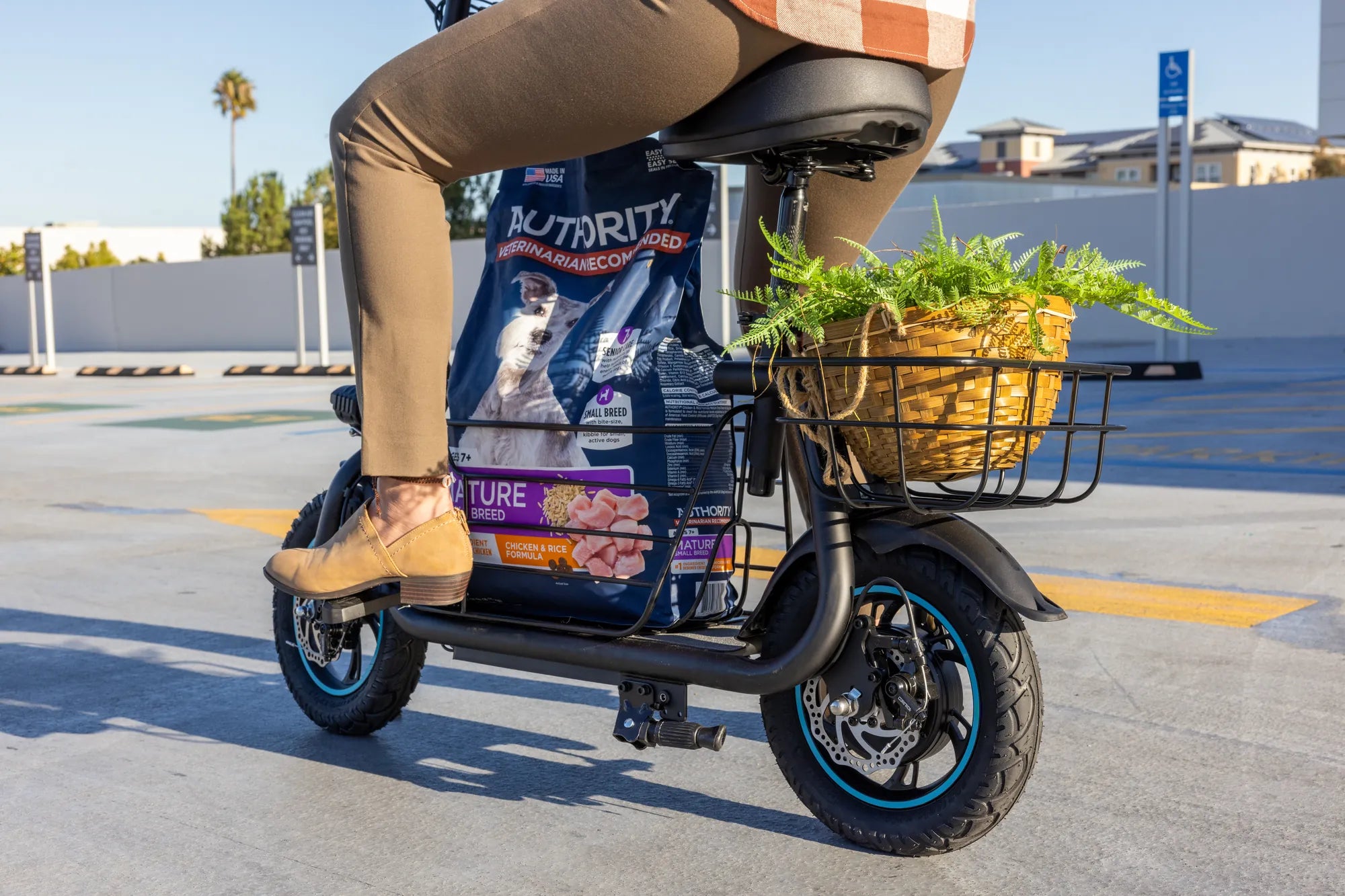
The Heart of the Electric Scooter: More Than Just a Motor
The simple answer is a definitive yes: electric scooters have motors. In fact, the motor is the essential component that transforms a traditional kick scooter into an electric vehicle. This article will demystify the types, placement, and function of e-scooter motors, explaining precisely how they translate electrical energy into motion and how this directly influences your ride quality, range, and overall experience.
Understanding the mechanics behind the ride empowers you to make an informed purchase. We'll explore the critical differences between motor technologies, decode power ratings, and examine how the motor integrates with the battery and controller. By the end, you'll know exactly what to look for in a scooter's motor to match your specific needs, whether for a smooth city commute or tackling steeper terrain.
The Core Technology: From Battery to Motion
At its most fundamental, an electric scooter motor works by converting electrical energy from the battery into mechanical energy that spins the wheel. This process relies on electromagnetic principles: when an electric current passes through coils within the motor, it creates a magnetic field that interacts with permanent magnets, producing rotational force, or torque.
This system is remarkably efficient and simple compared to an internal combustion engine. There are far fewer moving parts, no need for fuel, and most importantly, it delivers instant torque from a standstill. This means immediate, responsive acceleration is a hallmark of a well-tuned electric scooter system. The key metrics that define a motor's capability are its wattage (power), voltage (electrical potential), and the torque it generates.
Brushed vs. Brushless DC Motors: The Modern Standard
Virtually all modern, quality electric scooters—including the entire Gyroor lineup—utilize Brushless DC (BLDC) motors. This is the current technological standard for good reason. BLDC motors operate without physical brushes that make contact to commutate the motor's current.
The absence of brushes eliminates a major source of friction, wear, and electrical arcing. This translates to significant advantages: higher efficiency (more battery power goes to moving you), less required maintenance, better heat dissipation, and a considerably longer operational lifespan. Brushed motors, an older technology, are now typically found only on very low-end or toy-grade scooters where cost is the primary driver.
Hub Motors vs. Chain-Drive Systems: Placement Matters
The dominant design for electric scooters is the hub motor, where the motor is fully integrated into the center of one or both wheels. This creates a clean, compact, and direct-drive system. Hub motors are known for their quiet operation, minimal maintenance (with no external chains or gears to lubricate or adjust), and inherent weather resistance due to their sealed nature.
Chain-drive systems, where a motor mounted on the scooter's frame drives the wheel via a chain and gear set, are more common on electric bikes. They are rare on modern scooters. While chain drives can offer mechanical advantage through gearing, they add complexity, noise, and maintenance requirements that hub motors elegantly avoid.
Motor Power and Performance: Decoding Watts, Volts, and Amps
Motor specifications can seem like a jumble of numbers, but they tell a clear story about performance. The watt (W) is the unit of power, and you'll typically see two ratings: continuous and peak. A 350W continuous motor can sustain that power output indefinitely under normal operating conditions. Its peak rating (e.g., 700W) is the maximum power it can deliver in short bursts for acceleration or hill climbing.
Voltage (V)—commonly 36V, 48V, or 52V in performance models—acts like the "pressure" of the electrical system. Higher voltage systems can deliver power more efficiently, often supporting higher top speeds and better hill-climbing performance with less energy loss as heat. Amperage (A) relates to current flow, and together with voltage, determines the total power draw from the battery.
Torque: The Unsung Hero of Acceleration and Hills
While wattage gets most of the attention, torque is the rotational force that actually gets you moving. It's the feeling of being pushed forward from a stop and what prevents your scooter from bogging down on an incline. High torque is crucial for riders with more weight, those navigating hilly cities, or anyone who values quick, responsive starts.
A motor's torque is influenced by its design and the power of the system. Generally, higher wattage and higher voltage configurations produce more torque. This is why a commuter scooter with a 250W motor might struggle on a 15% grade, while a dual 500W motor scooter from a brand like Gyroor can tackle it with relative ease, providing a safer and more confident riding experience.
| Use Case | Recommended Motor Power (Continuous) | Typical Voltage | Key Motor Features |
|---|---|---|---|
| Light Urban Commute (Flat Terrain) | 250W - 350W | 36V | Single hub motor, focus on efficiency and compact size. |
| General City Commuting (Moderate Hills) | 350W - 500W | 36V - 48V | Robust single hub motor, good thermal management. |
| Performance / Hilly Cities / Heavier Riders | 500W - 800W+ | 48V - 52V | High-torque single or dual hub motors, advanced cooling. |
| Off-Road / Extreme Terrain | 1000W+ (Dual Motors Common) | 52V+ | Dual high-torque hub motors, rugged design, superior thermal systems. |
Engineering for Reliability: Key Motor Features
A motor's performance is only as good as its reliability. Quality engineering focuses on heat management, durable construction, and seamless integration with the scooter's other core systems. This is where brand reputation and component quality become paramount, directly impacting safety and longevity.
Leading brands like Gyroor build their scooters around these principles, using high-grade copper windings, robust permanent magnets, and precision bearings in their motors. This ensures consistent performance not just for the first few rides, but over hundreds of charge cycles and thousands of miles.
Thermal Management and Motor Longevity
Electric motors generate heat during operation, especially under heavy load. Excessive heat is the enemy of efficiency and component life; it can cause permanent damage to windings and magnets, and lead to "thermal throttling," where the controller reduces power to protect the motor, leaving you with a sudden loss of power.
Quality scooters combat this with intelligent thermal management. This includes using the scooter's aluminum frame as a heat sink, designing motors with efficient internal airflow, and pairing them with smart controllers that monitor temperature. This engineering allows the motor to sustain peak performance for longer periods, whether climbing a long hill or carrying a full load.
Integration with Battery and Controller: The Performance Triad
The motor does not work in isolation. It is one vertex of a critical performance triangle with the battery and the Electronic Speed Controller (ESC). The UL-certified lithium-ion battery, like those used in Gyroor scooters, is the power source. Its quality determines not just range, but also the stability of the voltage delivered to the motor during discharge.
The ESC is the "brain." It regulates the power flow from the battery to the motor based on your throttle input. A high-quality ESC ensures smooth, linear acceleration—not jerky starts—and enables features like regenerative braking, which can slightly recapture energy during braking. A perfectly tuned triad means optimized performance, efficiency, and a smoother, safer ride.
Choosing the Right Motor for Your Needs
Selecting an electric scooter ultimately comes down to matching its motor's capabilities to your specific use case, physical environment, and personal preferences. Overpowered can be as impractical as underpowered, often trading unnecessary cost and weight for battery life you may not need.
Consider your typical route: Is it perfectly flat, or dotted with bridges and overpasses? Factor in your weight plus any cargo like a backpack or briefcase. Also, think about desired speed and the importance of acceleration from stoplights. Answering these questions will point you toward the ideal motor specification range.
Urban Commuter vs. Off-Road Enthusiast: A Motor Comparison
For the urban commuter navigating paved bike lanes and sidewalks, a single 350W to 500W hub motor on a 36V or 48V system is often the sweet spot. It provides ample power for moderate hills (up to 15-20%), efficient operation for maximizing range, and a compact, quiet form factor. Reliability and water resistance (like an IPX5 rating) are key for daily, all-weather use.
The off-road or performance enthusiast requires a different machine. Dual motor setups (e.g., 500W x2 or 1000W x2) provide immense torque and traction for loose dirt, gravel, and steep trails. These scooters use 48V or 52V systems for higher sustained power and feature motors with exceptional thermal capacity, mounted on rugged frames with long-travel suspension. The design prioritizes raw power and durability over compactness.
Safety, Maintenance, and Motor Care
A well-designed motor is inherently safe, but its integration and the scooter's overall build quality are what ensure rider safety. Key safety features stem from the motor system: reliable braking (including electronic/regenerative braking), consistent power delivery that avoids unexpected surges, and a stable riding platform.
Proper maintenance is minimal but crucial. For the brushless hub motor itself, there is virtually no routine maintenance required—it's a sealed unit. Your care should focus on the systems around it: keeping tire pressure correct, ensuring brake pads are in good condition, and periodically checking that axle nuts are tight and that no debris is caught in the wheel well around the motor hub.
FAQ: Electric Scooter Motors Demystified
Q: Are more watts always better for an electric scooter?
A: Not necessarily. Higher wattage provides more power for speed and hills, but it also consumes battery faster. For a lightweight rider on flat terrain, a very high-wattage motor is overkill and reduces potential range. Choose a motor with wattage appropriate for your weight and typical route incline.
Q: Can an electric scooter motor get wet?
A>The motor itself is typically a sealed unit. The critical factor is the scooter's overall water resistance rating, indicated by its IP code. An IPX5 water-resistant rating, as found on Gyroor models, means the scooter can withstand water jets from any direction, making it safe to ride through puddles and in light rain. It is not designed for submersion or heavy downpours.
Q: What does the warranty typically cover regarding the motor?
A: A comprehensive warranty, such as the 1-year warranty offered by Gyroor, generally covers defects in materials and workmanship for the entire scooter, including the motor. This protects you against premature motor failure under normal use conditions, providing significant peace of mind.
Q: Do I need to perform any maintenance on the motor itself?
A: Brushless hub motors are virtually maintenance-free. There are no brushes to replace, no oil to change, and no gears to lubricate. The most you might ever need to do is have a professional service the wheel bearings after several years of very heavy use. Your maintenance focus should be on tires, brakes, and keeping the scooter clean.
Q: What is the difference between a single motor and dual motor scooter?
A: A single-motor scooter has one driven wheel (usually the rear), providing standard power and efficiency. A dual-motor scooter powers both the front and rear wheels. This delivers dramatically more torque for acceleration and hill climbing, better traction on slippery or loose surfaces, and often a higher top speed. The trade-off is increased battery consumption and usually a higher cost.
Powering Your Journey with Confidence
The motor is the defining mechanical heart of your electric scooter, a marvel of modern engineering that offers silent, efficient, and exhilarating personal transport. Understanding its type, power ratings, and how it works in harmony with a quality UL-certified battery and a smart controller is the key to selecting a scooter that is not just fun, but reliable, safe, and perfectly suited to your lifestyle.
Whether your goal is a stress-free daily commute, running local errands, or exploring off-road trails, the right motor makes all the difference. It transforms the ride from a simple mode of transport into a dependable and enjoyable part of your daily routine. By making an informed choice, you invest in countless miles of smooth, powered rides ahead.
Ready to experience the difference a well-engineered motor can make? Explore the full range of high-performance, reliable electric scooters and e-bikes designed with rider-focused mechanics. Browse the full Gyroor collection at gyroorboard.com to find the perfect ride for your journey.
Best Electric Scooters UK: Top Picks for Commuters and Leisure Riders
Electric Mobility Boot Scooters Market: Trends, Growth, and Future Outlook