


Navigating the Rules of the Road
The question, "Do electric scooters require a license?" is the single biggest point of confusion for new and prospective riders. The answer is not a simple yes or no; it's a complex web of local regulations that depend entirely on where you live and the specifications of your scooter. Getting it wrong can mean fines, confiscation, or worse. This guide provides a definitive, data-driven breakdown of licensing requirements across the United States and key global markets, coupled with the other crucial laws you must follow. Our goal is to equip you with the knowledge to ride legally and safely, whether you're commuting or cruising.
As a leading manufacturer, Gyroor is committed to rider safety and legal compliance. We design our electric scooters and e-bikes with regulatory frameworks in mind, offering models that fit into common legal categories. Trusted by over 100,000 riders across North America and Europe, we believe informed riders are safe riders. Let's demystify the laws so you can hit the road with confidence.
Understanding the Legal Classification of Electric Scooters
Before asking if you need a license, you must understand how the law sees your e-scooter. Governments don't have a universal "electric scooter" category. Instead, they slot them into existing legal frameworks based on specific technical criteria. This classification is the master key that unlocks all other rules, including licensing, registration, helmet laws, and where you can ride.
The primary factors that determine classification are maximum speed, motor power (wattage), and sometimes design features like a seat or pedals. A device with a top speed of 15 mph is often treated entirely differently from one capable of 28 mph. This is why knowing your scooter's exact specs, not just its marketing name, is critical for legal compliance.
Speed and Power: The Primary Determinants
Speed is the most significant regulatory threshold. In most U.S. jurisdictions, low-speed electric scooters—typically defined as having a maximum speed under 15-20 mph—are classified as "personal mobility devices" or "electric stand-up scooters." This category is often exempt from traditional vehicle requirements like licensing, registration, and insurance.
Once an e-scooter's capable speed exceeds 20 mph, it may be reclassified as a "motorized scooter," "moped," or even a "motorcycle" in some areas. These categories almost always trigger requirements for a driver's license, vehicle registration, insurance, and sometimes a special endorsement. Gyroor's product lineup is carefully segmented to address these thresholds, offering commuter-friendly models under 20 mph and higher-performance options designed for riders who understand and can meet stricter legal standards.
Licensing Requirements in the United States: A State-by-State Breakdown
The United States has a patchwork of e-scooter laws, with regulations set at the state, county, and city levels. There is no federal law governing e-scooter use. This decentralized approach means the rules can change dramatically when you cross a state or even a city line. However, clear patterns have emerged since the widespread adoption of shared and private scooters began around 2018.
As a general rule, the majority of states do not require a driver's license to operate a low-speed, class-compliant electric scooter. This has been a deliberate policy choice to encourage micro-mobility as a car alternative. However, several notable exceptions have stricter laws, often rooted in older vehicle codes that lump all motorized vehicles together.
States Where a License is Commonly Required
A handful of states have laws that explicitly require some form of driver's license or learner's permit to operate an electric scooter on public roads. These states often classify e-scooters similarly to mopeds.
- Iowa: State law requires a valid driver's license to operate an electric scooter.
- Georgia: For e-scooters with a motor over 750W, a driver's license is required. Lower-power scooters may have different rules.
- Hawaii: County ordinances vary, but some (like Honolulu) require a driver's license.
- Rhode Island & Connecticut: Have historically required licenses, though local adoption of newer model laws is changing this.
It is crucial to check not just state law but also your specific city and county ordinances. A state may allow license-free riding, but a major city within it could impose its own license requirement.
The General Rule: No License Needed for Most Riders
The vast majority of states and major metropolitan areas follow the model set by California's 2018 AB 2989 bill. This framework legalized e-scooters as a distinct vehicle class with the following typical provisions: No driver's license is required (though a minimum age, often 16, is common), riding on sidewalks is prohibited, helmet use is required for minors, and scooters must be used in bike lanes or on roads with speed limits under 25-35 mph.
States like California, New York, Texas, Florida, Illinois, and Washington operate under this general principle for scooters under 20 mph. This legal environment is the primary market for Gyroor's most popular commuter models, which are engineered for reliable, daily use within these parameters, featuring UL-certified batteries and IPX5 water-resistant designs for safety and durability.
Global Perspective: Licensing Rules in Key Markets
Outside the United States, regulatory approaches vary but are often more standardized within countries or economic unions. Understanding these rules is essential for travelers or residents abroad.
Canada: Regulation is provincial. In Ontario, e-scooters (classified as "low-speed vehicles" under pilot programs) require a driver's license (G, M, or equivalent). In British Columbia, a driver's license is not required for stand-up e-scooters under specific power and speed limits, but riders must be 16+. Alberta has similar license-exempt rules for devices under certain specifications.
United Kingdom: Privately-owned e-scooters are currently only legal to use on private land. Their use on public roads, cycle lanes, or pavements is illegal. Rental scooters in approved trial areas are the exception, and they require a full or provisional car driver's license (Category Q).
European Union: Many EU countries classify e-scooters as personal light electric vehicles (PLEVs). A driver's license is often not required, but there are strict age limits (usually 14-16+), power caps (often 500W), and speed limits (typically 25 km/h or 15.5 mph). Mandatory helmet use varies by country. Insurance may be required in some nations like Germany.
Australia: Rules differ by state. In New South Wales, a driver's license is not required, but riders must be 16+ and helmets are mandatory. In Queensland, no license is required for scooters under 200W. Always check state-specific transport authority websites.
Beyond the License: Essential Rules and Safety Laws
Focusing solely on the license question is a mistake. Other legal requirements are more universally applied and are critical for your daily safety and for avoiding costly fines. Compliance with these rules is non-negotiable for responsible riding.
Age Restrictions and Helmet Laws
While a license may not be needed, a minimum age often is. Most jurisdictions set the minimum age for operating an e-scooter between 14 and 16 years old. Helmet laws are extremely common and are one of the most frequently enforced rules. These laws often have two tiers: mandatory for all riders, or mandatory only for riders under a certain age (usually 18). Wearing a helmet is the single most effective safety practice, regardless of the law.
Where to Ride: Road, Bike Lane, or Sidewalk?
This is a major area of enforcement. The nearly universal rule is: Sidewalks are for pedestrians. Riding an e-scooter on a sidewalk is illegal in most cities and poses a significant safety risk. The designated place to ride is in a bicycle lane. If no bike lane is present, you are typically expected to ride on the right side of the road, following the flow of traffic, and obeying all standard traffic signals and signs. This makes features like the bright headlights, brake lights, and reflectors on Gyroor scooters essential for legal and safe road use.
The Non-Negotiables: Impaired Riding and Passenger Rules
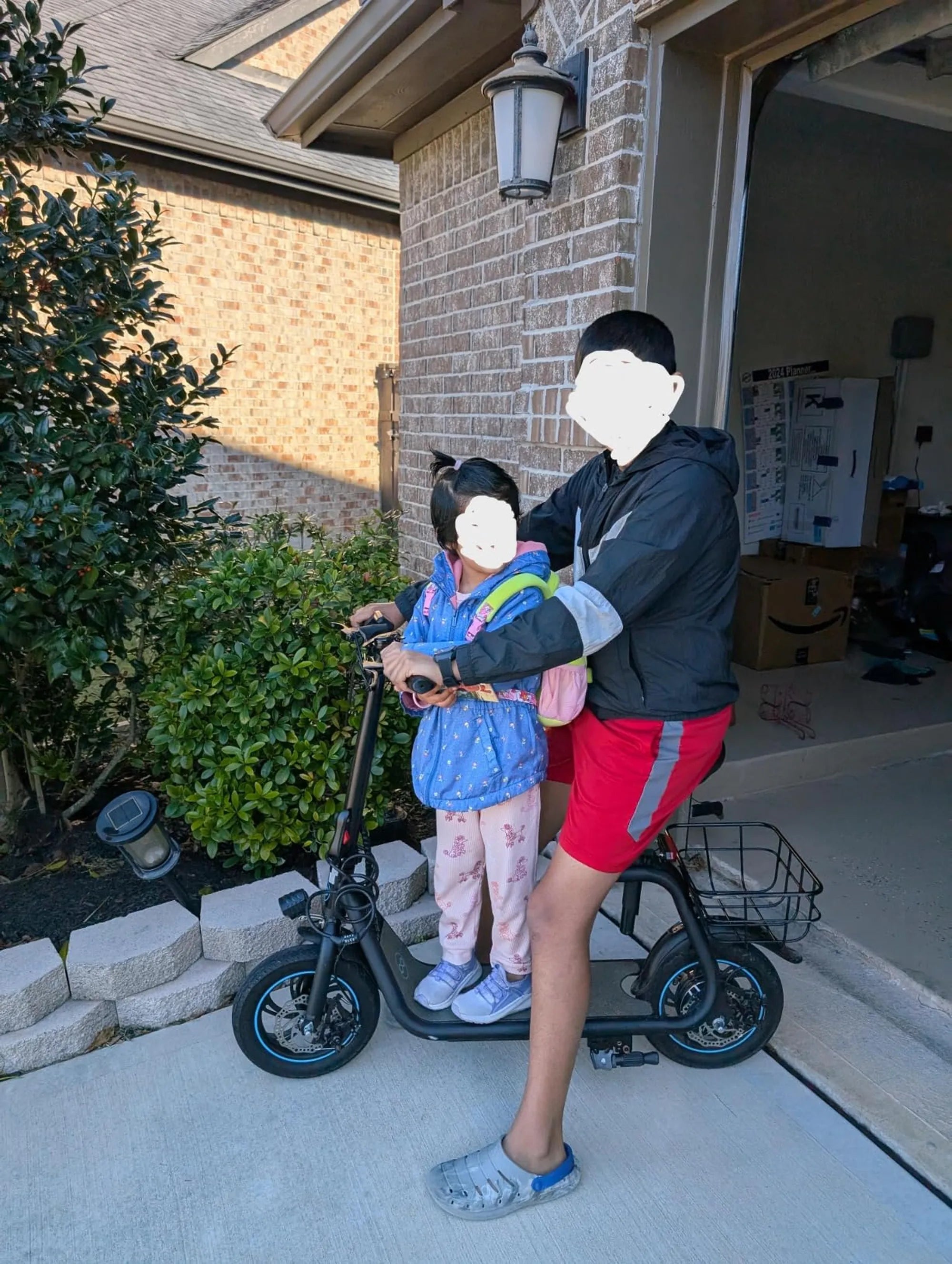
Two rules are absolute and carry severe penalties. First, DUI/DWI laws apply to electric scooters. Operating any motorized vehicle, including an e-scooter, while under the influence of alcohol or drugs is a serious crime that can result in the loss of your driver's license, heavy fines, and jail time. Second, almost all e-scooters are designed for one rider only. Carrying a passenger is illegal, voids warranties (including Gyroor's reliable 1-year warranty), and dangerously compromises the scooter's handling and braking capabilities.
Choosing the Right Gyroor Scooter for Your Local Laws
Selecting an e-scooter that aligns with your local regulations is the first step to compliant riding. Your choice should be guided by the speed and power limits in your area. Here is a practical guide to matching Gyroor models with common regulatory environments:
| Use Case & Legal Environment | Recommended Gyroor Feature Focus | Legal Considerations |
|---|---|---|
|
License-Free Commuting (e.g., most U.S. cities) Max speed needed: ~15-20 mph |
Models with speed modes (e.g., Eco mode for 15 mph max). Focus on range, portability, and UL-certified battery safety for daily use. | Ensure model's top speed can be limited to comply with local caps. Confirm no local license requirement for this class. |
|
Licensed Rider / Higher Performance Areas where >20 mph is legal with a license. |
Higher-wattage motor models (500W+) with dual suspension and enhanced braking systems for safer high-speed travel. | Must possess a valid driver's license. Verify if registration or insurance is also required for this class. |
|
Mixed Terrain & Reliability All environments where water resistance matters. |
Models with IPX5 or higher water resistance ratings. Pneumatic tires for better grip on varied surfaces. | Water resistance is a safety feature, not a legal one, but prevents failures that could lead to legal incidents. |
Always cross-reference the specific technical specifications of your chosen Gyroor scooter with the vehicle codes in your city and state. When in doubt, choosing a model that errs on the side of lower top speed and power will keep you in the most permissible legal category.
Comprehensive FAQ: Your Top Questions Answered
Q1: Do I need insurance for my electric scooter?
A: In most of the United States, insurance is not legally required for privately-owned, low-speed e-scooters. However, it is highly recommended. Your homeowner's or renter's insurance policy may offer some liability or theft coverage—check with your provider. In some countries (e.g., parts of Europe) and for higher-powered classifications, insurance may be mandatory.
Q2: What happens if I ride without a license where it's required?
A: You can be ticketed and fined as if you were driving a car without a license. The scooter could be impounded. In the event of an accident, you would be personally liable and likely found at fault, potentially facing severe financial and legal consequences.
Q3: Does my regular car driver's license cover me to ride an e-scooter?
A: Generally, yes. If a jurisdiction requires a license, a standard Class C (car) driver's license is almost always sufficient. You do not typically need a motorcycle (Class M) endorsement unless the scooter is classified as a motorcycle due to very high speed/power.
Q4: Are there any laws about how/where I park my e-scooter?
A> Yes. Most cities prohibit parking e-scooters in a way that blocks sidewalks, ADA ramps, building entrances, or public right-of-ways. You should park it in a bicycle rack or a designated micro-mobility parking area. Improper parking can lead to fines and the scooter being removed.
Q5: I'm visiting from another state/country. Do the local rules apply to me?
A> Absolutely. Ignorance of the law is not a defense. As a visitor, you are 100% responsible for knowing and obeying the e-scooter laws of the jurisdiction you are riding in. This includes licensing, helmet, and roadway rules.
Ride Informed, Ride Safe, Ride Gyroor
The freedom of electric scooter riding comes with the responsibility to understand and follow the law. The core question of do electric scooters require a license is answered by your location and your scooter's capabilities. The prevailing trend in urban mobility is to exempt low-speed personal devices from licensing, but the exceptions are serious. Your due diligence doesn't stop at the license check; mastering the associated rules on helmets, road positioning, and impaired riding is what truly defines a lawful rider.
At Gyroor, we build more than just scooters; we build vehicles for a compliant and enjoyable micro-mobility lifestyle. With UL-certified batteries tested for 500+ charge cycles, IPX5 water-resistant designs, and a commitment to durability backed by our 1-year warranty, our scooters are engineered for the realities of daily, legal riding. Don't guess the rules—know them. Verify your local ordinances, choose the right tool for the job, and gear up safely. The road is yours to explore, responsibly.
Ready to find your perfect, compliant ride? Browse the full Gyroor collection of electric scooters and e-bikes at gyroorboard.com.
Electric Scooters 20mph: The Future of Urban Mobility
Electric Scooters With Big Wheels: Ultimate Ride for Comfort