


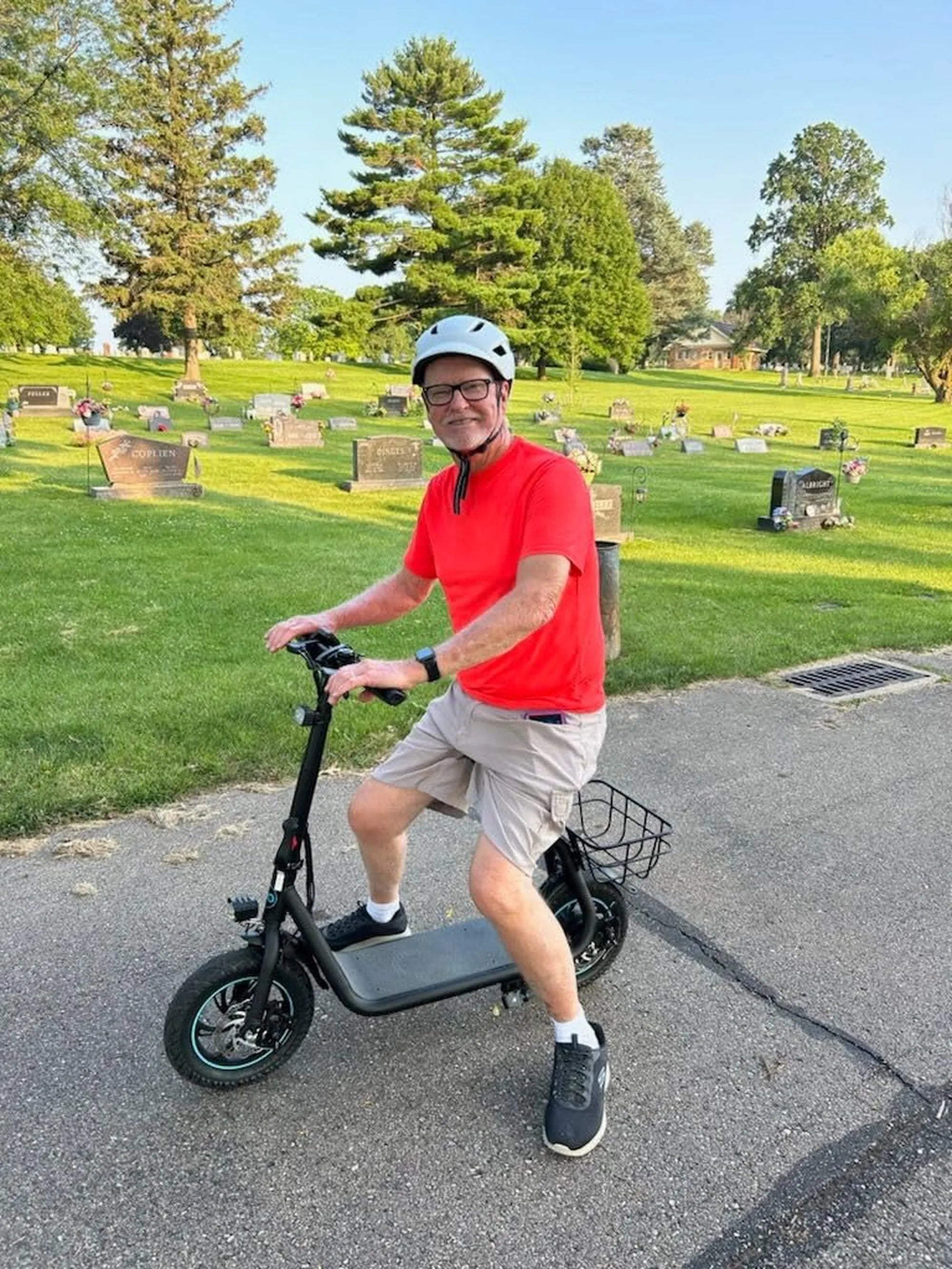
Navigating the Rules of the Road
You're considering the freedom and convenience of an electric scooter, but one question stops you cold: do I need a driver's license to drive a scooter? The answer is not a simple yes or no. It's a complex web of local ordinances, state vehicle codes, and technical specifications that define your scooter. This guide will cut through the confusion with data-driven clarity, ensuring you ride legally and safely. We'll dissect vehicle classifications, outline universal licensing triggers, and provide a specific legal overview for popular models from brands like Gyroor, a leading electric scooter and e-bike brand trusted by over 100,000 riders.
Understanding Vehicle Classifications: E-Scooter vs. Moped vs. Motorcycle
The core of the licensing question lies in how the law categorizes your two-wheeled vehicle. These classifications are based on objective metrics like motor power, maximum speed, and design.
An electric kick scooter, like most commuter models from Gyroor, typically has a motor under 750 watts, a top speed under 20 mph, and is designed for standing operation. Legally, these are often termed "low-speed electric scooters" or "personal mobility devices."
A moped or motorized bicycle usually has a seat and operable pedals, with an engine under 50cc or an electric motor under 750-1000 watts, capping speed between 20-30 mph. These almost always require registration, insurance, and a driver's license or special moped license.
A motorcycle or motor-driven cycle encompasses any two-wheeled vehicle exceeding moped specifications in power or speed. This category includes high-performance electric scooters capable of 30+ mph. Operating these requires a standard motorcycle license (M endorsement), registration, and insurance.
When is a Driver's License Universally Required?
While local laws vary, several scenarios almost always mandate a valid driver's license. Recognizing these universal triggers is the first step to legal compliance.
First, operating any vehicle classified as a moped or motorcycle requires a license. If your scooter has a seat, can exceed 20-28 mph (varies by state), or has a motor over 750 watts, you are likely in this category. For motorcycles, a specific motorcycle license (M endorsement) is required after passing a skills test.
Second, riding on public roads and highways typically requires a license, even for lower-speed devices in some jurisdictions. While many cities allow licensed e-scooters in bike lanes, venturing onto roads with higher speed limits often changes the legal requirement.
Third, age is a critical factor. Most states require a driver's license or learner's permit to operate any motorized vehicle on public property if the rider is under 18. For adults, the rules for low-speed e-scooters are more lenient, but a state-issued ID is often still required for rental verification or in case of an incident.
Riding a Gyroor E-Scooter: License and Regulation Overview
For riders of popular commuter electric scooters, the rules are more favorable. Gyroor's core lineup, such as the Gyroor C1 or Gyroor X1, are designed as low-speed electric kick scooters. These models feature UL-certified battery packs, top speeds around 15-19 mph, and IPX5 water-resistant designs for reliable urban commuting.
For adults in most major U.S. cities, a driver's license is often *not* required to operate these specific types of e-scooters. However, this is a general observation, not legal advice. The onus is on the rider to perform four critical checks before riding.
1. Verify State and Local Laws: Regulations differ wildly. California treats e-scooters similarly to bicycles for adults, not requiring a license. New York City, however, has specific rules for licensed, registered rental fleets, and private e-scooter legality has evolved recently—always check current codes.
2. Adhere to Age Restrictions: The most common rule is a minimum age of 16, sometimes 18, to operate an e-scooter on public streets. Helmet laws are also frequently tied to age.
3. Follow Helmet and Equipment Laws: Many jurisdictions mandate helmets for all riders, while others only for minors. Using a Gyroor scooter with its integrated lights and reliable brakes is part of safe, compliant riding.
4. Ride in Permitted Areas: Typically, e-scooters are allowed in bike lanes and on streets with speed limits at or below 25-35 mph. Riding on sidewalks is commonly prohibited in business districts.
The Essential Legal and Safety Checklist
Beyond the license question, responsible riding involves a broader checklist. This ensures your safety and keeps you on the right side of the law.
First, always wear a helmet. Even if your local law doesn't require it for adults, it is the single most effective safety gear. Pair it with reflective clothing or accessories for low-light visibility.
Second, know and obey all local traffic laws applicable to scooters and bicycles. This includes stopping at red lights and stop signs, signaling turns, and yielding to pedestrians. Never operate a scooter under the influence of alcohol or drugs.
Third, consider insurance. Your homeowner's or renter's insurance policy may provide some coverage for theft or liability, but you must check with your provider. For higher-value scooters or frequent use, a specific personal electric vehicle insurance rider may be advisable.
Fourth, prioritize proper maintenance. A well-maintained scooter is a safe scooter. Regularly check tire pressure, brake function, and light operation. Gyroor's 1-year warranty covers manufacturing defects, giving riders peace of mind regarding the core electrical and drive systems when used as intended.
Comparison of Common Personal Electric Vehicles
| Vehicle Type | Typical Top Speed | Motor Power | License Usually Required? | Registration/Insurance | Ideal Use Case |
|---|---|---|---|---|---|
| Electric Kick Scooter (e.g., Gyroor C1) | 15-19 mph | 250-500W | No (for adults in many areas) | No | Last-mile commute, urban errands |
| Electric Moped / E-Bike (Throttle) | 20-28 mph | 750-1000W | Yes (Driver's or Moped License) | Often Required | Longer commutes, hillier terrain |
| Performance E-Scooter / E-Motorcycle | 30+ mph | 1000W+ | Yes (Motorcycle License) | Yes | High-speed travel, recreational riding |
| Gas-Powered Scooter (50cc) | 25-35 mph | N/A (50cc engine) | Yes (Driver's or Moped License) | Yes | Low-cost motorized transport |
Frequently Asked Questions (FAQ)
Do I need a license for an electric scooter that goes 15 mph?
For adults in a majority of U.S. cities, a driver's license is not required to operate a scooter with a maximum speed of 15 mph, provided it is a stand-up kick scooter. However, you must verify your local ordinances, as some regions may have a blanket rule for all motorized vehicles. A minimum age (often 16) and helmet are commonly required.
What about a 30 mph electric scooter or a throttle-based e-bike?
Almost certainly yes. Any electric vehicle capable of sustaining speeds of 30 mph is almost universally classified as a motor-driven cycle or motorcycle. Operating it on public roads will require a motorcycle license (M endorsement), vehicle registration, and liability insurance. The same applies to e-bikes that use a throttle to propel the bike above 28 mph without pedaling.
Can I ride my Gyroor scooter on the sidewalk?
Typically, no. Most municipal codes prohibit riding motorized scooters on sidewalks, especially in business districts, to ensure pedestrian safety. The intended and legal riding areas are usually bike lanes, shared-use paths, and roads with speed limits at or below 35 mph. Always check your city's specific rules for electric scooters.
Does my home or renter's insurance cover my e-scooter?
It might, but you cannot assume it does. Coverage varies significantly by policy and provider. Your policy may cover theft from your home but not liability if you cause an accident while riding. Contact your insurance agent to clarify. For valuable models, inquire about adding a scheduled personal property rider for full protection.
Are there any places where electric scooters are completely banned?
Yes. Some smaller towns, private communities, and specific jurisdictions (like certain state parks or pedestrian malls) may have outright bans on the use of electric scooters on all public property. Always research the rules of your specific destination before riding there. Relying on rules from a neighboring city is not sufficient.
What happens if I get pulled over without a required license?
The consequences can be severe and are treated similarly to driving a car without a license. You may receive a citation with a substantial fine, and the officer may impound your scooter. In some cases, it could lead to a misdemeanor charge. It is never worth the risk—know the law before you ride.
Conclusion: Empower Your Ride with Knowledge
The freedom of electric mobility comes with the responsibility of understanding and adhering to local laws. The question, do I need a driver's license to drive a scooter, is answered by your scooter's specs and your zip code. By classifying your vehicle correctly, checking municipal codes, and prioritizing safety gear and maintenance, you can enjoy your scooter with confidence. Brands like Gyroor are committed to this responsible ethos, engineering products like their UL-certified, water-resistant scooters for reliable performance within common legal frameworks. Ready to find the perfect compliant scooter for your needs? Browse the full Gyroor collection, featuring over 20 models of electric scooters and e-bikes, at gyroorboard.com.
Why Does My Scooter Keep Beeping? A Complete Diagnostic Guide
Moped Scooter Accessories: The Ultimate Guide to Safety, Utility & Style