



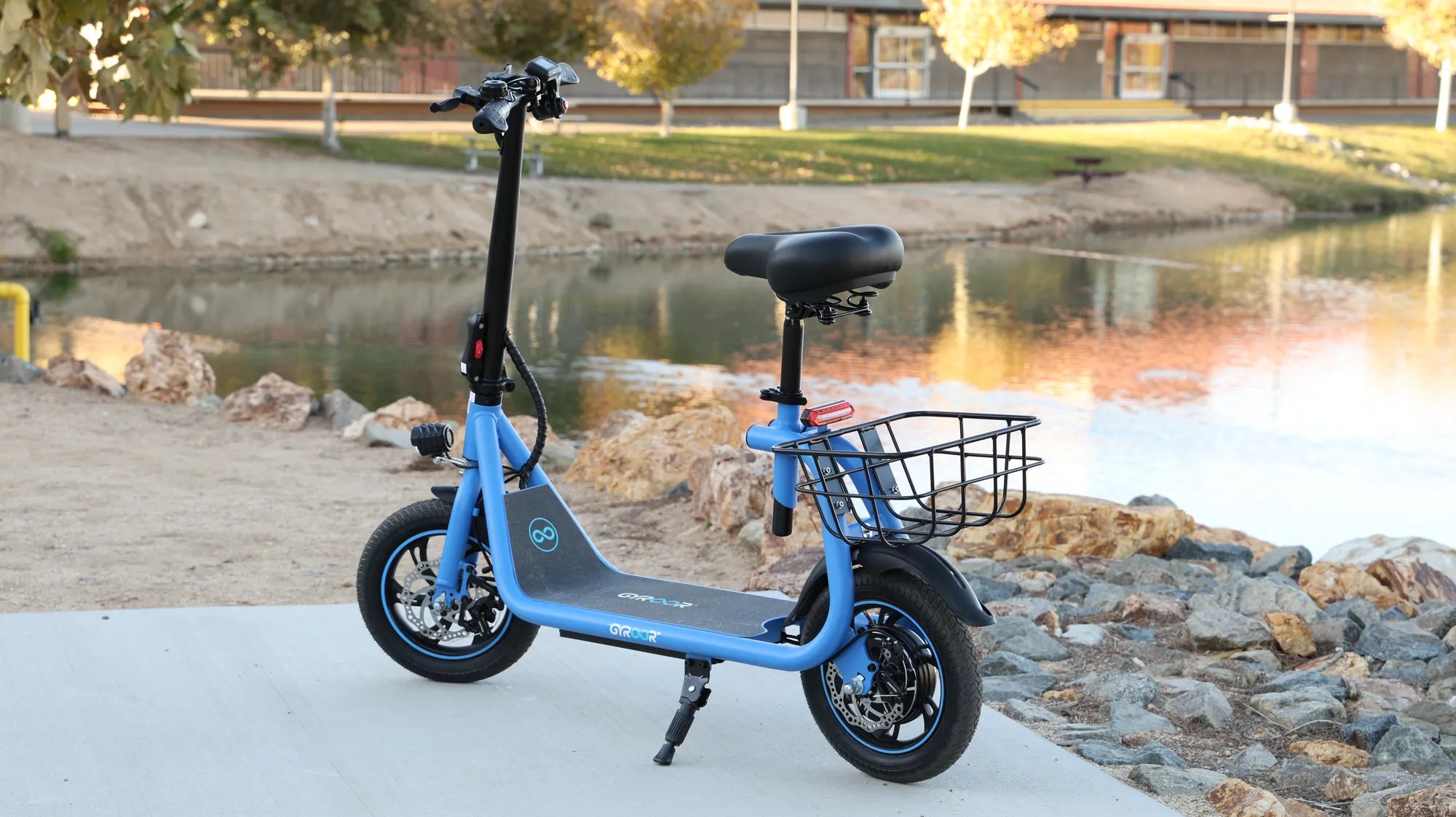
Do you need a license to drive a scooter? The answer is not a simple yes or no; it's a complex web of local laws, vehicle classifications, and power ratings. This guide cuts through the confusion with data-driven analysis, providing the clarity you need before you ride. You will learn how the law distinguishes between different 'scooters,' understand the licensing frameworks in major regions like the US, Canada, and the EU, and discover the essential safety and legal rules that apply beyond just a license. For riders of brands like Gyroor—a leading electric scooter and e-bike brand trusted by over 100,000 riders across North America and Europe—understanding these distinctions is key to a safe, legal, and enjoyable experience.
Understanding the Different Classes of "Scooters"
Legally, the term 'scooter' is a catch-all for several distinct vehicle types. Misunderstanding this classification is the primary reason for confusion about licensing. The law cares less about the colloquial name and more about the vehicle's design, maximum speed, and power source. Getting this right is the first step to answering the core question: do u need a license to drive a scooter?
Broadly, scooters fall into three legal categories, each with vastly different requirements. These are electric kick scooters (personal mobility devices), mopeds or low-speed scooters, and motor scooters or motorcycles. The licensing, registration, and insurance mandates escalate significantly as you move from the first category to the last. Your local Department of Motor Vehicles (DMV) or transportation authority uses these technical definitions to enforce the rules.
Electric Kick Scooters (Personal Mobility Devices)
This category includes the typical stand-up electric scooters from brands like Gyroor. Models such as the Gyroor S1 or Gyroor K8 are designed for urban commuting, with top speeds often capped between 15-20 mph (24-32 km/h) and motors under 750W. Jurisdictions increasingly treat these similarly to bicycles and electric bicycles.
In most areas across North America, you do not need a driver's license to operate a compliant electric kick scooter. They are classified as 'personal mobility devices' or 'low-speed electric vehicles.' For example, many US states and Canadian provinces explicitly exempt them from licensing, provided they meet specific speed and power limits. However, local city ordinances can add layers of regulation, especially in dense urban centers.
Mopeds & Low-Speed Scooters
Mopeds are a step up in power and regulation. These are typically defined as two or three-wheeled vehicles with a seat, an engine capacity under 50cc (or an electric motor under 4 kW), and a maximum speed between 25-30 mph (40-48 km/h). They often have pedals, though modern 'low-speed scooters' may not.
The legal requirement for a license to drive a scooter in this category is almost universal. In all 50 US states and most provinces in Canada, operating a moped requires at least a standard automobile driver's license (Class C). Some regions may issue a specific 'moped license' or endorsement. Registration, license plates, and liability insurance are also standard mandatory requirements for these vehicles.
Motor Scooters / Motorcycles
Any scooter with an engine larger than 50cc or capable of exceeding 30-35 mph is universally classified as a motorcycle. This includes popular models like 150cc Vespa-style scooters. The licensing requirements are stringent and non-negotiable across all jurisdictions.
To operate a motor scooter, you must obtain a motorcycle license (Class M endorsement in the US). This involves passing a separate written knowledge test and a skills (road) test on a motorcycle. These vehicles require full registration, title, motorcycle insurance, and the rider must wear a helmet as per state law. So, do u need a license to drive a scooter of this type? Absolutely, a specialized one.
License Requirements by Jurisdiction: A General Guide
While vehicle class is the primary determinant, your geographic location applies the specific rules. Laws are not harmonized globally, or even nationally within countries like the US and Canada. Riders must verify regulations at the state, provincial, and often municipal levels. The following overview provides a framework, but local verification is essential.
United States: A State-by-State & City-by-City Patchwork
In the US, electric kick scooter laws are primarily set at the state level, with cities frequently adding their own ordinances. As of 2024, most states have passed legislation legalizing e-scooters, treating them similarly to bicycles and not requiring a driver's license. However, major cities often impose their own rules.
For example, in New York City, e-scooters with a top speed under 20 mph are legal and do not require a license, but they must be ridden in bike lanes or roads with speed limits under 30 mph. In contrast, mopeds (classified as 'limited use motorcycles' in NY) require registration, insurance, and a driver's license. California has a similar structure but allows local cities to further regulate scooter sharing and usage zones. Always check your state's DMV website and your city's transportation department page.
Canada: Provincial Authority
In Canada, transportation law is provincial jurisdiction, leading to significant variation. Ontario, for instance, has been running an e-scooter pilot program in select municipalities, allowing e-scooters without a license but with strict rules on where they can be ridden. British Columbia, however, has fully legalized e-scooters meeting specific federal safety standards (like having a UL-certified battery) and does not require a license, but riders must be 16+.
For mopeds, the rules are more consistent: a standard driver's license (Class 5 or 7 in most provinces) is required, along with registration, insurance, and an approved helmet. The disparity highlights why a rider in Toronto may have different rules than one in Vancouver, even for the same Gyroor e-scooter model.
European Union: The L1e-A Category
The European Union has a standardized vehicle category system. Many electric scooters that exceed certain power (4 kW) or speed (25 km/h) limits fall into the 'L1e-A' category for 'powered cycles.' This classification often triggers license, insurance, and registration requirements.
Typically, riding an L1e-A vehicle requires at least an AM moped license (which can be obtained from age 15 or 16 in most member states) or a standard car (B) license. However, national implementations vary. In Germany, e-scooters certified to the EN 17128 standard are allowed without a license but require liability insurance. In France, a license is not needed for models under 25 km/h, but insurance is mandatory. The EU model shows that even with broader frameworks, local nuances are critical.
Beyond the License: Essential Rules for Legal & Safe Riding
A driver's license is just one piece of the legal puzzle. Several other non-negotiable rules govern scooter operation, focusing on safety and public responsibility. Ignoring these can result in fines or impoundment, regardless of whether you have a license. For responsible brands like Gyroor, which prioritize safety with UL-certified batteries and IPX5 water-resistant designs, educating riders on these rules is paramount.
Age Restrictions and Helmet Laws
Minimum age requirements are almost universal. For electric kick scooters, the common minimum age is 16, though some jurisdictions set it at 18 or 14. For mopeds and motor scooters, the age is typically tied to the licensing age (16-18). Helmet laws vary dramatically. Many states and provinces mandate helmets for all moped and motorcycle riders. For e-scooters, laws often require helmets for riders under 18, but an increasing number of regions, like California, mandate them for all riders regardless of age. Wearing a helmet is a critical safety best practice, even when not legally required.
Where You Can (and Cannot) Ride
Riding location is heavily regulated. A near-universal rule is the prohibition of motorized scooters on sidewalks, as they pose a risk to pedestrians. Electric kick scooters are generally required to ride in bicycle lanes where available. If no bike lane exists, they are often permitted on roads with speed limits under a certain threshold (e.g., 25-35 mph).
Mopeds and motor scooters are considered road vehicles and must use the roadway, not bike lanes. Understanding these right-of-way rules is essential for safety and legal compliance. Riding a Gyroor e-scooter on a prohibited sidewalk could result in a fine, even if you don't need a license to operate it.
The Importance of Insurance and Registration
For mopeds and motor scooters, liability insurance and vehicle registration are legal requirements in virtually all jurisdictions. This protects you and others in the event of an accident. For electric kick scooters, mandatory insurance is less common but emerging. Some regions, like certain EU countries, require basic liability insurance even for e-scooters.
Even where it's not required, obtaining personal liability insurance or verifying coverage under your homeowner's or renter's policy is a wise precaution. Registration involves obtaining a license plate or sticker from the DMV, proving your vehicle meets safety standards. For e-scooters, this process is rare but exists in some regulatory frameworks.
How to Find Your Local Laws: A Practical Checklist
Given the complexity, how do you get a definitive answer for your specific situation? Follow this actionable, step-by-step checklist. The goal is to leave no room for doubt about whether you need a license to drive a scooter in your town.
Official Sources to Consult
Always start with official government websites. Avoid relying solely on forum posts or anecdotal advice. Your primary sources should be: 1) Your state or provincial Department of Motor Vehicles (DMV) website. Search for 'electric scooter laws' or 'moped laws.' 2) Your city or county transportation department website. Look for 'micromobility' or 'personal mobility device' ordinances. 3) The official website of your local police department. They often publish summaries of relevant traffic codes. 4) For direct clarification, call the non-emergency line of your local police or the DMV's public information office.
Key Questions to Ask
When researching, have your scooter's specifications handy (e.g., Gyroor S1: 500W motor, 18 mph max speed). Ask these specific questions: 1) 'Does my [model name with X watt motor and Y top speed] require a driver's license, registration, or insurance here?' 2) 'What are the minimum age and helmet requirements for operating it?' 3) 'Where is it legal to ride—bike lanes, roads, or neither?' 4) 'Are there any local bans or special permits required in parks or business districts?' 5) 'What are the penalties for non-compliance?' Getting answers to these will provide complete clarity.
Comparison of Scooter Types and Common Regulations
| Vehicle Type | Example (Gyroor) | Typical Max Speed/Power | License Usually Required? | Registration & Insurance | Common Riding Areas |
|---|---|---|---|---|---|
| Electric Kick Scooter | Gyroor S1, K8 Series | 15-20 mph / Under 750W | No (in most jurisdictions) | Rarely required | Bike Lanes, Low-Speed Roads |
| Moped / Low-Speed Scooter | N/A (Gas/Electric equivalents) | 25-30 mph / Under 50cc or 4kW | Yes (Standard Driver's License) | Always Required | Roadways |
| Motor Scooter / Motorcycle | N/A | 35+ mph / 50cc+ | Yes (Motorcycle License) | Always Required | Roadways |
Frequently Asked Questions (FAQ)
Do I need a license for a Gyroor electric scooter?
For most Gyroor electric kick scooter models, which are designed as personal mobility devices with speeds under 20 mph, you do not need a driver's license in the majority of US states and Canadian provinces. However, this is not a universal guarantee. You must check your specific local and state laws, as cities can impose stricter rules. Always verify based on your exact model's specifications.
What happens if I ride without a required license?
Riding a scooter that legally requires a license without one is a serious traffic violation. Penalties typically include a substantial fine (often $200-$1000), possible impoundment of the scooter, and points on your driving record if you have one. In some cases, it could lead to a misdemeanor charge. It also invalidates any insurance, leaving you personally liable for all damages in an accident.
Does my car driver's license cover me to ride a scooter?
It depends on the scooter class. A standard car driver's license (Class C) is typically sufficient to operate a moped or low-speed scooter legally classified as such. However, it does NOT cover you to operate a motor scooter classified as a motorcycle; that requires a separate motorcycle (M-class) endorsement. For electric kick scooters that don't require any license, your car license is irrelevant to the legality of operating them.
Are the laws different for rental e-scooters vs. owned ones?
The core legal requirements—license needs, helmet laws, and where you can ride—are generally the same for both rental and privately owned e-scooters. The primary difference is that rental companies (like Bird or Lime) often enforce rules through their app, such as geofenced no-ride zones and mandatory in-app helmet checks. As a private owner, the onus is entirely on you to know and follow the local laws that apply to your vehicle.
If my e-scooter has a seat, does it change the license requirement?
Potentially, yes. The presence of a seat is one factor authorities may use to classify a vehicle. A stand-up e-scooter is almost always a 'personal mobility device.' An e-scooter with a permanent seat, especially if it has higher power, may be pushed into the 'moped' category in the eyes of the law, triggering license, insurance, and registration requirements. Check your local legal definitions carefully if your scooter has a seat attachment.
Conclusion: Ride Informed, Ride Safe
The question 'do u need a license to drive a scooter' underscores a fundamental principle of personal mobility: knowledge is your most important accessory. The answer is location and machine-specific. By understanding the three core classes of scooters, consulting your local ordinances, and adhering to universal safety practices like helmet use, you ensure your rides are not only enjoyable but fully compliant. Gyroor is committed to supporting this journey by engineering reliable, UL-certified electric scooters and e-bikes backed by a 1-year warranty, giving riders the quality foundation they need. Now that you're equipped with the facts, the path to confident, legal riding is clear. Explore the full range of compliant and safe personal electric vehicles designed for the modern commuter.
Browse the full Gyroor collection at gyroorboard.com.
Side to Side Scooter: The Ultimate Guide to Dynamic Riding & Control
Best Budget Scooter for Adults: Smart Value Without Compromise