



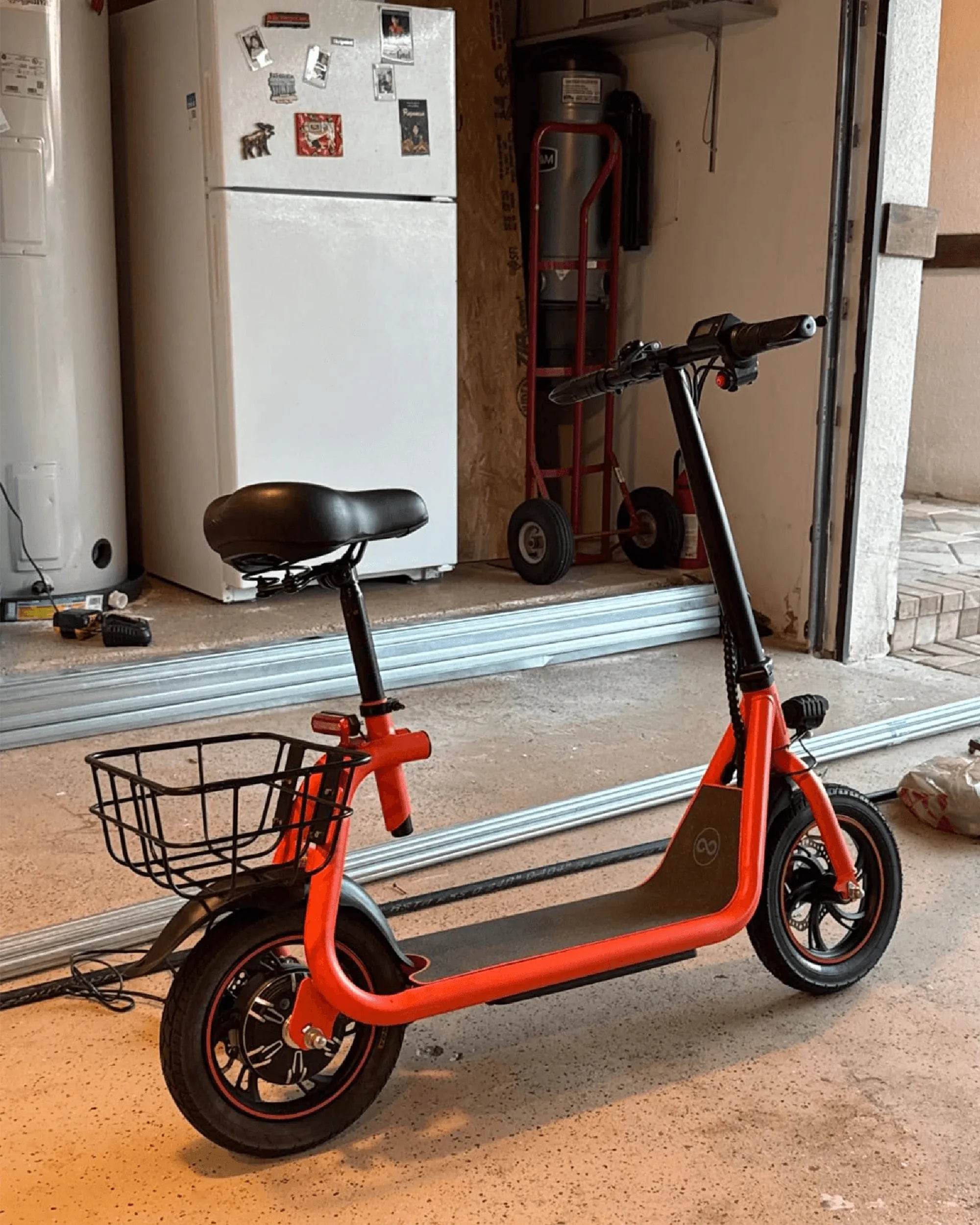
The question "do you need a licence for a scooter?" is deceptively simple. The answer isn't a universal yes or no. It's a complex equation of vehicle type, motor power, local jurisdiction, and intended use. Getting it wrong can mean fines, impounded vehicles, or even legal liability. This definitive 2024 guide provides the clarity you need. We'll dissect the legal classifications, outline typical requirements across regions, and connect you to the right scooter for your licensing situation. By the end, you'll know exactly where you stand.
Understanding Scooter Licensing: A Rider's Guide
The core confusion stems from the broad term "scooter." It can describe a child's toy, a 500W electric commuter vehicle, or a 150cc gas-powered machine. Licensing authorities don't see one category. They see distinct vehicle classes, each with its own rulebook. The primary determinant is whether the device is classified as a "motor vehicle."
This classification hinges on factors like maximum speed, engine displacement (or motor wattage), and sometimes the presence of a seat or pedals. A device deemed a motor vehicle almost always requires registration, insurance, and an operator's license. Those falling outside this definition are often regulated under separate micro-mobility or pedestrian ordinances.
Your location is the second critical variable. Laws differ dramatically between countries, states, and even cities. A vehicle legal in one town may be prohibited in the next. This guide outlines general trends, but your final step must always be to verify rules with your local Department of Motor Vehicles (DMV) or transportation authority.
Electric Scooter vs. Gas-Powered Moped: Defining the Vehicles
Before discussing licenses, we must precisely define what we're talking about. The legal chasm between a low-power e-scooter and a moped is vast. Misidentifying your ride is the most common mistake new riders make.
Low-Speed Electric Kick Scooters (e.g., Gyroor Models)
These are stand-up, electric-powered scooters designed for personal urban mobility. Key characteristics include a motor typically under 750 watts, a maximum speed between 15-28 mph (24-45 km/h), and no seat. They are often foldable and use a kick-to-start mechanism.
In legal terminology, they may be called "Electric Personal Assistive Mobility Devices" (EPAMDs), "electric foot scooters," or "micro-mobility devices." For private ownership, they are generally not considered motor vehicles by state DMVs in the U.S., though specific local traffic codes apply. Brands like Gyroor specialize in this category, focusing on UL-certified batteries and IPX5 water-resistant designs for safe, reliable commuting.
Motor Scooters, Mopeds, and High-Power E-Scooters
This category encompasses vehicles with greater power and different form factors. A moped typically has a small engine (often 50cc or less), a step-through frame, pedals (or the historical presence of them), and a maximum speed below 30-35 mph. A motor scooter has a larger engine (50cc+), a platform for the rider's feet, and a bodywork enclosing the drivetrain.
Critically, high-power electric scooters with seats and sustained speeds over 28 mph often fall into the moped or motorcycle classification, regardless of their power source. These vehicles are almost universally classified as motor vehicles, triggering a full suite of regulatory requirements.
Licensing Requirements by Scooter Category
Now, let's apply the definitions to licensing. This table summarizes the typical requirements across the main scooter categories in the United States. European trends are noted in the discussion below.
| Vehicle Type | Typical Power/Speed | License Required? | Registration & Insurance? | Helmet Law (Typical) |
|---|---|---|---|---|
| Private Low-Speed E-Scooter | <500-750W, <20 mph | No (but age min: 14-18) | No | Required for minors |
| High-Power E-Scooter (with seat) | >750W, >20 mph | Often Yes (Moped/Motorcycle) | Often Yes | Required for all |
| Moped (Gas/Electric) | <50cc or <4kW, <30 mph | Yes (Driver's or Moped License) | Yes | Required for all |
| Motor Scooter/Motorcycle | >50cc or >4kW, >30 mph | Yes (Motorcycle License) | Yes | Required for all |
Private, Low-Speed Electric Scooters (Under 750W)
In most U.S. states, a standard driver's license is NOT required to operate a privately-owned, low-speed electric scooter on roads or bike lanes where they are permitted. However, significant restrictions apply. Age minimums are common, typically 16 or 18 years old. For example, California requires riders to be at least 16 and hold a driver's license or instruction permit, while many other states have no license requirement but set the age at 16+.
In the European Union, the regulatory framework is more unified. E-scooters with a maximum speed of 25 km/h (15.5 mph) and a motor under 500W are generally treated as "personal light electric vehicles." A driver's license is often not required, but age restrictions (14-16+) apply, and they are usually banned from sidewalks. Specific national and city rules, like mandatory insurance in Germany, are critical to check.
The key is that these devices are regulated similarly to bicycles, not cars. Your responsibility is to know local traffic laws for micro-mobility, including where you can and cannot ride.
Motorized Scooters & Mopeds (50cc or equivalent electric power)
This is where licensing becomes mandatory. A 50cc gas moped or an electric equivalent (typically defined by power output, e.g., 4 kW in the EU) is a motor vehicle. At a minimum, operators need a valid driver's license (class C in the U.S.). Many states require a specific moped license or endorsement, which may involve a written test.
Registration with the state DMV and the display of a license plate is almost always required. Liability insurance is also a standard mandate. In Europe, mopeds (up to 50cc/45 km/h) require at least an AM category license, which is available from age 16 in most countries, and must be registered and insured.
Scooters with Larger Engines (Over 50cc)
Scooters with engines over 50cc (or electric motors exceeding moped power limits) are classified as motorcycles. Operating them requires a full motorcycle license (M1 or M endorsement in the U.S., A1/A2/A license in Europe, depending on power).
The process involves both written and practical on-cycle testing. Registration, insurance, and a motorcycle helmet are non-negotiable legal requirements. There is no ambiguity in this category; these are full-fledged motor vehicles.
Beyond the License: Essential Local Regulations & Safety Gear
Obeying the law involves more than just having the right license. Local ordinances and safety rules form the daily framework for legal riding. Ignoring these can lead to penalties just as severe as riding unlicensed.
Navigating City & State-Specific Laws
State law provides the baseline, but city ordinances frequently add stricter layers. Common local regulations include: Sidewalk riding bans (almost universal for motorized scooters), designated bike lane/slow street requirements, speed limits for e-scooters in pedestrian areas (e.g., 10 mph), and parking rules that prohibit locking to certain fixtures or cluttering sidewalks.
Some cities require e-scooters to have certain features like a bell, front and rear lights, and reflectors. Always search your city's municipal code for terms like "motorized scooter," "electric scooter," or "EPAMD." Your local police department's non-emergency line or website can also provide guidance.
Mandatory and Recommended Safety Equipment
Legal minimums are just the starting point for safety. From both a legal and practical standpoint, your gear is critical.
Mandatory Gear (Varies by Location): A helmet is the most common legal requirement, especially for riders under 18. Many states and countries mandate helmets for all moped and motorcycle riders. Front white and rear red lights are legally required for night riding on any scooter in virtually all jurisdictions. Reflectors are also commonly mandated.
Strongly Recommended Gear (For All Riders): A full-face or high-quality bicycle helmet, even if not legally required. Durable gloves, elbow and knee pads, and abrasion-resistant clothing (like a motorcycle jacket or sturdy jeans) can prevent serious injury in a fall. Reflective clothing or strips dramatically increase visibility at night.
Shared E-Scooter Services vs. Private Ownership: A Key Distinction
The booming shared e-scooter market (Lime, Bird, etc.) operates under a different set of user-facing rules than private ownership, adding another layer to the "do you need a licence for a scooter?" question.
Rental companies almost universally require users to input a valid driver's license number into their app to verify age and identity. This is true even in cities where private e-scooter riders don't need a license. It's a company liability measure, not necessarily a reflection of local law.
Shared scooters are also subject to geofencing. Apps use GPS to create no-ride zones (sidewalks, parks), slow zones, and mandatory parking corrals. Violating these geofences can result in user fines. As a private owner, you are responsible for knowing these zones yourself, as they often apply to all scooters.
The terms of service for rentals also typically mandate helmet use, prohibit tandem riding, and set a minimum rider age (usually 18). Understanding this distinction is crucial; the rules you follow on a rental may be stricter than the law for your own vehicle.
Choosing the Right Gyroor Scooter for Your Licensing Level
Aligning your scooter choice with your local laws and willingness to obtain a license is the smartest approach. As a brand trusted by over 100,000 riders, Gyroor offers models that fit clearly into specific regulatory categories.
For riders seeking a license-free commuting option (where local laws permit), models like the Gyroor F1 Pro or similar commuter scooters are ideal. With motors under 750W and top speeds around 20-25 mph, they are designed to fall within the low-speed e-scooter classification common in many areas. Their UL-certified battery packs and reliable 1-year warranty emphasize safety and durability for daily use.
If you possess a driver's license and are willing to register and insure your vehicle for more power or range, exploring higher-wattage models requires careful research. You must confirm with your local DMV whether a specific model's power output and speed classify it as a moped. Always prioritize a model that complies with your jurisdiction's clear legal definitions to avoid complications.
International Perspective: A Snapshot of Global Rules
While U.S. law is highly fragmented, other regions have more centralized rules. Understanding these highlights the importance of local research.
In the United Kingdom, e-scooters are currently legal only on private land or as part of government-approved rental trials. Using a privately-owned e-scooter on public roads, cycle lanes, or pavements is illegal. Approved rental scooters require at least a provisional car license.
In Australia, rules vary by state. Generally, low-power e-scooters are legal on bike paths and local roads with speed limits under 50 km/h, but not on sidewalks. A license is not required, but helmets are mandatory. Power and speed limits (usually 200-250W, 25 km/h) are strictly enforced.
In Canada, provincial rules differ. For example, in Ontario, e-scooters meeting specific criteria (max 500W, 24 km/h) are allowed on roads, but helmets are mandatory and a driver's license (any class) is required. Always check Transport Canada and provincial ministry guidelines.
Frequently Asked Questions (FAQ)
Q: Do I need a license for a 500W Gyroor electric scooter?
A: In most U.S. states and European countries, no driver's license is required for a privately-owned 500W e-scooter, provided its top speed is limited (typically to 20 mph/32 km/h or less). However, you must be of legal age (often 16 or 18) and follow all local traffic and helmet laws.
Q: What if I modify my e-scooter to go faster?
A: Modifying your scooter to exceed local speed or power limits for its class can instantly reclassify it as a moped or motorcycle. This makes your previous license, registration, and insurance status invalid. You could be fined for operating an unregistered motor vehicle and face liability issues in an accident.
Q: Do I need insurance for my electric scooter?
A: For low-speed e-scooters, it's rarely legally required but is highly recommended. Homeowner's or renter's insurance may offer some liability coverage. For any scooter classified as a moped or motorcycle, liability insurance is a legal mandate. Some companies now offer specific micro-mobility insurance policies.
Q: Are the rules different for riding on bike paths versus roads?
A> Yes, often significantly. Many cities explicitly permit e-scooters in bike lanes but prohibit them on sidewalks. Some states allow them on roads with speed limits under a certain threshold (e.g., 35 mph). The rules for bike paths, especially multi-use recreational paths, vary widely—some allow them, some don't.
Q: Could the laws change in my area?
A> Absolutely. E-scooter and micro-mobility regulations are among the fastest-evolving in transportation law. Cities and states regularly update codes based on usage data and safety studies. Before you buy or ride, and periodically thereafter, check your local Department of Transportation or city council website for the most current ordinances.
Ride Informed, Ride Safe
The question "do you need a licence for a scooter?" is your starting point, not the end of your research. The definitive answer lies at the intersection of your vehicle's specifications and your local municipal code. Assuming you don't need a license can be a costly error, while overestimating requirements might unnecessarily limit your mobility options.
Responsible riding is built on a foundation of legal compliance and proactive safety. Equip yourself with the right gear, understand where and how you can ride, and choose a scooter that fits cleanly within the legal framework of your community. For millions, a low-speed electric scooter from a reputable brand like Gyroor offers a license-free path to efficient, enjoyable urban travel where laws permit. Their focus on UL-certified safety and robust construction aligns with the priorities of a savvy rider.
Ready to find a scooter that matches your local regulations and riding style? Browse the full Gyroor collection at gyroorboard.com to explore models built for reliability, safety, and real-world commuting.
Motorcycle Trike Frame Kit: The Complete Guide to Three-Wheel Conversion
Best Fast Ebike: The Ultimate Guide to High-Speed Electric Bikes