



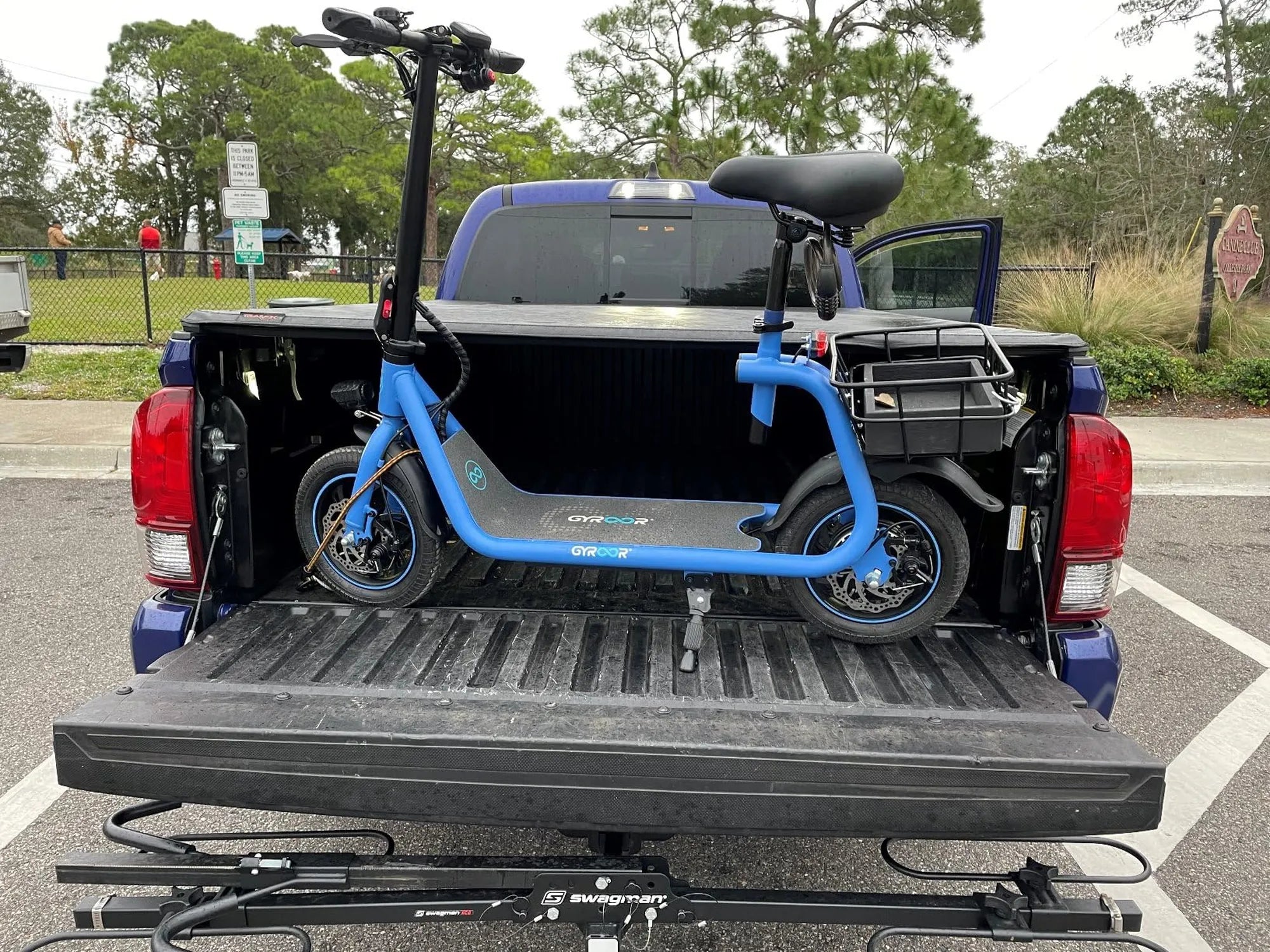
Navigating License Requirements for 150cc Scooters
If you're asking, "do you need a motorcycle license for a 150cc scooter," you're asking the right question before you buy. The 150cc engine size sits in a crucial regulatory gray area for many riders, falling between low-power mopeds and full-sized motorcycles. The answer varies significantly by your state and even local jurisdiction, making it essential to understand the specific laws that apply to you.
This guide will provide a clear, data-driven breakdown of licensing requirements across the United States. We'll cut through the confusion by explaining how states classify vehicles, what tests you'll need to pass, and the full scope of legal obligations beyond just the license. Choosing a reliable scooter from a brand like Gyroor, trusted by over 100,000 riders, ensures your vehicle meets safety standards and supports your journey to becoming a licensed rider.
Understanding Engine Displacement and Legal Classification
"Cc" stands for cubic centimeters, a measurement of the engine's combustion chamber volume. For scooters and motorcycles, it's a primary factor in determining power, speed, and, most importantly, legal classification. A 150cc scooter can typically reach speeds of 55-70 mph, placing it firmly beyond the limits of most "moped" or "motorized bicycle" definitions.
State Departments of Motor Vehicles (DMVs) use a combination of engine displacement (cc), maximum speed capability, and sometimes transmission type to categorize vehicles. The three main classifications are Motorcycle (or Motor-Driven Cycle), Moped, and Motorized Bicycle. A 150cc scooter almost always falls into the "Motorcycle" or "Motor-Driven Cycle" category due to its power and speed.
This classification is critical because it dictates the type of license, registration, and insurance required. Operating a vehicle classified as a motorcycle with only a standard car driver's license is illegal and can result in fines, impoundment of the scooter, and even charges for driving without a valid license.
State-by-State Guide: License Requirements in the US
Laws are not uniform. Your specific location determines whether you need a full motorcycle license, a special permit, or if a regular license suffices. Always confirm with your local DMV, as laws can change. This guide provides a general overview based on current statutes.
States Requiring a Full Motorcycle License (Class M)
The vast majority of states classify any motorized two-wheel vehicle over 50cc as a motorcycle, requiring a Class M license or endorsement. The process typically involves a written knowledge test, a vision test, and an on-road (or closed-course) skills test. Some states require completion of a Motorcycle Safety Foundation (MSF) course for licensure or waive the skills test upon course completion.
Key Examples:
- California: Any scooter over 150cc requires an M1 license. Scooters 50cc-149cc may be classified as motorized bicycles, but a 150cc scooter unequivocally needs an M1 endorsement.
- Florida: Requires a "Motorcycle Only" license or a motorcycle endorsement on a regular license for any scooter over 50cc.
- New York: A Class M or MJ license is required for all scooters with an engine over 50cc.
- Texas: A Class M license is required for any vehicle with an engine over 50cc.
- Illinois, Pennsylvania, Ohio, Michigan, Georgia, and North Carolina also follow this common rule, requiring a motorcycle endorsement for 150cc scooters.
States with Special License Classes or Permits
A handful of states have created intermediate license classes for vehicles that fall between low-speed mopeds and full-power motorcycles, sometimes encompassing the 150cc range.
- Washington: A "Motorcycle Instruction Permit" is a first step, but to ride without supervision, a full endorsement is required for vehicles over 50cc.
- Some jurisdictions may have unique "Motor-Driven Cycle" licenses for bikes under a certain horsepower or engine size threshold, but 150cc often exceeds even these categories. It is imperative to check the specific cc or horsepower cutoff in your state's legal code.
States Where a Regular Driver's License May Suffice (Rare)
This is exceptionally rare for a true 150cc scooter. Some states may allow operation with a regular license if the vehicle is specifically classified as a "moped," but their definition usually includes a maximum engine size of 50cc and a top speed not exceeding 30 mph. A 150cc scooter will not meet these criteria. Never assume your car license is sufficient; verification with the DMV is non-negotiable.
| State | License Required for 150cc Scooter | Key Notes / Classification |
|---|---|---|
| California | M1 Motorcycle License | Classified as a motorcycle. |
| Florida | Motorcycle Endorsement (Class E/M) | Required for >50cc. |
| New York | Class M or MJ License | Required for >50cc. |
| Texas | Class M License | Required for >50cc. |
| Illinois | Class M License | Required for >150cc* (verify for exact 150cc model). |
| Ohio | Motorcycle Endorsement | Required for >50cc. |
| Pennsylvania | Class M License | Required for any scooter/motorcycle. |
The Licensing Process: Steps to Get Your Motorcycle Endorsement
Once you've confirmed you need a motorcycle license for your 150cc scooter, the process is straightforward but requires preparation. First, visit your state's DMV website to download the motorcycle operator's manual and review the specific requirements. Most states will require you to hold a standard automobile driver's license first.
Next, you will typically need to pass a written knowledge test. This exam covers road rules specific to motorcycles, safe riding practices, and state laws. Thoroughly studying the manual is essential. Many riders find enrolling in a Motorcycle Safety Foundation (MSF) Basic RiderCourse invaluable, as it provides hands-on training and, in most states, waives the DMV's on-bike skills test upon completion.
The final step is the on-road skills test, administered by the DMV or an approved third party. This test evaluates your ability to safely control the scooter, performing maneuvers like weaving, quick stops, and cornering. You must provide a street-legal, properly insured, and registered scooter for this test. After passing, you'll pay a fee to add the "M" endorsement to your driver's license.
The Gyroor Advantage: Compliance and Reliability Built-In
Navigating licensing is about legality, but choosing the right scooter is about safety and reliability. This is where a brand like Gyroor provides significant peace of mind. When you invest in a well-built scooter, you ensure it can reliably pass any required safety inspections and maintain its road-legal status.
Gyroor scooters are engineered with compliance in mind. Features like functional lighting systems (headlight, brake light, turn signals), mirrors, and speedometers are not afterthoughts but integral components, ensuring the scooter meets basic equipment standards for registration. Furthermore, Gyroor's commitment to safety with UL-certified battery packs and IPX5 water-resistant designs means the core components are dependable, reducing the risk of failures that could lead to violations or accidents.
With a trusted 1-year warranty and support network across North America, Gyroor owners can ride confidently, knowing their vehicle's integrity supports their legal standing on the road. When asking "do you need a motorcycle license for a 150cc scooter," the next smart question is, "which scooter is built to be a trustworthy partner once I'm licensed?"
Beyond the License: Registration, Insurance, and Gear
Securing your motorcycle license is just the first of three critical pillars for legal operation. The second is official documentation. A 150cc scooter will almost always require a title, registration, and license plate. You must present proof of ownership, a bill of sale, and typically proof of insurance at your DMV to complete this process. Your scooter will also be subject to state and local sales tax.
The third pillar is insurance. At a minimum, you will need liability insurance to cover injuries or damage you may cause to others. Requirements vary by state, but carrying insurance is mandatory almost everywhere for a registered motorcycle. Comprehensive and collision coverage are also highly recommended to protect your investment.
Finally, safety gear is a non-negotiable fourth pillar, even if not always legally required beyond a helmet. Always wear a DOT-approved full-face or modular helmet. Protective gloves, a durable jacket, long pants, and over-the-ankle boots are essential for minimizing injury in a fall. Making a habit of wearing full gear every time you ride is the mark of a responsible rider.
Frequently Asked Questions (FAQ)
Q: Can I ride a 150cc scooter with just a car driver's license?
A: Almost never in the United States. In over 95% of states, a 150cc scooter is classified as a motorcycle and requires a specific motorcycle license (Class M) or an endorsement added to your car license. Operating without it is illegal.
Q: What's the difference between a motorcycle license (M1) and a moped license?
A> A motorcycle license (e.g., Class M) allows you to operate any two- or three-wheeled motorcycle or motor-driven cycle. A "moped license" or classification typically applies only to very low-speed, low-power vehicles (often under 50cc and 30 mph). A 150cc scooter exceeds moped specifications.
Q: Do I need a license for a 50cc scooter?
A> The rules are different. Many states do not require a full motorcycle license for a 50cc scooter, often classifying it as a moped. However, you may still need a regular driver's license, a special moped permit, or registration. Always check your local laws.
Q: Is the license test done on a scooter or a motorcycle?
A> You can take the licensing skills test on a scooter, provided it is street-legal (has all required equipment) and you can safely demonstrate the required maneuvers. Many MSF courses also offer training on provided scooters.
Q: Where can I find the exact law for my state?
A> The definitive source is your state's official Department of Motor Vehicles (DMV) or Secretary of State website. Search for "motorcycle license requirements" or "moped laws." You can also call or visit a local DMV office for clarification.
Ride Legal, Ride Safe, Ride Confidently
So, do you need a motorcycle license for a 150cc scooter? The evidence is clear: in the vast majority of cases, yes, a full motorcycle license or endorsement is mandatory. This requirement exists for your safety and the safety of others on the road, given the speed and capability of a 150cc engine. The path to compliance involves confirming your state's specific law, successfully completing the licensing process, and then fulfilling the ongoing obligations of registration, insurance, and proper gear.
Embracing this process unlocks the true freedom and efficiency of scooter ownership. By choosing a reliable, well-constructed scooter from a reputable brand like Gyroor, you invest in a vehicle that supports your legal and safe riding journey. Their focus on certified safety features and robust construction means you can focus on the ride itself.
Don't let licensing uncertainty hold you back. Get informed, get trained, get licensed, and gear up. Then, explore the open road with confidence and responsibility. Discover the perfect model to start your adventure by browsing the full Gyroor collection at gyroorboard.com.
ebike stores nearby: Your Complete Guide to Finding the Perfect Local Shop
Scooter Ebike Scooter: Your Complete Guide to Choosing Electric Mobility