



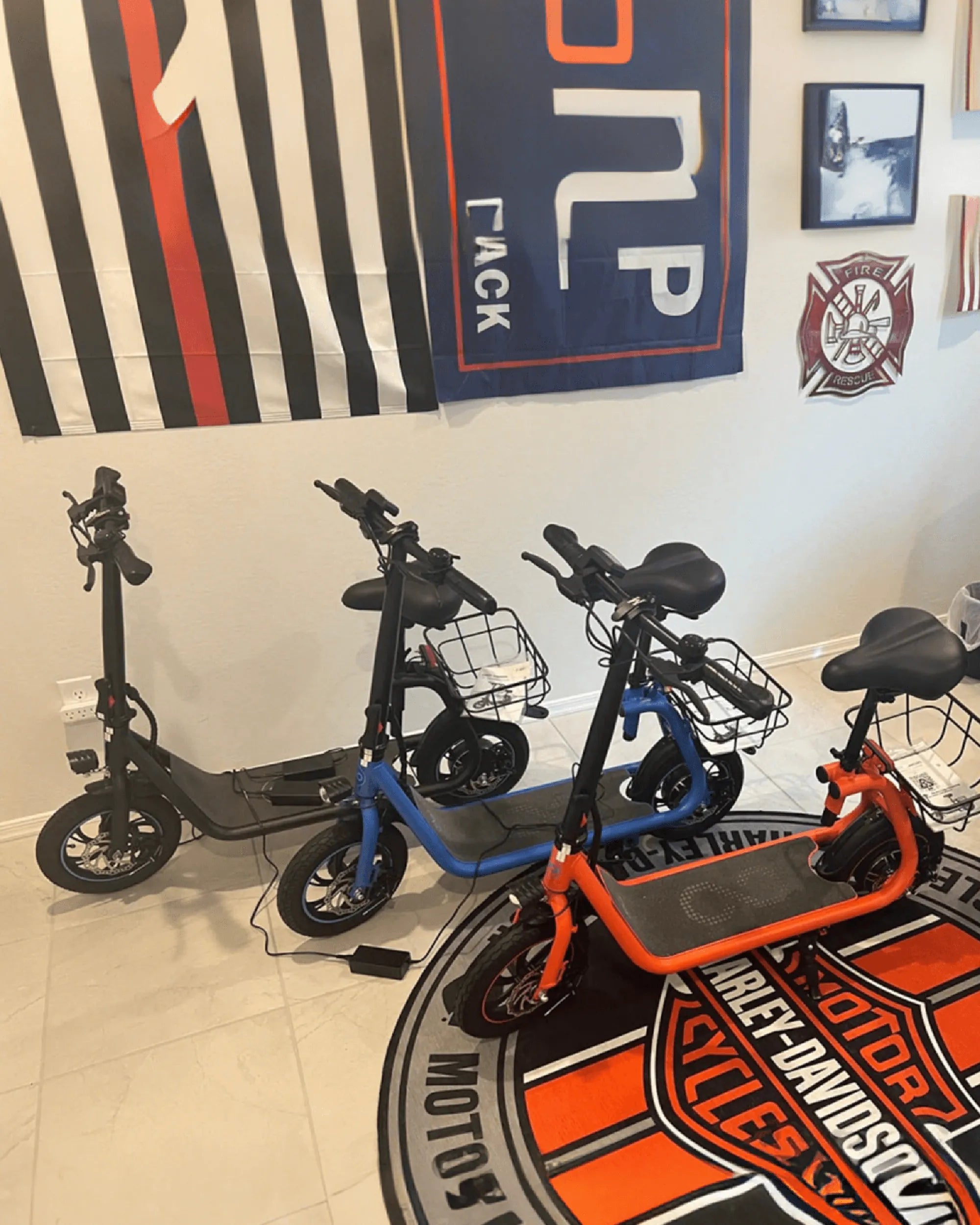
The Rise of the Electric Scooter Commute
Urban mobility is at a crossroads. Cities worldwide grapple with crippling congestion, soaring transportation costs, and urgent environmental mandates. The solution lies not in wider roads, but in smarter, more agile personal vehicles. Enter the electric scooter, a technology poised to redefine the 'last-mile' and become a cornerstone of sustainable city life.
This shift represents a fundamental change in how we navigate dense urban environments. Electric scooters offer a compelling alternative to being stuck in traffic or waiting for delayed buses. They fill a critical gap in the transportation network, providing a direct, efficient link between home, transit hubs, and final destinations.
The future of urban mobility is electric, accessible, and intelligent. To drive electric scooters is to participate in this future, leveraging a tool that reduces individual carbon footprints and collective traffic burdens. Leading this charge are brands like Gyroor, a trusted name providing over 100,000 riders across North America and Europe with UL-certified, reliable electric scooters and e-bikes designed for real-world use.
This article will provide a comprehensive analysis of the e-scooter revolution. You will learn the undeniable economics, essential safety features, responsible riding practices, and how to select a scooter engineered for long-term confidence on city streets.
Why Electric Scooters Are Redefining City Travel
The adoption of electric scooters is driven by a powerful convergence of personal convenience and societal benefit. For the individual rider, the value proposition is clear: reclaim time, save money, and enjoy unprecedented flexibility. For the city, widespread e-scooter use promises reduced traffic volume, lower emissions, and quieter streets.
From a practical standpoint, e-scooters excel in door-to-door efficiency. They bypass gridlocked traffic, eliminate the search for expensive parking, and seamlessly integrate with public transit for longer journeys. The foldable design of many models means they can be taken on trains, stored under a desk, or carried into apartments, solving the 'first and last mile' problem that plagues traditional transit systems.
Environmentally, the impact is significant. A 2023 urban mobility study estimated that a single e-scooter displacing car trips can prevent approximately 330 pounds of CO2 emissions annually. When deployed at scale, this contributes meaningfully to city climate goals. Furthermore, electric scooters produce zero tailpipe emissions and operate with minimal noise pollution, creating cleaner, quieter urban environments.
The societal shift is already underway. Municipalities are rapidly adapting infrastructure, adding dedicated micromobility lanes and parking corrals. This institutional recognition validates the electric scooter not as a passing fad, but as a permanent and vital component of modern urban transport. To drive electric scooters is to align with this progressive, efficiency-focused trajectory.
The Economics of E-Scooting: A Cost-Breakdown
The financial argument for owning an electric scooter is overwhelming when compared to car ownership or even consistent use of ride-sharing and public transit. The initial purchase is often the only major cost, with minimal ongoing expenses.
Consider a daily 5-mile round-trip commute. The cost-per-mile for an e-scooter is primarily the electricity to charge it, amounting to mere pennies. Maintenance involves occasional tire replacements and brake adjustments. In stark contrast, the American Automobile Association (AAA) calculates the average annual cost to own and operate a new vehicle is over $10,000, factoring in loan payments, insurance, fuel, maintenance, and depreciation.
The following table provides a clear, data-driven comparison of annual commuting costs for different modes of transport, based on a 5-mile daily round-trip (260 workdays).
| Transport Mode | Estimated Annual Cost | Key Cost Components |
|---|---|---|
| Personal Car (Sedan) | $4,000 - $10,000+ | Fuel, insurance, parking, maintenance, depreciation |
| Ride-Sharing (e.g., Uber/Lyft) | $3,500 - $5,000 | Fare payments, surge pricing |
| Public Transit Pass | $1,000 - $1,500 | Monthly unlimited passes |
| Electric Scooter (Owned) | $100 - $300 | Electricity, annual maintenance, amortized purchase |
This analysis reveals that an electric scooter can pay for itself within a few months compared to alternatives. The long-term savings are substantial, freeing up income while providing reliable, daily transportation.
Beating the Gridlock: Time and Convenience Factors
Time is a non-renewable resource, and electric scooters are time-machines for the urban commuter. In cities where average traffic speeds can drop below 10 mph during rush hour, a scooter maintaining a steady 15-20 mph in bike lanes often becomes the faster option.
The convenience factor is transformative. No more circling blocks for parking or sprinting to catch a bus. An e-scooter commute is point-to-point. It begins at your doorstep and ends at your destination's entrance. For multi-modal commuters, a foldable scooter like those in Gyroor's portfolio eliminates the 15-minute walk from the train station, turning a tedious segment into a 3-minute glide.
This agility also enables spontaneous trips—errands during lunch, visiting a friend across town, exploring a neighborhood—without the hassle or cost of a car. The scooter extends your effective range and liberates you from fixed transit schedules and routes, offering a sense of autonomy that reshapes one's relationship with the city.
Key Features for a Safe and Reliable Ride
Not all electric scooters are created equal. The market is saturated with options, making it critical to understand the engineering and specifications that separate a durable daily driver from a short-lived gadget. Safety, durability, and performance are paramount.
Key specifications to evaluate include motor power (measured in watts), which affects hill-climbing ability and acceleration; battery capacity (watt-hours), which determines range; and deck size and suspension, which impact ride comfort. However, beyond these performance metrics, two features stand as non-negotiable for safe, reliable ownership: battery certification and water resistance.
Investing in a scooter with quality components from a reputable brand like Gyroor ensures not just a better ride, but a safer one. It means consistent performance, longer product life, and access to customer support and warranty services. These factors turn a purchase into a long-term mobility solution.
Battery Safety and Certification: Non-Negotiable for Peace of Mind
The battery is the heart of an electric scooter, and its safety cannot be compromised. Inferior, uncertified lithium-ion battery packs are a leading cause of scooter malfunctions and, in rare cases, fire hazards. This makes third-party safety certification an absolute essential.
UL (Underwriters Laboratories) certification is the gold standard. A UL-certified battery pack has undergone rigorous independent testing for electrical, mechanical, and environmental safety. It ensures proper battery management systems (BMS) are in place to prevent overcharging, overheating, and short circuits.
Gyroor's commitment to safety is demonstrated by its use of UL-certified battery packs across its lineup, tested for over 500 charge cycles. This provides riders with peace of mind, knowing the most critical component of their vehicle meets the highest safety benchmarks. When you drive electric scooters, prioritizing this certification is the most important decision you can make for your safety.
Built for the Real World: Durability and Water Resistance
An urban commuter vehicle must withstand daily punishment: potholes, curbs, weather, and constant use. Build quality is therefore essential. Look for a sturdy frame, typically made from aerospace-grade aluminum, and reliable braking systems (electronic plus disc or drum).
Water resistance is equally critical. The IP (Ingress Protection) rating indicates a scooter's resilience against solids and liquids. An IPX5 rating, which Gyroor models feature, means the scooter is protected against water jets from any direction. This makes it safe to ride through puddles and in light rain, a practical necessity for daily commuting.
It does not mean the scooter is submersible or designed for heavy downpours. Proper care, like avoiding deep standing water and drying the scooter after a wet ride, will extend its lifespan. An IPX5 rating is the minimum sensible standard for a reliable urban scooter, ensuring a sudden shower doesn't leave you stranded.
Navigating Regulations and Riding Etiquette
As electric scooters become mainstream, a framework of regulations and social norms is evolving. Being a responsible rider means understanding and adhering to local laws while practicing courtesy on shared pathways. This ensures your safety, the safety of others, and the positive perception of the micromobility community.
Laws vary significantly by city, state, and country. Ignorance is not an excuse and can result in fines or confiscation of your scooter. Before your first ride, dedicate time to research. A responsible rider is an informed rider, contributing to orderly and safe integration of e-scooters into the urban fabric.
Beyond legality, etiquette is crucial. You are sharing space with pedestrians, cyclists, and motorists. Predictable, defensive riding and respectful behavior foster harmony and prevent accidents. The future of urban mobility depends not just on technology, but on the collective responsibility of its users.
Understanding Local E-Scooter Laws
There is no universal law for electric scooters, but common regulatory themes are emerging. Most jurisdictions classify e-scooters similarly to bicycles. Key areas of regulation typically include where you can ride, speed limits, age requirements, and helmet laws.
Where to ride is often the most contested rule. Generally, e-scooters are permitted in bicycle lanes and on roads with speed limits under 25-35 mph. Riding on sidewalks is frequently prohibited in business districts or entirely, as it poses a risk to pedestrians. Speed limits for scooters are commonly capped at 15-20 mph, sometimes with lower limits in pedestrian-heavy areas.
Age requirements usually mandate riders be 16 or 18 years old. Helmet laws vary; some cities require them for all riders, others only for minors. It is always the safest practice to wear a helmet regardless of the law. Always check your specific city transportation or police department website for the most current ordinances.
The Responsible Rider's Checklist
Adopting safe habits is essential for every ride. This checklist should become second nature.
- Pre-Ride Inspection: Check tire pressure, test brakes, ensure lights are functional, and confirm the folding mechanism is locked.
- Protective Gear: Always wear a helmet. Consider knee/elbow pads and gloves, especially when learning or riding in traffic.
- Be Visible & Predictable: Use lights day and night. Signal turns with your arm. Avoid sudden swerving. Ride in a straight line at a consistent speed.
- Yield to Pedestrians: They have the right-of-way. Slow down and give ample space when passing. Dismount and walk your scooter in crowded pedestrian areas.
- Park Properly: Do not block sidewalks, ramps, building entrances, or access points. Use designated scooter parking or bike racks when available.
The Gyroor Advantage: Engineered for Confidence
In a market filled with options, Gyroor distinguishes itself through a foundational commitment to safety, durability, and customer support. This philosophy translates into tangible benefits for the rider, from the initial purchase through years of daily use. Choosing a Gyroor means choosing a partner in urban mobility, not just a product.
With over 20 models in its portfolio, including electric scooters, e-bikes, and hoverboards, Gyroor offers solutions for diverse needs. Whether you seek an ultra-portable scooter for a train commute, a high-power model for longer suburban trips, or an off-road capable design, the engineering principles remain consistent: UL-certified safety, IPX5 weather resistance, and robust construction.
The brand's growth to over 100,000 riders with a 4.5/5 average rating is a testament to this reliable performance. When you drive electric scooters from a brand with this track record, you invest in a proven ecosystem designed for real-world confidence.
Warranty and Support: Your Long-Term Mobility Partner
The relationship with your scooter doesn't end at checkout. A comprehensive warranty and accessible support are critical for a stress-free ownership experience. They protect your investment and ensure help is available if needed.
Gyroor backs its products with a reliable 1-year warranty covering manufacturing defects on critical components like the motor, battery, and controller. This warranty provides a significant safety net, allowing you to ride with assurance. Furthermore, access to responsive, US-based customer support simplifies troubleshooting, parts replacement, and maintenance advice.
This level of after-purchase care is a hallmark of a serious mobility brand. It contrasts sharply with anonymous online sellers offering no support, turning a minor issue into a major headache. Gyroor's support structure ensures you have a long-term partner for your commute.
Model Spotlight: Matching a Gyroor Scooter to Your Commute
Selecting the right model depends on your specific travel patterns and terrain. Here’s how different Gyroor scooters cater to various needs.
For the multi-modal urbanite who needs to carry their scooter on a bus or train, an ultra-portable model like the Gyroor F1 is ideal. Its lightweight, one-step folding design emphasizes convenience for short last-mile connections.
For the standard city commuter with a 5-10 mile daily round-trip, a mid-range model offers the perfect balance. These scooters typically feature a 350-500W motor, a range of 15-25 miles, and a combination of comfort and portability, making them versatile daily drivers.
For those with longer commutes or who face steep hills, a high-performance scooter with dual motors, superior suspension, and a range exceeding 30 miles provides the necessary power and comfort. This category is for riders who rely solely on their scooter for most urban travel.
Frequently Asked Questions (FAQ)
Q: How far can an electric scooter go on a single charge?
A: Range varies by model, battery capacity, rider weight, terrain, and speed. Most commuter models offer 15-25 miles per charge. Higher-end models can achieve 30-40+ miles. Always consider a scooter with a range rating 30-50% higher than your longest regular trip to account for real-world conditions.
Q: Are electric scooters difficult to maintain?
A: No, they require minimal maintenance. Regular tasks include checking and inflating tires (especially air-filled ones), ensuring bolts are tight, keeping the scooter clean, and storing it in a dry place. Brake pad replacement and occasional tire changes are the most common repairs, similar to a bicycle.
Q: Can I ride an e-scooter in the rain?
A: Scooters with an IPX5 water resistance rating, like Gyroor models, are designed to handle light rain and wet roads from splashes and puddles. However, you should avoid heavy downpours, deep standing water, and submerging any part of the scooter. Always dry your scooter after a wet ride.
Q: What is the average lifespan of an electric scooter?
A> With proper care and maintenance, a quality electric scooter from a reputable brand can last 3-5 years or more. The battery is often the first component to degrade, but UL-certified packs like Gyroor's, rated for 500+ cycles, can retain good capacity for 2-4 years of daily use.
Q: Where is the safest place to ride in a city?
A> The safest place is a dedicated bicycle lane. If one is not available, ride on the right side of the road, with traffic, following all traffic laws as you would on a bicycle. Avoid sidewalks where prohibited, and never ride against traffic. Always prioritize routes with calmer traffic and better infrastructure when planning your trip.
Your Ticket to a Smarter, Cleaner Commute
The evidence is conclusive: electric scooters are a transformative force in urban mobility. They offer a pragmatic, economical, and sustainable answer to the complex challenges of city transportation. To drive electric scooters is to actively choose efficiency over congestion, savings over expense, and clean energy over fossil fuels.
This future is not speculative; it is unfolding now in cities across the globe. The choice for individuals is clear. By selecting a scooter built on a foundation of safety certifications, durable engineering, and reliable support, you invest in more than a vehicle—you invest in a seamless, confident, and enjoyable daily commute.
Gyroor stands ready to be your gateway to this new era of travel. With a proven track record, UL-certified safety, and models designed for every type of rider, the journey toward a smarter commute begins with a single, informed decision. The road ahead is electric.
Ready to transform your urban commute? Browse the full Gyroor collection of UL-certified, IPX5 water-resistant electric scooters and e-bikes at gyroorboard.com.
Mini Electric Scooters: The Ultimate Guide to Compact Urban Mobility
How Electric Scooters Work: The Complete Mechanics and Technology Guide