



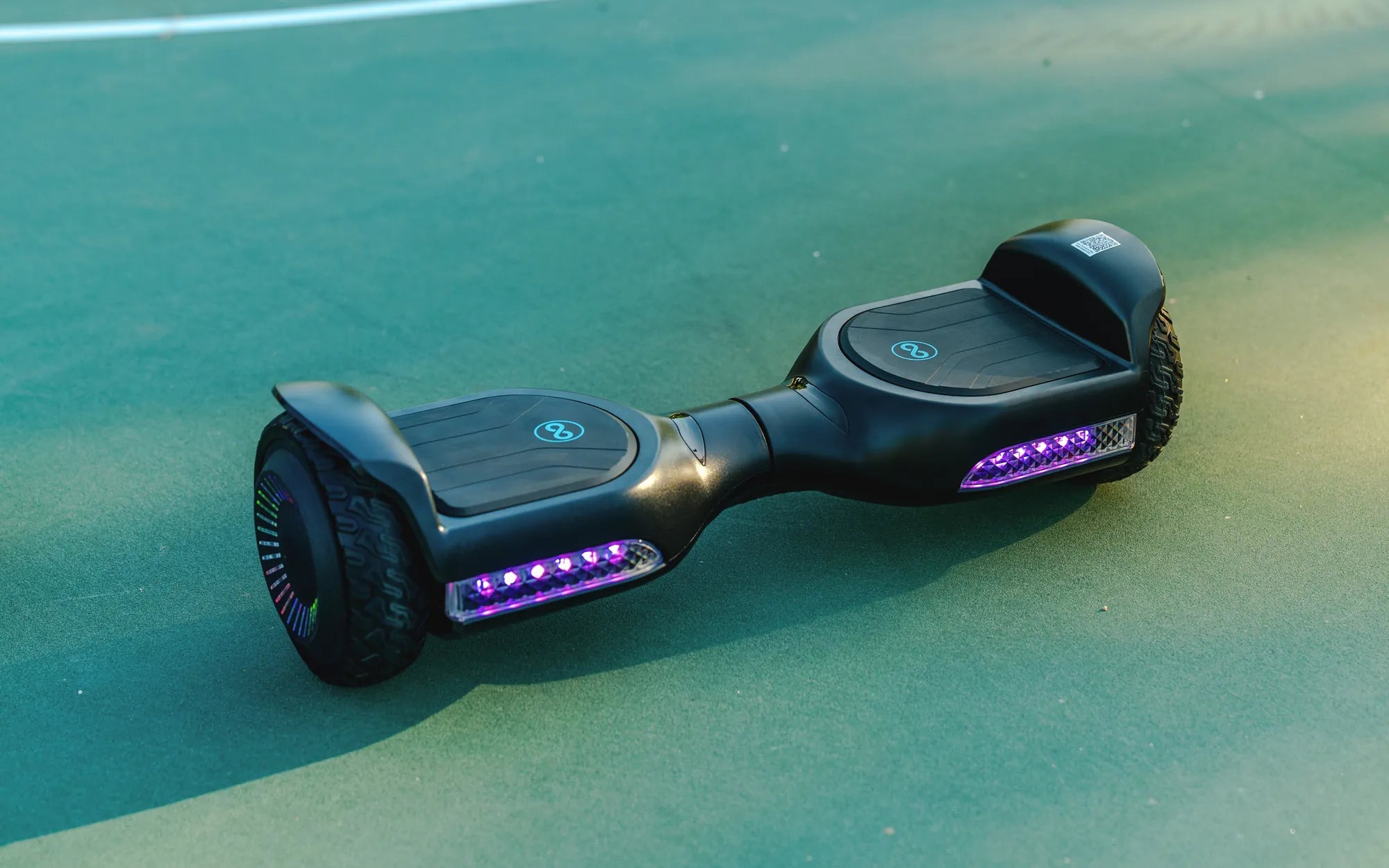
Introduction: Redefining the Commute with Self-Balancing Innovation
The daily urban commute is undergoing a silent revolution, and at its forefront is the dual wheels smart electric self balancing scooter. This device represents a paradigm shift in personal electric mobility, moving beyond the simple kick-scooter design to offer an intuitive, hands-free riding experience. It directly tackles the persistent "last mile" problem—the inconvenient gap between public transit stops and final destinations—with a sleek, compact, and technologically advanced solution.
Unlike traditional e-scooters with handlebars or bulkier e-bikes, the dual wheels smart electric self balancing scooter uses sophisticated sensors and algorithms to maintain balance, controlled entirely by the rider's subtle weight shifts. This design eliminates the need for physical steering apparatus, resulting in a remarkably portable form factor. For urban dwellers, students, and professionals, this translates to a commute that is not just efficient, but also engaging and futuristic.
This article will dissect the engineering that makes this possible, compare its practical advantages against other micro-mobility options, and provide a comprehensive guide to mastering the urban landscape on one. We will explore why devices like those from Gyroor, with their emphasis on UL-certified safety and robust construction, are making the dual wheels smart electric self balancing scooter a credible and compelling fixture in the future of urban mobility. The evolution from novelty to legitimate transport is complete.
The Engineering Behind the Balance: How Dual-Wheel Smart Scooters Work
The magic of the dual wheels smart electric self balancing scooter lies in a complex dance of hardware and software designed to mimic human balance. At its core is a principle called dynamic stabilization. The scooter doesn't just stay upright on its own; it actively makes hundreds of micro-corrections per second to keep the rider's center of gravity over the wheels.
This process is governed by an Inertial Measurement Unit (IMU), a cluster of sensors including gyroscopes and accelerometers. The gyroscope detects the scooter's angular tilt and rotation, while the accelerometer measures its linear acceleration. These sensors feed real-time data to a central processing unit (CPU) running a proprietary control algorithm.
When a rider leans forward, the sensors detect the change in pitch. The algorithm instantly calculates the necessary response and commands the electric motors in each wheel to accelerate proportionally, driving the platform forward to "catch" the rider and restore equilibrium. Leaning back commands deceleration or reversal. Steering is achieved through differential torque; leaning your weight slightly to the left causes the left wheel to slow down or the right wheel to speed up, initiating a turn.
The dual-wheel configuration is crucial for this stability, especially at low speeds and during mounting/dismounting, where a single-wheel design would be far less forgiving. This seamless integration of sensor data, processing power, and motor response creates the intuitive, gliding sensation that defines the ride.
Key Components for Reliability and Safety
The sophisticated software is useless without equally robust hardware. Reliability in a dual wheels smart electric self balancing scooter hinges on a few critical components. First and foremost is the battery pack. High-quality scooters utilize lithium-ion cells with integrated Battery Management Systems (BMS) for protection against overcharging, deep discharge, and short circuits. Brands like Gyroor prioritize safety by using UL-certified battery packs, tested for over 500 charge cycles, which significantly mitigates the risk of thermal runaway and fire.
Next is the motor. Typically, these scooters use high-torque, brushless DC hub motors integrated directly into the wheels. Dual 300W to 500W motors are common, providing ample power for urban inclines and quick acceleration. The frame, usually constructed from aerospace-grade aluminum alloy, must be rigid enough to handle stresses but lightweight for portability.
Finally, environmental sealing is vital for an urban commute. An IP rating dictates dust and water resistance. An IPX5 rating, as found on many Gyroor models, means the scooter can withstand low-pressure water jets from any direction, making it safe to ride in rain or through puddles. Together, these components—certified battery, powerful motors, durable frame, and proper sealing—transform advanced concepts into a safe, dependable daily transporter.
Urban Mobility Face-Off: Dual-Wheel Scooter vs. Traditional E-Scooters & E-Bikes
Choosing the right micro-mobility device requires understanding their distinct advantages. The dual wheels smart electric self balancing scooter occupies a unique niche between the ubiquitous stand-up e-scooter and the more substantial e-bike.
The primary differentiator is portability and form factor. Without handlebars, a self-balancing scooter is supremely compact. It can be easily carried with one hand, rolled alongside like luggage, or tucked under a desk or cafe table. This makes it ideal for multi-modal commutes involving buses, trains, or subways. A traditional e-scooter, while foldable, is still a bulky, awkward shape to carry for extended periods.
Maneuverability in tight spaces is another key strength. The intuitive lean-to-steer control allows for incredibly tight turns and precise navigation through crowded sidewalks or busy bike lanes. The learning curve, however, is steeper than for a handlebar-equipped scooter, which most people can ride instinctively. E-bikes, while offering greater range and speed, lack this level of agility and require dedicated bike parking.
The following table provides a data-driven comparison across critical urban commuting parameters:
| Feature | Dual-Wheel Self-Balancing Scooter | Traditional E-Scooter (Handlebar) | Electric Bike |
|---|---|---|---|
| Avg. Weight | 25-35 lbs (11-16 kg) | 30-45 lbs (14-20 kg) | 45-70 lbs (20-32 kg) |
| Portability | Excellent (most compact, easy carry) | Good (foldable, but bulky) | Poor (requires bike rack/lock) |
| Learning Curve | Moderate (30-60 mins practice) | Low (almost immediate) | Low (like a regular bike) |
| Maneuverability | Excellent (tight turns, agile) | Good | Fair (requires more space) |
| Typical Range | 12-18 miles (19-29 km) | 15-25 miles (24-40 km) | 20-50+ miles (32-80+ km) |
| Max Speed | 10-15 mph (16-24 km/h) | 15-20 mph (24-32 km/h) | 20-28 mph (32-45 km/h) |
| Ideal Use Case | Last-mile, multi-modal commute, campus, crowded urban cores | Medium-length direct commutes, recreational paths | Longer commutes, hilly terrain, cargo transport |
Ultimately, the dual wheels smart electric self balancing scooter excels in scenarios where seamless integration with public transit and superior space-saving are paramount. It's the choice for the rider whose journey ends indoors or on a crowded train car.
Mastering Your Ride: Practical Tips for the Urban Commuter
Transitioning to a dual wheels smart electric self balancing scooter requires a blend of skill development and practical knowledge. Start in a safe, open, and flat area like an empty parking lot. Use a support (a wall or railing) to mount initially. Focus on micro-movements; excessive leaning is a common beginner mistake. Most riders achieve basic competency within an hour, with confidence growing over several days of practice.
Safety is non-negotiable. Always wear a helmet. Consider wrist guards, knee pads, and elbow pads, especially during the learning phase. Obey all local traffic laws, which often classify these devices similarly to bicycles. Ride in bike lanes where available, signal your intentions, and never use headphones at high volume. Be hyper-aware of pedestrians, uneven pavement, and vehicle blind spots.
Maintenance is straightforward but essential. Regularly check tire pressure (for pneumatic tire models) to ensure optimal range and stability. Keep the footpad sensors clean and free of debris. After riding in wet conditions (within the IPX5 limits), wipe the scooter down with a dry cloth. Store it in a cool, dry place and avoid leaving it at full or empty charge for extended periods to maximize the lifespan of the UL-certified battery.
Charging best practices include using only the manufacturer-provided charger and never leaving the unit to charge unattended for excessively long periods, such as overnight or while away from home. A typical charge time is 3-4 hours. Following these simple steps will ensure your dual wheels smart electric self balancing scooter remains a reliable partner for years.
Navigating Cityscapes: Terrain and Route Considerations
The urban environment is a tapestry of surfaces and obstacles. A dual wheels smart electric self balancing scooter performs best on smooth, paved surfaces like asphalt roads, concrete bike paths, and indoor flooring. Most models can handle small cracks, painted road lines, and minor imperfections with ease due to their wide, pneumatic tires which provide some shock absorption.
Inclines are a key consideration. While powerful dual motors can handle moderate slopes (typically up to a 15-20% grade), steep hills will drain the battery rapidly and may exceed the scooter's torque capabilities. Plan your route to use gentler inclines where possible. Be extra cautious on wet surfaces, even with IPX5 water resistance; reduce speed, avoid sharp turns, and allow for longer braking distances.
Navigate obstacles like curbs, potholes, or tram tracks by approaching them at a 90-degree angle whenever possible. For higher curbs, it's safest to step off and manually carry the scooter over. When planning your commute, leverage bike lane maps and consider apps that track your route for elevation changes. The agility of the scooter allows you to take advantage of shortcuts through parks or pedestrian plazas that are inaccessible to bikes or cars, often making your journey more direct and enjoyable.
The Future is Balanced: Sustainability and Smart City Integration
The rise of the dual wheels smart electric self balancing scooter is more than a transportation trend; it's a component of a broader shift toward sustainable urban ecosystems. Each trip taken on an electric scooter instead of a personal car represents a direct reduction in carbon emissions, traffic congestion, and noise pollution. With energy consumption measured in pennies per charge, the environmental and economic efficiency is profound.
Looking forward, integration with smart city infrastructure is the next frontier. Future models may feature built-in connectivity (4G/5G or Bluetooth) that syncs with city transit apps, allowing for seamless payment, real-time navigation optimized for micro-mobility, and geofencing to manage speed in pedestrian-heavy zones. Smart lock technology, integrated into the scooter's firmware, could deter theft and enable shared mobility schemes.
As cities redesign themselves to prioritize people over cars, with more bike lanes, pedestrian zones, and mobility hubs, devices like the dual wheels smart electric self balancing scooter will become even more viable. They represent a modular, scalable solution that complements public transit networks without the space and resource demands of private automobiles. This alignment with sustainable urban planning principles cements its role not just as a gadget, but as a legitimate tool for urban transformation.
FAQ: Your Questions on Dual-Wheel Self-Balancing Scooters, Answered
Q1: Is it difficult to learn how to ride a self-balancing scooter?
A: Most adults can learn the basics within 30 to 60 minutes of dedicated practice in a safe area. The key is to start with small, controlled movements. The learning curve is steeper than for a bike or traditional scooter, but the intuitive control quickly becomes second nature.
Q2: How does the warranty and customer support work for brands like Gyroor?
A> Reputable brands stand behind their products. Gyroor, for instance, offers a reliable 1-year warranty on the main unit, covering manufacturing defects. Their customer support, trusted by over 100,000 riders, assists with troubleshooting and parts. Always purchase from authorized retailers to ensure warranty validity.
Q3: What is the real-world range I can expect on a single charge?
A: Manufacturer ranges are based on ideal conditions (light rider, smooth flat terrain, slow speed). Real-world range for a dual wheels smart electric self balancing scooter is typically 12-18 miles. Factors like rider weight, terrain, temperature, and riding style (frequent acceleration) will affect this. The UL-certified batteries in quality models ensure consistent performance over hundreds of cycles.
Q4: Is it safe to ride in the rain?
A> Safety depends on the scooter's IP rating. Models with an IPX5 rating, like many from Gyroor, are designed to withstand water jets from any direction. This makes them safe for riding in light to moderate rain and through puddles. However, you should always reduce speed, avoid deep standing water, and dry the scooter afterward. Never submerge the unit.
Q5: Who is this type of scooter best suited for?
A> The ideal user is an urban commuter or student facing a "last-mile" challenge, someone who uses public transit and needs a highly portable device. It's also great for campus travel, quick errands within dense neighborhoods, or as a fun, efficient way to navigate large facilities like airports or warehouses. It's less suited for those with very long solo commutes or who need to transport heavy cargo.
Conclusion: Embracing a Smarter, Smoother Commute
The dual wheels smart electric self balancing scooter has evolved from a futuristic novelty into a practical, efficient, and sustainable pillar of urban mobility. Its core value lies in a brilliant synthesis of intuitive self-balancing technology, compact portability, and reliable performance. By solving the last-mile dilemma with elegance and efficiency, it empowers riders to reclaim time and navigate cities with unprecedented agility.
Success in this category is defined by engineering integrity—UL-certified batteries for peace of mind, IPX5 resilience for all-weather capability, and robust motors for confident riding. Brands that prioritize these features, like Gyroor with its commitment to safety and a 1-year warranty, are leading the market toward greater reliability and user trust. As urban landscapes continue to evolve, embracing smarter, smaller-scale transportation is not just an option but a necessity.
For those ready to step into the future of personal transport, the journey begins with choosing a scooter built on a foundation of quality and safety. Experience the blend of innovation and practicality that is redefining how we move. Browse the full Gyroor collection at gyroorboard.com to find the model that will transform your urban commute.
Beginner Scooter Tricks for Kids: Fun and Safe Ways to Get Started
Big Two Wheel Balancing Electric Scooter: Future of Urban Mobility