



Stuck in traffic or facing soaring fuel costs? Your next commute could be transformed by a personal electric vehicle. The modern choice often comes down to two contenders: the increasingly sophisticated electric bike and the traditional, motorized moped. This isn't just about picking a ride; it's about selecting a transportation system that fits your lifestyle, budget, and local regulations. We'll cut through the marketing hype to deliver a factual, data-driven comparison of e-bike vs moped, empowering you to make an informed decision with clarity and confidence.
Defining the Contenders: E-Bike and Moped Explained
The terms "e-bike" and "moped" are often used loosely, but their legal and mechanical definitions are distinct. This classification dictates where you can ride, what you need to operate it, and how the vehicle functions. Understanding these definitions is the essential first step in your decision-making process.
Confusion arises because both vehicles have two wheels and a motor. However, the core philosophy of operation separates them. An e-bike is fundamentally a bicycle augmented by electric power, while a moped is a low-powered motorcycle. This fundamental difference cascades into every aspect of ownership, from your initial ride to long-term upkeep.
What is an Electric Bike (E-Bike)?
An electric bike is a bicycle equipped with an electric motor that assists the rider's pedal power. In North America and Europe, e-bikes are typically categorized into three classes, a system crucial for understanding their capabilities and legal status. This system provides a clear framework for comparison in the e-bike vs moped debate.
Class 1: The motor provides assistance only when you are pedaling (pedal-assist) and ceases at 20 mph (32 km/h). No throttle is present. Class 2: Features a throttle that can propel the bike without pedaling, with motor assistance capping at 20 mph. Class 3: Also known as "speed pedelecs," these are pedal-assist only (no throttle) but assist up to 28 mph (45 km/h).
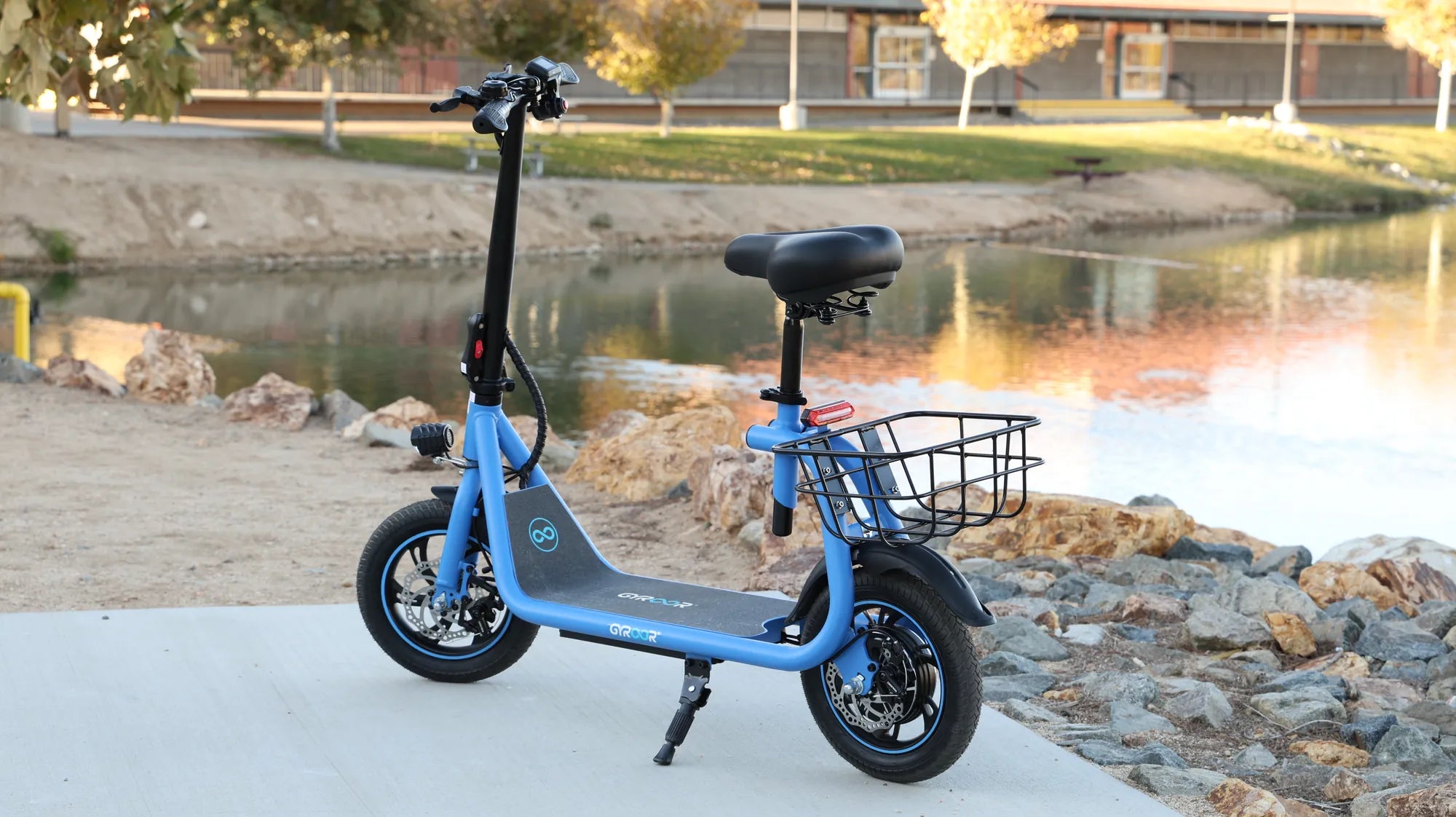
Key specifications for a typical commuter e-bike include a motor rated between 250W and 750W, a battery capacity of 500Wh to 750Wh, and a range of 20 to 60 miles per charge. Brands like Gyroor engineer their e-bikes to these standards, incorporating UL-certified battery packs for safety and IPX5 water-resistant designs for reliability in various conditions, trusted by a community of over 100,000 riders.
What is a Moped?
A moped, a portmanteau of "motor" and "pedal," historically referred to a low-powered motorcycle with bicycle pedals for starting. Modern definitions focus on engine displacement and speed. Legally, a moped is usually defined as a two-wheeled vehicle with an engine under 50cc (or an electric motor under 4,000W in some jurisdictions) and a maximum speed of 30-35 mph.
Operation is primarily via a twist-grip throttle, like a motorcycle. While some vintage models retain functional pedals, most contemporary mopeds do not; they are started with a kick or electric starter. This throttle-only operation is a primary differentiator in the e-bike vs moped comparison.
Because they are considered motor vehicles, mopeds are subject to a different regulatory regime. This almost always requires a valid driver's license (sometimes a motorcycle endorsement), vehicle registration with a license plate, and minimum liability insurance. They are generally prohibited from bicycle lanes and dedicated paths.
Key Comparison: E-Bike vs Moped - A Data-Driven Analysis
Moving beyond definitions, let's examine the tangible factors that impact your wallet, daily routine, and legal responsibilities. This side-by-side analysis of e-bike vs moped uses current market data and typical usage scenarios to provide a clear picture of what ownership entails.
The choice often hinges on a trade-off between convenience and regulation. Mopeds offer a more hands-off, motorcycle-like experience but bring bureaucratic and financial overhead. E-bikes blend human power with electric assist, offering greater accessibility and lower barriers to entry but may require more physical effort.
Cost Analysis: Upfront Price & Ongoing Expenses
The initial purchase price can be surprisingly similar for mid-range models. A quality commuter e-bike from a reputable brand typically ranges from $1,200 to $3,000. A new 50cc gas moped often falls between $1,500 and $2,500. However, the long-term financial picture diverges dramatically, a critical point in the e-bike vs moped cost debate.
E-bike ongoing costs are minimal. Electricity to charge a 750Wh battery costs about $0.10 to $0.15 per full charge. Annual maintenance resembles a bicycle: brake pad replacements, tire changes, and chain lubrication, totaling perhaps $100-$200 if done at a shop. There is no insurance or registration mandate in most areas.
Moped expenses are significantly higher. Fuel costs, while lower than a car, are ongoing (approx. 100+ mpg). Annual insurance can range from $200 to $500. Registration fees apply yearly. Engine maintenance is more complex, requiring regular oil changes, spark plug replacements, and belt/transmission service, easily adding several hundred dollars annually.
Furthermore, many regions and employers offer purchase incentives, tax credits, or subsidies for e-bikes as part of green transportation initiatives, a benefit rarely extended to gasoline-powered mopeds. This can effectively lower the already favorable total cost of ownership for an e-bike.
Licensing, Registration, and Legal Road Use
This is the most decisive legal differentiator. For most riders, the regulatory burden of a moped is the single biggest factor in choosing an e-bike. Understanding local laws is non-negotiable before purchasing either vehicle.
E-bikes (Classes 1, 2, and often 3, depending on state/province) are legally treated as bicycles. This means no driver's license is required (though a minimum age may apply), no vehicle registration or license plate is needed, and no mandatory insurance applies. They are generally permitted anywhere a traditional bicycle can go: bike lanes, multi-use paths, and roads (unless prohibited).
Mopeds are classified as motor vehicles. Operation almost universally requires a valid driver's license (a standard Class C license is often sufficient, but some states require a motorcycle permit or endorsement). The moped must be registered with the Department of Motor Vehicles, receive a license plate, and display proof of registration. Minimum liability insurance is mandatory in nearly all jurisdictions.
Where you can ride is also restricted. Mopeds are typically banned from bicycle lanes, sidewalks, and off-road paths. They must operate on the road, obeying all standard traffic laws for motor vehicles. This limits route flexibility compared to an e-bike, which can legally shortcut through park paths or dedicated bike infrastructure.
Performance & Practicality for Daily Use
How do they feel on the road? Performance metrics like speed, range, and hill-climbing ability are practical concerns for commuters. The e-bike vs moped performance battle shows each has strengths tailored to different scenarios.
Speed is comparable on paper. A Class 3 e-bike assists up to 28 mph, while a 50cc moped is often governed to 30-35 mph. However, the moped maintains its top speed effortlessly via throttle, while sustaining 28 mph on an e-bike requires significant pedaling effort. For stop-and-go city traffic, an e-bike's instant torque from a stop can feel more responsive.
Real-world range varies greatly. An e-bike's 20-60 mile range depends on assist level, terrain, rider weight, and wind. A moped's 100+ mile range per tank is more consistent but requires refueling at gas stations. For daily commutes under 20 miles, both are sufficient, but e-bikes offer the convenience of home charging.
Practicality favors e-bikes in several ways. They are lighter (50-70 lbs vs. 150+ lbs for a moped), making them easier to carry upstairs or load onto a bus rack. Parking is simpler—they can use standard bike racks. Cargo can be carried in panniers, baskets, or on racks. Mopeds require motorcycle parking and have limited, if any, built-in cargo capacity without adding aftermarket boxes.
Maintenance and Reliability
Long-term ownership satisfaction hinges on reliability and ease of repair. The mechanical complexity of each vehicle dictates the maintenance schedule and potential points of failure.
E-bike maintenance is largely bicycle-based. Regular tasks include checking tire pressure, inspecting and lubricating the chain, and ensuring brake pads have sufficient material. The electrical system is relatively sealed; the main consumable is the battery, which degrades over 500+ charge cycles (3-5 years of typical use). Brands like Gyroor mitigate concerns with robust, IPX5 water-resistant construction and a reliable 1-year comprehensive warranty, ensuring the electrical components withstand daily commutes in varied weather.
Moped maintenance involves internal combustion engine care. This includes regular oil changes (every 500-1,000 miles), air filter cleaning, spark plug replacement, and periodic transmission fluid or belt changes. Carburetors can clog, and fuel systems require stabilization if not used regularly. While generally reliable, repairs are more specialized and often require a small-engine or motorcycle mechanic.
For the average user, e-bike maintenance is more accessible. Many tasks can be performed at home with basic tools, and most local bike shops can service the bicycle components. Moped maintenance, while not overly complex, involves more hazardous materials (oil, gasoline) and typically requires more specific knowledge or a paid service visit.
Who Should Choose Which? Making Your Decision
With the data laid out, the optimal choice becomes clearer based on your personal profile. The e-bike vs moped decision isn't about which is objectively better, but which is better for you. Consider your primary use case, physical ability, and tolerance for bureaucracy.
Your daily route is a major factor. Is it flat or hilly? Does it include protected bike lanes or multi-use paths? Are you comfortable riding in traffic on main roads? Your answers will naturally steer you toward one vehicle type. Budget constraints, both initial and ongoing, will further refine your choice.
The Ideal E-Bike Rider (Choose an E-Bike If...)
You should strongly consider an e-bike if your priorities align with flexibility, low overhead, and multi-modal travel. The e-bike excels as a versatile urban and suburban tool that integrates seamlessly into a car-light or car-free lifestyle.
Choose an e-bike if: You want the option of exercise with an electric boost for hills or long distances. Your commute or errands can utilize bike lanes, paths, or trails. You have a tight budget for ongoing costs like fuel, insurance, and registration. You want to avoid DMV visits and paperwork entirely. You need to combine your ride with public transit (e.g., bringing it on a bus or train). You have secure indoor storage at home and work. For these riders, a brand like Gyroor, with its emphasis on UL-certified safety and durable, water-resistant design, provides a trustworthy and joyful commuting solution.
The Ideal Moped Rider (Choose a Moped If...)
The moped is the choice for those who prioritize a more traditional, motorized experience and are willing to accept the associated regulations and costs. It suits riders who need consistent speed without physical exertion.
Choose a moped if: You require or strongly prefer throttle-only operation with no pedaling whatsoever. Your primary routes are on faster arterial roads where bicycle infrastructure is poor or non-existent. You need to reliably travel at 30-35 mph for longer stretches. You already possess a driver's license and don't mind handling registration and insurance. You have access to secure, on-street or garage parking. You are comfortable with basic motorcycle-style maintenance or have access to affordable repair services.
Safety and Gear: Non-Negotiables for Both
Regardless of your choice in the e-bike vs moped debate, safety must be your top priority. Riding any two-wheeled vehicle exposes you to risks from other road users and the environment. Investing in proper gear and adopting defensive riding habits is essential.
A certified helmet is the most critical piece of safety equipment. For e-bike speeds up to 28 mph, a sturdy bicycle helmet (CPSC or CE EN1078 certified) is the minimum. For moped speeds, a full-face motorcycle helmet (DOT or ECE 22.06 certified) is strongly recommended, as it provides crucial jaw and face protection in a crash.
Visibility is your second line of defense. Use bright, always-on front and rear lights, even during the day. Wear reflective clothing or add reflective strips to your backpack and bike. Assume drivers do not see you. For mopeds, using your headlight at all times is often a legal requirement.
Learn and practice defensive riding. Obey all traffic laws, signal your intentions clearly, and avoid riding in drivers' blind spots. Be hyper-aware at intersections. For e-bike riders, be predictable when using bike lanes and alert pedestrians when passing. For both vehicles, secure storage is part of safety: use a high-quality U-lock for your e-bike and a disc lock/alarm for your moped. For e-bikes, follow battery care guidelines, charging in a dry area and avoiding extreme temperatures.
Frequently Asked Questions (FAQ)
Q: Can I ride an e-bike on the sidewalk?
A: Generally, no. E-bikes are typically subject to the same laws as bicycles, which are prohibited on sidewalks in most urban and suburban areas for pedestrian safety. They belong in bike lanes or on the road.
Q: Do I need a license for a 50cc moped?
A: In the vast majority of U.S. states and other countries, yes. You almost always need at least a standard automobile driver's license. Some states require a specific motorcycle license or learner's permit. Always check your local DMV regulations.
Q: Which is better for hills: e-bike or moped?
A: A mid-drive e-bike with adequate torque (e.g., 80+ Nm) is often superior for steep, sustained hills, as it leverages the bicycle's gears. A 50cc moped has limited power and can struggle on steep grades, especially with a rider on board.
Q: How far can I realistically go on a single e-bike charge?
A: Using moderate pedal assist (Eco or Touring mode), a rider on a e-bike with a 500Wh battery can expect 30-50 miles on relatively flat terrain. Using maximum assist (Turbo) or tackling many hills can reduce range to 20-25 miles. Rider weight and wind are also significant factors.
Q: Are electric mopeds a thing, and how do they compare?
A> Yes, electric mopeds (e-mopeds) exist. They replace the gas engine with an electric motor and battery but retain the moped's legal classification (requiring license, registration, insurance). They offer quieter operation and no gas costs but share the regulatory burden of gas mopeds, placing them in a different category than pedal-assist e-bikes.
Side-by-Side Comparison Table
| Feature | Electric Bike (E-Bike) | Gas-Powered Moped |
|---|---|---|
| Legal Classification | Bicycle (Classes 1-3) | Motor Vehicle |
| License Required | No (age restrictions may apply) | Yes (Standard Driver's License, often) |
| Registration & Plate | No | Yes |
| Insurance Required | No | Yes (Liability Minimum) |
| Where to Ride | Bike Lanes, Paths, Roads | Roads Only (no bike paths) |
| Top Speed | 20 mph (Class 1/2) / 28 mph (Class 3) | 30-35 mph (typical) |
| Operation | Pedal-Assist and/or Throttle | Throttle Only |
| Avg. Upfront Cost | $1,200 - $3,000+ | $1,500 - $2,500+ |
| Fuel/Energy Cost | ~$0.15 per charge | ~$3-5 per gas tank (100+ mpg) |
| Annual Maintenance Cost | Low ($100-$200) | Moderate-High ($300-$600+) |
| Parking | Bike Racks | Motorcycle/Designated Parking |
| Weight | 50-70 lbs | 150-200 lbs |
Conclusion: Your Path to Smarter Urban Mobility
The e-bike vs moped comparison reveals a fundamental trade-off. E-bikes offer unparalleled freedom from bureaucracy, remarkably low operating costs, and the flexibility to ride where bicycles go. Mopeds provide a more traditional, motorized experience with slightly higher speeds but at the cost of licensing, registration, insurance, and higher maintenance. For the vast majority of urban commuters, students, and eco-conscious riders seeking a fun, efficient, and affordable way to navigate city streets, a modern, well-built e-bike is the overwhelmingly compelling choice. It transforms a chore into a joy, reduces your carbon footprint, and saves you money every mile.
Ready to experience the freedom of an e-bike engineered for reliability and safety? Explore the full range of UL-certified, high-performance electric bikes and scooters designed for real-world commuting. Browse the full Gyroor collection at gyroorboard.com and find the perfect ride to revolutionize your daily journey.
Lightweight 24 Inch Mountain Bike: The Ultimate Trail Confidence Builder
New Trike for Sale: The Complete 2024 Buyer's Guide to Electric Trikes