

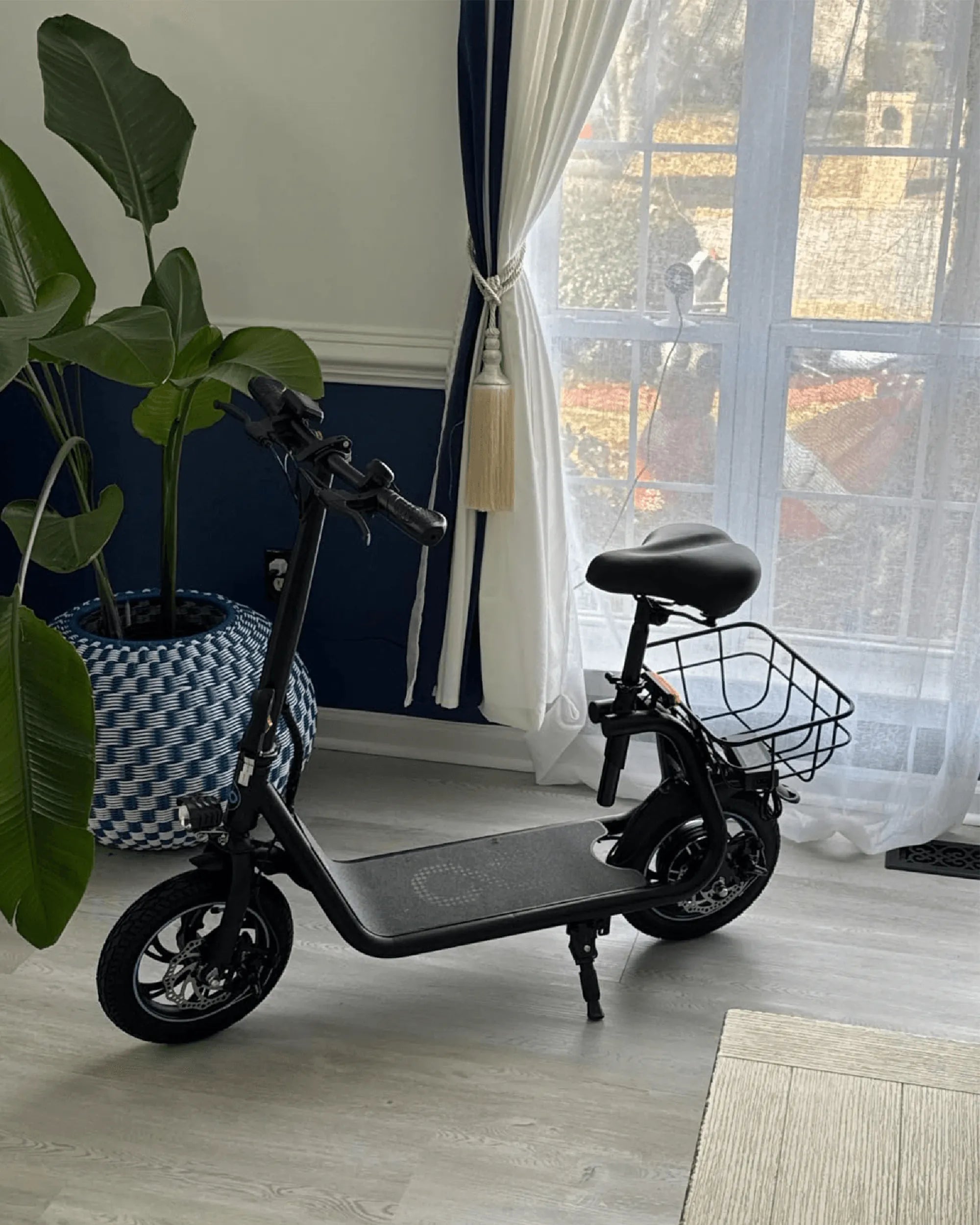
You're searching for an e-bike that prioritizes comfort and versatility, and the answer lies in a specific design: the e bike with long seat. This isn't just about a slightly wider saddle; it's about a fundamental shift in riding posture and capability. This guide will provide a complete technical and practical analysis of long-seat e-bikes, covering their unique anatomy, performance metrics for solo and passenger use, critical safety considerations, and how to select a model built for durability and shared journeys. Whether you're a commuter seeking all-day comfort or someone who occasionally transports a child or partner, understanding the specifics of this e-bike category is essential for making an informed purchase.
Introduction to E-Bikes with Long Seats: Beyond the Standard Saddle
An e bike with long seat, often referred to as a "bench," "banana," or "scooter-style" seat, features an elongated seating platform that extends significantly rearward from the steering post. This design fundamentally differs from the traditional, narrow bicycle saddle. Its primary purpose is twofold: to provide exceptional comfort for the solo rider by allowing natural posture adjustment, and to safely and comfortably accommodate a second passenger, typically a child or adult, behind the primary rider.
The market for these models has grown alongside the demand for utilitarian electric mobility. Key user segments are clearly defined. Daily urban commuters seek a more relaxed, upright riding position that reduces fatigue on longer trips. Parents view it as a car-alternative for school runs or park visits, providing a secure spot for a child. Finally, couples or friends in dense urban environments appreciate the convenience of shared, short-distance trips without the need for a second vehicle.
The ergonomic philosophy behind the long seat moves away from performance-oriented cycling posture and towards a more natural, seated position. This aligns perfectly with the use case of most utility e-bikes, where the goal is efficient, comfortable transportation rather than athletic exertion. The extended seat is a direct response to real-world needs, transforming the e-bike from a personal vehicle into a practical micro-mobility solution for small cargo and passengers.
When evaluating an e bike with long seat, it's crucial to understand that it represents a specific subcategory of electric bicycles. These models often share more DNA with electric mopeds or scooters in their riding stance and intended use, though they are typically classed as e-bikes due to their pedal-assist capabilities and speed governors. This hybrid nature demands a specific set of features to ensure safety, performance, and longevity.
The Anatomy of Comfort: Why a Long Seat Design Matters
The benefit of an e bike with long seat begins with fundamental ergonomics. A standard bicycle saddle is designed for efficient power transfer during pedaling, concentrating support on the rider's sit bones. For casual, upright riding—especially over uneven urban terrain—this can create pressure points and discomfort. A long, padded bench seat distributes the rider's weight over a much larger surface area, significantly reducing pressure on any single point and allowing for subtle shifts in position during a ride.
This design permits a natural, upright posture with feet planted flat on a wide footboard, rather than dangling or resting on narrow pedals. This posture improves visibility in traffic and reduces strain on the lower back, wrists, and neck. For the solo rider, the ability to slide forward for a more aggressive stance or backward to fully recline transforms the riding experience from a task into a leisurely activity. The comfort advantage is not marginal; it is the primary reason many riders choose this style over traditional e-bike designs.
From a stability perspective, the long seat provides a more planted and secure feeling. The rider's center of gravity is lower and more centralized over the frame, which enhances control, particularly at lower speeds and during stops. This inherent stability is exponentially important when carrying a passenger. The extended seat offers a defined, secure space for a second person, preventing the unsafe practice of a passenger balancing on a rear rack or clinging to the rider.
Furthermore, the design often integrates seamlessly with other comfort-focused features. These include comprehensive suspension systems (both front fork and rear shock), wide, pneumatic tires for absorbing vibrations, and relaxed geometry that prioritizes a smooth ride over aggressive handling. When these elements combine with the long seat, the result is an e-bike capable of turning a daily commute or errand run into a genuinely pleasant experience, mile after mile.
Key Technical Specifications for a Long-Seat E-Bike
Choosing the right e bike with long seat requires looking beyond the seat itself to the underlying engineering that supports its function. The first critical specification is motor power and torque. While a 350W motor may suffice for a solo rider on flat terrain, a model intended for potential dual riding should feature a 500W, 750W, or even higher-wattage motor. Torque (measured in Newton-meters, Nm) is equally important, as it determines the bike's ability to accelerate from a stop and climb inclines with the added weight of a passenger.
Battery capacity and real-world range are the next vital considerations. Battery capacity is measured in Watt-hours (Wh). A larger Wh rating generally translates to a longer range. However, it's imperative to understand that advertised ranges are often for ideal conditions: a lightweight solo rider on flat, paved paths. Carrying a passenger can reduce the effective range by 30-40% due to increased load. Therefore, selecting a model with a robust battery, such as a 48V 15Ah (720Wh) system or larger, is advisable for dual-use scenarios. Safety here is non-negotiable; insist on UL-certified battery packs, which have undergone rigorous testing for thermal stability and longevity.
Frame strength and weight capacity are the backbone of a safe two-person e-bike. The frame must be constructed from high-tensile steel or aluminum alloy to handle dynamic stresses. The stated weight capacity is an absolute limit; a quality e bike with long seat should have a capacity of at least 300-400 lbs to safely accommodate two adults or an adult and child with margin for error. The rear rack, if present, should be integrated into the frame's design, not merely bolted on.
Finally, the braking system must be over-engineered for the task. Mechanical or hydraulic disc brakes are essential. They provide consistent, powerful stopping power in all weather conditions, a critical feature when the bike's total mass can double with riders and cargo. Other key features to prioritize include a comprehensive lighting system (integrated headlight, taillight, brake lights, and turn signals), IP-rated water resistance (IPX5 or higher for protection against spray from all directions), and wide, treaded tires for all-surface traction.
The Gyroor Advantage: Engineering for Shared Journeys
As a leading brand in personal electric mobility, Gyroor's design philosophy aligns perfectly with the demands of a reliable e bike with long seat. Trusted by over 100,000 riders across North America and Europe, Gyroor emphasizes safety, durability, and user-focused design—prerequisites for a vehicle meant to carry passengers. Their approach to this category involves integrating the long seat into a holistic system built for shared journeys.
Central to this is battery safety. Every Gyroor model utilizes UL-certified battery packs tested for 500+ charge cycles. This certification is a critical differentiator, ensuring the battery management system protects against overcharge, short circuit, and thermal runaway. For a family-oriented e-bike, this level of certified safety is paramount. Furthermore, Gyroor incorporates IPX5 water-resistant designs across key electrical components, ensuring reliability whether commuting in drizzle or after crossing a wet street.
Gyroor's potential long-seat models would be engineered with a reinforced frame architecture to handle the increased torsional and load-bearing stresses of dual riding. The motor selection would prioritize high-torque outputs for confident acceleration even on hills with a passenger. The extended seat would be complemented by a spacious footboard, providing secure footing for both the primary rider and a passenger, completing the stable riding triangle.
This engineering is backed by a clear commitment to the rider experience, evidenced by a reliable 1-year warranty and accessible customer support. For a rider investing in an e bike with long seat for practical daily use, this support network provides essential peace of mind. It reflects a brand that stands behind the durability and performance of its products, from the UL-certified heart of the battery to the comfort of the long seat itself.
Solo vs. Passenger Use: A Performance Comparison
The performance characteristics of an e bike with long seat change significantly between solo and passenger use. Understanding this variance is key to setting realistic expectations and operating the vehicle safely. The most impacted metric is range. The increased load requires more energy from the motor, drawing down the battery faster. A bike achieving 40 miles of range with a solo 180-lb rider might see that drop to approximately 25 miles with an added 120-lb passenger, depending on terrain, assist level, and riding style.
Acceleration and hill-climbing ability are also affected. The power-to-weight ratio decreases, meaning the bike will feel less peppy and will require more throttle or pedal assist to maintain speed on inclines. This makes a powerful motor (750W+) and high-torque output even more valuable. Handling dynamics shift as well; the bike's responsiveness to leaning will be slightly dampened, and stopping distances will increase, underscoring the need for premium disc brakes.
The following table provides a data-driven comparison of key performance and operational factors:
| Performance Factor | Solo Rider (180 lbs) | With Passenger (+120 lbs) | Notes & Recommendations |
|---|---|---|---|
| Estimated Range | 35-40 miles | 22-27 miles | Varies by battery capacity (Wh). Plan trips with a 30-35% reduction. |
| 0-15 mph Acceleration | Brisk, responsive | Moderate, steady | Allow more space and time for merging or crossing intersections. |
| Recommended Tire Pressure | Manufacturer's spec (e.g., 30 PSI) | Increase by 10-15% | Higher pressure reduces rolling resistance and tire wall flex under load. |
| Optimal Cruising Speed | Up to legal limit (e.g., 20-28 mph) | 15-20 mph for stability | A lower, stable speed improves control and reaction time. |
| Braking Distance | Standard distance | Increase by 25-50% | Begin braking earlier and more gradually. Test brakes at low speed first. |
| Suspension Feel | Compliant, absorbs bumps | Firmer, may bottom out on large impacts | Consider pre-load adjustable suspension if available. |
Maintenance schedules should also be adjusted. Tires, brake pads, and drive components (chain or belt) will experience more wear under heavier loads. Regular checks for tire wear, brake pad thickness, and proper chain tension should become more frequent. Keeping the tires properly inflated is the single easiest maintenance task to preserve range and safety when carrying a passenger.
Safety, Etiquette, and Legal Considerations for Two Riders
Operating an e bike with long seat with a passenger introduces a new layer of responsibility. Safety begins with understanding and obeying local laws. Regulations governing passengers on e-bikes vary widely by country, state, and municipality. Some areas permit passengers only on bikes specifically designed with a passenger seat and footrests, which a long-seat model provides. Others may restrict passengers to children of a certain age or require a dedicated child seat. Always verify local regulations before carrying a passenger.
Proper mounting and dismounting procedure is crucial. The rider should mount first, stabilize the bike with both feet on the ground and the kickstand retracted, and then have the passenger mount. The passenger should hold onto the rider's waist or dedicated handholds, not the rider's shoulders or the handlebars, which can affect steering. Dismount in the reverse order: passenger off first, then rider. Both parties should wear properly fitted helmets rated for bicycle or multi-impact use.
Weight distribution is key to stable handling. The passenger should sit centered on the seat, facing forward, with their feet firmly on the passenger footrests or footboard. They should avoid sudden leaning or shifting, especially during turns or braking. The primary rider must adopt a more defensive riding style: increasing following distances, anticipating stops earlier, avoiding sharp maneuvers, and communicating intentions clearly. The added mass means momentum is harder to overcome, so smoothness in acceleration, braking, and steering is paramount.
Finally, rider-passenger communication is essential. Establish simple signals before setting off. A tap on the shoulder can indicate a need to stop or a warning about an upcoming bump. The passenger must understand they are an active participant in safety, not just cargo. By treating the e bike with long seat as a true two-person vehicle and respecting its different handling characteristics, riders can ensure shared journeys are safe, legal, and enjoyable for everyone involved.
Frequently Asked Questions (FAQ)
1. Are e-bikes with long seats legal for carrying a passenger?
Legality depends entirely on your local jurisdiction. In many regions, it is legal to carry a passenger on an e-bike only if it is specifically designed for the purpose, which includes a permanent passenger seat and footrests—features inherent to a true e bike with long seat. However, some areas prohibit any passengers, while others allow only child passengers in an approved seat. Always check your state/provincial vehicle code and municipal bylaws before carrying a passenger.
2. What is the typical weight capacity for a two-person e-bike?
A quality e-bike designed for two riders, featuring a long seat and reinforced frame, typically has a total weight capacity between 300 and 400 pounds. This includes the weight of both riders, any cargo, and the bike itself. It is critical to never exceed the manufacturer's stated maximum weight capacity, as doing so can overstress the frame, brakes, and motor, leading to premature failure or unsafe handling.
3. How does carrying a passenger affect battery life and maintenance?
Carrying a passenger increases the energy demand on the motor, reducing the bike's effective range by 30-40% on average. It also increases wear on mechanical components. You should perform maintenance checks more frequently: monitor tire pressure and tread wear, check brake pad thickness, and ensure the chain or belt drive is properly tensioned and lubricated. Adhering to a stricter maintenance schedule ensures safety and longevity.
4. Can I add a long seat to any standard e-bike?
Generally, no. A long "banana" seat is not a universal accessory. It requires a specific frame design that includes the necessary mounting points and geometry to support its length and the altered rider/passenger weight distribution. Installing an incompatible seat on a frame not designed for it can be unsafe, affecting handling and potentially damaging the frame. It is always best to purchase an e-bike designed from the ground up with a long seat.
5. What features are most important for safety with a passenger?
The most critical safety features for a two-person e-bike are, in order: a high-performance braking system (hydraulic disc brakes are ideal), a frame with a high verified weight capacity, a UL-certified battery for fire safety, a comprehensive lighting system (headlight, taillight, brake lights, turn signals), and secure footrests for the passenger. Never compromise on brakes or frame strength when the bike will be used to carry a passenger.
Choosing Your Ideal Long-Seat E-Bike: A Decision Framework
Selecting the right e bike with long seat requires a clear assessment of your primary use case. Begin by asking: Will this be primarily for comfortable solo commuting, or will carrying a passenger be a regular, essential function? Your answer dictates the required specifications. For frequent dual riding, prioritize maximum motor torque (750W+), the highest battery capacity (Wh) you can afford, a weight capacity well above your combined weight, and hydraulic disc brakes.
For the comfort-focused solo rider, the emphasis can shift slightly. A powerful motor remains beneficial for hills and acceleration, but you may opt for a slightly smaller battery if your daily range needs are modest. The quality of the seat padding, the smoothness of the suspension, and the overall ergonomics of the riding position become paramount. However, even solo riders benefit from the overbuilt safety features that come with a passenger-ready design.
Brand reputation and post-purchase support are non-negotiable. Look for brands that transparently list safety certifications like UL 2849 for the entire electrical system, not just the battery. A robust warranty (at least one year) and accessible customer service indicate a company that stands behind its products. Reviewing feedback from other riders, particularly regarding durability and real-world range, is invaluable.
Finally, consider the complete ecosystem. Does the bike have integrated cargo options like a rear rack or front basket? Are the lights bright and properly positioned? Is the display intuitive? The e bike with long seat is a tool for daily life; its integration into your routines should be seamless. By methodically evaluating your needs against the bike's specifications and the brand's commitment to quality, you can invest in a vehicle that delivers comfort, capability, and peace of mind for years to come.
The journey toward more comfortable and versatile urban mobility starts with the right equipment. An e bike with long seat represents a perfect fusion of relaxed ergonomics and practical passenger capability, transforming daily travel. By prioritizing safety certifications like UL-approved batteries, robust construction for higher weight capacities, and reliable components from trusted brands, you secure not just a ride, but a dependable transportation solution. Assess your needs, understand the performance trade-offs, and choose a model engineered for the long haul. Explore thoughtfully designed electric mobility options that prioritize safety and comfort. Browse the full Gyroor collection at gyroorboard.com.
Is an E-Bike Considered a Motor Vehicle? The Definitive Legal Guide
Scooter Buyers Guide: The Data-Driven Manual for Your Perfect Ride