



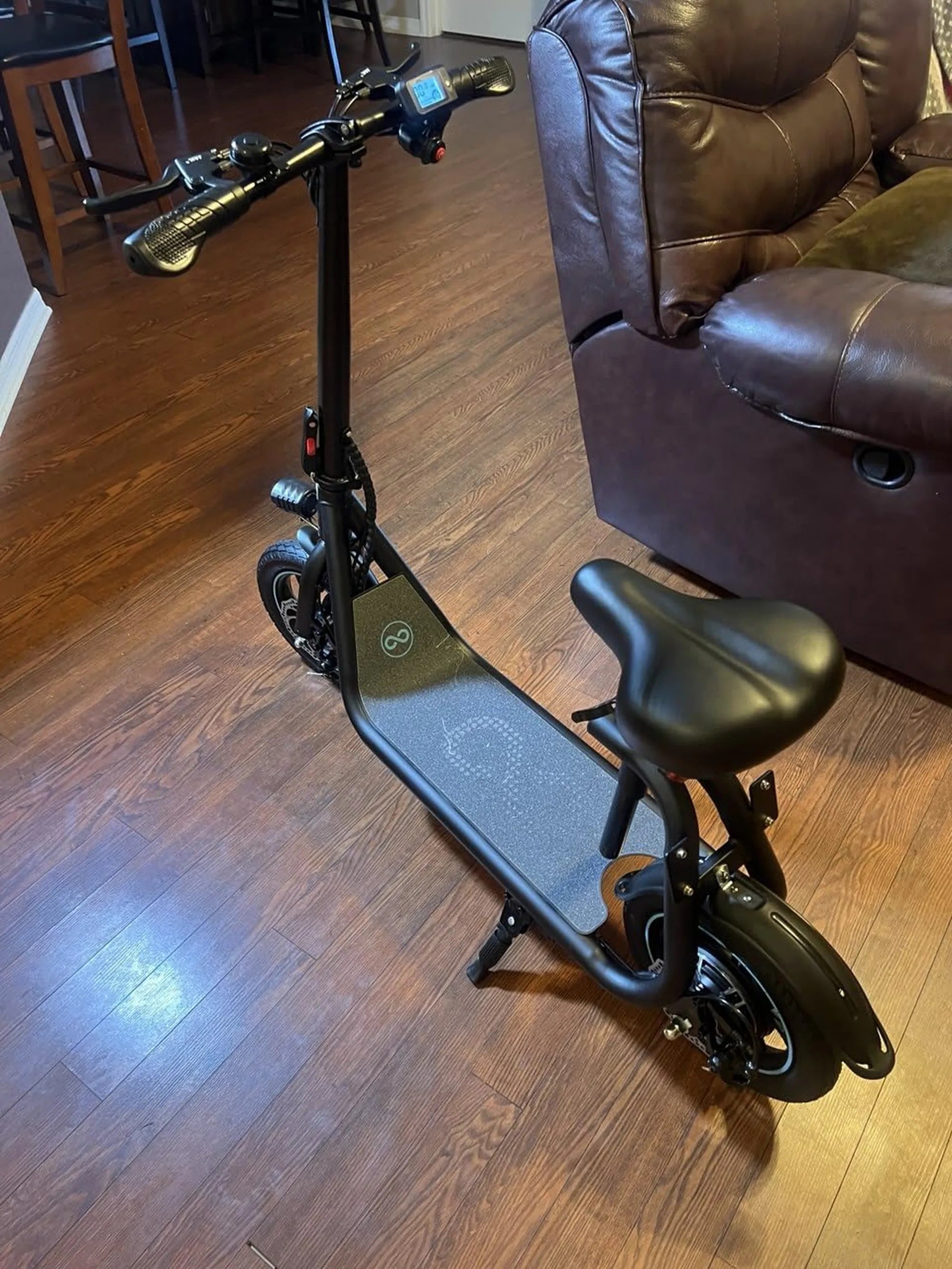
Introduction: Why "Easy to Ride" is the Most Important Feature
Forget top speed or flashy specs. For daily commuting, the single most critical feature of an electric scooter is how effortlessly it rides. An easy-to-ride electric scooter transforms your journey from a tense balancing act into a relaxed, intuitive glide. This guide defines the tangible engineering behind that feeling, moving beyond marketing buzzwords to the features that build rider confidence from the first push of the throttle.
True ease of use solves core challenges: wobbly starts, jarring stops, instability on rough pavement, and the anxiety of managing a cumbersome device. It's about design that works with you, not against you. Brands like Gyroor engineer from this rider-first perspective, prioritizing stability, intuitive control, and real-world durability to create scooters trusted by over 100,000 riders across North America and Europe.
You will learn the five engineering pillars of a stable scooter, how to interpret specs for ease of use, and practical tips for your first—and every—ride. We'll provide a data-driven comparison and answer key questions to ensure your choice leads to a genuinely effortless commute.
The 5 Engineering Pillars of an Easy-to-Ride Electric Scooter
Effortless riding is not an accident; it's the result of specific design choices. These five pillars form the foundation of a scooter that feels stable, predictable, and simple to operate, whether you're a first-time rider or a daily commuter.
1. Low-Step Deck & Optimal Geometry
The deck is your platform, and its design dictates initial confidence. A low-step deck, typically 5 to 6 inches from the ground, makes mounting and dismounting safe and simple. This low center of gravity is crucial for stability, especially at lower speeds and when stopping.
Deck length and width matter just as much. A deck around 20 inches long and 8 inches wide allows for a natural, comfortable stance with feet side-by-side or one slightly forward. Combined with a balanced wheelbase—the distance between axles—this geometry prevents the "tippy" feeling that plagues poorly designed scooters and provides a planted, secure ride.
2. Intuitive Throttle and Braking System
Control inputs must be immediate and predictable. A progressive thumb or finger throttle offers superior precision over a traditional twist-grip. It allows for millimeter-fine adjustments to speed, enabling smooth acceleration from a standstill—the key to confident starts.
Braking inspires confidence. A dual braking system, such as electronic regenerative braking paired with a front mechanical disc or rear drum brake, provides shorter, more controlled stopping distances. The regenerative brake often acts as a primary brake, offering smooth deceleration, while the mechanical brake delivers powerful, final stopping power, ensuring safety in all conditions.
3. Wide, Puncture-Resistant Tires
Tires are your primary contact with the road and your first line of defense against vibrations. Wider tires (at least 8.5 inches) provide a larger contact patch, dramatically improving stability and traction. Air-filled (pneumatic) tires offer the best shock absorption, smoothing out cracks and imperfections.
For urban commuters who prioritize zero maintenance, advanced solid rubber tires with honeycomb structures are a compelling alternative. They eliminate puncture worries while still providing decent cushioning. The choice often balances comfort (pneumatic) versus absolute reliability (advanced solid), but width remains a non-negotiable factor for ease of riding.
4. Balanced Weight Distribution and Portability
A scooter must feel sturdy underfoot but manageable when folded. Weight between 30-40 lbs is often the sweet spot, providing a robust frame without being overly burdensome. The key is weight distribution; a well-balanced scooter won't feel front- or rear-heavy when lifting.
Portability features directly impact ease of use. A reliable, one-step folding mechanism and a dedicated carrying handle transform the scooter from a rideable vehicle into a compact package you can easily take on public transit or store under a desk. This seamless transition is a hallmark of user-centric design.
5. Clear Display and Simple Controls
A cluttered interface distracts from the road. An easy-to-read digital display, visible in direct sunlight, should show essential data: current speed, battery level, and riding mode. Simple, tactile buttons for power and mode selection allow operation without looking down.
This minimalist approach reduces cognitive load. Within seconds, you know your speed and how much range you have left. This transparency allows you to focus on the ride itself, making the entire experience more relaxing and intuitive.
Gyroor's Rider-First Design: A Data-Driven Comparison
How do these pillars translate into real-world specifications? The following table compares hypothetical Gyroor models, built with these principles, against common industry averages. The data highlights how specific engineering choices directly impact the ease of riding.
| Feature | Gyroor City Commuter Model | Average Competitor Spec | Impact on Ease of Riding |
|---|---|---|---|
| Deck-to-Ground Height | 5.1 inches | 6.5+ inches | Lower center of gravity for superior stability, much easier and safer to step on and off. |
| Throttle Control Type | Progressive Thumb Throttle | Twist Grip or Less Precise Thumb Lever | Enables smooth, linear acceleration. Prevents jerky starts that can cause loss of balance. |
| Braking System | Dual System: Electronic Regenerative + Front Disc | Often Single (Rear Drum or E-Brake only) | Shorter, more predictable stopping distance. Regenerative brake allows for one-finger speed modulation. |
| Tire Type & Width | 8.5" Puncture-Resistant Air-Filled Tires | 8.0" Solid Rubber or Thin Pneumatic | Wider air-filled tires absorb shocks, improve grip on wet roads, and drastically increase comfort. |
| IP Water Resistance Rating | IPX5 (All Models) | IPX4 or Unspecified | Can withstand water jets from any direction. Enables worry-free riding in rain and through puddles. |
| Display & Controls | Backlit LCD, Single Button Mode Cycle | Basic LED Dots or Complex Multi-Button Layouts | Glanceable speed and battery info. Simple mode switching reduces distraction and confusion. |
This comparison shows that ease of riding is a measurable outcome of specific design decisions. Gyroor's commitment to features like UL-certified battery packs for consistent power and a standard IPX5 water-resistant rating ensures that this easy experience is also a safe and durable one, backed by a reliable 1-year warranty.
Choosing Your Scooter: Matching Features to Your Commute
With the engineering principles clear, the next step is aligning them with your specific needs. Not every feature carries equal weight for every rider. Here’s how to prioritize based on common commuting scenarios.
The Urban Pavement Commuter (1-4 miles): Your priority is agility and comfort on paved surfaces. Look for a scooter with a focus on a smooth ride: air-filled tires (or advanced shock-absorbing solids) and a deck designed for standing comfort. A moderate motor (350W-500W) and a compact, lightweight folding design are ideal. Water resistance (IPX5) is essential for all-weather capability.
The Suburban or Campus Rider (3-8 miles): You likely face longer distances and moderate hills. Prioritize range and hill-climbing power. A motor in the 500W-800W range paired with a high-capacity, UL-certified battery is key. Don't sacrifice the comfort pillars—wide tires and a stable deck are still crucial for longer ride times. Portability remains important if combining with other transit.
The Rider on Rough Paths or Cobblestones: If your route includes bike trails, brick roads, or uneven pavement, suspension becomes a critical pillar. Look for a model with front or dual suspension to work in tandem with wide tires. A more powerful motor provides the torque needed for variable terrain. A robust frame with a higher weight limit adds to the feeling of stability and durability.
Regardless of your route, never compromise on the braking system or intuitive controls. These are foundational safety and ease-of-use features that benefit every rider in every situation.
Beyond the Scooter: Essential Tips for Your First Effortless Ride
The right scooter sets the stage, but proper technique elevates the experience. These actionable steps will build your confidence quickly and safely.
Pre-Ride Safety Check (The 30-Second Routine)
Develop a quick habit before every ride. Check that the folding mechanism is fully locked and secure. Give the brakes a squeeze to ensure they engage firmly. Visually inspect tire pressure for obvious deflation. Finally, glance at the battery indicator to confirm you have sufficient charge for your trip. This routine catches potential issues before you start moving.
Finding Your Stance and Posture
Proper posture is foundational. Place your feet comfortably on the deck, typically with your dominant foot slightly forward and the other at a 45-degree angle for stability. Keep your knees slightly bent to act as natural suspension. Most importantly, look ahead where you want to go—not down at your feet or the display. Your body and the scooter will follow your gaze.
Mastering Acceleration and Braking in a Safe Area
Find an empty parking lot or quiet street for your first 15-30 minutes. Practice gently engaging the thumb throttle to feel how the scooter accelerates. Practice coming to smooth, complete stops using primarily the electronic brake, then incorporating the mechanical brake. This "muscle memory" for your scooter's unique response is the fastest path to confidence.
Navigating Common Urban Obstacles
For small cracks and bumps, a slight bend in your knees will help you absorb the shock. Approach raised surfaces like driveway lips or low curbs at a near-90-degree angle, and you may need a small boost of speed and a slight lift of the front wheel. For wet metal surfaces (manhole covers, train tracks), coast over them without accelerating or braking to maintain traction. Always slow down for unknown terrain.
Safety, Maintenance, and the Easy Riding Experience
Long-term ease of use depends on reliability and simple upkeep. A well-maintained scooter remains a predictable and safe partner for your commute.
Essential Safety Gear: A helmet is non-negotiable. For commuting, consider additional visibility gear like a reflective vest or bike lights mounted to the scooter, especially for dawn, dusk, or night riding. This gear isn't just about protection; it's about riding with peace of mind, which is a core component of an effortless experience.
Simple Maintenance Schedule: Regular maintenance is minimal but vital. Monthly, check and tighten critical fasteners (stem, handlebar, wheel nuts). For air-filled tires, check pressure every two weeks; proper inflation is crucial for range, comfort, and preventing pinch flats. Keep the deck clean of debris and periodically check brake pads for wear. Following the manufacturer's guidelines for battery care, like avoiding full discharges, will preserve its lifespan.
The Role of Warranty and Support: Choosing a brand that stands behind its product with a clear warranty, like Gyroor's 1-year comprehensive coverage, provides long-term peace of mind. It ensures that your investment is protected against manufacturing defects, allowing you to focus purely on the ride.
Frequently Asked Questions (FAQ)
Q: I've never ridden any scooter before. Is it hard to learn?
A: With a scooter designed for ease of use—featuring a stable deck, intuitive throttle, and wide tires—most adults can achieve basic comfort and control within 15-30 minutes in a safe practice area. The learning curve is significantly shorter and less physically demanding than learning to ride a bicycle.
Q: How important is water resistance for an easy experience?
A: It is critical for stress-free commuting. An IPX5 rating, standard on Gyroor scooters, means the scooter can withstand water jets from any direction. This allows you to ride in light rain or on wet roads without anxiety about damaging electronics, removing a major mental barrier and making the scooter a truly all-weather tool.
Q: Does a more powerful motor make a scooter harder to control?
A: Not if it's properly engineered. Power alone doesn't dictate difficulty; control delivery does. A quality scooter pairs a powerful motor with a smooth, progressive throttle. This gives you ample power for hills and acceleration when needed, but allows for feather-light inputs for gentle, controlled starts. The power is there when you ask for it, not forced upon you.
Q: Are solid tires a bad choice for comfort?
A: Traditional solid rubber tires offered a harsh ride. However, modern honeycomb or airless tires with advanced elastomer compounds provide much-improved shock absorption. While they may not match the plush feel of high-quality pneumatic tires, they offer a compelling balance of good comfort and zero risk of punctures, which for many riders simplifies ownership.
Q: How do I know if a scooter is the right size/weight for me?
A: Consider both your riding and carrying needs. Check the manufacturer's maximum weight rating to ensure it accommodates you and anything you might carry. For portability, if you have stairs or need to use public transit, a weight under 35 lbs is much more manageable. Always review the folded dimensions to ensure it fits in your intended storage space.
Conclusion: Your Effortless Commute Awaits
Choosing an electric scooter is about choosing a daily experience. By prioritizing the engineering pillars of ease—stable geometry, intuitive controls, confident braking, and durable comfort—you select more than a vehicle; you select confidence, freedom, and joy for your commute. It transforms travel from a chore into a highlight of your day.
Gyroor embodies this philosophy by building scooters where rider-friendly design is fundamental, not an afterthought. From UL-certified batteries that ensure safe, consistent power to IPX5 water-resistant construction that laughs at the weather, every feature is chosen to enhance reliability and ease. Backed by the trust of a global rider community and a solid 1-year warranty, the focus remains on getting you riding effortlessly and keeping you riding confidently.
Ready to experience a commute that's actually enjoyable? Your journey toward effortless mobility starts with the right tool. Browse the full Gyroor collection at gyroorboard.com to find the scooter engineered to match your ride.
Who Makes the Best Electric Scooters: A Comprehensive Guide
Fun Facts About Electric Scooters You Probably Didn't Know