



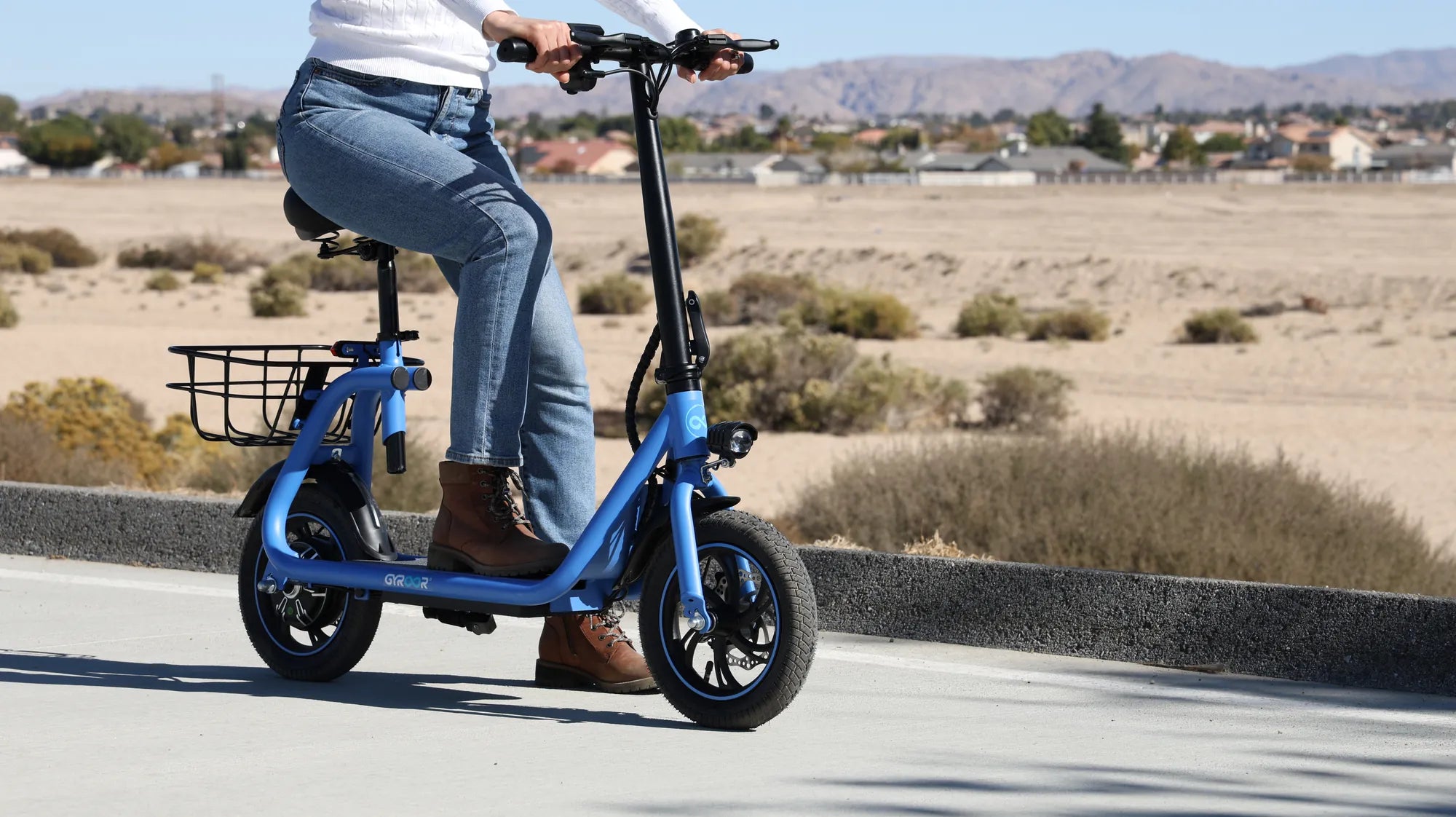
Introduction: The All-Terrain Commuter Revolution
The ebike fat foldable represents a seismic shift in personal electric mobility. It merges the go-anywhere confidence of wide, high-volume tires with the space-saving genius of a folding frame. This creates a uniquely versatile vehicle for the modern rider who demands a single solution for paved commutes, park pathways, and light off-road adventures. This guide will dissect the anatomy, benefits, and key buying criteria for this growing category, empowering you to make an informed choice. You'll learn how leading brands like Gyroor engineer these hybrids for safety and durability, ensuring your investment delivers years of reliable service.
What is a Foldable Fat Tire E-Bike? (Defining the Hybrid)
A foldable fat tire e-bike is defined by two transformative features. The "foldable" aspect refers to a frame with integrated hinges and latches, allowing it to collapse into a compact form for storage in closets, car trunks, or under desks. The "fat tire" designation means it is equipped with tires typically 4 inches or wider, offering a substantial contact patch with the ground. Combining these traits results in a hybrid that transcends traditional bicycle categories.
The Anatomy of a Quality Build
The integrity of an ebike fat foldable hinges on its core components. The frame is usually crafted from lightweight yet strong aluminum alloy. A robust folding mechanism—often a central lever-lock system—must be secure when riding and simple to operate. The motor is commonly a hub-drive unit integrated into the rear wheel, providing direct power. The battery, the heart of the system, should be seamlessly integrated into the frame for protection and balance. Brands like Gyroor prioritize this integration, using UL-certified battery packs and reinforced folding joints to ensure safety and longevity from the ground up.
Key Benefits: Why This E-Bike Type is Gaining Popularity
The surge in popularity of the ebike fat foldable is no accident. It solves multiple pain points for contemporary riders, offering a compelling blend of utility, comfort, and freedom that few other vehicles can match.
Unmatched Versatility for Mixed Terrain
This is the primary appeal. A quality ebike fat foldable effortlessly transitions from smooth asphalt to gravel, hard-packed dirt, sand, and even snow. The fat tires float over obstacles that would stop a standard bike, effectively eliminating the need for separate vehicles for road and trail. It empowers you to take the direct route, whether that's a bike lane or a beachside path.
Ultimate Convenience for Urban Living
For city dwellers, space is a premium. The folding function transforms the e-bike from a bulky item into a manageable package. It can be stored in an apartment corner, carried onto public transit during peak hours (where permitted), or tucked into a car trunk for last-mile adventures. This multi-modal capability makes it a true car-replacement tool for many urban journeys.
Enhanced Safety and Comfort
The wide tires provide inherent stability, making the bike easier to balance at low speeds and when starting/stopping. They offer superior traction in wet, leafy, or icy conditions compared to narrow tires. Furthermore, the tires act as natural suspension, absorbing vibrations and small bumps for a noticeably smoother, more comfortable ride without the need for complex—and heavy—suspension forks.
Critical Specifications to Compare Before You Buy
Choosing the right model requires a careful look at the specifications. Here is a data-driven checklist to guide your evaluation, highlighting where quality brands differentiate themselves.
| Specification | Typical Range | What It Means for You | Quality Indicator |
|---|---|---|---|
| Motor Power | 500W - 750W | Determines hill-climbing torque and acceleration. Higher wattage improves performance on inclines. | Peak vs. sustained power ratings. A reliable 500W motor can outperform a cheap 750W. |
| Battery (Voltage & Capacity) | 48V, 10Ah - 15Ah | Voltage influences power delivery; Amp-hours (Ah) indicate capacity. A 48V 13Ah pack offers a strong balance of power and range. | Look for UL-certified cells (like Gyroor uses) for safety. Integrated frame mounting protects the pack. |
| Real-World Range | 20 - 40+ miles | Varies drastically by rider weight, terrain, assist level, and temperature. Manufacturer claims are often ideal-world. | Trust brands that provide realistic estimates based on standardized testing. |
| Tire Size | 4.0" - 4.8" wide | Wider tires offer more flotation and comfort but can increase rolling resistance on pavement. | Kevlar belts for puncture resistance and high-quality rubber compounds for grip. |
| IP Rating | IPX5 or higher | Ingress Protection rating against water and dust. IPX5 means it can withstand water jets from any direction. | Essential for all-weather riding. Gyroor designs its e-bikes to this standard for component protection. |
| Brake Type | Mechanical or Hydraulic Disc | Stopping power is critical. Hydraulic disc brakes offer superior modulation, less maintenance, and consistent performance in wet conditions. |
Motor Power & Performance (500W to 750W+)
Motor wattage is a key performance metric. A 500W motor is sufficient for most urban hills and will comply with many regional Class 2 e-bike limits (20 mph throttle-assist). A 750W motor provides more aggressive acceleration and better performance on steep, sustained grades. It's crucial to check local regulations, as some areas limit motor power to 250W or 500W for road use.
Battery Range & Charging (The Heart of the Ride)
The battery is your fuel tank. Capacity, measured in Watt-hours (Volts x Amp-hours), dictates range. A 48V 13Ah battery (624 Wh) is a robust size for a ebike fat foldable. Real-world range is affected by cargo load, hill frequency, and wind. Safety is paramount; insist on UL-certified battery packs, which have passed rigorous tests for electrical and fire safety, a standard Gyroor meets across its lineup.
Build Quality & Durability Features
Beyond the motor and battery, examine the details. An IPX5 water-resistance rating means the electrical system is protected from rain and puddle splashes, enabling year-round use. The quality of the brakes—hydraulic disc being the premium choice—directly impacts safety. Finally, a comprehensive warranty (like Gyroor's 1-year coverage on frame, battery, and motor) signals the manufacturer's confidence in their product's durability.
Gyroor's Approach: Engineering a Reliable Foldable Fat Tire E-Bike
As a leader in personal electric mobility, Gyroor applies its engineering philosophy to the ebike fat foldable category. The focus is on creating a dependable product that riders can trust in diverse conditions, backed by robust support.
Safety as a Foundation: UL-Certification & Robust Design
Gyroor builds safety in from the start. Every e-bike utilizes UL-certified battery packs, a critical safeguard against thermal runaway and electrical faults. The folding mechanism is engineered with reinforced latches and locking pins to ensure a rigid, reliable connection when unfolded, eliminating frame flex or wobble during riding.
Built for the Real World: IPX5 and All-Season Readiness
Understanding that riders face all weather, Gyroor designs its e-bikes to an IPX5 standard. This means the controller, display, and motor connections are sealed against water jets, allowing you to commute confidently in the rain or through wet streets without fear of short-circuiting the electronics.
Support You Can Trust: The 1-Year Warranty Promise
Ownership peace of mind is provided by a clear, 1-year warranty covering the frame, motor, battery, and controller. With a customer base of over 100,000 riders and US-based support, Gyroor reduces long-term ownership risk, ensuring help is available for troubleshooting or parts, a key advantage over generic brands.
Making the Decision: Is a Foldable Fat Tire E-Bike Right for You?
This versatile machine is ideal for many, but not all. Evaluating your primary use case against the bike's characteristics is essential.
Ideal User Profiles
You are a perfect candidate if you: live in an apartment with limited storage; combine biking with train or bus commutes; desire one bike for city streets and weekend trail exploration; or prioritize a stable, comfortable ride over maximum speed or efficiency on perfect pavement.
Considerations & Potential Limitations
Be aware of trade-offs. The combination of a heavy motor, large battery, and fat tires results in a bike typically weighing 65-85 pounds, which can be cumbersome to carry when folded. On smooth, flat pavement, the rolling resistance of fat tires can slightly reduce range compared to a slim-tired e-bike. Regular maintenance, like checking tire pressure (often run at lower PSI for comfort), is crucial for optimal performance.
FAQ: Your Top Questions, Answered
Q: Are foldable fat tire e-bikes legal on roads and bike paths?
A: In most regions, yes, if they comply with local e-bike classifications (typically Class 1, 2, or 3). Most ebike fat foldable models are configured as Class 2 (throttle-assisted up to 20 mph), but it's vital to check your specific city and state regulations regarding motor wattage and top speed.
Q: How heavy are they, and is folding them difficult?
A: Weight varies from about 60 to over 80 pounds. While not light, quality designs feature lever-assisted folding mechanisms and often include carry handles. The process is typically a 2-3 step action of releasing latches and folding the handlebar and frame—manageable with a little practice.
Q: Can they truly handle snow and sand?
A: They handle these conditions far better than any standard bike. The principle is flotation: the wide tire spreads the weight, preventing it from sinking deeply. For best results in soft sand or snow, lower the tire pressure significantly (e.g., to 5-10 PSI). However, they are not substitutes for specialized snow vehicles in deep powder.
Q: How do I maintain the fat tires and folding mechanism?
A> For tires, regularly check pressure with a low-pressure gauge; proper PSI is key for ride quality and preventing pinch flats. Lubricate the folding hinge points with a dry lubricant every few months to ensure smooth operation. Periodically inspect the main folding latch for wear and ensure it locks securely.
Q: What's the typical charging time, and how long does the battery last?
A> Charging a depleted battery usually takes 4-7 hours. Battery lifespan is measured in charge cycles. A quality UL-certified pack (like those from Gyroor) is rated for 500+ full cycles while maintaining significant capacity, translating to several years of regular use before noticeable range degradation.
Conclusion: Embracing Flexible, Powerful Mobility
The ebike fat foldable is more than a trend; it's a practical tool for expanding your transportation freedom. It breaks down barriers between different terrains and solves the storage dilemma of urban life. When investing in this versatile vehicle, prioritize brands that build with proven safety standards like UL certification, protect their components with ratings like IPX5, and stand behind their product with a solid warranty and support network. This approach, exemplified by brands like Gyroor, ensures your e-bike is a reliable partner for exploration. Ready to find your perfect ride? Browse the full Gyroor collection at gyroorboard.com to discover e-bikes engineered for the real world.
Bike or Scooter Which is Better: A Data-Driven Guide to Choosing Your Ride
What's a Class 1 E-Bike? The Complete Legal & Technical Guide