



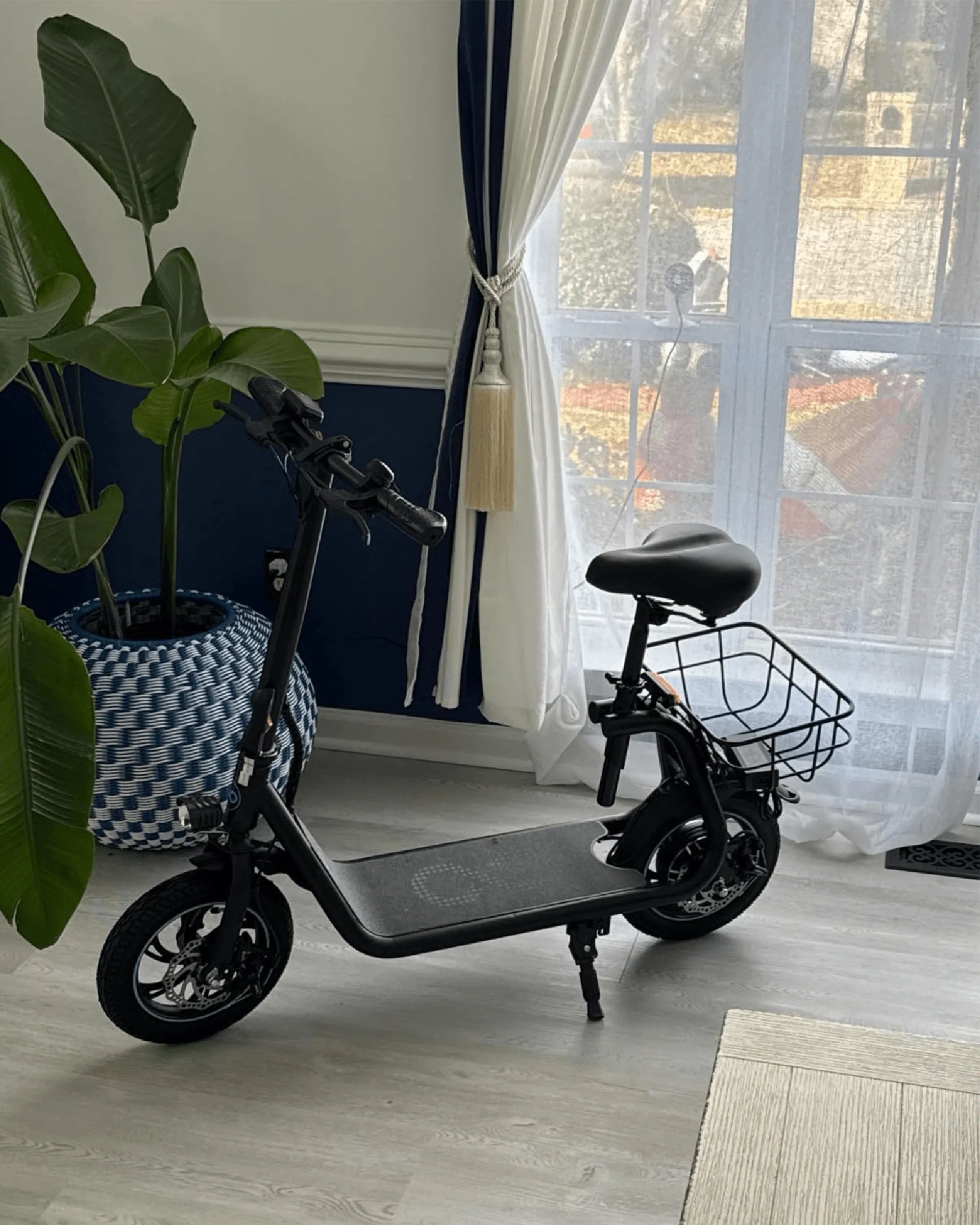
Introduction: Diagnosing the "No Power" E-Bike Dilemma
You press the power button, and nothing happens. No display lights, no motor hum, just silence. An e-bike that won't turn on is a universal frustration that can derail your commute, workout, or leisurely ride. Before you assume the worst or consider a costly repair, know that many power failures have simple, user-fixable causes.
This guide provides a systematic, data-driven approach to troubleshooting your electric bike. We'll start with the most common and easily checked issues and progress to more complex electrical diagnostics. Understanding this process empowers you as a rider and can save significant time and money.
For riders of brands like Gyroor, known for robust engineering and safety certifications, many problems are often external or connection-based rather than core component failures. A methodical check of the power delivery chain—from the battery to the display—resolves the majority of "no power" scenarios.
By following this structured diagnostic path, you can identify whether you're dealing with a drained battery, a loose wire, a blown fuse, or a rarer controller issue. Let's start with the quick checks that solve most problems.
The First Line of Defense: Quick and Simple Checks
Approximately 80% of e-bike power issues stem from a handful of simple causes. Performing these no-tool checks first is the most efficient way to potentially solve your problem in minutes. Always start here before disassembling any parts or assuming major component failure.
This process follows the basic electrical principle: power must flow uninterrupted from the energy source (battery) to the control unit (display/controller) to activate the system. A break at any point in this simple circuit will result in a complete lack of power.
Riders often overlook these basics in frustration, leading to unnecessary stress. We'll methodically eliminate each common point of failure. Remember, an e-bike is a vehicle, and like a car, it sometimes needs a simple "jump start" in the form of re-seating a connection.
Investing five minutes in these steps can save you a trip to the repair shop. Let's begin with the most frequent culprit: the battery's state of charge.
Is Your Battery Actually Charged?
It sounds obvious, but a partially or fully depleted battery is the #1 reason an ebike won't turn on. Modern lithium-ion batteries can self-discharge over time, and chargers can be accidentally unplugged. Don't rely on memory; verify the charge state empirically.
First, check the battery's integrated indicator lights, if it has them. Most batteries have a button that, when pressed, shows charge level via 4-5 LEDs. If no lights illuminate at all, the battery is either completely dead or has a disconnected internal circuit. Next, plug in the official charger. A green light typically means full, red means charging, and no light can indicate a problem with the outlet, charger, or battery port.
For e-bikes with a central display, the display itself might not turn on if the battery voltage is below a certain minimum threshold (often around 30V for a 36V system), even if some charge remains. This is a safety feature to prevent deep discharge, which damages cells. Always use the manufacturer-provided charger, like Gyroor's UL-certified units, as third-party chargers may not communicate correctly with the battery management system (BMS).
If the battery shows no signs of life, ensure it's been charging for at least 30 minutes before testing again. A deeply discharged battery may take a few minutes of charging before the BMS reactivates and allows output. If after a proper charge cycle the issue persists, we must look deeper.
Secure Connections: The Power Circuit Basics
E-bikes endure vibrations and impacts from riding, which can loosen connections over time. The primary connection is between the battery and the bike's main harness. Even if the battery is charged, power cannot flow if this link is broken.
For frame-integrated or downtube batteries, ensure the battery is fully seated and physically locked into place. The locking mechanism should engage with a solid click. Remove the battery entirely and inspect the mounting plate on the bike and the contacts on the battery for dirt, debris, or corrosion. Clean contacts gently with a dry cloth. For external rack-mounted batteries, check that the connector is fully plugged in and the locking collar is tightened.
Next, trace the main power cable from the battery mount to the controller (usually in a compartment under the downtube or near the bottom bracket). Check for any obvious disconnections. Also, verify that the display unit's cable is securely plugged into its port on the handlebar or control unit. These connectors often have weatherproof rubber seals; ensure they are seated properly.
A loose connection can create high resistance, leading to voltage drop and preventing the system from booting. Ensuring every plug from the battery to the display is firm and clean is a critical step. After checking connections, try powering the bike on again.
The Master Switch and Safety Cut-Offs
Many e-bikes have secondary switches or safety sensors that can interrupt power. First, locate the battery's physical on/off switch. Some models, particularly those with removable batteries, have a separate power switch on the battery itself. Ensure it is in the "ON" position.
Next, consider safety cut-offs. Some systems will not power on if the bike is in "walk mode" (an assist mode for pushing the bike). Consult your manual to see if your model has this feature and how to disable it. Another common safety is a kickstand sensor. If the kickstand is down, the system may disable the motor for safety; on some bikes, it may prevent the entire system from powering on. Try retracting the kickstand fully.
Less commonly, brake lever motor inhibitors can cause issues. If a brake lever sensor is stuck in the "engaged" position (simulating you pulling the brake), the controller will not send power to the motor as a safety precaution. While this usually allows the display to turn on, a faulty sensor could theoretically cause a no-power state on some models. Gently wiggle the brake levers to ensure they aren't stuck.
If all quick checks pass—battery charged, connections secure, switches on, safety sensors clear—and your ebike won't turn on, we must move to more detailed component diagnostics.
Delving Deeper: Diagnosing the Core Electrical System
When simple fixes don't work, the problem lies within the core electrical components. Diagnosing these requires a bit more investigation, and in some cases, basic tools like a multimeter. This section helps you identify a faulty charger, a blown fuse, or damaged wiring.
It's important to work methodically and safely. Disconnect the battery before inspecting wires or fuses. We are looking for points of failure that prevent voltage from reaching the controller and display. The goal is to isolate the problem to a single component.
Electrical issues often manifest as complete failures (no power) rather than intermittent problems. This makes the faulty component easier to find, as the break in the circuit is total. We'll test the system in segments: first the charging circuit, then the main power fuse, then the wiring harness.
Gathering information here is key. If you need to contact support, being able to say "the battery charges to full, but there's no output voltage" or "the main fuse is intact" will help them immensely. Let's start with the battery and charger.
Battery and Charger Diagnostics
A battery showing full charge on its LEDs might still have a failed BMS or internal cell group that prevents output. Conversely, a faulty charger may not actually be charging the battery. We need to diagnose both. First, test the charger. Plug it into a known-good outlet. The charger should show a solid or blinking red light when connected to a depleted battery and a green light when connected to a full one. If it shows no light at all, the charger is likely dead.
For a more precise test, use a multimeter. Set it to DC Volts, matching your battery's nominal voltage (e.g., 36V, 48V). With the charger unplugged from the bike, measure the voltage at the charger's output plug. You should read slightly above the battery's nominal voltage (e.g., ~42V for a 36V system). No voltage indicates charger failure.
To test the battery's output, you'll need to access its main discharge terminals, which can be risky. A safer method is to check the voltage at the bike's battery connector (the part on the frame) after ensuring the battery is seated and switched on. Again, use a multimeter. A healthy 36V battery should read between 36V and 42V. A reading below 30V suggests a deeply discharged or damaged battery. A reading of 0V indicates a complete break—likely a blown fuse or BMS failure.
Gyroor e-bikes utilize UL-certified battery packs with robust BMS protection against over-discharge, short circuits, and overheating. This makes total battery failure rare, but physical damage from a crash or water ingress past the IPX5 rating can still cause issues. Inspect the battery case for cracks or the charging port for debris.
Fuse Check: The Small Part That Can Stop Everything
Hidden in line with the main power cable is a fuse, a deliberate weak point designed to protect the rest of the electrical system from a short circuit or surge. If this fuse blows, it creates an open circuit, and your ebike won't turn on. It's a small, inexpensive part that causes a total failure.
The fuse location varies. It's often found in a small compartment on the battery mount, inside the battery case itself (requires careful disassembly), or inline on the main power cable near the controller. Consult your manual. Once located, visually inspect the fuse. A glass tube fuse will show a broken metal filament. A blade fuse can be checked with a multimeter for continuity.
If the fuse is blown, replace it with an identical type and amperage rating (e.g., 20A, 30A). Never replace a fuse with one of a higher rating or bypass it with wire, as this removes a critical safety feature and creates a fire risk. A blown fuse is often a symptom, not the root cause. It indicates a momentary surge or short. If the new fuse blows immediately upon powering the bike, a more serious short circuit exists downstream (e.g., in the controller or motor) and requires professional diagnosis.
Replacing a blown fuse is a common and simple fix. Keeping a spare fuse in your bike's tool kit is highly recommended for all e-bike owners.
Inspecting Wires, Connectors, and the Display
With the battery and fuse verified, the next link is the wiring harness. Visually inspect all visible wiring, especially along the frame downtube, near the headset (where handlebars turn), and around the rear wheel for the motor cable. Look for obvious damage: cuts, crushing, pinching, or chew marks from rodents.
Pay close attention to areas where wires flex or are exposed. The cable running from the frame to the rear hub motor is particularly vulnerable to stress and can suffer internal breaks even if the outer sheath looks intact. Gently bend these cables while checking for any intermittent power flicker on the display (if it momentarily turns on).
Disconnect and reconnect every major connector you can find (power to controller, controller to display, controller to motor). Look for corroded or bent pins inside the connectors. A small amount of electrical contact cleaner can be used to clean contacts. Moisture is a major enemy; while Gyroor's IPX5 rating protects against water jets, prolonged exposure or submersion can still lead to corrosion over time.
Finally, the display/control unit itself could be faulty. If possible, try a known-good display from a similar model. If the system powers on with a different display, the original unit is defective. If all wiring appears intact and connectors are clean, but voltage is present at the controller's input, the fault likely lies with the controller or motor.
When to Seek Professional Support: Controller and Motor Issues
If you have confirmed battery voltage is reaching the controller's input wires but the system remains dead, the issue is likely with the controller, the motor, or their internal connection. These components are complex and often sealed, making user repair difficult and potentially dangerous.
Attempting to open a controller or hub motor voids warranties and risks electric shock or causing further damage. This stage of diagnosis is about recognizing the symptoms that point to these components, so you can intelligently seek professional help. A qualified technician will have the tools to run advanced diagnostics.
It's also the point where the value of a strong warranty, like Gyroor's 1-year comprehensive coverage, becomes clear. A failed controller or motor is a significant expense if out-of-warranty, but a covered repair under warranty is straightforward. Let's understand what these components do and how they fail.
Understanding the Controller's Role
The controller is the "brain" of the e-bike. It takes input from the battery, throttle, pedal assist sensor, and display, and regulates power output to the motor. A completely dead controller will not boot up, meaning it won't send power to the display or motor. Symptoms of a failing controller can include no power at all, an error code on the display before it shuts off, or a single click sound with no further action.
Controllers can fail due to water ingress, overheating (from sustained high load or poor ventilation), a voltage spike, or a manufacturing defect. They contain numerous MOSFETs (transistors) and capacitors that can burn out. Visually, a failed controller may show burn marks or a swollen casing, but often there is no external sign.
Diagnosis requires swapping in a known-good controller. For the average rider, this isn't feasible. If you've eliminated all other causes and power is at the controller's input terminals, contacting support is the next step. Providing them with your diagnostic steps will expedite the process. They may authorize a controller replacement under warranty.
Motor Connection and Hall Sensor Failures
The hub motor itself is generally very reliable, but its connection to the bike can fail. The most common motor-related issue that prevents startup is a failure of the internal Hall sensors. These sensors tell the controller the precise position of the motor's rotor, allowing for smooth, efficient power delivery.
If the Hall sensors fail, the controller may go into a protective shutdown and refuse to power the system or will show a specific error code. A broken phase wire inside the motor cable can have the same effect. You might hear a clicking from the controller as it attempts and fails to sync with the motor.
Testing Hall sensors requires a multimeter and knowledge of the motor's pinout, which is beyond most home diagnostics. A loose motor cable connector is a simpler check. Ensure the large, multi-pin connector from the motor axle to the frame is fully secured. If it is, and the controller is suspected to be good, the motor likely needs professional inspection or replacement.
For mid-drive motors, the issues are similar but can also involve the internal gear system jamming, which might trigger a safety cut-off. The principle remains: user diagnosis is limited, and professional service is required.
Gyroor's Commitment: Your Warranty and Support Lifeline
Troubleshooting can feel isolating, but with a brand like Gyroor, you have a dedicated support system. Their engineering philosophy prioritizes rider safety and long-term reliability, which translates into design choices that minimize common failure points and a warranty that stands behind the product.
Knowing when to stop DIY repairs and leverage professional support is a mark of a smart rider. It ensures your safety, protects your investment, and gets you a correct, lasting fix. Gyroor's US-based support team is trained to guide you through advanced diagnostics and process warranty claims efficiently.
This support infrastructure is a key differentiator from budget brands that may offer little post-purchase help. It turns a frustrating breakdown into a manageable, supported process. Let's examine the specifics of Gyroor's warranty and how to navigate the repair decision.
Leveraging Your 1-Year Comprehensive Warranty
Gyroor offers a robust 1-year warranty on the electric bicycle frame, battery, motor, and controller against manufacturing defects. This is a significant coverage window for the core components most likely to cause a "no power" issue. The warranty process is designed to be straightforward.
If your diagnostic efforts point to a failed component covered under warranty, your first step is to contact Gyroor Customer Support via their website. Have your proof of purchase (order number) and the e-bike's serial number ready. Clearly describe the problem and the troubleshooting steps you've already performed.
Based on your description, support may offer further diagnostic tips or immediately initiate a warranty claim. For smaller components like a controller or display, they will often ship a replacement part directly to you with instructions. For more complex issues or frame/battery problems, they may arrange for service at an authorized partner or provide a return authorization.
This warranty is a testament to the confidence Gyroor has in its products, which use UL-certified batteries and undergo rigorous quality control. It transforms a potential major expense into a covered repair, ensuring your e-bike investment is protected.
Professional Repair vs. DIY: Making the Smart Choice
Discerning which repairs are within a rider's scope and which require a professional is crucial for safety and success. A good rule is: if it involves high-voltage diagnostics (>50V), opening sealed battery/controller units, or cutting/splicing main power cables, seek a professional.
Safe for DIY: Checking and cleaning connections, replacing an accessible inline fuse, installing a replacement display or throttle sent under warranty, diagnosing charge state with a multimeter (at the connector level), and basic visual inspection.
Require a Professional: Opening a lithium-ion battery pack, testing or replacing internal controller components, diagnosing internal motor failures (Hall sensors, phase wires), repairing damaged wiring inside the frame, or any work that makes you uncomfortable. For complex electrical faults, a certified e-bike technician has schematic diagrams and specialized tools.
Gyroor's design aids DIY for simple fixes while ensuring critical safety components are protected. Choosing professional repair for complex issues ensures the job is done correctly and preserves any remaining warranty. It's the smart choice for long-term reliability.
Preventative Maintenance to Avoid "No Power" Issues
Proactive care can prevent many of the problems that cause an e-bike to not turn on. Establishing simple maintenance habits significantly increases reliability and extends the lifespan of all components, especially the electrical system.
A monthly check-up takes only 10 minutes. Start by visually inspecting the battery mount and contacts for dirt. Wipe them clean with a dry cloth. Ensure the battery lock mechanism operates smoothly and holds the battery firmly without wobble. Check that all cable connectors along the frame are snug and that rubber seals are in place.
Battery care is paramount. Avoid storing the battery in a fully discharged or fully charged state for extended periods. For seasonal storage, charge it to about 60-70%. Store the battery (and bike) in a cool, dry place, away from direct sunlight or freezing temperatures. Use only the official charger to maintain BMS compatibility and safety.
Be mindful of water exposure. While Gyroor e-bikes feature IPX5 water resistance—protecting against low-pressure water jets from any direction—they are not waterproof for submersion. Avoid deep puddles and pressure washing directly at electrical connectors, the display, or the battery seal. Dry the bike off after riding in the rain.
Comparison: Common E-Bike Power Issues & Solutions
The table below summarizes the most frequent reasons an ebike won't turn on, their typical symptoms, and the recommended solution path. Use it as a quick-reference diagnostic chart.
| Symptom / Likely Cause | How to Check | DIY Fix? | Component Focus |
|---|---|---|---|
| No power, no display lights. Battery LEDs also off. | Press battery indicator button. Plug in charger. | Yes | Battery deeply discharged, charger faulty, or main battery switch off. |
| No power, but battery shows full charge on its own LEDs. | Check battery is fully seated/locked. Inspect main fuse. | Yes | Loose battery connection, blown main fuse, or faulty BMS output. |
| Display flickers on then dies, or shows error code then shuts off. | Check voltage at battery terminals under load (if possible). Inspect wiring for shorts. | Maybe | Failing controller, short circuit in wiring, or severely degraded battery. |
| Power seems to cut out when hitting a bump. | Wiggle all connectors and check battery lock. Inspect wiring for intermittent break. | Yes | Loose connection, chafed wire making intermittent contact, or loose battery. |
| Charger shows green light immediately when plugged into bike. | Test charger output voltage with multimeter. Check for debris in charging port. | Yes | Faulty charger (no output), blocked/damaged charging port, or failed BMS charging circuit. |
FAQ: Quick Answers to Common "No Power" Questions
Q: My Gyroor e-bike was working yesterday but is dead today. What's the most likely cause?
A: This is almost always a battery-related issue. The battery may have self-discharged below the BMS's low-voltage cut-off overnight, a connection became loose, or the main fuse blew. First, plug in the charger for 30 minutes. Then, ensure the battery is fully seated and locked. If still dead, check the main fuse.
Q: I see a red light on my charger, but the battery won't charge. What does this mean?
A: A solid red light typically means the charger is delivering power. If the battery's charge indicator doesn't activate, the issue could be a dirty charging port, a failed connection between the charger plug and port, or an internal fault in the battery's BMS charging circuit. Try cleaning the port with compressed air. If no change, the charger or battery may need service.
Q: Can water damage cause my e-bike not to turn on? How does Gyroor's IPX5 rating help?
A: Yes, water ingress can cause short circuits and corrosion, leading to power failure. Gyroor's IPX5 rating means the electrical components are protected against low-pressure water jets from any direction, making them highly resistant to rain and splashes. However, submersion, high-pressure washing, or prolonged exposure can still compromise this protection. Always dry your e-bike after wet rides.
Q: I've checked everything and it still won't power on. What are my next steps?
A: Document your troubleshooting steps: battery voltage, fuse status, connection checks. Then, contact Gyroor Customer Support with your bike's serial number and this information. Given your thorough diagnostics, they will likely proceed quickly to a warranty evaluation for a potential controller or internal wiring harness issue.
Q: Is it safe to try and "jump-start" my e-bike battery from another battery?
A: Absolutely not. Attempting to jump-start a lithium-ion e-bike battery is extremely dangerous and risks fire or explosion. The BMS is designed to protect the battery. If it has entered a protect state due to deep discharge, it must be reactivated by the proper charger or serviced by a professional. Never bypass safety systems.
Conclusion: Regain Confidence with Knowledge and Support
An e-bike that won't turn on is a solvable puzzle. By starting with simple checks—battery charge, connections, and switches—you resolve the vast majority of issues. When problems run deeper, a logical approach to diagnosing the electrical system isolates the faulty component, whether it's a fuse, wiring, or a core part like the controller.
This process underscores the importance of choosing a brand engineered for reliability and backed by strong support. Gyroor's use of UL-certified batteries, IPX5 water-resistant construction, and a comprehensive 1-year warranty are not just marketing points; they are direct defenses against the common causes of power failure. They provide peace of mind that, even if a problem occurs, you have a clear path to a resolution.
Empower yourself with this diagnostic knowledge, but also know when to leverage the expertise of professionals. Regular preventative maintenance will keep your e-bike in peak condition, minimizing the chances of being left without power. Remember, the goal is to enjoy the ride with confidence.
If you're experiencing persistent issues or are in the market for a reliably engineered e-bike designed to avoid these problems, explore the range of robust options available. Browse the full Gyroor collection of electric scooters and e-bikes, trusted by over 100,000 riders, at gyroorboard.com.
Super Moto E-Bike: The Ultimate Hybrid of Motorcycle Thrills & E-Bike Practicality
Scooter vs Car: The Ultimate Urban Mobility Showdown