



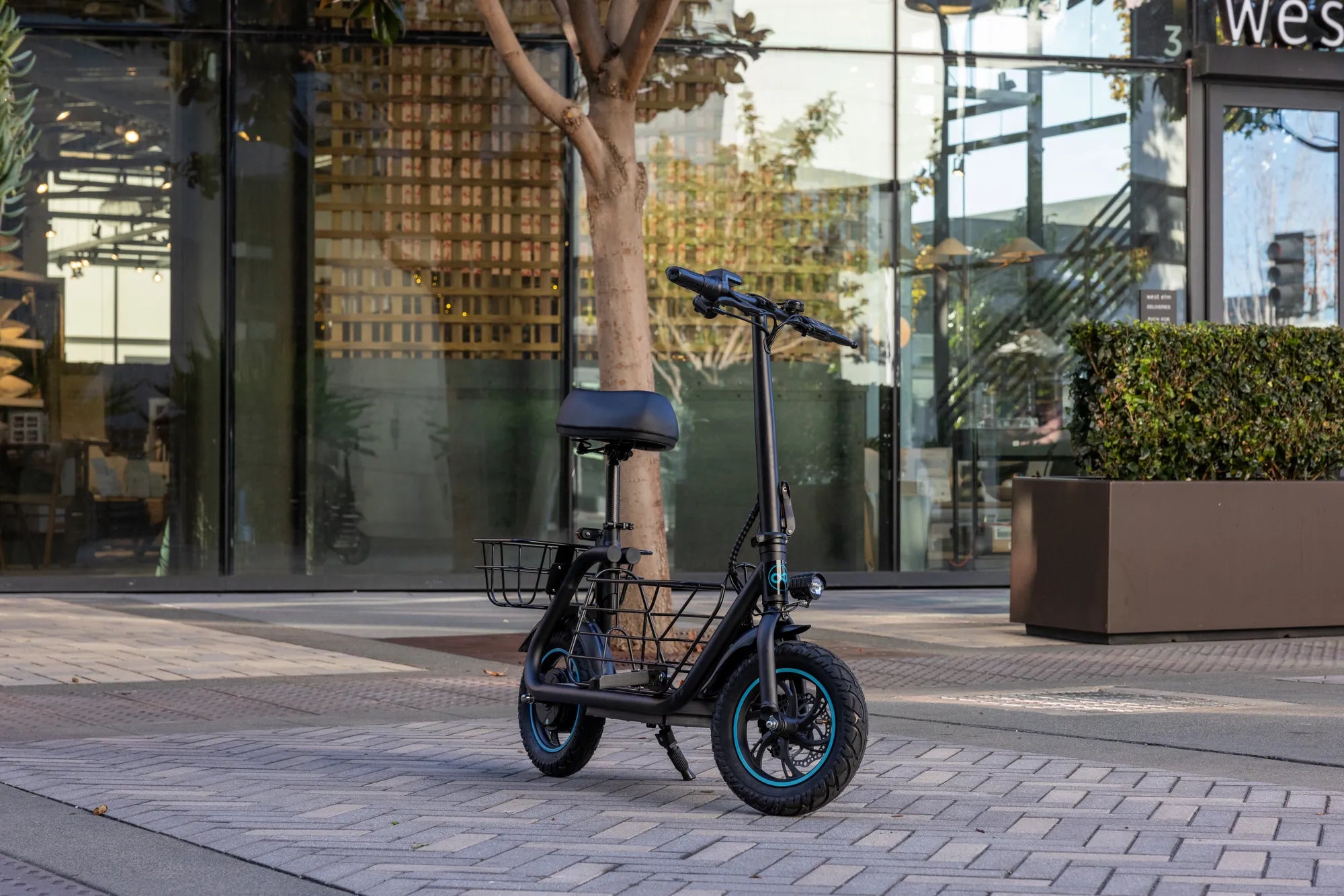
Introduction: The Rise of the Electric Commuter Scooter
City streets are clogged, public transit is overcrowded, and the search for a smarter way to move has reached a tipping point. Enter the electric commuter scooter, a transformative solution rapidly becoming the future of urban transportation. These compact, electric-powered vehicles are no longer a novelty but a practical necessity for millions navigating dense metropolitan areas. The adoption of electric commuter scooters signifies a fundamental shift in urban mobility, driven by a demand for efficiency, sustainability, and personal freedom.
Urban planners and city governments worldwide are now actively integrating micro-mobility infrastructure, from dedicated lanes to parking corrals, recognizing the role these vehicles play in reducing congestion. The growth is not anecdotal; market data shows consistent double-digit annual growth in personal electric vehicle ownership, with commuter scooters leading the charge. This isn't just about a new gadget; it's about reimagining the daily journey from point A to point B. The future of getting around our cities is quieter, cleaner, and remarkably more direct, thanks to the electric commuter scooter.
Why Electric Scooters Are Dominating City Streets
The dominance of electric scooters in urban environments is built on a powerful trifecta of advantages: unparalleled efficiency, significant cost savings, and tangible environmental benefits. For the average commuter facing a 5-10 mile trip, an electric scooter can often match or beat car travel times by circumstanding gridlocked traffic. The door-to-door convenience eliminates the 'last-mile' problem that plagues public transit users, providing a seamless connection from home to train station to office.
Financially, the argument is compelling. Compared to car ownership, the savings on fuel, insurance, parking fees, and maintenance are substantial. Even against public transit, a scooter can pay for itself within a year of consistent use in many cities. Environmentally, the impact is direct and positive. Electric commuter scooters produce zero tailpipe emissions, contributing to cleaner air and a lower personal carbon footprint. Their energy efficiency, measured in watt-hours per mile, far exceeds that of even the most efficient electric cars, making them a supremely sustainable choice for individual urban transport.
The Practical Advantages for Daily Commutes
The daily user experience is where electric scooters truly shine. Modern folding designs, like those perfected by leading brands, transform the scooter from a vehicle into a portable package. This allows for easy storage under a desk, in a closet, or beside a cubicle, eliminating the risk of theft and the hunt for parking. The learning curve is minimal; most adults can become proficient riders within minutes, making it an accessible option for a broad demographic.
Beyond portability, the commute itself becomes less stressful. Riders bypass standstill traffic, avoid crowded buses and trains, and enjoy a consistent, predictable travel time. This reclaims minutes—often hours per week—from the commute, reducing daily frustration. The ability to weave through urban spaces on a direct path provides a sense of autonomy and efficiency that traditional transport modes simply cannot match for short to medium distances.
Environmental Impact and Sustainability
A data-driven look at the environmental benefits solidifies the scooter's green credentials. A study by the North Carolina State University found that, on a per-mile basis, shared e-scooters generate about half the greenhouse gas emissions of a standard automobile when accounting for their full lifecycle—from manufacturing to daily charging. For privately owned models used over several years, this footprint decreases further due to amortized manufacturing impact.
Sustainability extends beyond emissions. Responsible manufacturers prioritize durable construction and high-quality, long-lasting components to minimize waste. A critical component is the battery. Using UL-certified battery packs, as mandated by brands like Gyroor for all their models, ensures not only safety from fire risk but also reliability and longevity. These batteries are tested for 500+ charge cycles, supporting years of daily use and reducing the frequency of battery replacement, which is a key factor in the vehicle's overall environmental lifecycle.
Key Features to Look for in a Reliable Commuter Scooter
Choosing the right scooter is crucial for a safe and satisfying commute. The market offers a wide range, but a reliable daily workhorse must excel in specific areas. Key specifications should align with real-world needs, not just peak theoretical performance. Discerning buyers must look beyond marketing claims to the engineering and quality assurances that guarantee daily dependability. This focus separates a short-term toy from a legitimate transportation tool that serves as the future of urban transportation for an individual rider.
The core pillars of a great commuter scooter are performance that matches your route, safety features that protect you in all conditions, and a durable build backed by a strong warranty. Ignoring any of these aspects can lead to frustration, unsafe situations, or unexpected costs. A meticulous approach to selecting features ensures your investment enhances your lifestyle reliably for years to come. Let's break down what truly matters when you're evaluating models for your daily travel needs.
Performance Specs: Range, Speed, and Motor Power
Performance specifications require careful interpretation. Advertised range, for example, is typically achieved under ideal laboratory conditions. For real-world planning, riders should discount the manufacturer's claim by 25-30% to account for variables like rider weight, hills, frequent stops and starts, and colder temperatures. For a true commuter scooter, a minimum real-world range of 15 miles is advisable to comfortably cover a round trip with a buffer.
Motor power, measured in watts, determines hill-climbing ability and acceleration. A 350W motor can handle moderate inclines, but for cities with steeper terrain, 500W or more is recommended. Top speed is a balance between efficiency and practicality. While some scooters can exceed 30 mph, a top speed of 15-20 mph is ideal for urban commuting; it's fast enough to maintain flow with city traffic while remaining within the legal limits of most micro-mobility ordinances and significantly safer than higher speeds in mixed-use environments.
Safety and Durability: Non-Negotiable Features
Safety is paramount and should never be compromised. A robust braking system is the most critical component. A combination of electronic (regenerative) braking and a mechanical brake (disc or drum) on at least one wheel provides reliable stopping power in all conditions. Lighting is equally vital for visibility; a bright front headlight, rear brake light, and side reflectors are essential for dawn, dusk, and night riding.
Tire choice affects both safety and comfort. Pneumatic (air-filled) tires offer superior shock absorption and traction on uneven pavement, while solid tires eliminate the risk of flats but provide a harsher ride. For durability, the scooter's build quality and water resistance are key. An IP rating indicates protection against dust and water. An IPX5 rating, a standard feature on Gyroor commuter scooters, means the scooter can withstand water jets from any direction, making it capable of handling wet roads and light rain, a crucial feature for a reliable daily vehicle.
Battery and Warranty: Ensuring Long-Term Value
The battery is the heart and most expensive component of an electric scooter. Insisting on a UL-certified lithium-ion battery pack is non-negotiable for safety and performance. This certification means the battery cells and management system have passed rigorous independent testing for electrical, mechanical, and fire safety. Brands that use these batteries, like Gyroor, prioritize rider safety and product longevity from the core.
The warranty is the brand's promise of quality and your protection against defects. A comprehensive warranty should cover the frame, motor, and battery for a significant period. A 1-year warranty with accessible, US-based customer support, as offered by Gyroor, demonstrates a company's confidence in its products and provides peace of mind. It ensures that your investment in the future of urban transportation is protected, safeguarding you from costly repairs during the critical first year of heavy use.
Electric Scooters vs. Other Commuting Options: A Data-Driven Comparison
To fully appreciate the value proposition of an electric commuter scooter, it must be contextualized against other common modes of urban transport. The following table presents a clear, data-driven comparison based on average costs and conditions in a major U.S. metropolitan area for a 5-mile one-way commute.
| Transport Mode | Avg. Cost per Mile | Avg. Door-to-Door Time (5 mi) | Parking Availability & Cost | Estimated CO2 Emissions (per 5 mi trip) |
|---|---|---|---|---|
| Electric Commuter Scooter | $0.03 - $0.05 (electricity) | 20 - 25 minutes | Easy (fold & carry), $0 | ~0.5 lbs (grid-dependent) |
| Personal Car (Sedan) | $0.60 - $0.70 (fuel, maint., deprec.) | 30 - 50+ minutes (with traffic) | Difficult, $10 - $40/day | ~4.6 lbs |
| Ride-Sharing (e.g., Uber/Lyft) | $2.50 - $3.50 (average fare) | 25 - 40 minutes | N/A (curbside drop-off) | ~4.6 lbs |
| Public Transportation (Bus/Subway) | $0.30 - $0.60 (fare) | 40 - 60 minutes (with access/wait) | N/A | ~1.2 lbs |
| Bicycle (Traditional) | Negligible | 25 - 35 minutes | Moderate (requires rack), $0 | 0 lbs |
This comparison highlights the electric scooter's unique position. It competes with the bicycle on cost and emissions while providing electric assistance for less exertion and more consistent speed. It dramatically outperforms the car and ride-sharing on cost and time efficiency in congested areas, while also being vastly better for the environment. It solves the 'last-mile' and scheduling issues inherent to public transit. This data underscores why electric commuter scooters are not just an alternative, but often the optimal choice for urban transportation.
Integrating E-Scooters into Your Urban Lifestyle
Adopting an electric scooter as a primary commute tool requires some practical planning. Start with route reconnaissance. Use bike lane maps and apps to identify the safest, most continuous paths. Roads with protected bike lanes or calm residential streets are preferable to high-speed arterials. Familiarize yourself with the scooter's handling and braking in a safe, empty parking lot before hitting busy streets.
Invest in essential safety gear. A helmet is absolutely mandatory; consider a multi-impact certified model designed for urban cycling or skating. High-visibility clothing or reflective accessories are wise for low-light conditions. Legally, know your local regulations: most cities prohibit sidewalk riding (for pedestrian safety), impose speed limits (often 15-20 mph in bike lanes), and may have age requirements or helmet mandates. Riding predictably, signaling your intentions, and respecting pedestrians and other road users is key to safe integration into the urban flow.
Addressing Common Concerns: FAQ for Potential Riders
Q: Are electric scooters safe to ride in the rain?
A: Scooters with a high water-resistance rating (IPX5 or higher) are designed to handle wet roads and light rain. The IPX5 rating, standard on Gyroor commuter models, means the scooter can withstand water jets from any direction. However, caution is always advised: reduce speed, avoid painted road markings and metal surfaces like manhole covers which become slick, and never ride through deep puddles that could submerge the deck or electronics.
Q: How far can I *really* go on a single charge?
A> Real-world range depends on rider weight, terrain (hills significantly reduce range), speed (higher speeds use more energy), and temperature (cold reduces battery efficiency). As a rule, expect 70-80% of the manufacturer's advertised range under normal commuting conditions. For accurate planning, look for independent review tests rather than relying solely on marketing claims.
Q: What about maintenance and repairs?
A> Electric scooters require far less maintenance than a car. Regular tasks include checking tire pressure (for pneumatic tires), ensuring brakes are properly adjusted, and keeping the scooter clean, especially after wet rides. For repairs, choosing a brand with robust customer support is crucial. Brands like Gyroor offer a 1-year warranty with accessible support, ensuring you can get help with any manufacturing defects. For wear items like tires or brake pads, many components are user-replaceable with basic tools.
Q: Is it difficult to learn to ride one?
A> Most adults find electric scooters very easy to learn. The balancing is intuitive, similar to a bicycle, but with a lower center of gravity. The thumb or finger throttle controls acceleration, and braking is typically a lever. Within 15-30 minutes of practice in a safe area, most people feel confident enough for a calm street. Starting on the lowest speed setting is recommended for beginners.
Q: Where can I legally park and store my scooter?
A> The golden rule is: never block sidewalks, ramps, or building entrances. Many cities are installing dedicated micro-mobility parking corrals. When at your destination, the best practice is to fold it and take it with you if possible. This is a major advantage of folding models—they can be stored under a desk, in a coat closet, or in a dedicated storage area, eliminating theft risk and parking fees entirely.
Conclusion: Your Ticket to a Smarter, Greener Commute
The evidence is clear: electric commuter scooters are a cornerstone of the future of urban transportation. They offer a powerful solution to the intertwined problems of congestion, cost, and pollution that plague modern cities. By providing a fast, affordable, clean, and enjoyable way to navigate urban spaces, they empower individuals with unprecedented mobility freedom. The shift towards micro-mobility is not a trend but a fundamental correction in how we design our travel around human scale and efficiency.
Embracing this future means choosing a vehicle built to last. It means prioritizing safety certifications like UL-rated batteries, durability standards like IPX5 water resistance, and the backing of a reliable warranty and customer support team. This is an investment in a smoother daily routine and a more sustainable urban environment. The journey toward smarter cities begins with individual choices. Explore how a high-performance, reliable electric commuter scooter can redefine your daily travel. Browse the full Gyroor collection, featuring UL-certified, IPX5-rated models backed by a 1-year warranty, at gyroorboard.com.
Fast Electric Scooters 50 mph: The Ultimate Guide to High-Speed Commuting
Cheap Electric Mobility Scooters: Affordable Freedom for Seniors and Disabled Individuals