



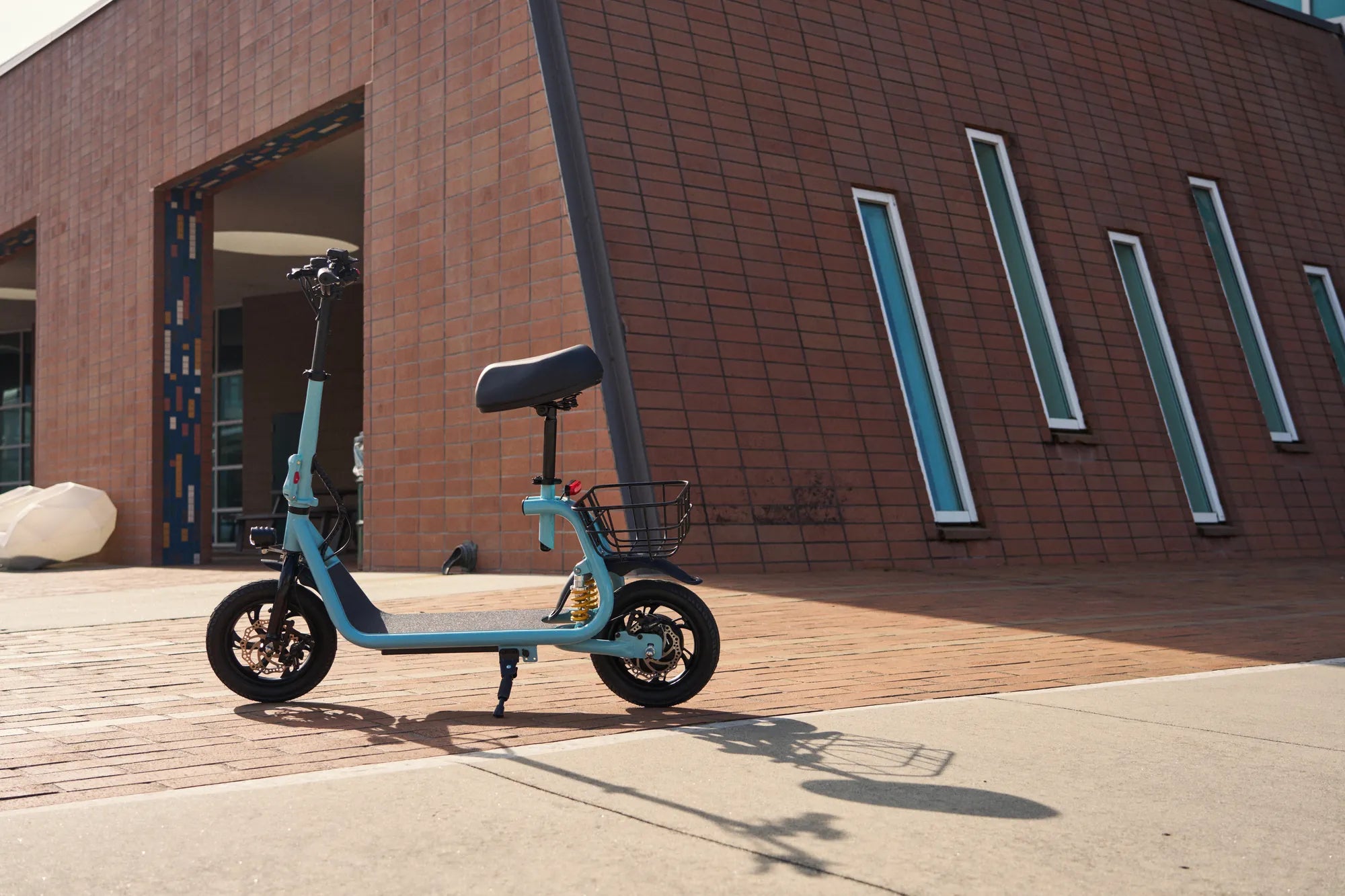
Redefining Urban Mobility with Electric Mobile Scooters
City streets are undergoing a quiet revolution. The familiar gridlock of cars is being punctuated by the swift, silent glide of electric mobile scooters. These compact vehicles are not a passing trend but a fundamental shift in how we navigate dense urban environments. They directly address the triple threat of modern commuting: traffic congestion, expensive parking, and transportation-related emissions.
This article provides a comprehensive, data-driven analysis of why electric mobile scooters are poised as a cornerstone of future urban transportation. We will dissect their practical advantages, essential technical features, and their evolving role within the broader mobility ecosystem. For over 100,000 riders across North America and Europe, brands like Gyroor have demonstrated that reliable, safety-focused engineering is key to unlocking this future, offering UL-certified batteries and IPX5 water-resistant designs backed by a solid 1-year warranty.
The Core Advantages: Why Cities Are Embracing E-Scooters
The rapid adoption of electric mobile scooters is driven by a compelling value proposition for both individual riders and city planners. They represent a convergence of personal convenience and public benefit, creating a more efficient use of limited urban space.
For the Daily Commuter: Speed, Cost, and Convenience
In city centers, the average car speed often falls below 15 mph during peak hours. A typical electric scooter, with a top speed of 15-20 mph, can match or exceed this for trips under 5 miles, bypassing stationary traffic. The cost differential is staggering. The operating cost per mile for an e-scooter is measured in pennies for electricity, compared to dollars for fuel, insurance, and parking for a car.
Perhaps the most underrated advantage is seamless integration. A folding electric scooter can be carried onto a bus or train, solving the "last-mile" problem that plagues public transit. It transforms a 20-minute walk from the station into a 5-minute ride, making multimodal commuting genuinely practical. This convenience factor is a primary reason commuters are making the switch.
For the City and Environment: Sustainability and Space Efficiency
From a municipal perspective, electric mobile scooters offer tangible benefits. They produce zero tailpipe emissions, directly improving local air quality. A shift from short car trips to e-scooters can significantly reduce a city's carbon footprint and noise pollution. The space efficiency argument is even more powerful.
Parking a car requires approximately 150 square feet. Ten electric scooters can be parked in the same space. This efficient use of curbside and sidewalk space can free up land for public amenities. By taking cars off the road for short trips, e-scooters reduce overall traffic volume, benefiting all road users and making cities more livable.
Key Features to Consider When Choosing Your E-Scooter
Selecting the right electric scooter requires understanding key performance metrics and safety features. Not all models are built for the rigors of daily urban commuting, making informed choices critical.
Performance Metrics: Range, Speed, and Motor Power
Advertised range is a theoretical maximum under ideal conditions (light rider, flat terrain, slow speed). Real-world range is typically 60-75% of the claimed figure. For a reliable daily commute, a scooter with a manufacturer-stated range of 15-20 miles is a practical minimum. Motor power, measured in watts, determines hill-climbing ability and acceleration. A 350W motor can handle moderate inclines, while 500W or more is recommended for hilly cities.
Speed should align with local regulations, which often cap e-scooters at 15-20 mph. Beyond raw power, the quality of the battery pack is paramount. UL-certified batteries, like those used in Gyroor scooters, undergo rigorous testing for stability and safety, providing peace of mind over hundreds of charge cycles.
Safety and Durability: The Non-Negotiables
Safety is the foremost concern. A reliable braking system is essential; a combination of a disc brake (for strong, consistent stopping power) and an electronic regen brake is considered best practice. Build quality directly impacts safety and longevity. A sturdy aluminum frame, wide deck for stable footing, and effective lighting (front, rear, and side) are mandatory for urban riding.
Durability against the elements is crucial. An IPX5 water-resistance rating means the scooter can withstand water jets from any direction, making it safe to ride in light rain or on wet roads. This feature, combined with robust suspension (either spring or pneumatic) and 8.5-inch or larger air-filled tires, ensures a stable, comfortable ride over cracks and potholes.
Portability and Comfort: Folding Mechanisms and Suspension
Portability defines utility. A good folding mechanism should be a secure, one-step action that locks the stem firmly to the deck, creating a compact package for carrying or storage. The total weight is a key factor; models between 30-40 lbs offer a balance of stability and manageable liftability.
Comfort is often overlooked but vital for daily use. Suspension absorbs impacts from uneven pavement, reducing fatigue. Larger, pneumatic (air-filled) tires provide better shock absorption and traction than small, solid rubber tires. A comfortable ride encourages regular use and makes longer trips feasible.
E-Scooters in the Ecosystem: Comparison with Other Transport Modes
Electric mobile scooters do not exist in a vacuum. Their value is best understood by comparing them to established forms of urban transport.
Versus Traditional Bicycles and E-Bikes
Electric scooters offer distinct advantages in certain scenarios. They require less physical effort than a traditional bike, making them accessible to a wider range of fitness levels and allowing riders to arrive at their destination without sweating. They are typically more compact and lighter than most e-bikes, making them easier to carry upstairs or onto public transport.
However, e-bikes generally offer greater range and comfort for longer distances (10+ miles) and can better handle rough terrain. The choice often comes down to trip length, storage options, and personal preference for riding posture. For short, spontaneous urban trips and mixed-mode commuting, the e-scooter's portability is a decisive factor.
Versus Public Transit and Ride-Sharing
For distances of 1-3 miles, an electric scooter is often faster than both public transit (which involves waiting and walking to/from stops) and ride-sharing (which is subject to traffic and pickup times). The cost comparison is stark. A $2-3 ride-share trip for a mile can cost over 100 times more per mile than using a personal e-scooter.
Public transit excels in moving large numbers of people along fixed corridors. Electric scooters act as the perfect feeder system, extending the effective radius of every transit station. They provide autonomy and predictability, freeing the rider from schedules, route limitations, and the surge pricing of app-based ride services.
| Transport Mode | Avg. Cost per Mile | Door-to-Door Speed (3 mi trip) | Parking Space Needed | CO2 Emissions (per mile) |
|---|---|---|---|---|
| Personal Car | $0.60 - $0.80 | 20-25 mins | 150 sq ft | ~411 grams |
| Ride-Sharing | $2.50 - $4.00 | 15-20 mins | Pick-up/Drop-off | ~411 grams |
| Public Transit | $0.20 - $0.40 | 30-40 mins | Minimal | ~200 grams |
| E-Bike | $0.03 - $0.05 | 18-22 mins | 10 sq ft | ~22 grams (grid) |
| Electric Scooter | $0.01 - $0.02 | 14-18 mins | 5 sq ft | ~22 grams (grid) |
Navigating the Future: Regulations, Infrastructure, and Technology
The long-term success of electric mobile scooters depends on thoughtful integration into the urban fabric, guided by clear regulations and supported by evolving technology.
Understanding Local Laws and Safe Riding Etiquette
Regulations vary widely by city and country. Key legal aspects typically include: where you can ride (bike lanes vs. sidewalks, which are often prohibited), maximum speed limits (often 15-20 mph), minimum age requirements (usually 16+), and helmet laws (mandatory for some or all riders). It is the rider's responsibility to know and follow these rules.
Safe riding etiquette is equally important. This includes yielding to pedestrians, signaling turns, not riding under the influence, using lights at night, and avoiding sudden maneuvers. Responsible parking is critical; scooters should be parked upright in designated areas or next to bike racks without blocking sidewalks, ramps, or building entrances. Adhering to these practices ensures safety and fosters public acceptance.
The Road Ahead: Smart Features and Urban Integration
Technology is making e-scooters smarter and more integrated. Advanced models now feature Bluetooth connectivity with dedicated apps for locking/unlocking, tracking ride statistics, diagnosing maintenance issues, and customizing performance settings. GPS-based geofencing can automatically reduce speed in pedestrian-heavy zones, enhancing safety.
Forward-looking city planning is creating the physical infrastructure for this future. This includes expanding networks of protected bike lanes, installing dedicated scooter parking docks or corrals, and incorporating micro-mobility into broader transit planning. The future urban street will likely feature dedicated lanes for light electric vehicles, separating them from both fast-moving cars and pedestrian walkways, creating a safer ecosystem for all.
Frequently Asked Questions (FAQ)
Q1: How far can I really go on a single charge?
Real-world range depends on rider weight, terrain, speed, and temperature. For accurate planning, take the manufacturer's stated range and multiply by 0.65. A scooter advertised for 20 miles will typically deliver 13 miles of practical range. For a 5-mile round-trip commute, this provides a comfortable safety margin.
Q2: Are electric scooters safe in the rain?
Safety in wet conditions depends on the scooter's IP rating. A rating of IPX5 or higher, like those on Gyroor models, means the electrical components are protected from water jets, making light rain safe. However, riders should always exercise extreme caution: reduce speed, avoid painted road markings and metal surfaces, and use wider, pneumatic tires for better wet traction. Never submerge an e-scooter.
Q3: What maintenance does an e-scooter require?
Regular maintenance is minimal but crucial. Key tasks include: checking tire pressure weekly (for pneumatic tires), ensuring brakes are properly adjusted and responsive, periodically tightening bolts and checking the folding mechanism, and keeping the scooter clean, especially the braking surfaces. The battery requires the most care: avoid complete discharges, store in a cool, dry place, and use only the manufacturer-provided charger.
Q4: Can I take my e-scooter on public transportation?
Policies vary by transit authority. Many buses and trains allow folded e-scooters, treating them like luggage or bicycles during off-peak hours. It is always best to check the specific rules of your local transit agency. A compact, lightweight folding scooter is most likely to be permitted.
Q5: Is it worth buying my own scooter versus using shared rentals?
If you commute regularly (3+ times per week), purchasing your own scooter is far more economical and hygienic. A quality personal scooter offers better performance, reliability, and safety features than most fleet rentals. You also avoid the hassle of locating an available, charged rental scooter. The investment pays for itself within a few months compared to daily rental fees.
Conclusion: Your Ticket to a Smoother, Greener Commute
The evidence is clear: electric mobile scooters are a smart, efficient, and sustainable pillar of the 21st-century city. They solve immediate personal transportation problems while contributing to broader urban goals of reduced congestion and cleaner air. The future of urban transportation is multimodal, and the electric scooter is set to be a primary workhorse for short-to-medium distance travel.
Embracing this future starts with choosing a vehicle built for reliability and safety. Prioritizing brands that invest in UL-certified battery technology, robust water-resistant construction, and comprehensive warranties is not just a purchase decision—it's an investment in safe, sustainable mobility. As infrastructure and regulations evolve to support this new normal, there has never been a better time to join the movement and redefine your own commute.
Ready to experience the future of urban transportation? Browse the full Gyroor collection of UL-certified, high-performance electric scooters and e-bikes at gyroorboard.com.
Can You Rent Electric Scooters at Universal Studios? A Complete Mobility Guide
Electric Chairs and Scooters: Revolutionizing Mobility for Modern Lifestyles