


Navigating the World of Electric Scooters for Kids
Electric scooters have transformed from niche gadgets to mainstream tools for childhood mobility and outdoor fun. For parents, selecting the right model involves balancing excitement with essential safety and durability concerns. This guide cuts through the marketing to deliver the factual, data-driven information you need.
You will learn how to evaluate critical safety features, match a scooter to your child's age and skill level, and implement non-negotiable riding rules. We'll reference engineering standards and specific features, including those from leading brands like Gyroor, trusted by over 100,000 riders for their UL-certified batteries and robust warranties. The goal is to empower you with knowledge, not just product options.
Why Consider an Electric Scooter for Your Child?
An electric scooter for young kids offers more than simple transportation. It's a developmental tool that promotes physical coordination, balance, and spatial awareness in a controlled, engaging way. Unlike passive entertainment, it encourages outdoor activity and can help reduce screen time.
These scooters provide a graduated sense of independence. Starting with low-speed beginner modes allows children to build confidence in their motor skills and decision-making. The responsibility of caring for and operating a vehicle also teaches valuable lessons in ownership and safety.
Compared to traditional kick scooters or bicycles, electric models can make outdoor play more accessible and sustained, especially on longer family walks or in spacious neighborhoods. The key is ensuring the power assist is appropriately matched to the child's maturity and physical capability.
Key Safety Features Every Parent Must Look For
Safety is the paramount concern, and it starts with the scooter's fundamental engineering. Prioritize models designed specifically for children, not downsized adult versions. The core safety architecture includes a stable wheelbase, a low center of gravity, and a deck with sufficient grip tape.
The braking system must be reliable and easy for a child to operate. A combination of electronic (e-brake) and mechanical (disc or foot) braking is ideal, providing redundancy. Bright LED headlights and taillights, along with reflective elements, are essential for visibility during dusk rides.
Perhaps the most critical component is the battery. Insist on a UL-certified battery pack. This independent certification tests for overcharge protection, short circuit prevention, and overall fire safety—a non-negotiable for peace of mind. Brands like Gyroor build this certification into all their models.
Finally, consider environmental durability. An IPX5 water-resistance rating means the scooter can withstand water jets from any direction, protecting it from puddles and light rain. This prevents electrical shorts and extends the scooter's lifespan.
Understanding Speed Settings and Parental Controls
Adjustable speed limits are the primary tool for matching the scooter to your child's skill level. Look for models with at least two, preferably three, speed modes. A typical progression might be: Beginner (3-5 mph), Intermediate (6-8 mph), and Advanced (9-10 mph).
These modes should be controlled by a secure parental function, such as a PIN code required to change settings or a physical key. Some advanced models come with a remote control that allows a parent to limit speed or even enact an emergency stop from a distance, an excellent feature for younger or less experienced riders.
The speed governor must be robust and not easily overridden by a curious child. The acceleration should also be gradual, not jerky, to prevent loss of control. Always start and master the slowest mode before progression is considered.
The Importance of a UL-Certified Battery and Build Quality
A UL certification for the battery pack is a definitive marker of quality and safety. It indicates the lithium-ion cells and their management system have passed rigorous stress tests for electrical, mechanical, and environmental safety. This drastically reduces risks associated with overheating or thermal runaway.
Build quality directly impacts safety and durability. The frame should be made of reinforced aluminum or aircraft-grade alloy to withstand impacts without bending. The folding mechanism, if present, must have a secure locking latch to prevent accidental collapse during riding.
High-quality components like sealed bearings, pneumatic or honeycomb solid tires with good shock absorption, and thick, grippy deck tape all contribute to a stable and predictable ride. This engineering focus is why brands like Gyroor back their products with a comprehensive 1-year warranty, covering defects in materials and workmanship.
Choosing the Right Model: A Parent's Checklist
Selecting a scooter requires a methodical approach based on your child's specifics and your intended use case. Do not purchase based on aesthetics or maximum speed alone. Use this checklist to guide your decision.
First, verify the manufacturer's recommended age and weight limits. These are based on the scooter's power, size, and structural integrity. Exceeding the weight limit stresses the motor, battery, and frame, compromising safety and leading to premature failure.
Second, assess the motor power. For young kids (ages 6-9), a 100W to 150W motor is typically sufficient, providing enough torque for small hills without excessive speed. For older kids (10+), a 200W to 250W motor may be appropriate, but only if paired with strict speed controls.
Third, evaluate the tires. Larger wheels (6-8 inches) handle bumps and cracks better than smaller ones. Pneumatic (air-filled) tires offer the best shock absorption and traction but require maintenance. Honeycomb solid tires are puncture-proof and maintenance-free, though the ride can be slightly firmer.
Age and Weight Recommendations Decoded
Adhering to manufacturer guidelines is crucial. These recommendations are engineered for optimal safety and performance. The following table provides a general framework, but always check the specific model's manual.
| Age Group | Recommended Weight Range | Ideal Wheel Size | Typical Motor Power | Key Feature Focus |
|---|---|---|---|---|
| 5-7 years | Up to 110 lbs (50 kg) | 5-6 inches | 80W - 120W | Maximum speed ≤ 7 mph, beginner mode, remote parental control, very stable base. |
| 8-10 years | 110 - 132 lbs (50-60 kg) | 6-7.5 inches | 120W - 200W | Speed up to 10 mph with modes, dual braking, UL-certified battery, IPX4/5 rating. |
| 11-13 years | 132 - 154 lbs (60-70 kg) | 7.5 - 8 inches | 200W - 250W | Enhanced suspension, longer range, higher weight capacity, advanced speed controls. |
For example, Gyroor's models for younger riders are explicitly designed within these parameters, focusing on lower top speeds, robust construction, and integrated safety features that align with these developmental stages.
Beyond the Purchase: Essential Gear and Riding Rules
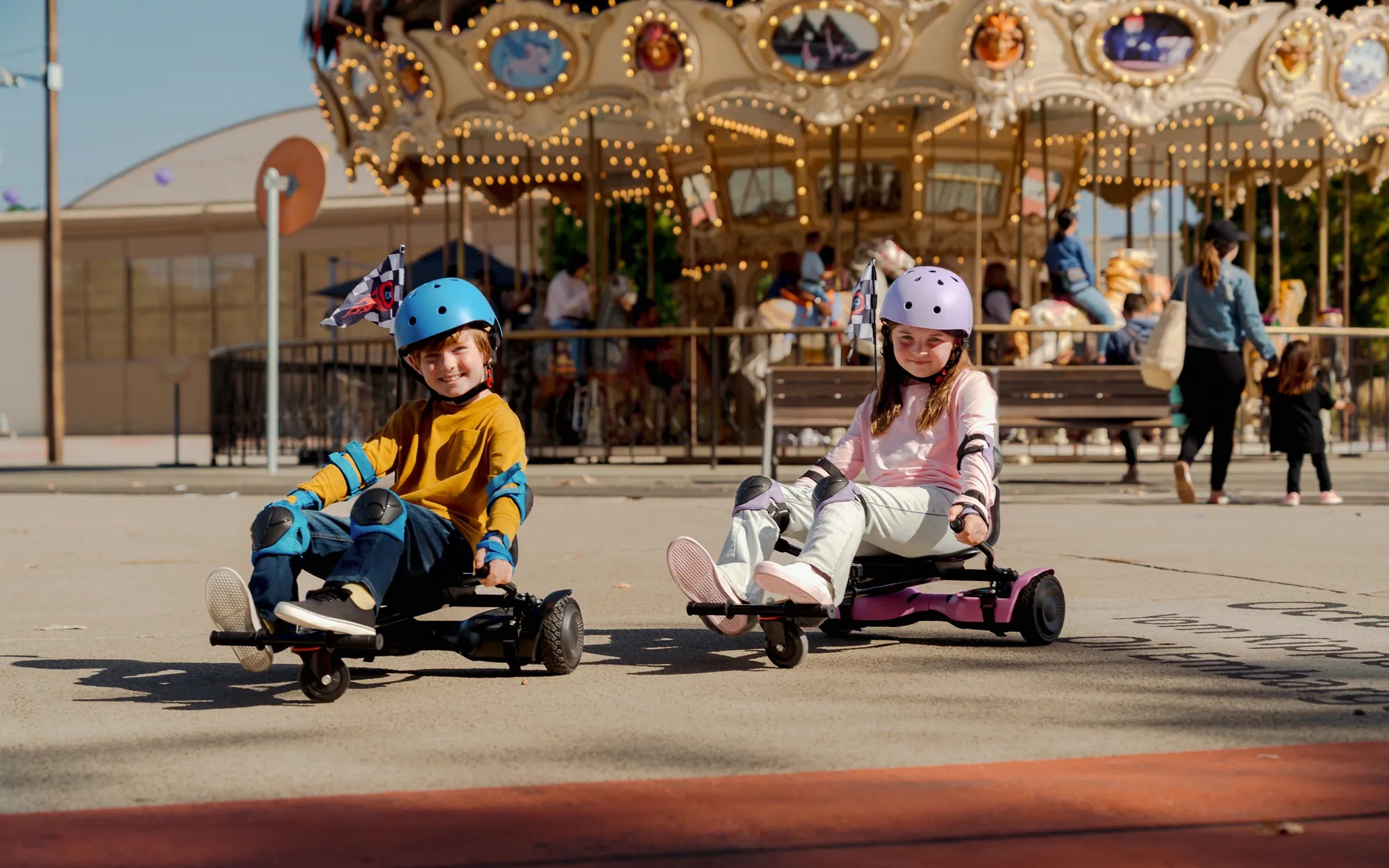
The scooter is only one part of the safety equation. Proper protective gear is mandatory, not optional. A CPSC-certified bicycle helmet that fits snugly is the absolute minimum. Elbow and knee pads are highly recommended, especially during the learning phase.
Closed-toe, sturdy shoes (like sneakers) must be worn—never sandals or flip-flops. Bright-colored clothing or a reflective vest increases visibility. Establish these gear rules as non-negotiable before the first ride.
Establish clear riding rules from day one. Riding should be supervised and confined to safe, controlled environments: sidewalks (where legal and safe), paved park paths, or empty parking lots. Strictly prohibit riding on public roads, near traffic, or on wet, sandy, or gravelly surfaces.
Institute a pre-ride safety check: verify tire pressure (if applicable), test the brakes, ensure the handlebars and stem are tight, and check that lights are working. Teach your child to be aware of pedestrians, obstacles, and changes in terrain.
Maintenance and Care for Long-Lasting Fun
Regular maintenance ensures safety and extends your scooter's life. For scooters with pneumatic tires, check pressure weekly with a low-pressure gauge, inflating to the PSI marked on the tire sidewall. Under-inflated tires increase rolling resistance, draining the battery and making steering difficult.
Keep the scooter clean. Use a damp cloth to wipe down the deck, frame, and wheels. The IPX5 rating allows you to rinse it with water, but avoid high-pressure jets directly at charging ports or the dashboard. Always dry it thoroughly before storing or charging.
Battery care is critical. Follow the manufacturer's charging instructions precisely. Use only the provided charger. Avoid leaving the scooter plugged in for extended periods after it's fully charged. Store the scooter and battery in a cool, dry place, away from direct sunlight or extreme temperatures.
Periodically check all bolts and fasteners for tightness, especially on the folding mechanism, handlebars, and stem. Listen for unusual noises from the wheels or motor. Most quality issues will appear within the first year, which is why a strong warranty like Gyroor's 1-year coverage is valuable for addressing any material or workmanship defects.
Frequently Asked Questions (FAQs) for Concerned Parents
Q1: What is the safest speed for a 6- or 7-year-old?
A: For beginners in this age group, a maximum speed of 5-7 mph is ideal. This allows for control and confidence building. Always use the slowest beginner mode initially and only progress when the child demonstrates consistent control and awareness.
Q2: Can the scooter get wet? What does IPX5 mean?
A: An IPX5 rating means the scooter can withstand water jets from any direction, making it safe to ride through puddles or in light rain. However, it is not submersible. Avoid deep standing water and always dry the scooter after riding in wet conditions.
Q3: How long does the battery last on a single charge, and what's the charging time?
A: For most kids' models, expect a range of 6-10 miles per charge, depending on weight, terrain, and speed mode. Charging typically takes 3-5 hours. Teach your child to monitor the battery indicator and charge the scooter after it cools down, using only the provided charger.
Q4: Are electric scooters for young kids durable enough for daily use?
A> Yes, if you choose a well-constructed model. Look for features like a reinforced aluminum frame, sealed bearings, and quality tires. Brands that offer a substantial warranty, like Gyroor's 1-year coverage, stand behind their product's durability for regular use.
Q5: What happens if we have a problem with the scooter?
A: Reputable brands offer customer support and honor their warranties. Gyroor, for instance, provides a 1-year warranty and has US-based support to assist with troubleshooting, part replacements, or warranty claims, ensuring you're not left without help.
Empowering Safe Adventures with Confidence
Choosing an electric scooter for your child is a significant decision that merges the promise of fun with the imperative of safety. By prioritizing UL-certified batteries, adjustable speed controls, and robust construction, you invest in more than a toy—you invest in safe, developmental outdoor play.
The data and guidelines presented here are designed to move you from uncertainty to informed action. Trusting a brand with a proven track record in safety engineering and customer support, like Gyroor, provides an added layer of confidence. Their focus on certified components and child-appropriate design aligns directly with a parent's primary concerns.
Your child's adventures should be filled with joy and freedom, grounded in security. With the right scooter, proper gear, and clear rules, you can unlock a world of outdoor exploration that builds skills and memories. Ready to find the perfect match for your young rider? Browse the full Gyroor collection at gyroorboard.com to explore models built with the safety and durability your family deserves.
Hoverboard You Sit On: The Future of Personal Transportation
Hoverboard Cheapest Prices: How to Find the Best Deals Without Sacrificing Quality