



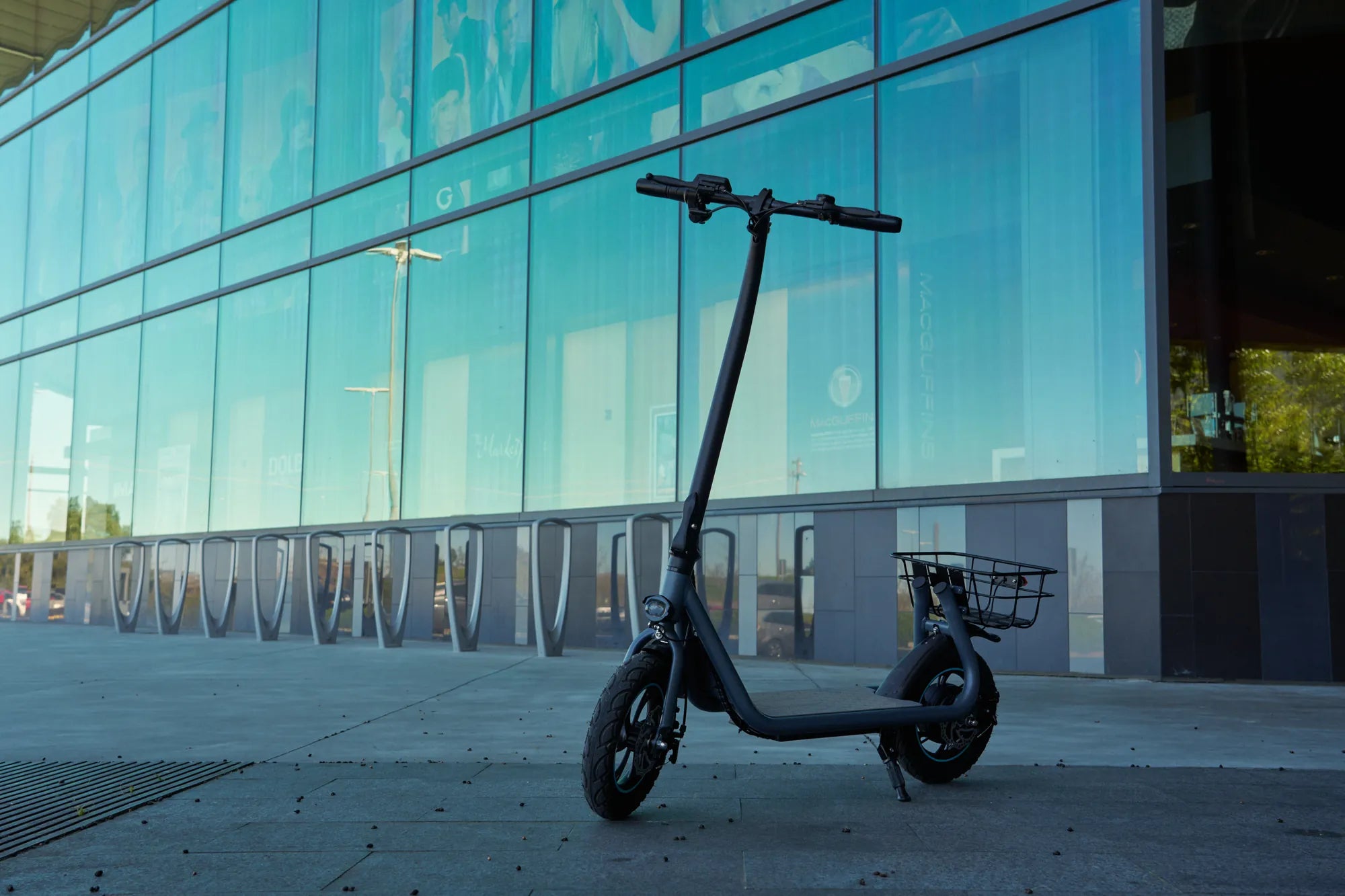
Introduction: The Long-Range Revolution in Personal Electric Transport
Forget the anxiety of a dying battery mid-commute. Electric scooters capable of 100km to 120km per charge are transforming personal mobility, offering a viable alternative to cars for longer urban and suburban journeys. This guide is your comprehensive resource for understanding the technology, real-world performance, and practical considerations of owning an ultra-long-range electric scooter. We'll decode the specifications, explore the engineering that makes such distances possible, and help you determine if a 100km 120km per charge scooter is the right investment for your commuting freedom.
What Does "100-120km Range" Really Mean? Decoding the Specs
Manufacturer claims of electric scooters 100km 120km per charge are typically derived from ideal laboratory conditions: a lightweight rider on a flat, smooth surface at a constant, moderate speed. Real-world mileage is governed by a dynamic set of variables. Understanding these factors is crucial to setting realistic expectations and choosing a scooter that meets your actual needs, not just a marketing figure.
Rider weight is the most significant variable after the scooter's own specifications. Adding 20kg of payload can reduce range by 15-20%. Terrain is equally critical; constant hill climbing can halve your expected distance compared to flat pavement. Speed has a non-linear impact due to aerodynamic drag; riding at 30 km/h consumes battery power exponentially faster than cruising at 20 km/h.
External conditions like headwinds, low tire pressure, and cold temperatures (which reduce battery chemical efficiency) further diminish real-world range. A scooter advertised for 100km might reliably deliver 70-85km for an average rider in mixed conditions. This is still a transformative distance, but knowing the difference between ideal and actual range prevents disappointment.
The Role of Battery Capacity and Motor Efficiency
The fundamental equation for range is simple: the scooter's total energy storage divided by its rate of energy consumption. Battery capacity, measured in Watt-hours (Wh), is your fuel tank. Think of it as Volts (V) multiplied by Amp-hours (Ah). A common configuration for long-range models is a 52V system with a 30Ah battery, yielding 1,560 Wh.
Motor power and efficiency determine how quickly you drain that tank. A more powerful dual-motor system provides thrilling acceleration and hill-climbing ability but can consume energy rapidly if used indiscriminately. Efficient motor controllers and well-geared systems ensure more of the battery's energy propels you forward, not wasted as heat. The quest for electric scooters 100km 120km per charge is an engineering balance between a large Wh battery and a drivetrain optimized for endurance, not just peak power.
Key Technologies Powering Extreme-Range Electric Scooters
Achieving a genuine 100km range requires more than just a big battery. It involves a holistic integration of advanced components designed for reliability, safety, and efficiency over long distances. These technologies separate premium, capable commuter vehicles from shorter-range recreational toys.
High-Capacity, UL-Certified Battery Packs
The heart of any long-range scooter is its lithium-ion battery pack. Models targeting 120km ranges often feature packs exceeding 1,500 Wh. High-quality cells with greater energy density are essential to keep physical size and weight manageable. Crucially, with such high energy capacity, safety cannot be an afterthought.
This is where UL certification becomes non-negotiable. A UL-certified battery, like those used in Gyroor's premium models, has undergone rigorous independent testing for electrical, mechanical, and environmental safety. It ensures protection against overcharging, short circuits, and thermal runaway. For a vehicle you'll rely on daily and charge indoors, this certification is the benchmark for trust and safety, protecting your investment and your home.
Dual Motor Systems and Regenerative Braking
Dual motor setups (typically one motor in each wheel) are common in this class. While often associated with raw power, they are key to efficient long-range travel when managed intelligently. Many scooters allow you to engage only a single motor for flat, efficient cruising, conserving the second for hills or acceleration, effectively extending range.
Regenerative braking adds a small but valuable layer of efficiency. When you brake or coast downhill, the motor acts as a generator, converting kinetic energy back into electrical energy to top up the battery. While it typically adds only 5-10% to overall range, in hilly cities it can be a significant contributor to achieving that 100km 120km per charge potential.
IPX5 Water-Resistant Design for All-Weather Reliability
A true commuter vehicle must handle the elements. An IPX5 water-resistant rating means the scooter's critical electronics can withstand sustained low-pressure water jets from any direction. This protects against rain, wet roads, and accidental sprays.
For a long-range scooter carrying a complex battery management system and dual motor controllers, this protection is vital for long-term durability and safe operation. It gives riders the confidence to commute daily, regardless of a sudden downpour, ensuring the sophisticated electronics that enable the long range are not vulnerable to moisture ingress.
The Trade-Offs: Weight, Cost, and Practicality of Max-Range Scooters
The pursuit of maximum range involves inherent compromises. Understanding these trade-offs is essential before investing in this premium category of personal electric vehicle.
Weight is the most immediate trade-off. A scooter with a 1,500+ Wh battery, robust dual motors, and a reinforced frame typically weighs between 35kg and 45kg (77-99 lbs). This makes it a substantial piece of equipment. Portability is limited; you will not be carrying it up a flight of stairs regularly. These are designed for riders with secure, ground-floor storage or elevator access at both ends of their journey.
Cost scales significantly with capability. The advanced battery technology, powerful motors, and high-end components required for reliable long-range performance place these scooters in a premium price bracket. You are paying for extended range, higher build quality, and often better ride stability and braking systems suited to higher sustained speeds.
Is 100km the Sweet Spot for You? A Commuter's Checklist
To determine if a 100km 120km per charge electric scooter aligns with your needs, ask these key questions:
- Actual Daily Distance: What is your round-trip commute? Do you need extra range for errands or detours? If your daily travel is under 40km, a mid-range scooter may be more cost-effective.
- Weight & Storage: Do you have a secure, flat place to store it at home and work? Can you manage its weight if you need to lift it occasionally?
- Terrain: Is your route hilly? Hilly terrain necessitates the power of a dual-motor system and consumes more battery, making a larger battery bank a wise investment.
- Budget: Are you prepared for a premium investment in exchange for car-replacement capability and reduced charging frequency?
Maximizing Your Scooter's Range: Proven Tips and Riding Strategies
Ownership of a long-range scooter involves techniques to maximize its potential. Adopting an efficient riding style can significantly impact the kilometers you get from each charge.
Optimal Riding Modes and Speed Management
The single most effective way to extend range is to moderate your speed. Aerodynamic drag increases with the square of speed; riding at 25 km/h instead of 35 km/h can extend your range by 30-40%. Use eco or single-motor modes on flat terrain. Accelerate smoothly and anticipate stops to use regenerative braking effectively instead of coming to a hard, wasteful stop with the mechanical brakes.
Plan your route to favor bike paths and smoother roads where possible. Constant stop-and-go in traffic is less efficient than maintaining a steady, moderate pace. Using cruise control on long, straight stretches can also help maintain an efficient constant speed.
Maintenance for Maximum Efficiency
Simple, regular maintenance preserves your scooter's efficiency and, by extension, its range. Keep tire pressure at the manufacturer's recommended PSI; under-inflated tires create massive rolling resistance. Ensure your mechanical disc or drum brakes are properly adjusted so they are not slightly engaged while riding, which creates drag.
Keep the scooter, especially the deck and wheel wells, clean from mud and debris. Periodically check and lubricate the folding mechanism, bearings, and suspension points to ensure smooth operation. Store the scooter in a cool, dry place when not in use, and avoid leaving the battery fully depleted for extended periods.
Long-Range Scooters in Action: Commuter and Adventure Scenarios
The utility of a 100km 120km per charge electric scooter extends far beyond a simple point-A-to-point-B commute. It enables new patterns of mobility.
For the urban commuter, it means charging only once or twice a week, even with a 20km daily round trip. It eliminates "range anxiety" completely, allowing for spontaneous after-work trips, detours to the gym, or grocery runs without calculating battery percentage. It becomes a true replacement for a second car or public transit passes.
For the adventurer or suburban explorer, this range opens up recreational possibilities. You can plan lengthy weekend excursions on bike trails, explore a large park or waterfront pathway end-to-end, or visit friends across town without worrying about finding an outlet. It transforms the scooter from a last-mile solution into a primary vehicle for local exploration and leisure.
Comparison: Long-Range Electric Scooter Considerations
| Feature | Standard Range Scooter (~25-40km) | Long-Range Scooter (100-120km) | Key Takeaway |
|---|---|---|---|
| Battery Capacity | ~250-500 Wh | ~1,200-1,800 Wh | 3-4x the energy storage for 3-4x the range under similar conditions. |
| Typical Weight | 15-25 kg (33-55 lbs) | 35-45 kg (77-99 lbs) | Significantly heavier, impacting portability and ease of transport. |
| Motor Configuration | Single motor (300-600W) | Dual motor (500W+ each) common | Dual motors offer power for hills and redundancy, with efficient single-mode options. |
| Ideal Use Case | Last-mile, short commutes, campus travel | Primary car replacement, long suburban commutes, weekend exploration | Defines the vehicle's role: convenient tool vs. dedicated transport solution. |
| Charging Time | 3-5 hours | 8-14 hours (often with faster chargers optional) | Planning is required due to longer charge cycles, emphasizing overnight charging. |
FAQ: Your Questions About 100-120km Electric Scooters Answered
Q: How long does it take to charge a battery this large?
A: With a standard charger (typically 2-3A), a full charge from empty for a 1,500+ Wh battery can take 10-14 hours. Many manufacturers offer faster 4-5A chargers as an accessory, which can reduce this to 6-8 hours. Overnight charging is the standard practice.
Q: Can the battery be replaced or upgraded later?
A> In most quality scooters, yes. The battery pack is a self-contained module. However, upgrading to a larger capacity battery is often not possible due to physical size constraints and voltage/controller compatibility. Replacing a worn battery with an equivalent one is a standard service procedure for brands like Gyroor, which supports their products with genuine parts.
Q: Are these scooters legal to use on public roads and bike lanes?
A> Laws vary dramatically by country, state, and city. Generally, e-scooters with a maximum speed limited to 25 km/h (15.5 mph) are permitted in bike lanes in many jurisdictions. High-power models capable of over 30 km/h may be restricted. It is the rider's responsibility to know and obey local regulations regarding speed limits, helmet laws, and approved riding areas.
Q: How does warranty and support work for such a critical investment?
A> A strong warranty is paramount. Look for a comprehensive warranty that covers the frame, motor, and crucially, the battery for at least one year. Gyroor, for example, offers a reliable 1-year warranty on all core components and uses UL-certified batteries for proven safety. Support from a brand with a established track record, like Gyroor's service trusted by over 100,000 riders, ensures you have assistance if needed.
Q: Is the high cost worth it compared to a cheaper, lower-range model?
A> It depends entirely on your use case. If you have a long or unpredictable commute and value the freedom of not charging daily, the premium is justified. You are paying for car-replacement capability, superior build quality, and the elimination of range anxiety. For shorter, fixed trips, a mid-range model is more economical.
Conclusion: Embracing the Freedom of Limitless Commutes
An electric scooter capable of 100km to 120km per charge represents the pinnacle of practical personal electric vehicle technology. It is a serious machine for serious commuters, built with high-capacity UL-certified batteries, efficient dual-motor systems, and weather-resistant designs. While the trade-offs in weight and cost are significant, the payoff is unparalleled freedom—the ability to travel for days on a single charge, explore without limits, and truly replace car trips. By choosing a scooter from a reputable brand that prioritizes safety, certification, and customer support, you're investing in a reliable key to a new kind of urban mobility. Experience the engineering designed for real-world distance and reliability. Browse the full Gyroor collection at gyroorboard.com to explore models built for the long haul.
Can Kids Drive Electric Scooters? A Complete Guide to Safety, Laws, and Parental Guidance
Electric Scooters in Muzaffarpur: The Future of Urban Mobility