



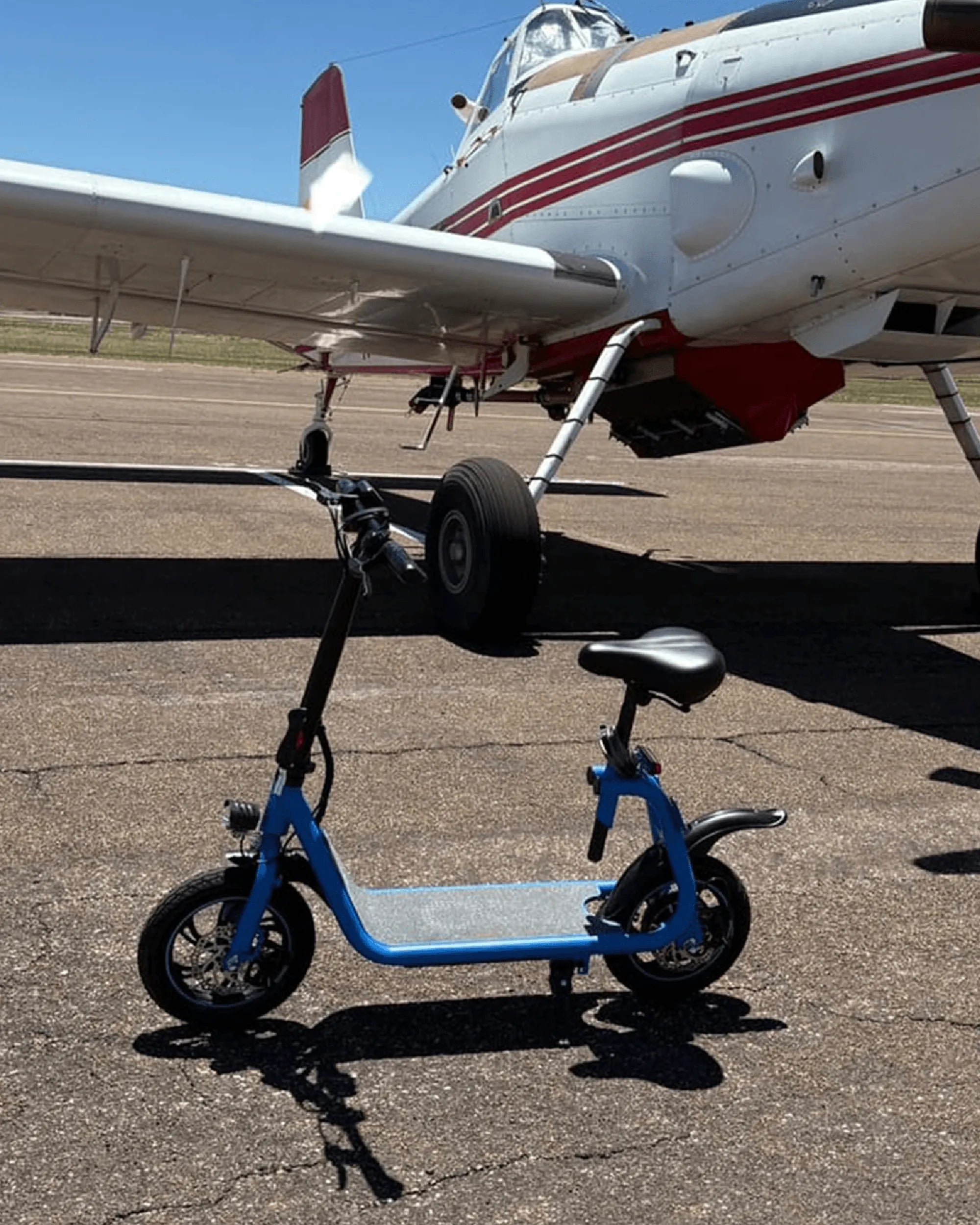
Redefining Urban Speed Limits
Forget crawling in traffic or waiting for delayed buses. A new class of personal electric vehicle is decisively solving the last-mile problem and redefining short-range urban travel: the 30mph electric scooter. These machines bridge a critical gap, offering the agility of a micro-mobility device with the pace necessary to integrate safely with city traffic flow. This isn't about reckless speed; it's about practical, efficient velocity that matches the 25-35 mph limits common on many urban arteries. Electric scooters 30mph represent a mature evolution in the category, moving beyond novelty toys to legitimate, primary commuter vehicles. Brands like Gyroor, a leading electric scooter and e-bike manufacturer trusted by over 100,000 riders, are at the forefront, engineering these high-performance scooters with a focus on safety, durability, and reliable power to meet the demands of daily urban commuting.
Why 30 MPH? The Sweet Spot for Urban Commuting
The 30mph benchmark is not arbitrary; it's a calculated sweet spot born from urban infrastructure and rider psychology. Slower scooters (15-20 mph) can feel vulnerable in mixed traffic, causing bottlenecks in bike lanes and forcing riders onto crowded sidewalks. Conversely, speeds significantly above 35 mph enter a regulatory gray area, often requiring licensing and moving into moped territory. A 30mph electric scooter allows a rider to maintain pace with city traffic, safely overtake cyclists, and cover meaningful distances in practical timeframes, all while typically remaining within the legal definition of an electric scooter in many jurisdictions.
The Commuter's Time-Saving Calculus
The time advantage is quantifiable. Consider a 5-mile cross-town commute. A car, factoring in traffic congestion and a 5-10 minute search for parking, might average 20 mph, taking 15 minutes plus parking time. Public transit with a walk, wait, and transfer could easily take 30-40 minutes. A 20mph scooter covers the distance in 15 minutes of pure ride time. However, a 30mph electric scooter completes the same 5-mile journey in just 10 minutes of ride time. When you eliminate parking hassle and operate door-to-door, the high-speed scooter often becomes the fastest mode of transport for trips under 10 miles, turning a 45-minute ordeal into a 10-minute breeze.
Safety and Control at Higher Speeds
Speed must be paired with superior control. Reliable 30mph electric scooters are engineered with this principle. Key features include dual braking systems (often disc brakes front and rear), larger wheel diameters (10-inch or more) for stability over bumps, and robust suspension to maintain tire contact with the road. Lighting is critical: bright headlights, brake lights, and turn signals are essential for visibility. Gyroor designs its performance scooters with these elements, incorporating wide decks for stable footing, IPX5 water-resistant construction for all-weather reliability, and precise motor controllers for smooth acceleration and braking, ensuring that the capability for speed is matched by the capacity for safe operation.
Key Features to Look for in a 30 MPH Electric Scooter
Not all scooters that claim a 30mph top speed are built for sustained, safe performance. Distinguishing a true commuter-grade vehicle requires scrutiny of core specifications. The pursuit of electric scooters 30mph demands a specific set of engineering choices that directly impact power, range, and durability.
Power & Range: Beyond the Top Speed
Achieving and maintaining 30mph, especially on inclines, requires substantial motor power. Look for a continuous power rating of at least 500 watts; peak power will be higher. Battery capacity is equally crucial. A combination of high voltage (48V or 52V is standard for this class) and ample amp-hour (Ah) rating determines range. Be skeptical of maximum range claims; real-world range at a constant 30mph is typically 50-60% of the advertised maximum due to wind resistance and power draw. For example, a scooter rated for 40 miles might achieve 20-25 miles at top speed. Gyroor utilizes high-capacity, UL-certified battery packs tested for 500+ charge cycles, ensuring both safety and consistent power delivery for the lifespan of the scooter.
Build Quality & Durability for Daily Use
Daily commuting subjects a scooter to constant vibration, impacts, and weather. The frame should be constructed from aerospace-grade aluminum, offering a blend of strength and lightness. The IP (Ingress Protection) rating indicates resilience against dust and water. An IPX5 rating, like those on Gyroor scooters, means the unit can withstand water jets from any direction, making it commuter-ready in rain. Tire choice matters: pneumatic (air-filled) tires provide superior shock absorption and traction compared to solid tires, especially at higher speeds. This focus on durable construction is backed by Gyroor's reliable 1-year warranty, a testament to their confidence in daily-use performance.
Rider Safety Systems and Stability
At 30mph, advanced rider aids become important. Look for features like Electronic Braking Distribution (EBD) which optimizes braking force between front and rear wheels to prevent skidding. Some models incorporate regenerative braking, which helps recharge the battery slightly while slowing the scooter. A low center of gravity, wide handlebars, and a rigid, flex-free deck are fundamental for stability. A quality suspension system (spring or hydraulic) is non-negotiable for maintaining control and comfort on imperfect city streets, ensuring the scooter remains predictable and planted.
The Practical Rider's Guide to 30 MPH Scooting
Owning a high-performance scooter comes with the responsibility to operate it safely and legally. This guide ensures you get the most out of your electric scooter 30mph while respecting the rules of the road and your own safety.
Navigating Local Laws and Regulations
Legality is paramount. In many areas, 30mph may exceed local e-scooter speed limits, which are often set at 15-20 mph. It is the rider's responsibility to know and obey local laws. Use dedicated bike lanes where available. If your scooter has multiple speed modes, use a lower mode in congested areas or where prohibited. Always yield to pedestrians and ride defensively. The advantage of a 30mph electric scooter is the capability for speed when conditions and laws allow, not the obligation to always ride at the limit.
Gear Up: Essential Safety Equipment
Your safety gear must match your vehicle's capability. At a minimum, always wear a certified bicycle or motorcycle helmet. Full-face helmets offer superior protection. High-visibility clothing or a reflective vest is crucial for being seen. Riding gloves protect your hands in a fall and improve grip. Consider knee and elbow pads, especially when learning. Protective eyewear shields your eyes from wind, dust, and debris. Investing in proper gear is a non-negotiable part of responsible high-speed scooter ownership.
Maintenance Checklist for Peak Performance
Regular maintenance ensures safety and longevity. Perform a pre-ride check: test brakes, check tire pressure (for pneumatic tires), and ensure lights are functional. Weekly, inspect for loose bolts, especially on the stem and handlebars. Clean the scooter regularly, avoiding direct water spray on the charging port. For the battery, follow charging best practices: avoid draining to 0%, don't leave it fully charged for extended periods, and store in a cool, dry place. Adhering to a simple maintenance routine upholds the performance and safety your 30mph electric scooter was designed for.
30 MPH Scooters vs. Other Urban Transport Options
How does a performance e-scooter truly stack up against the alternatives? The following data-driven comparison reveals its compelling advantages in cost, efficiency, and convenience for urban travel.
| Transport Mode | Avg. Speed (Urban) | Cost per Mile* | Parking | CO2 Emissions (g/mile) | Door-to-Door Convenience |
|---|---|---|---|---|---|
| 30 MPH E-Scooter | 20-25 mph | $0.03 - $0.05 | Free & Easy | ~0 (at point of use) | Excellent |
| Compact Car | 15-20 mph | $0.60 - $0.70 | Costly/Difficult | ~350 | Good (minus parking) |
| Public Transit | 10-15 mph | $0.15 - $0.30 | N/A | ~200** | Poor (fixed routes) |
| 20 MPH E-Scooter | 15-18 mph | $0.02 - $0.04 | Free & Easy | ~0 (at point of use) | Excellent |
| E-Bike (Class 3) | 20-28 mph | $0.02 - $0.04 | Free & Easy | ~0 (at point of use) | Excellent |
*Includes estimated fuel/charging, maintenance, depreciation, and parking where applicable. **Varies greatly by grid energy source.
Cost-Per-Mile and Total Ownership Analysis
The financial case is overwhelming. As the table shows, the cost per mile for a 30mph electric scooter is a fraction of car ownership and competitive with public transit. There is no gas, minimal insurance (optional personal liability), zero parking fees, and low maintenance (tires, brakes). The upfront cost of a quality scooter ($800-$1500) is recouped quickly compared to a car's purchase price, insurance, and fuel. Over a year, a commuter saving $100/month on parking and $50/month on fuel can save $1,800, potentially paying for the scooter in full.
Environmental Impact and Efficiency
Electric scooters are exceptionally energy-efficient. They require roughly 20-30 watt-hours per mile, translating to over 1,000 miles per gallon of gasoline equivalent. Their direct carbon footprint is zero; any emissions are from the electricity generation, which on the average U.S. grid is still far lower per mile than a gasoline car. They reduce traffic congestion and noise pollution. By replacing car trips for short urban journeys, riders of electric scooters 30mph make a direct, positive impact on urban air quality and their personal carbon footprint.
FAQ: Your Questions on 30 MPH Electric Scooters, Answered
Q: Do I need a license or insurance to ride a 30mph electric scooter?
A: Laws vary by state and municipality. In most U.S. states, electric scooters with a top speed under a certain threshold (often 20-28 mph) do not require a driver's license, registration, or insurance. However, a 30mph scooter may approach or exceed these limits in some areas. It is critical to check your local Department of Motor Vehicles or transportation authority regulations. Insurance is rarely mandatory but is a wise consideration for theft or liability.
Q: How far can I really go on a single charge at 30mph?
A: Real-world range at top speed is always less than the maximum claimed range. A scooter advertised for 40 miles of range might achieve 20-25 miles when ridden consistently at 30mph due to high power draw and wind resistance. Factors like rider weight, hills, wind, and temperature significantly impact range. Always plan your commute with a buffer and consider charging opportunities at your destination.
Q: Are 30mph electric scooters safe in wet conditions?
A: With proper construction, they can be. Key is the IP water resistance rating. An IPX5 rating, like those on Gyroor scooters, means the scooter is protected against low-pressure water jets from any direction, making it safe to ride in rain and through puddles. However, riders must adjust behavior: reduce speed, increase following distance, avoid sharp turns, and never ride through deep standing water that could submerge the deck or motor.
Q: What is the difference between peak and continuous motor power?
A: Peak power is the maximum output the motor can produce in short bursts (e.g., for acceleration or climbing a steep hill). Continuous power is the output the motor can sustain indefinitely without overheating. For maintaining 30mph, especially on slight inclines, the continuous power rating is more important. A scooter with a 500W continuous motor is more capable than one with a 1000W peak but only 250W continuous rating.
Q: What kind of warranty and support can I expect from a brand like Gyroor?
A> Gyroor offers a comprehensive 1-year warranty covering manufacturing defects on the scooter, with a 6-month warranty on the battery. They provide U.S.-based customer support for troubleshooting and can coordinate service or parts replacement through their network. This support structure, combined with their use of UL-certified batteries and quality components, provides significant peace of mind for a commuter relying on their electric scooter 30mph daily.
Embracing a Faster, Smarter Commute
The electric scooter 30mph is more than just a faster version of its predecessors; it's a strategically optimized tool for modern urban life. It delivers tangible time savings, unparalleled cost efficiency, and a clean, quiet footprint. The key to unlocking this potential lies in a responsible approach: selecting a scooter built with legitimate performance and safety features, adhering to local laws, and never compromising on protective gear. Brands like Gyroor have elevated the category by focusing on the engineering essentials—UL-certified batteries, IPX5 water resistance, robust frames, and reliable warranties—that make daily high-speed commuting not just possible, but practical and enjoyable. This represents the future of urban mobility: personalized, efficient, and empowering.
Ready to transform your commute? Explore Gyroor's high-performance lineup of electric scooters 30mph and e-bikes, designed for reliability and built to last. Browse the full Gyroor collection at gyroorboard.com and discover the faster, smarter way to navigate your city.
Street Legal Electric Scooters for Adults: The Ultimate Urban Commuting Solution
Top Electric Scooters 2025: The Future of Urban Mobility