



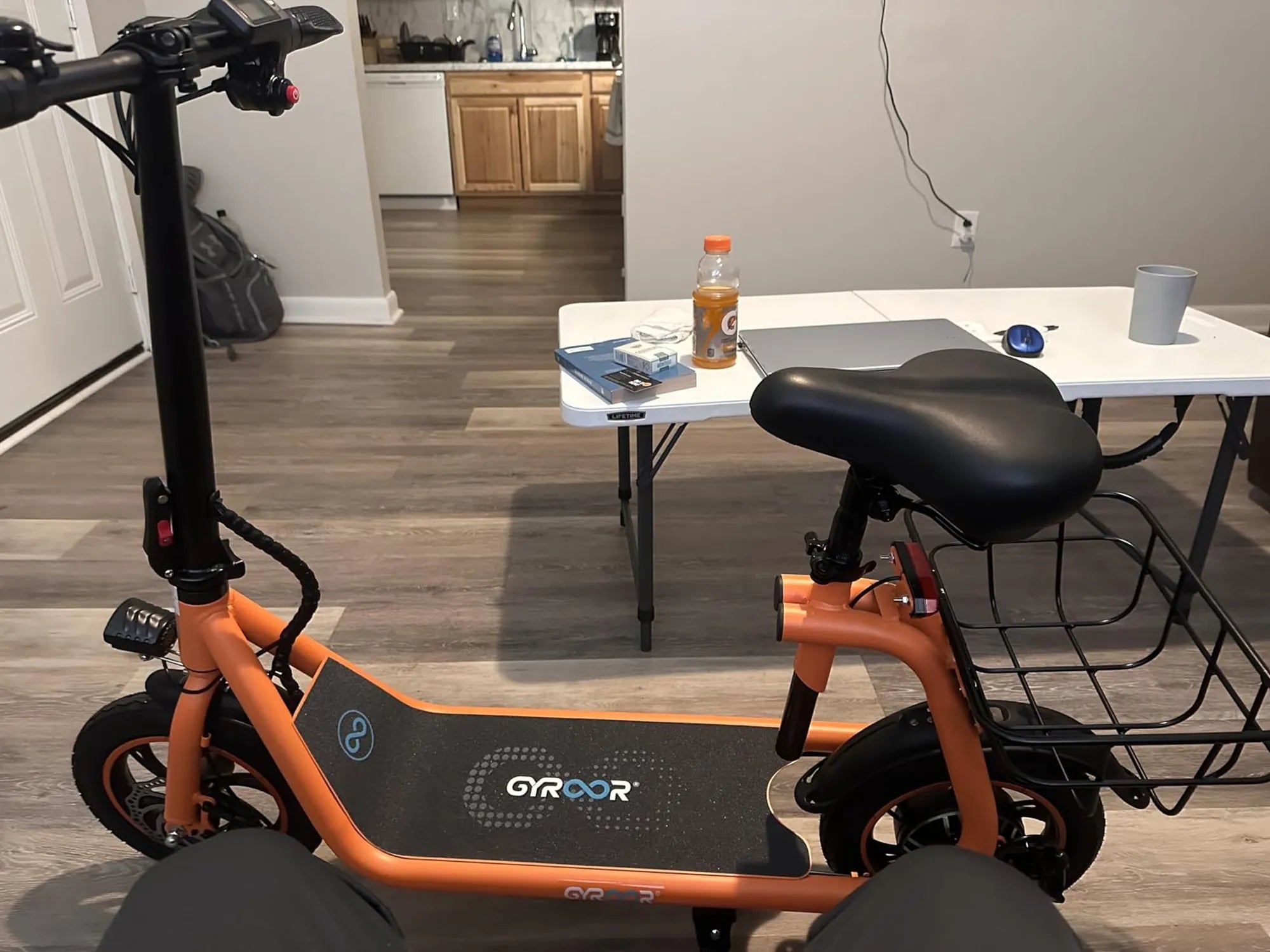
The Need for Speed in Modern Commuting
Electric scooters capable of 40mph are redefining urban and suburban mobility. They represent a significant leap from last-mile solutions to legitimate primary commuting vehicles. This guide provides a comprehensive look at high-speed electric scooters, dissecting the technology, practical use, and regulations.
You will learn what components enable reliable 40mph performance. We will analyze the real-world impact on commute times and route flexibility. Crucially, this guide covers the heightened safety protocols and complex legal landscape that come with this vehicle class.
For commuters facing distances of 10-20 miles, a 40mph electric scooter can cut travel time by more than half compared to cars in traffic. It offers an unparalleled blend of efficiency, exhilaration, and cost-effectiveness. Understanding this technology is key to leveraging its full potential safely and legally.
What Makes a 40mph Electric Scooter? Key Components Explained
Achieving a stable, sustainable 40mph requires more than a powerful motor. It demands a synergistic engineering approach where every component is designed for high-speed performance. The core system involves a high-output motor, a large-capacity battery, a robust controller, and a frame built for stability.
These scooters are engineered for adults seeking a serious commuting tool. They bridge the gap between standard e-scooters and mopeds. The design philosophy prioritizes power delivery, thermal management, and structural integrity over ultra-portability.
Motor Power & Performance: Beyond Wattage Numbers
Motor power is the primary determinant of top speed. Most 40mph models feature dual motor configurations or a single high-wattage motor, typically ranging from 1000W to 2000W per motor. The combined peak power often exceeds 3000W.
Nominal power indicates continuous output, while peak power is the maximum short-term burst. For hill climbs at high speeds, high torque is essential. Dual-motor setups provide superior torque and redundancy, ensuring consistent performance even if one motor overheats.
The motor controller is the brain, regulating power flow from the battery to the motors. A high-quality controller ensures smooth acceleration, protects components from voltage spikes, and enables features like regenerative braking. Thermal management through heat sinks or fans is critical to prevent power throttling during sustained high-speed runs.
Battery & Range: The Fuel for High-Speed Travel
Sustaining 40mph draws immense power, requiring high-capacity lithium-ion battery packs. Expect capacities between 20Ah and 30Ah, often at 52V or 60V. A larger battery is the single biggest factor for real-world range at top speed.
Manufacturer range claims are often based on ideal conditions at lower speeds. At a constant 40mph, real-world range can be 40-50% lower. A scooter advertised for 50 miles might achieve 20-25 miles at full throttle. Riding style, rider weight, terrain, and temperature significantly impact results.
Charging times for these large batteries are longer, typically 8-12 hours with standard chargers. Fast chargers can reduce this to 4-6 hours but may impact long-term battery health. Battery management systems (BMS) are vital for cell balancing, temperature monitoring, and preventing over-discharge.
Build & Safety: Engineering for Stability at Speed
At 40mph, frame rigidity and geometry are non-negotiable. Frames are constructed from reinforced aluminum alloy or aircraft-grade aluminum to resist flex and torsional stress. The deck is longer and wider for a stable riding stance.
Suspension systems transition from basic spring setups to hydraulic or rubber cartridge systems. They absorb impacts from road imperfections, maintaining tire contact and rider control. Large pneumatic tires (10 inches or more) provide crucial shock absorption and superior grip compared to solid tires.
Braking systems must be exceptional. Dual hydraulic disc brakes are the gold standard, offering progressive, powerful stopping power in all conditions. Many systems combine hydraulic brakes with electronic regenerative braking for increased efficiency and brake pad longevity. Bright, focused headlights and brake lights are essential for visibility.
Gyroor's Approach to High-Speed, Safe Riding
As a leader in personal electric transport, Gyroor's philosophy for high-speed scooters centers on responsible performance. The brand integrates rigorous safety standards and durable engineering directly into its high-performance models, ensuring speed does not compromise reliability.
With over 100,000 riders across North America and Europe, Gyroor's design insights are informed by real-world use. Their high-speed models are built not as toys, but as dependable commuter vehicles. This focus on verified safety and rider support defines their approach to the 40mph category.
UL-Certified Power: Confidence in Every Charge
For a high-power device like a 40mph scooter, battery safety is paramount. Gyroor uses UL-certified battery packs in its performance models. This certification means the battery cells, BMS, and enclosure have undergone independent testing for electrical, mechanical, and fire safety.
UL-certified batteries are engineered to handle the high discharge rates demanded by dual-motor systems without overheating. They are built to endure 500+ charge cycles while maintaining significant capacity. This certification mitigates the risk of thermal runaway, a critical consideration for the large, high-energy-density packs required for high-speed travel.
Built for the Elements: The IPX5 Advantage
Commuting means encountering weather. Gyroor designs its performance scooters with IPX5 water resistance. This rating means the scooter's critical electrical components can withstand low-pressure water jets from any direction, protecting against rain and road spray.
This engineering prevents water ingress that could short-circuit the controller, motor, or battery connections. While not submersible, an IPX5 rating provides essential peace of mind for daily riders, ensuring a sudden downpour doesn't end the commute or cause a costly failure. It's a feature that underscores the vehicle's all-weather capability.
Warranty & Support: Your Safety Net for High-Performance Riding
Investing in a high-speed scooter is a commitment. Gyroor backs its performance models with a comprehensive 1-year warranty covering manufacturing defects in the frame, motor, battery, and controller. This warranty acts as a critical safety net for complex electronics and mechanical systems.
Accessible customer support is equally important. Gyroor provides direct support channels, ensuring riders can get timely assistance for troubleshooting or warranty claims. For a vehicle that may serve as a primary commute tool, this reliable support structure is as vital as the hardware itself.
The Real-World 40mph Commute: Benefits, Trade-offs, and Legality
Owning a 40mph electric scooter transforms the daily commute but introduces new responsibilities. The benefits are substantial, but they are paired with a need for advanced riding skill, proper safety gear, and careful navigation of local laws.
This vehicle class exists in a regulatory gray area in many regions. Understanding this landscape is essential before purchase. The trade-off for blistering speed and freedom is a higher level of rider responsibility and potential regulatory compliance.
Transforming Your Commute: Time Savings & Route Freedom
The primary benefit is dramatic time reduction. A 15-mile commute that takes 50 minutes in peak car traffic can be completed in under 25 minutes on a 40mph scooter. You bypass congestion by using bike lanes where permitted and filtering through stationary traffic.
Route options expand significantly. You can take direct routes through urban corridors inaccessible to cars. Parking becomes trivial, eliminating time spent searching for spots and costly parking fees. The direct operating cost is a fraction of a car's, often just pennies per mile for electricity.
Understanding the Responsibilities: Safety Gear and Riding Skill
At 40mph, a fall can be severe. Essential safety gear is not optional; it is mandatory. This includes a full-face motorcycle helmet (DOT or ECE certified), motorcycle gloves with palm sliders, a padded jacket or armor, and sturdy boots. Regular street clothing offers no protection.
Riding skill must match the machine's capability. Beginners should not start on a 40mph scooter. Practice in empty parking lots is essential to master acceleration, braking, and emergency maneuvers. Defensive riding is crucial—anticipate car doors opening, pedestrians stepping out, and vehicles failing to yield.
Navigating Laws and Regulations
The legal status of 40mph electric scooters is complex and varies by country, state, and city. In most U.S. jurisdictions, they exceed the speed and/or power limits for "low-speed electric bicycles" or standard e-scooters.
They are often classified as "motorized scooters," "mopeds," or even "motorcycles." Common requirements may include a valid driver's license (sometimes a motorcycle endorsement), vehicle registration, license plates, and insurance. They are frequently prohibited on sidewalks, bicycle paths, and multi-use trails, restricted to roads.
Riders must proactively research their local Department of Motor Vehicles (DMV) or transportation authority regulations. Ignorance of the law is not a defense and can result in fines, impoundment, or points on your license.
40mph Scooters vs. Alternatives: Making the Right Choice
Choosing a 40mph electric scooter involves comparing it to other personal transport options. Its unique value proposition becomes clear when analyzed against standard scooters, e-bikes, and traditional vehicles. The following table provides a clear comparison.
| Feature | 40mph Electric Scooter | Standard Commuter Scooter (~20mph) | High-Speed E-Bike (Class 3, 28mph) | Car / Motorcycle |
|---|---|---|---|---|
| Top Speed | 35-40 mph | 15-20 mph | 20-28 mph (pedal-assist) | 65+ mph |
| Typical Range* | 20-35 miles | 15-25 miles | 30-60 miles | 200+ miles |
| Primary Use Case | Medium-distance urban/suburban commute | Last-mile / short urban trips | Medium-distance commute with exercise | Long-distance, all-weather, cargo/passenger transport |
| Legal Complexity | High (often requires license/registration) | Low to Medium (varies by city) | Medium (clear federal class system) | High (license, registration, insurance required) |
| Operational Cost | Very Low (~$0.01/mile) | Extremely Low (~$0.005/mile) | Very Low (~$0.01/mile) | High (fuel, insurance, maintenance) |
| Parking & Storage | Extremely Easy | Extremely Easy | Moderately Easy (requires bike rack) | Difficult & Costly |
| Weather Protection | None (rider-provided) | None (rider-provided) | None (rider-provided) | Full |
*Range at typical commuting speeds. 40mph scooter range drops significantly at top speed.
In-Depth Comparison Analysis
Against a standard scooter, the 40mph model is for longer, faster commutes but sacrifices portability and legal simplicity. It's a different tool for a different job. Compared to a Class 3 e-bike, the scooter offers higher top speed but no pedal-assist option for exercise or extending range.
Versus a car or motorcycle, the 40mph scooter wins on cost and parking but loses on safety, cargo capacity, and all-weather capability. It is best suited as a car replacement for solo commuters in mild climates, or as a supplement for specific trips where traffic and parking are major concerns.
Frequently Asked Questions (FAQ) About 40mph Electric Scooters
Q1: Is it legal to ride a 40mph electric scooter on the road?
It depends entirely on your local laws. In many areas, 40mph scooters are classified as motor vehicles (like mopeds) due to their speed and power. This often requires a driver's license, registration, insurance, and adherence to road traffic laws. They are typically not legal on sidewalks, bike paths, or multi-use trails. You must check with your local Department of Motor Vehicles or transportation authority before riding.
Q2: What is the real-world range I can expect at top speed?
Expect 40-60% of the manufacturer's stated range. If a scooter is advertised with a 50-mile range, that is usually estimated at a steady 15-20mph. Riding consistently at 40mph dramatically increases power draw, reducing range to approximately 20-30 miles. Factors like rider weight, hills, wind, and temperature will further affect this.
Q3: Are 40mph scooters safe for beginners?
No. 40mph electric scooters are not recommended for beginners. They require experience with two-wheeled vehicle dynamics, advanced braking techniques, and defensive riding. Starting on a lower-speed model (15-25mph) to build fundamental skills is strongly advised. Even experienced riders must wear full protective gear and practice extensively in controlled environments.
Q4: How much maintenance does a high-performance scooter require?
Maintenance is more involved than for a standard scooter. Regular checks include tire pressure (critical for stability at speed), brake pad wear and hydraulic fluid levels, suspension bolt tightness, and motor/battery connector integrity. Electrical systems should be inspected periodically for loose wires. Following the manufacturer's maintenance schedule is essential for safety and longevity.
Q5: Why are brands like Gyroor emphasizing UL certification and IP ratings for these scooters?
UL certification for batteries and IP ratings for water resistance are indicators of professional-grade engineering and safety prioritization. For a high-power device carrying a rider at highway speeds, proven electrical safety (UL) is non-negotiable to prevent fire risk. An IPX5 rating ensures the scooter is a reliable all-weather commuter, not a fair-weather toy. These features separate serious transportation tools from less reliable products.
Is a 40mph Electric Scooter Right for You?
A 40mph electric scooter is a powerful tool for the right commuter. It is ideal for an experienced rider with a one-way commute of 10-20 miles, who values time savings over absolute portability, and is willing to invest in serious safety gear. This rider must also be proactive in understanding and complying with local vehicle regulations.
This vehicle class represents the pinnacle of electric scooter technology, blending exhilarating performance with practical utility. It is not a casual purchase but a strategic investment in personal mobility. The benefits of slashing commute times, avoiding traffic, and reducing transportation costs are profound for those whose needs align with its capabilities.
Prioritize brands that match high performance with verified safety standards, comprehensive warranties, and reliable support. Your safety and the scooter's reliability depend on this engineering integrity. The ultimate guide to high-speed commuting empowers you with the knowledge to choose wisely and ride responsibly.
Explore engineering-focused, high-performance electric scooters built with UL-certified safety and robust construction. Browse the full Gyroor collection at gyroorboard.com to find a model that matches your need for speed and commitment to safe riding.
Cheap Electric Mobility Scooters: Affordable Freedom for Seniors and Disabled Individuals
Top Selling Electric Scooters: The Ultimate Guide to Choosing the Best Ride