



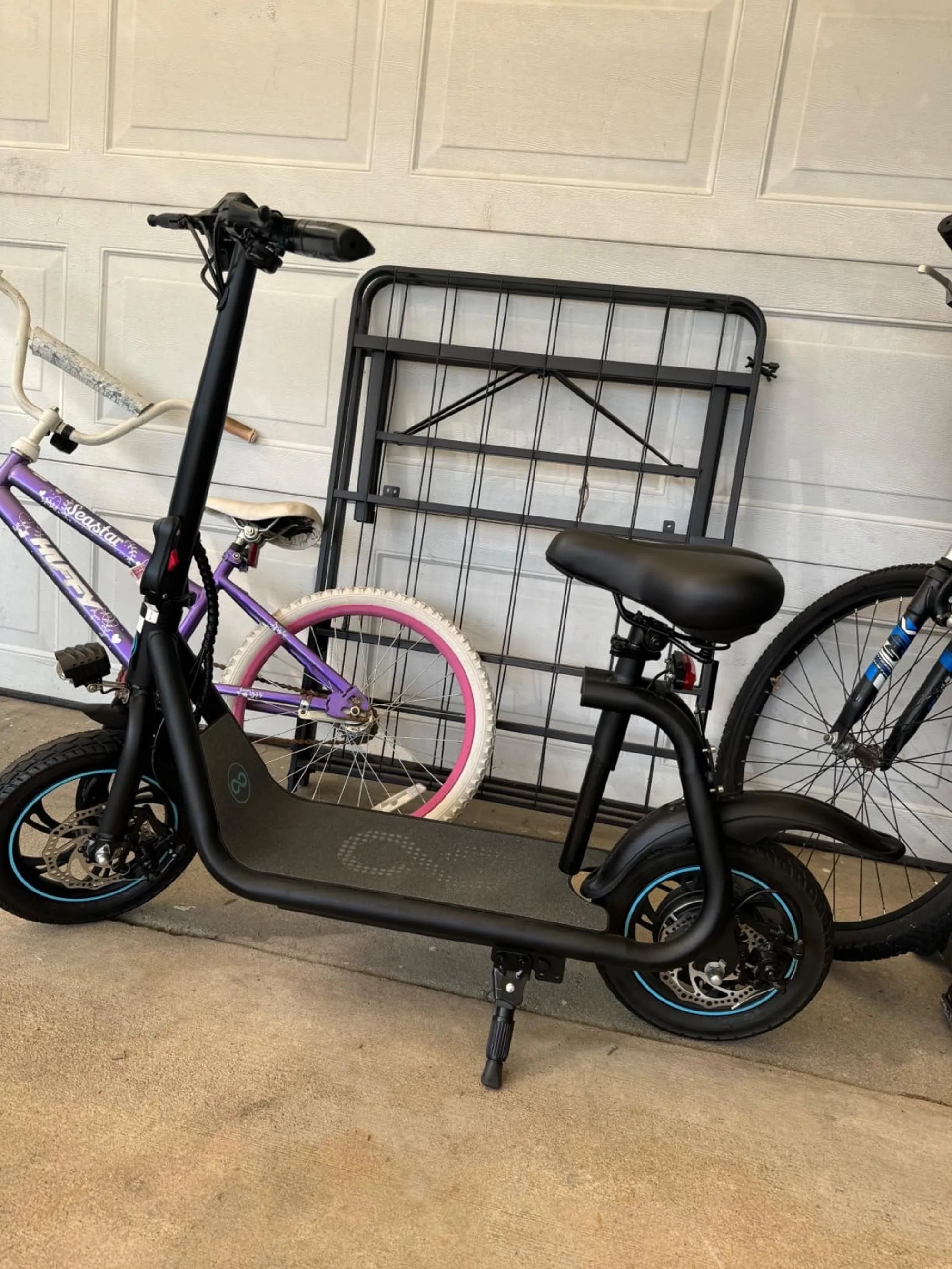
Introduction: The Rise of the 5600W Electric Scooter
The landscape of personal urban mobility is undergoing a power revolution. At its forefront are Electric Scooters 5600W, machines that transcend conventional commuting to offer motorcycle-rivaling performance. This category represents the pinnacle of electric scooter engineering, designed not for casual jaunts but for conquering long distances, steep hills, and rugged terrain with uncompromising authority.
These are not mere toys; they are serious transportation tools for the experienced rider. Brands like Gyroor, a leader in electric mobility trusted by over 100,000 riders across North America and Europe, are entering this high-stakes segment. They bring crucial expertise in UL-certified battery safety and robust, water-resistant designs to a category where reliability is paramount. This guide will dissect every aspect of 5600W electric scooters, from raw power translation to the essential safety and legal frameworks required for responsible ownership.
You will learn what 5600 watts truly means for acceleration and hill climb, the critical components needed to harness this power safely, and who stands to benefit most from this extreme performance. We will provide a data-driven comparison against lower-wattage models, outline mandatory safety protocols, and address the most pressing frequently asked questions. By the end, you will possess a complete understanding of whether a 5600W electric scooter aligns with your mobility needs and how to engage with this powerful technology wisely.
What Does 5600W Really Mean? Decoding Power & Performance
Wattage (W) is the unit measuring a motor's power output, representing its potential to do work. In practical terms, it defines the scooter's capability for speed, acceleration, and overcoming resistance like hills and wind. A 5600W motor is not an incremental step up; it's a quantum leap from mainstream models. To contextualize, a typical commuter scooter might feature a 350W motor, while high-performance models often sit in the 1000W to 2000W range.
A 5600W rating indicates a peak power output that places these scooters in an entirely different echelon. This immense power is typically achieved through dual motor configurations—often two 2800W motors—one in each wheel, providing all-wheel drive capability. This setup is crucial for distributing torque and maximizing traction, especially on loose or uneven surfaces. The power delivery is instantaneous and profound, fundamentally changing the riding experience.
The electrical system supporting such a motor is equally substantial. You will typically find a 60V or even 72V battery architecture, as higher voltage systems are more efficient at delivering high power with less current, reducing heat buildup in the wiring and controllers. The electronic speed controller (ESC) is a sophisticated component that manages the immense flow of energy from the battery to the motors, ensuring smooth acceleration and regenerative braking.
From Watts to Real-World Ride: Speed, Torque, and Hill Climb
The theoretical potential of a 5600W motor translates into staggering real-world metrics. While top speed is often electronically governed for safety and legal compliance, the underlying power allows for governed speeds typically ranging from 40 to over 60 mph. More transformative than top speed is the torque—the rotational force that propels you forward from a standstill.
Acceleration is brutal and immediate, allowing these scooters to outpace urban traffic from stoplights with ease. This makes them exceptionally capable for merging into fast-moving traffic flows where slower scooters would be a hazard. The hill climb ability is perhaps the most practically impressive feature. A 5600W dual-motor scooter can maintain high speeds on inclines that would bring lower-powered models to a crawl.
We are discussing the ability to conquer grades of 30% or more without a significant drop in speed. This means steep urban hills, mountain roads, and off-road trails become easily accessible. The power ensures that the scooter is never straining, which contributes to motor longevity and consistent battery performance even under heavy load. The ride is characterized by a sense of effortless power reserve, whether you're carrying a passenger or navigating challenging topography.
Who is the 5600W Electric Scooter For? Defining the Ideal Rider
The Electric Scooters 5600W category serves a specific, experienced demographic. It is emphatically not a recommendation for first-time electric scooter buyers or those seeking a simple last-mile solution from a subway station. The ideal rider possesses prior experience with lower-powered electric vehicles, understands the dynamics of high-speed riding, and has a clear, performance-driven need.
The primary user is the extreme commuter. This individual may have a daily round-trip commute of 20 to 40 miles, potentially involving major highways (where local laws permit), steep overpasses, or areas with inconsistent road surfaces. For them, the scooter is a legitimate car replacement, and the 5600W power ensures they can keep pace with traffic safely and arrive without range anxiety. The robust range and speed turn a wide metropolitan area into a easily navigable zone.
Off-road and adventure enthusiasts form another core demographic. The combination of immense torque, high ground clearance (on models designed for it), all-wheel drive, and advanced suspension makes certain 5600W models capable trail machines. They open up fire roads, beach paths, and wooded trails for exploration, offering a thrilling and unique outdoor experience. The power is necessary for loose dirt, sand, mud, and steep, rocky ascents.
Heavier riders (those over 250 lbs) who have been underserved by standard scooters will also find a perfect match here. The 5600W motor does not struggle under load, providing the same exhilarating acceleration and hill-climbing performance to a wider range of body types. Finally, these scooters appeal to the performance seeker—the individual who views personal mobility as a hobby and enjoys the engineering, customization, and sheer thrill of controlling such a powerful machine.
Key Features to Expect in a 5600W Powerhouse
Harnessing 5600 watts of power requires an entire ecosystem of high-end components. Compromising on any of these supporting features can lead to safety failures, poor performance, or rapid degradation. A true powerhouse is defined by the synergy between its motor, battery, chassis, and control systems.
The frame is the foundation. Expect aircraft-grade aluminum alloys or reinforced steel constructions. These frames are welded and engineered to handle the stresses of high speeds, off-road impacts, and the significant weight of the components they carry. Folding mechanisms, if present, are overbuilt with reinforced locks to prevent any play or failure during aggressive riding. The deck is wide and long, offering a stable, planted stance for the rider.
Suspension systems are paramount. Dual or even quadruple hydraulic spring shock absorbers are common, with long travel (often 4 inches or more) to soak up bumps at high speed. This protects the rider, the frame, and the electronic components from jarring impacts. Without such suspension, controlling a scooter at 40+ mph on imperfect pavement becomes dangerous and uncomfortable. The braking system is the most critical safety component outside of the rider's gear.
Battery & Range: Fueling the Beast
To feed a 5600W motor, you need a massive and high-performance battery pack. Standard configurations are 60V or 72V, with capacities ranging from 30Ah to 40Ah or more. This translates to a potential energy storage of 1800Wh to 2880Wh. For comparison, a typical commuter scooter battery is 500Wh. This high capacity is what enables the impressive real-world range of 35 to 70 miles per charge, depending on riding mode, terrain, and rider weight.
Battery chemistry and management are non-negotiable. High-quality models use LG, Samsung, or Panasonic lithium-ion cells arranged in packs with advanced Battery Management Systems (BMS). The BMS monitors cell temperature, voltage, and current, preventing overcharge, over-discharge, and short circuits. This is where Gyroor's commitment to UL-certified battery packs becomes a decisive advantage. UL certification involves rigorous testing for thermal runaway, crushing, and electrical abuse, providing a critical layer of safety assurance for a battery pack storing this much energy.
Charging times are a consideration. A full charge for a 2000+ Wh battery with a standard 2-3A charger can take 12-20 hours. Many high-end models now include fast-charging capabilities with 5A or higher chargers, potentially cutting charge times to 6-10 hours. Proper battery care—avoiding full discharges, storing in moderate temperatures, and using the manufacturer's charger—is essential for achieving the 500+ charge cycles these packs are rated for.
Frame, Suspension & Braking: Built for the Power
The triumvirate of frame, suspension, and braking defines the safety envelope of a 5600W scooter. The frame must be rigid to provide precise handling but also engineered with strategic flex to absorb shocks. Steering stems are thick and often supported by dual clamps or reinforcement plates to eliminate speed wobble, a dangerous phenomenon that can occur at high speeds if the front end is not perfectly stable.
Suspension is no longer a luxury; it is a necessity for control and comfort. Advanced systems combine hydraulic oil damping with coil springs, and some feature adjustable preload or damping to tailor the ride to the rider's weight and terrain. This ensures the tires maintain contact with the ground for optimal traction and braking, even over bumps.
Braking is the most critical system. Cable-actuated disc brakes are insufficient. The standard is full hydraulic disc brakes on both wheels, with large rotors (often 140mm or more) to dissipate heat. Some top-tier models incorporate ABS (Anti-lock Braking Systems) or electronic braking distribution to prevent wheel lock-up during panic stops, especially on wet surfaces. Regenerative braking, which feeds energy back into the battery during deceleration, is a valuable addition that also reduces wear on the physical brake pads.
Tires, Water Resistance, and Durability
Tires are the only point of contact with the ground, and their design is crucial. For 5600W scooters, tire sizes are typically 10 inches or larger, with 11-inch models becoming common. Larger diameter provides greater stability at speed and rolls over obstacles more easily. Tire choice splits into two camps: street and off-road.
Street tires are wide and have a slick or semi-slick tread pattern for maximum asphalt grip. Off-road tires feature deep, knobby treads for traction in dirt, gravel, and mud. Some riders opt for hybrid tires. Tubeless pneumatic (air-filled) tires are preferred for their ability to absorb road vibrations and provide self-sealing properties for small punctures. Solid tires cannot provide the necessary grip and comfort for this performance level.
Water resistance is a key durability and safety feature. Riding in wet conditions is inevitable. A high ingress protection rating like IPX5, which Gyroor incorporates into its designs, means the scooter can withstand low-pressure water jets from any direction. This protects the motor bearings, controller, battery compartment, and display from rain and road spray, preventing short circuits and corrosion. This rating is a benchmark for a scooter designed for all-weather, real-world use.
Data-Driven Comparison: 5600W vs. Lower Power Tiers
To visually comprehend the performance gap, a direct comparison of key metrics is essential. The following table illustrates how Electric Scooters 5600W stand apart from common power tiers.
| Metric | 500W (Entry Commuter) | 1000W (Performance Commuter) | 2000W (High-Performance) | 5600W (Ultra-Performance) |
|---|---|---|---|---|
| Motor Power | 500W (Single) | 1000W (Single/Dual) | 2000W (Dual) | 5600W (Dual) |
| Typical Top Speed | 15-20 mph | 25-30 mph | 35-40 mph | 40-60+ mph (Governed) |
| Max Incline | 10-15% | 20-25% | 25-30% | 35%+ |
| Real-World Range | 15-25 mi | 20-35 mi | 25-45 mi | 35-70 mi |
| Typical Battery | 36V/10Ah (360Wh) | 48V/13Ah (624Wh) | 52V/18Ah (936Wh) | 60V/30Ah+ (1800Wh+) |
| Ideal Use Case | Short urban trips, flat terrain | Longer commutes, moderate hills | Aggressive urban riding, steep hills | Extreme commuting, off-roading, high-speed travel |
| Approx. Weight | 30-40 lbs | 50-65 lbs | 65-80 lbs | 80-120 lbs |
This data reveals the exponential leap. The 5600W category offers more than double the hill-climbing ability and a 50-100% increase in potential speed and range over even the 2000W tier. The weight also increases significantly, underscoring the trade-off between portability and performance. This comparison makes it clear: the 5600W scooter is a different class of vehicle built for a different purpose.
Critical Considerations Before You Buy
Owning a machine of this capability comes with significant responsibilities and practicalities that must be acknowledged upfront. Ignoring these considerations can lead to legal trouble, financial loss, or personal injury. A prudent buyer evaluates these factors as seriously as the performance specifications.
First is the substantial financial investment. High-quality 5600W scooters are a major purchase, with prices often ranging from $2,500 to $5,000 or more. This investment should be protected by a robust warranty and supported by a company with proven customer service. The cost of ownership also includes high-end safety gear, potential maintenance, and replacement parts like tires and brake pads, which wear faster under high-performance use.
Second is the learning curve. Even experienced riders of lower-powered scooters need time to acclimate to the acceleration, braking power, and weight of a 5600W model. It is strongly advised to practice in a large, empty parking lot, gradually increasing speed and testing braking distances in a controlled environment before venturing into traffic. Understanding the scooter's handling characteristics at low and high speed is crucial for safe operation.
Local Laws and Regulations
This is the most critical and often overlooked factor. Local, state, and national laws governing electric scooters vary wildly and are rapidly evolving. Most jurisdictions have strict limits on motor power (e.g., 750W), top speed (e.g., 20 mph), and where scooters can be ridden (bike lanes vs. roads). A 5600W scooter almost certainly exceeds the legal definition of an "electric scooter" in most public areas.
In many regions, a vehicle of this power and speed may be classified as a moped, motorcycle, or limited-speed motorcycle. This can mandate requirements for a driver's license (often a motorcycle endorsement), vehicle registration, license plates, and insurance. Riding an unregistered, uninsured vehicle on public roads can result in heavy fines, impoundment of the scooter, and legal liability in the event of an accident.
It is the rider's absolute responsibility to research and comply with all applicable laws in their area. The appropriate venue for using a 5600W scooter to its full potential may be private property or designated off-road trails, not public streets. Responsible ownership means understanding and respecting these legal boundaries.
Safety Gear is Non-Negotiable
At the speeds and power levels of a 5600W scooter, a bicycle helmet is grossly inadequate. The required safety kit mirrors that of a motorcycle rider. A full-face motorcycle helmet (DOT or ECE certified) is essential to protect your head, face, and jaw in a collision. Armored motorcycle gloves, a motorcycle jacket with shoulder, elbow, and back armor, and durable pants with knee protection are mandatory.
This gear serves two purposes: abrasion resistance in a slide and impact protection. High-visibility elements are also recommended. This investment in gear is a fundamental part of the total cost of owning a high-performance scooter. It is not an accessory; it is your primary safety system. The scooter's brakes and frame protect the machine, but your gear protects you.
Weight, Portability, and Storage
The concept of "portability" essentially disappears with this class. Weighing between 80 and 120 pounds, these are not scooters you casually carry up a flight of stairs or fold into a car trunk. The folding mechanism is for storage and transport in a vehicle's rear hatch or truck bed, not for last-mile multi-modal commuting.
You must have a secure, dedicated storage plan. This includes a safe indoor space like a garage, shed, or ground-floor apartment, or a very secure outdoor anchor point with a heavy-duty motorcycle lock. The weight also affects how you handle mechanical issues—fixing a flat tire on a 100-pound scooter is a significant logistical challenge compared to a 40-pound model. Consider your ability to transport it if it needs service.
The Gyroor Advantage in High-Power Mobility
When engaging with the elevated risks and performance demands of the 5600W category, choosing a brand with a foundational commitment to safety and reliability is paramount. Gyroor's engineering philosophy, proven across its range of UL-certified electric scooters and e-bikes, directly addresses the core concerns of high-power riding.
The cornerstone is battery safety. Gyroor's use of UL-certified battery packs in its high-performance models is not just a feature; it's a critical risk mitigation strategy. For a battery storing over 1800 watt-hours of energy, the rigorous testing for thermal and electrical stability that UL certification provides is indispensable. It offers peace of mind that the most volatile component in the vehicle has been designed and tested to the highest recognized safety standards.
Durability for real-world conditions is engineered in. The IPX5 water-resistance rating ensures that the scooter's vital electronics are protected from rain and splashes, a necessity for a vehicle meant for daily transportation, not just fair-weather use. This protection extends the lifespan of controllers and motor connections, preventing the corrosion and short circuits that can plague lesser-built models.
Finally, the 1-year comprehensive warranty, backed by US-based customer support, provides a tangible safety net for a major investment. High-power components are under significant stress, and having a responsive support team for warranty claims or technical advice is invaluable. For the rider investing in a 5600W scooter, Gyroor's approach translates to a vehicle where the extreme performance is matched by a foundation of responsible engineering and support.
Frequently Asked Questions (FAQ)
Q: Is a driver's license or special registration required to ride a 5600W electric scooter?
A: This is entirely jurisdiction-dependent. In most cities and states, a 5600W scooter far exceeds the legal limits for an unregulated "electric scooter." It will likely be classified as a moped or motorcycle, requiring a valid driver's license (potentially with a motorcycle endorsement), vehicle registration, license plates, and liability insurance. You must check your local Department of Motor Vehicles (DMV) or transportation authority regulations before riding on public roads.
Q: How far can I realistically travel on a single charge with a 5600W scooter?
A> Real-world range varies dramatically based on riding mode, speed, rider weight, terrain, and temperature. While manufacturers may cite maximum ranges under ideal conditions, a practical expectation is 35 to 50 miles when riding at moderate speeds (20-30 mph) on mixed terrain. Aggressive use at top speed in dual-motor mode may cut that to 25-35 miles. Using a single motor and eco modes on flat ground can extend range beyond 60 miles on the largest battery packs.
Q: Are 5600W electric scooters safe for off-road trail riding?
A> Specific models designed with off-road geometry, knobby tires, extended suspension travel, and increased ground clearance can be very capable off-road vehicles. However, not all 5600W scooters are built for this purpose. You must choose a model with the appropriate tires, suspension, and frame protection. Even then, rider skill and appropriate safety gear are critical, as off-roading introduces risks like loose terrain, obstacles, and steeper inclines.
Q: What is the maintenance schedule like for such a powerful scooter?
A> Maintenance is more intensive than for a commuter scooter. It resembles light motorcycle care. Key tasks include: checking and adjusting hydraulic brake fluid and pad wear monthly; monitoring tire pressure weekly; inspecting and tightening critical bolts (stem, handlebar, wheel axles) every few weeks due to vibration; cleaning and lubricating the chain (if applicable) and suspension components periodically; and checking all electrical connections for tightness. An annual professional inspection is recommended.
Q: Can the speed of a 5600W scooter be limited for a beginner or to comply with local laws?
A> Yes, most high-end models have configurable settings within their display or companion app. You can typically limit the top speed, select a lower-power riding mode (e.g., "Eco" or single-motor mode), and adjust acceleration sensitivity (P-settings). This allows a new rider to start in a restricted, safer mode and gradually unlock performance as they gain confidence, or to set a legal speed limit for road use.
Conclusion: Unleashing Power Responsibly
Electric Scooters 5600W represent the absolute frontier of personal electric mobility, offering a blend of acceleration, hill-climbing prowess, and range that blurs the line between scooter and motorcycle. They are transformative tools for the serious commuter, the adventure seeker, and the performance enthusiast. However, this capability is a privilege that demands a commensurate level of responsibility.
The journey to owning one begins with honest self-assessment: matching the scooter's purpose to your needs, skill level, and local legal framework. It requires a commitment to investing in full safety gear and accepting the practical realities of weight and storage. Ultimately, the thrill and utility of a 5600W scooter are best realized when paired with a brand that prioritizes the underlying safety and durability required to manage such immense power reliably.
If you have the experience, the need, and the commitment to safe and legal operation, a 5600W electric scooter unlocks a new dimension of urban and off-road freedom. To explore high-performance models built with UL-certified safety, IPX5 water resistance, and robust engineering, browse the full Gyroor collection at gyroorboard.com.
Who Repairs Electric Scooters: Your Complete Guide to Reliable Service
Are Electric Scooters Legal in Thailand? Exploring the Rules and Regulations