



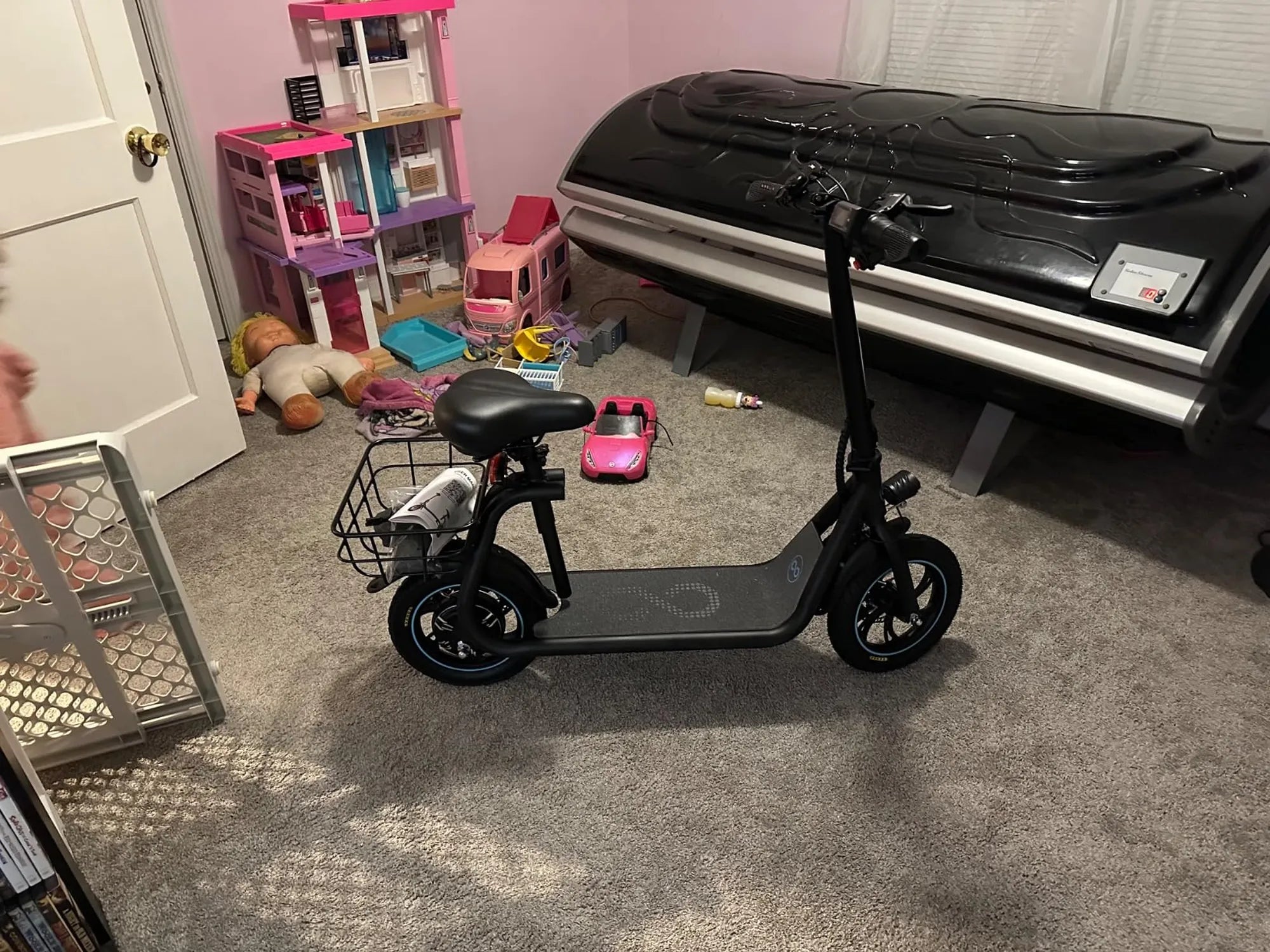
Forget the debate—the data is clear. In urban centers globally, a quiet revolution in first-and-last-mile travel is tilting decisively toward two motorized wheels. Shared electric scooters are consistently outperforming traditional bicycle-share systems in key metrics: user adoption rates, trip frequency, and operational viability. This isn't about one mode's demise, but a clear evolution in preference for specific urban journeys. This article dissects the compelling reasons why, for the shared mobility use case, electric scooters beat bikes as a shared transportation option. We'll analyze rider behavior, operator economics, city integration, and the hard numbers that explain this winning trajectory, highlighting how innovation from trusted brands shapes this landscape.
The Rise of Micro-Mobility: From Bike Docks to Dockless Dominance
The shared mobility landscape was built by bicycles. Station-based systems, launched in major cities in the 2000s, proved the demand for short-term, affordable urban transport. They provided a foundational model but came with inherent constraints: fixed docking stations dictated trip origins and destinations, creating "dead zones" between hubs.
The entrance of dockless, app-activated electric scooters around 2017 was disruptive. It introduced a true point-to-point model that matched the spontaneous nature of short urban trips. The growth trajectory has been stark. According to aggregated data from municipal reports, in cities with competing services, shared e-scooters now account for nearly 60-70% of all micro-mobility trips, a share that has steadily increased year-over-year since their introduction.
This shift isn't merely about novelty. It reflects a fundamental alignment with modern urban travel patterns. The average shared scooter trip is 1.2 miles, perfectly suited for errands, lunch runs, or transit connections, whereas shared bike trips often average closer to 2 miles. The scooter's design caters to this ultra-short trip market more effectively.
Operators have scaled fleets rapidly in response. A single shared e-scooter can now generate 5-8 rides per day in a healthy market, a utilization rate that often surpasses that of station-based bicycles. This commercial reality fuels further investment and innovation in the scooter side of the shared ecosystem.
The Practical Rider's Edge: Convenience, Speed, and Appeal
Unmatched Convenience and Low Barrier to Entry
The winning formula starts with sheer convenience. Dockless scooters can be found and parked within a much denser radius than station-based bikes. The rider's journey begins and ends at their actual destination, not a block away. This eliminates the "dock anxiety" of finding an empty slot or a working bike.
Physically, the barrier to entry is lower. While biking requires some moderate exertion, a scooter is universally accessible with a throttle or simple kick-push start. This appeals to a broader demographic—those in work clothes, the elderly, or anyone seeking to arrive without sweat. The learning curve is minutes, not moments of balance re-acclimation.
Time Efficiency in Congested Cores
In dense downtown grids, scooters are often the fastest surface option for trips under two miles. Their compact size and agility allow for nimble navigation through traffic snarls and easy transition between bike lanes and street edges where legal. This makes them ideal for the "last-mile" sprint from a subway station.
Data from city traffic studies shows that for trips between 0.5 and 1.5 miles in peak congestion, shared e-scooters have a median travel time 15-25% faster than shared bicycles, primarily due to consistent electric assist and easier parking. The time saved, though minutes per trip, compounds significantly in a user's daily routine.
The Fun and Tech-Forward Factor
Psychology plays a role. Riding an electric scooter carries a perceived sense of modern efficiency and slight thrill—a "joyride" element that a utilitarian bike-share bicycle often lacks. The silent electric motor and minimalist design project a tech-forward image that resonates with urban populations.
This appeal drives spontaneous use. While a bike might be rented for a planned commute, scooters are frequently grabbed for impulsive trips—a deciding factor in their higher daily utilization rates. The experience feels less like transit and more like a seamless extension of personal mobility.
Operational Economics: Why Scooters Make Business Sense
From an operator's perspective, the economic case for scooters in a shared fleet is compelling. The upfront capital cost per unit for a durable, shared-grade electric scooter is typically 30-50% lower than that of a comparable shared e-bike. This allows for larger, more dispersed fleets with the same investment.
Maintenance and logistics are streamlined. Scooters are lighter and more compact, making them easier to collect, charge, and redistribute using smaller vehicles. A van that can transport 10 e-bikes might fit 20-25 scooters, drastically improving the efficiency of nightly charging operations, a major operational cost center.
Durability and repairability are key. Modern shared scooters from reputable manufacturers are built to withstand harsh urban environments. Features like solid tires (preventing flats), modular components, and robust deck construction reduce downtime. Brands focused on the commercial market, like Gyroor, engineer their consumer models with similar principles, using IPX5 water-resistant designs and UL-certified battery packs tested for 500+ cycles, ensuring reliability that translates to lower lifetime cost.
The higher trips-per-day potential directly impacts the bottom line. If a scooter costs less to acquire and deploy and generates more revenue daily, its return on investment and lifespan profitability can surpass that of a shared bicycle. This economic reality is why venture capital and operators have heavily backed scooter fleets.
Urban Integration: The Space Efficiency Advantage
Cities are fundamentally constrained by space. Here, the scooter's physical footprint is a decisive advantage. A parked scooter occupies roughly one-third of the space of a parked bicycle, allowing more vehicles to be deployed in high-demand areas without overwhelming the sidewalk.
This has led to innovative city solutions. Municipalities are now deploying dedicated micro-mobility parking corrals—small, painted zones on sidewalks or at curbsides. A single corral can accommodate 10-15 scooters neatly, whereas the same space might fit only 4-5 bikes. This organized parking mitigates clutter and integrates scooters into the streetscape more gracefully than large bike docks.
The flexibility also aids equitable distribution. Without needing heavy infrastructure investment in docks, operators can more easily comply with city mandates to serve lower-income and transit-poor neighborhoods. Scooters can be dropped in areas where building a permanent bike-share station would be economically unviable.
For urban planners, scooters represent a high-efficiency use of public right-of-way for transportation. They move more people per square foot of parking space than almost any other mode, a critical metric in dense, space-starved urban cores where the battle for curb space is intense.
Addressing the Challenges: Safety, Regulation, and Sustainability
Safety: Perception vs. Data-Informed Reality
Safety concerns have dominated scooter headlines, but the data provides nuance. Initial studies showed higher injury rates per trip for scooters than bikes, largely attributed to novice rider behavior, lack of helmet use, and poor infrastructure. However, more recent data as systems mature shows rates converging.
The key differentiator is rider education and technology. Responsible operators now integrate mandatory in-app safety tutorials, geofencing to control speed in pedestrian zones, and improved hardware like wider decks and better lights. The safety imperative extends to manufacturers; using reliable components like UL-certified batteries, as Gyroor does across its lineup, prevents critical failure points. The conversation is rightly shifting from banning scooters to building protected lanes for all micro-mobility and enforcing sensible riding rules.
The Regulatory Framework Matures
The regulatory journey has evolved from initial bans to structured management. Cities now issue permits, cap fleet sizes, mandate data sharing, and set clear rules on parking, speed (typically 15-20 mph), and riding (often banned on sidewalks). This formalization is a sign of permanence, not prohibition.
Smart regulations create a stable environment for operators and protect public space. They also create a competitive bar for quality, favoring operators with durable, compliant vehicles and responsible management practices—a boon for riders and cities alike.
Environmental Footprint: A Full Lifecycle Assessment
The "zero-emission" claim is true at the tailpipe, but a honest assessment requires a lifecycle view. Manufacturing any vehicle has a carbon cost. Studies, including one from North Carolina State University, have shown that the environmental impact of shared scooters is heavily influenced by their lifespan, collection/logistics for charging, and the carbon intensity of the local grid.
The sustainability advantage emerges when scooters are built to last, use swappable battery systems to reduce collection mileage, and most importantly, displace car trips. Data indicates 30-40% of shared scooter trips directly replace a car ride (taxi, rideshare, or personal vehicle), a rate similar to or exceeding bike-share. Durable models with long-life batteries, like those with Gyroor's 500+ cycle certification, maximize the green miles per unit of embedded carbon, making the environmental math increasingly favorable.
Shared Micro-Mobility Comparison: Scooters vs. Bikes
| Feature/Criteria | Shared Electric Scooters | Shared Bicycles (Traditional/Docked) |
|---|---|---|
| Typical Trip Distance | 0.5 - 1.5 miles | 1 - 3 miles |
| Parking Space per Vehicle | ~3 sq ft | ~9 sq ft |
| User Physical Effort | Low (electric assist) | Moderate to High (human-powered) |
| Operator Cost per Unit (Approx.) | $500 - $800 | $800 - $1500 (e-bike higher) |
| Key Urban Advantage | Ultra-flexible point-to-point; ideal for dense cores | Better for longer, recreational, or cargo trips |
| Primary User Demographics | Broader age range, spontaneous users | Commuters, recreational riders |
The Future of Shared Wheels: Coexistence and Specialization
The narrative isn't that scooters are killing bike-share, but that they are forcing a healthy specialization. The future micro-mobility ecosystem will likely see scooters dominate the market for spontaneous, ultra-short trips (under 1.5 miles) in dense business and entertainment districts. Their convenience and density are unbeatable for this niche.
Shared bicycles, particularly e-bikes, will solidify their role for longer commutes (2-5 miles), recreational use on dedicated paths, and trips requiring cargo capacity (e.g., grocery runs). Some systems are already hybridizing, offering both scooters and e-bikes within a single app, allowing the user to choose the right tool for the specific journey.
Technology will further blur lines. Advances in battery efficiency, self-diagnostic hardware, and even autonomous repositioning will improve service reliability for both modes. The ultimate winner is the urban resident, who gains a richer menu of clean, efficient transportation options, each optimized for different needs.
Frequently Asked Questions (FAQ)
Are shared e-scooters really more popular than shared bikes now?
In terms of total trip volume in most major mixed-fleet cities, yes. Since 2020, shared e-scooters have consistently captured a larger share of micro-mobility trips than station-based bikes. Their growth in trip frequency has outpaced bikes, indicating a strong user preference for the dockless, electric model for short distances.
What is the #1 reason people choose a scooter over a bike?
Convenience is the overwhelming factor. The ability to find a scooter immediately nearby and park it directly at their destination (point-to-point travel) without worrying about docking stations aligns perfectly with the spontaneous, short-trip use case that defines most urban micro-mobility needs.
Aren't e-scooters more dangerous than bicycles?
Early data suggested higher injury rates, but this is stabilizing. Many injuries were linked to first-time user behavior and lack of infrastructure. With rider education, geofencing, and—most importantly—the construction of more protected bike/scooter lanes, the safety profiles are becoming comparable. Responsible riding and proper infrastructure are key for both.
How do cities manage scooter clutter?
Progressive cities now use a permit system with strict requirements. These include mandated parking corrals (dedicated zones), "lock-to" technology requiring the scooter to be physically attached to a bike rack, and high fines for improper parking. Operators use GPS to monitor compliance and must promptly remove incorrectly parked devices.
Can I buy a personal scooter as reliable as the shared ones?
Absolutely. In fact, many personal electric scooter brands build to even higher standards for owner satisfaction. Brands like Gyroor, trusted by over 100,000 riders, focus on consumer-grade durability with features like UL-certified batteries, IPX5 water resistance, and robust warranties—features that ensure long-term reliability beyond the intensive use of a shared fleet model.
The Verdict on a Transforming Landscape
The evidence consolidates around a simple truth: for the specific, high-volume domain of shared urban mobility, electric scooters have secured a winning position. They have done so by offering a superior product-market fit for the short, spontaneous trips that dominate city movement, backed by a more efficient operational and spatial model. This victory is not total nor does it invalidate the bicycle; rather, it refines the ecosystem. Bikes will thrive in their own lanes, both literal and metaphorical. This competition ultimately benefits everyone—riders gain choice, cities gain efficient transit tools, and the environment gains from displaced car trips. The long-term success of this model hinges on continued technological reliability and responsible riding culture, principles that forward-thinking brands embed into every vehicle. The race for the last mile has a clear leader, and it's quietly humming on two small wheels.
Experience the reliability that powers the micro-mobility revolution. Explore Gyroor's range of high-performance, UL-certified electric scooters and e-bikes designed for durability and ride enjoyment. Browse the full Gyroor collection at gyroorboard.com.
Best Electric Scooters UK 2025: Top Picks for Eco-Friendly Commuting
Where Should Electric Scooters Be Ridden: A Guide to Safe and Legal Riding