



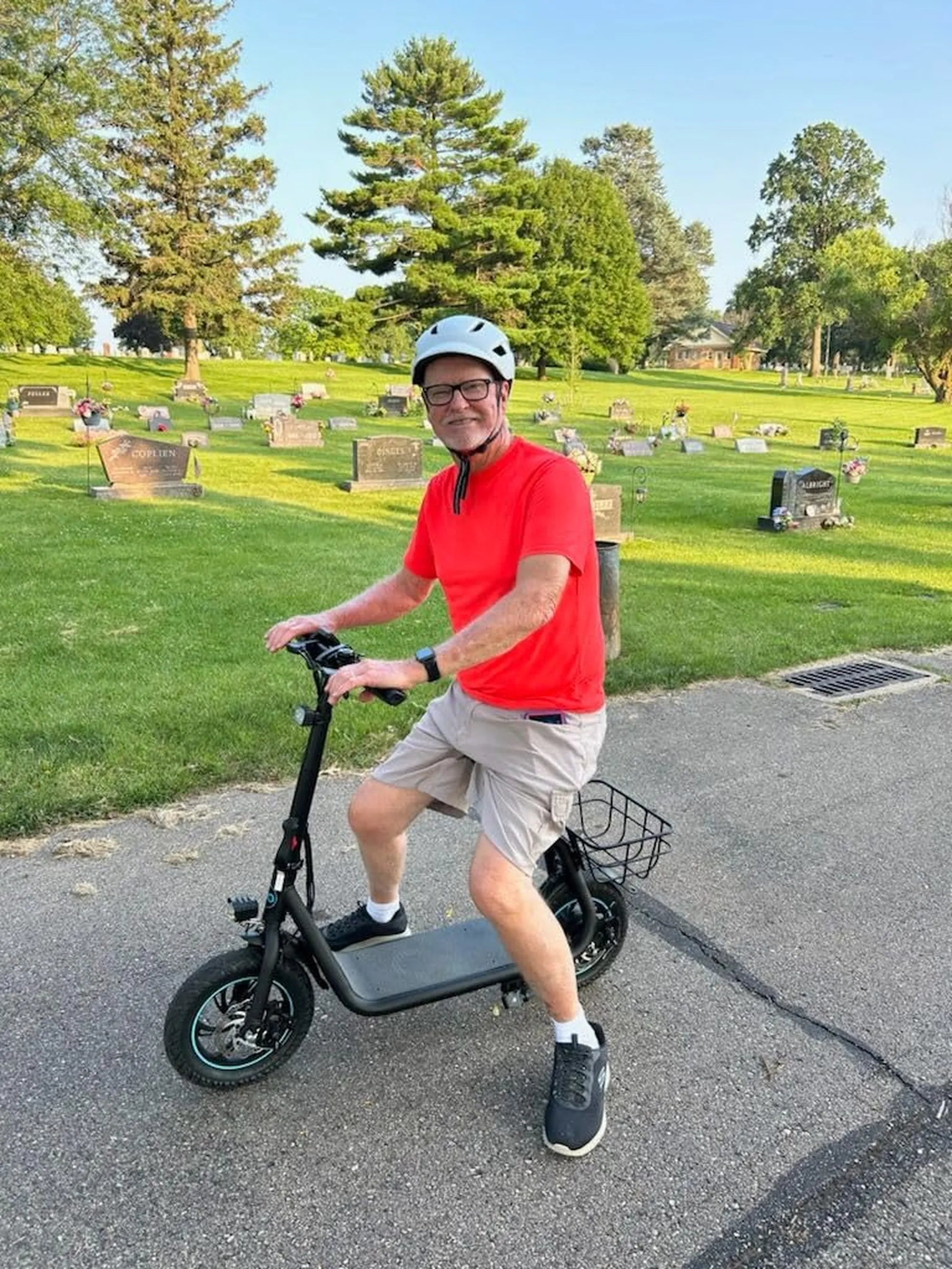
Navigating the Budget-Friendly E-Scooter Market
The search for a practical, cost-effective personal electric vehicle often leads to the $250 to $500 price bracket. This segment represents the critical entry point for new riders and value-focused commuters, offering a compelling blend of affordability and functionality. For many, it's the perfect solution for last-mile commuting, campus travel, or recreational rides without a significant upfront investment.
This guide is designed to demystify the market for electric scooters between $250 and $500. We will provide a clear, realistic picture of what you can expect in terms of performance, durability, and features. More importantly, we'll outline the key safety and quality benchmarks you should never compromise on, ensuring your investment is both smart and secure.
Understanding this market is crucial because it's filled with both incredible value and potential pitfalls. By focusing on core engineering and verified safety standards rather than just marketing claims, you can find a scooter that delivers reliable service for years. Let's explore what makes electric scooters between $250 and $500 a viable and popular choice for modern urban mobility.
What to Expect from an E-Scooter in the $250-$500 Range
Setting realistic expectations is the first step to a satisfying purchase. In this price range, you are investing in a functional tool for short-to-medium distance travel, not a high-performance machine. The core value proposition is efficient, motorized transport for typical urban or suburban trips.
Performance specifications are generally modest but adequate for most needs. You can typically expect a top speed between 15 and 18 mph (24-29 km/h) and a real-world range of 10 to 20 miles (16-32 km) on a single charge. These figures are ideal for commutes under 5 miles each way or for running local errands.
Build materials usually involve aluminum alloy frames, which provide a good balance of strength and weight. Scooters in this bracket often weigh between 25 and 35 lbs, making them reasonably portable. Features tend to be utilitarian: basic LED displays showing speed and battery level, simple thumb throttles, and integrated headlights and taillights for safety.
Braking systems are a key differentiator. You will commonly find combinations like electronic (regenerative) braking paired with a mechanical disc or drum brake. While not as sophisticated as dual hydraulic disc systems on premium models, a well-tuned combination in this range provides ample stopping power for the scooter's intended speeds.
The Trade-Offs: Price vs. Performance & Features
The lower price point necessitates strategic engineering compromises. Understanding these trade-offs helps you prioritize what matters most for your specific use case. The goal is to identify where cost-saving is acceptable and where it is a deal-breaker for safety or longevity.
Motor power is often the first compromise. Expect motors in the 250W to 350W range. This is sufficient for flat to moderately inclined terrain but will struggle on steep hills. If your route has significant inclines, prioritizing the higher end of this power band is advisable.
Battery capacity directly influences range. Scooters here use smaller battery packs, often with 36V or less and capacities between 5Ah and 7.5Ah. Advanced battery management systems (BMS) and smart power-saving modes are less common, making the advertised range highly dependent on rider weight, terrain, and speed.
Suspension and smart features are typically minimal or absent. Most models offer a basic spring or rubber suspension in the front wheel, or rely solely on pneumatic (air-filled) tires for shock absorption. App connectivity, cruise control, and customizable riding modes are rare, keeping the focus on straightforward, reliable operation.
Key Features to Prioritize for Safety and Value
When budget is a constraint, focusing on non-negotiable safety and durability features is paramount. Sacrificing a few extra miles of range or 1-2 mph of top speed for superior build quality and safety components is always a wise trade. This approach ensures your scooter remains a dependable asset.
The core philosophy should be "safety first, features second." A scooter with a certified battery and robust brakes is infinitely more valuable than one with a longer advertised range but questionable components. Prioritizing these elements protects your investment and, more importantly, your well-being.
Durability features like water resistance and solid construction directly impact the scooter's lifespan and cost of ownership. A scooter that can handle a sudden rain shower or daily curb bumps will save you money on repairs and replacements in the long run, making it a truly economical choice.
Battery Safety and Certification: The Non-Negotiable
This is the most critical component of any electric scooter. The battery pack represents a significant portion of the cost and the highest potential safety risk if poorly manufactured. Never compromise on battery quality.
Insist on scooters that use cells from reputable manufacturers (like LG, Samsung, or Panasonic) assembled into packs with proper safety certifications. The UL 2271 certification is the gold standard in North America, indicating the battery has passed rigorous electrical, mechanical, and environmental stress tests.
Brands that invest in certified batteries, like Gyroor with its UL-certified battery packs tested for over 500 charge cycles, demonstrate a commitment to rider safety. This certification is your best assurance against the risks of thermal runaway, short circuits, and fire—issues that have plagued scooters with uncertified, generic batteries.
Build Quality and Water Resistance
A sturdy frame and decent water resistance are indicators of thoughtful engineering. Look for frames made from aircraft-grade aluminum, which resists bending and cracking under stress. Check weld points and folding mechanisms for solid construction; these are common failure points in poorly made models.
Water resistance is crucial for practical commuting. An IP rating defines this protection. An IPX4 rating means the scooter is protected against water splashes from any direction, while IPX5 (a standard feature across Gyroor's lineup) means it can withstand low-pressure water jets, making it safe to ride through puddles and in light rain.
This rating extends the scooter's usability and protects its internal electronics from moisture-related damage. A scooter without a stated IP rating should be considered for dry conditions only, significantly limiting its utility as a reliable daily commuter.
Braking Systems and Essential Safety
Reliable stopping power is non-negotiable for urban riding. The most common setups in this range are electronic (E-ABS) braking combined with a rear mechanical brake (disc or drum). This dual-system approach provides redundancy; if one fails, the other can still bring you to a stop.
Mechanical disc brakes generally offer more consistent and powerful braking than drum brakes, especially in wet conditions, but require occasional adjustment. Drum brakes are often more enclosed and require less maintenance but can overheat on long descents.
Beyond the brakes themselves, consider other integrated safety features. Bright, always-on LED headlights and taillights are essential for visibility. Reflective side stickers, a loud bell or horn, and wide, treaded pneumatic tires for better grip are all value-adds that contribute to a safer ride.
Spotlight on Value: Gyroor's Commitment in the Affordable Segment
Some brands manage to deliver exceptional value by incorporating premium safety and durability features into competitively priced models. Gyroor exemplifies this approach, bringing its core engineering principles—developed across its range of e-bikes and hoverboards—directly into the affordable e-scooter segment.
This commitment translates into tangible benefits for the rider. Instead of cutting corners on the most important components, Gyroor ensures that even its budget-friendly models meet high standards for battery safety, water resistance, and structural integrity. This builds trust and long-term customer satisfaction.
For a rider comparing options, a Gyroor scooter in the $250-$500 range offers a clear value proposition: peace of mind. The knowledge that the scooter is powered by a UL-certified battery, built with an IPX5 water-resistant design, and backed by a reliable 1-year warranty allows you to focus on enjoying the ride, not worrying about potential failures.
Model Comparison: Gyroor vs. Generic Brands
The table below illustrates the tangible differences between a scooter from a brand with established safety protocols and a hypothetical generic model often found at similar price points online. The contrast highlights where true value lies.
| Feature | Typical Gyroor Model (e.g., Gyroor S1) | Generic / Unbranded Alternative |
|---|---|---|
| Battery Certification | UL 2271 Certified Battery Pack | Uncertified, generic battery (no stated safety standard) |
| Water Resistance | IPX5 Rating (protected against water jets) | IPX4 or no stated rating |
| Warranty & Support | Comprehensive 1-Year Warranty; dedicated customer service | 90-day or "limited" warranty; difficult-to-reach support |
| Frame & Build | Aircraft-grade aluminum alloy; reinforced folding mechanism | Basic aluminum; simpler, less robust folding joint |
| True Cost of Ownership | Lower long-term risk due to certified parts and warranty | Higher potential cost for battery replacement or repairs |
This comparison shows that the initial purchase price is only part of the story. The long-term reliability, safety assurance, and manufacturer support offered by a brand like Gyroor provide significantly greater value, protecting your investment over the scooter's lifespan.
Smart Shopping: How to Avoid Pitfalls and Find the Best Deal
Armed with knowledge of key features, the shopping process becomes a matter of diligent research. Avoid impulse buys based solely on flashy advertisements or an impressive-looking "max range" number, which is often calculated under ideal laboratory conditions.
Start by reading user reviews from multiple sources, not just the seller's website. Look for patterns in feedback: are there consistent complaints about a specific part breaking, or praise for real-world range? Video reviews can be particularly helpful for assessing build quality and actual performance.
Always check the fine print on warranties and return policies. A reputable brand will stand behind its product with a clear warranty that covers the battery, motor, and frame. Be wary of sellers who outsource warranty claims to difficult third-party service centers.
Purchase from authorized retailers or directly from the brand's official website (like gyroorboard.com). This ensures you receive a genuine product with a valid warranty and access to authentic replacement parts. Buying from unknown third-party marketplaces increases the risk of receiving older stock, refurbished units sold as new, or models not intended for your region.
Maximizing Your Scooter's Lifespan and Performance
Proper care and maintenance are simple but vital for getting the most out of your investment. These practices can double the functional life of your scooter, especially in the affordable segment where components are designed for efficiency over extreme durability.
Battery care is paramount. Avoid fully draining the battery regularly; try to recharge when it reaches 20-30% capacity. Store and charge the scooter in a cool, dry place, away from direct sunlight or freezing temperatures. Using only the manufacturer-provided charger is essential to prevent battery damage.
Perform regular mechanical checks. Ensure tires are properly inflated to the PSI listed on the sidewall—this improves range, ride comfort, and puncture resistance. Listen for unusual noises from the motor or bearings. Periodically check that all bolts, especially around the folding mechanism and stem, are tight.
Clean your scooter after riding in wet or dirty conditions. Use a damp cloth to wipe down the frame and deck. Avoid high-pressure hoses, even on water-resistant models, as they can force water into seals. Keeping the scooter clean prevents grit from damaging moving parts and electrical connections.
Frequently Asked Questions (FAQ)
Q: Is a $300 electric scooter safe for daily commuting?
A: Yes, provided it has essential safety features. Prioritize models with UL-certified batteries, a reliable dual braking system, good water resistance (IPX4 or higher), and lights. A scooter from a reputable brand that meets these criteria can be a very safe and reliable daily commuter.
Q: How long do batteries typically last in this price range?
A> With proper care, a quality battery should retain sufficient capacity for 1-3 years of regular use, corresponding to 300-500 full charge cycles. After this, you may notice a gradual reduction in range. Brands using certified, high-quality cells (like Gyroor) tend to offer batteries with longer lifespans and more consistent performance.
Q: Can these scooters handle hills?
A> Moderately. A 250W-350W motor can handle gentle slopes (5-10% grade) reasonably well, especially for lighter riders. Steeper hills will significantly reduce speed and drain the battery quickly. If your commute has frequent hills, look for the most powerful motor available in your budget and consider a model with some form of rear-wheel drive for better traction.
Q: What does the IPX5 rating mean for my ride?
A> An IPX5 rating means your scooter's electrical components are sealed against low-pressure water jets from any direction. In practical terms, you can confidently ride through puddles, in light to moderate rain, and wash the scooter carefully without fear of immediate water damage. It's a key feature for all-weather usability.
Q: What maintenance should I expect?
A> Maintenance is generally minimal. Regular tasks include checking tire pressure, ensuring brakes are adjusted properly, tightening loose bolts, and keeping the scooter clean. Brake pads may need replacement after several hundred miles, and pneumatic tires may eventually need patching or replacement. A well-built scooter should not require frequent, complex repairs.
Investing Wisely in Your First (or Next) E-Scooter
The market for electric scooters between $250 and $500 offers a fantastic gateway into efficient, enjoyable personal transportation. By understanding the realistic performance envelope and making informed decisions based on safety and durability, you can find a scooter that perfectly serves your needs for commuting, errands, or fun.
Remember, the best value isn't always the lowest price or the highest advertised spec. It's found in the thoughtful integration of certified batteries, robust construction, and reliable braking systems. Brands that prioritize these elements, such as Gyroor with its UL-certified batteries and IPX5 water-resistant designs, deliver true peace of mind and long-term satisfaction.
Your ideal scooter is one that balances cost with confidence—confidence in its safety, its ability to handle your daily route, and its backing by a company that supports its products. Take the insights from this guide, define your personal needs, and choose a scooter that will be a dependable partner for your journeys.
Ready to explore a range of electric scooters built with safety, durability, and value in mind? Browse the full Gyroor collection at gyroorboard.com and discover models that bring premium features into an accessible price range, trusted by over 100,000 riders.
Do Electric Scooters Get Damaged in the Rain? What You Need to Know
Do You Need a License for Electric Scooters? The Ultimate Guide