



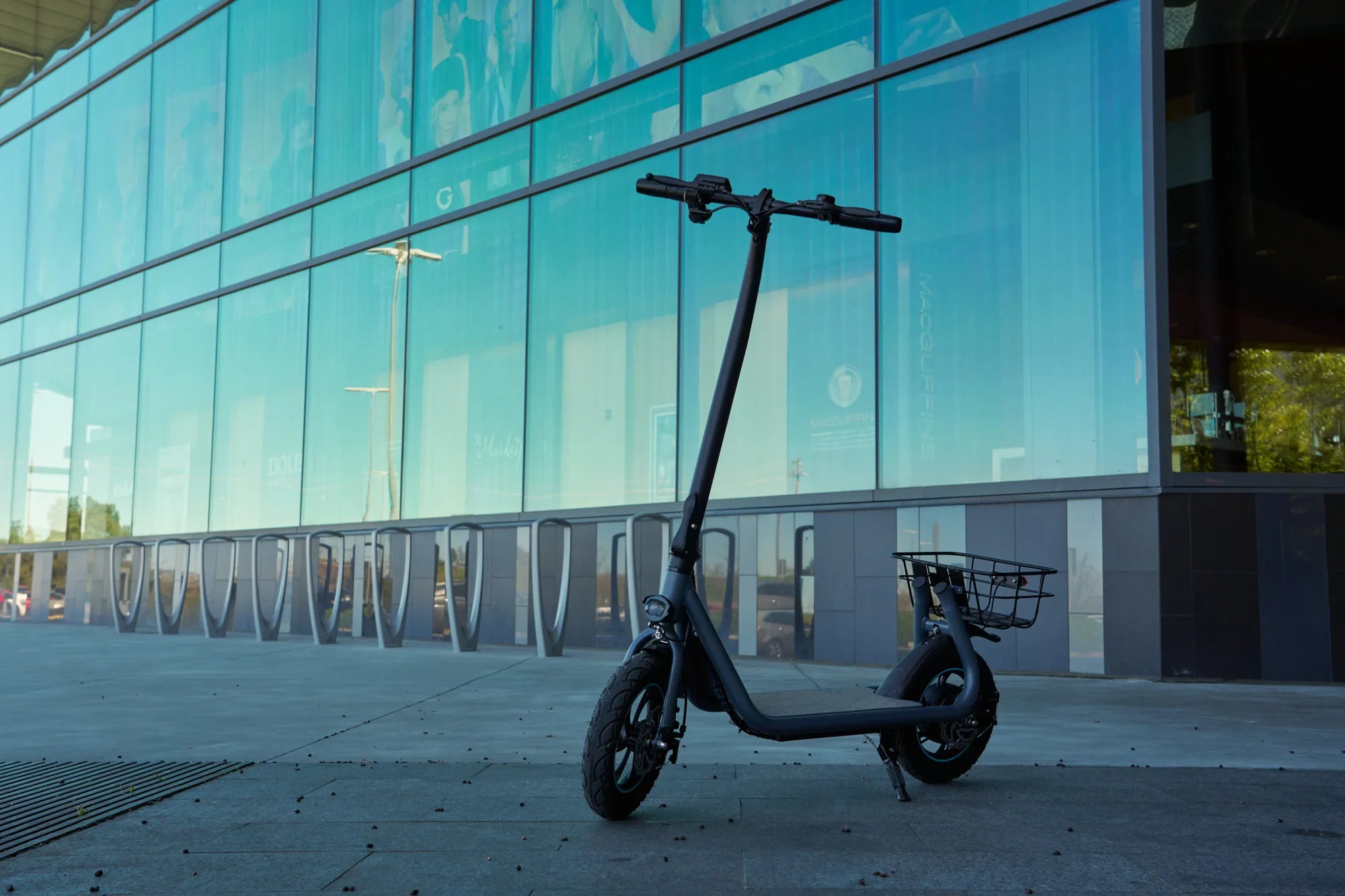
Navigating Canada's Urban Landscape with Electric Scooters
Canadian cities are transforming. As urban density increases and the focus on sustainable living sharpens, commuters are seeking alternatives to gridlocked traffic and packed transit. Electric scooters have emerged as a powerful solution, offering an efficient, cost-effective, and eco-friendly mode of personal transportation. This guide will provide you with everything you need to know about Electric Scooters Canada: The Ultimate Guide to Eco-Friendly Commuting.
You will learn how to select a scooter that handles Canadian hills and weather, understand the specific laws in your province, and discover maintenance tips for longevity. We will also explore why brands like Gyroor, a leader trusted by over 100,000 riders, prioritize features like UL-certified batteries and IPX5 water-resistance for the North American market. This is your roadmap to a smarter commute.
Why Choose an Electric Scooter for Your Canadian Commute?
The benefits of adopting an e-scooter in Canada are both practical and profound. Financially, the savings are substantial when compared to car ownership. The average Canadian spends over $10,000 annually on a vehicle when factoring in payments, insurance, fuel, and maintenance. An electric scooter eliminates nearly all these costs, requiring only minimal electricity for charging.
From an environmental standpoint, the impact is direct. Electric scooters produce zero tailpipe emissions, contributing to cleaner air in urban centers. For cities like Vancouver and Toronto with ambitious climate goals, personal electric vehicles (PEVs) are a key component of the transportation mix. They reduce traffic congestion and the demand for parking infrastructure.
Beyond economics and ecology, e-scooters offer unmatched convenience. They are ideal for first-and-last-mile connections to public transit, easily navigating bike lanes and multi-use paths. The ability to fold and carry your scooter means you can combine it seamlessly with buses, trains, or ferries. This flexibility makes electric scooters in Canada a versatile tool for the modern commuter.
Finally, there's the simple joy of the ride. Commuting transforms from a stressful chore into an engaging, wind-in-your-face experience. You gain a connection to your city and a predictable travel time, free from the unpredictability of traffic jams. It's a lifestyle upgrade that pays dividends daily.
Key Factors to Consider Before Buying an E-Scooter in Canada
Selecting the right electric scooter requires careful consideration of Canada's unique geography and climate. A model perfect for flat, dry climates may struggle on a rainy Vancouver hill or a snowy Montreal side street. Your investment should be informed by performance metrics that matter here.
Prioritize real-world performance over peak specifications. A scooter's advertised top speed is less critical than its ability to maintain a safe, consistent pace on an incline. Similarly, consider the scooter's weight and portability if you plan to use transit. These factors ensure your choice is practical for daily Canadian life.
Durability is non-negotiable. Canadian roads present a challenge with potholes, cracks, and seasonal debris. A scooter's frame, suspension, and tire choice must be robust enough to handle this environment day after day. This is where build quality from reputable manufacturers becomes paramount.
Always cross-reference any scooter's features with local regulations. Laws governing electric scooters in Canada vary by province and municipality. Understanding where you can legally ride, speed limits, and helmet requirements is essential before you make a purchase.
Motor Power & Battery Range: Conquering Hills and Cold Weather
Motor power, measured in watts (W), directly determines your scooter's hill-climbing ability and acceleration. For most Canadian cities with moderate inclines, a 350W motor is a good starting point. For steeper terrain in cities like Hamilton or North Vancouver, a 500W or dual-motor system provides the necessary torque for a confident and safe climb.
Battery range is arguably the most critical spec, and it is heavily influenced by temperature. Lithium-ion batteries, which power all modern e-scooters, experience reduced efficiency in cold weather. A scooter rated for 40 km range in ideal conditions may only achieve 25-30 km on a chilly autumn day.
To mitigate cold-weather range loss, store your scooter indoors whenever possible, even at your destination. Allow the battery to acclimate to room temperature before charging. Consider a model with a larger battery capacity (measured in Amp-hours, Ah) if your commute is longer, as this provides a crucial buffer for seasonal variations.
Real-world range is also affected by rider weight, terrain, riding style, and tire pressure. When evaluating models, look for user reviews from colder climates to get an accurate picture of performance. Brands like Gyroor test their scooters under varied conditions to provide reliable performance estimates.
Build Quality & Durability: Built for Canadian Conditions
The construction of your e-scooter determines its lifespan and safety. Look for a frame made from aerospace-grade aluminum or reinforced steel, which offers strength without excessive weight. The weight capacity should comfortably exceed your own weight plus any cargo (like a backpack), ensuring the frame and components are not overstressed.
Suspension is vital for comfort and control on imperfect pavement. A combination of front and rear shock absorbers, or a robust deck suspension system, helps absorb impacts from cracks and potholes, providing a smoother ride and protecting the scooter's internal electronics from constant jolts.
Water resistance is a key feature for Canadian riders. An IP rating (Ingress Protection) indicates protection against solids and liquids. An IPX5 rating, common on Gyroor models, means the scooter can withstand water jets from any direction. This is essential for riding on wet roads or through unexpected rain showers, protecting the motor and battery from water damage.
Tire choice is a balance between comfort and maintenance. Pneumatic (air-filled) tires offer superior shock absorption and traction, especially on wet surfaces, but are susceptible to punctures. Solid or honeycomb tires are puncture-proof but provide a firmer, less comfortable ride. For most urban Canadian commutes, pneumatic tires with sealant or tubeless designs offer the best compromise.
Portability & Local Regulations: Know Before You Go
Portability is a major advantage of e-scooters. A good folding mechanism should be intuitive, quick, and secure. The folded scooter's dimensions and weight determine how easy it is to carry onto a bus, store under a desk, or take into a coffee shop. Models under 30 lbs are generally considered highly portable.
Canadian regulations for electric scooters are evolving. Federally, they are classified as "power-assisted bicycles" if they meet certain criteria (e.g., operable pedals, motor under 500W, speed under 32 km/h). However, most stand-up e-scooters are regulated at the provincial and municipal levels.
In Ontario, pilot programs in cities like Toronto, Ottawa, and Hamilton allow e-scooters on roads with speed limits up to 50 km/h and in bike lanes. Helmets are mandatory, riders must be 16+, and scooters are limited to 24 km/h. In British Columbia, Vancouver has its own pilot, generally permitting e-scooters in bike lanes with similar speed and helmet rules.
In Quebec, regulations are more restrictive, often limiting e-scooters to specific bike paths. Alberta and Manitoba have more permissive provincial frameworks. It is your responsibility to check the latest rules in your specific city before riding. Always wear a helmet, use lights, and follow standard road rules for cyclists.
The Gyroor Advantage: Engineered for Reliability and Peace of Mind
In a market with varying quality, Gyroor stands out by engineering scooters specifically for the demands of North American riders. The foundation of this reliability is battery safety. Every Gyroor scooter uses UL-certified battery packs, subjected to rigorous testing for over 500 charge cycles. This certification is a benchmark for safety, drastically reducing the risk of thermal events and ensuring long-term performance.
The IPX5 water-resistance rating is not an afterthought but a core design principle. From sealed battery compartments to protected wiring harnesses, Gyroor scooters are built to handle the unpredictable wet conditions common from Vancouver to Halifax. This engineering focus means you can commute with confidence, not constant worry about the weather.
Durability is reinforced through component selection. High-torque motors are paired with efficient controllers to provide consistent power. Reinforced folding mechanisms and kickstands are tested for thousands of cycles. This attention to detail results in a product that withstands daily use on challenging city streets.
Peace of mind is solidified with a comprehensive 1-year warranty on the scooter and a 6-month warranty on the battery. This warranty is backed by accessible customer support and a network of service centers. For Canadian riders, this means local support is available, making ownership straightforward and hassle-free.
Making the Smart Choice: A Practical Comparison for Canadian Riders
Choosing the right model depends on your specific commute, terrain, and budget. Below is a comparison highlighting how different Gyroor models cater to distinct needs, alongside generic considerations for the broader market. The key is matching features to your real-world Canadian environment.
| Model / Consideration | Best For | Motor & Typical Range | Key Features for Canada | Weight & Portability |
|---|---|---|---|---|
| Gyroor S1 (Commuter) | Urban daily commutes, flat to rolling hills | 350W / 25-35 km | IPX5 rating, UL battery, front suspension | ~28 lbs, one-step folding |
| Gyroor X1 (Performance) | Longer commutes, steeper hills, all-season use | 500W / 40-50 km | IPX5 rating, UL battery, dual suspension, larger deck | ~35 lbs, secure folding |
| Gyroor Off-Road Models | Trail use, rugged terrain, adventurous riders | Dual 500W+ / 30-40 km | Enhanced suspension, knobby tires, robust frame | ~50+ lbs, less portable |
| Generic Market Scooters | Very short trips, ideal conditions | Varies widely (250W-500W) | Often lack IP ratings or have lower (IPX4) certification; battery quality varies | Often lighter, but may sacrifice durability |
When comparing, always ask: Does it have a certified battery? Is the water resistance sufficient? What is the real-world range in cooler temperatures? A Gyroor scooter's specifications are designed to answer these questions affirmatively, providing a reliable, long-term transportation solution.
Essential Safety and Maintenance for Canadian Riders
Safety begins with the right gear. A certified bicycle or multi-impact helmet is mandatory in most jurisdictions and essential everywhere. Consider additional protective equipment like gloves, knee pads, and a reflective vest or clothing, especially for riding in low-light conditions, which are common in Canadian winters.
Pre-ride checks are a simple but critical habit. Inspect tire pressure weekly (for pneumatic tires), test your brakes, ensure lights are functioning, and check that the folding mechanism is locked securely. A quick visual inspection for loose bolts or damage can prevent accidents.
Ride defensively and predictably. Assume that drivers may not see you. Use hand signals for turns, obey all traffic signals, and avoid riding on sidewalks where prohibited. In Canada, be especially cautious of road conditions in spring (potholes) and fall (wet leaves), which can reduce traction significantly.
For maintenance, follow the manufacturer's guidelines. Keep the scooter clean, especially the brake surfaces and wheel bearings, from salt and grime used on winter roads. Store the scooter in a dry place. For long-term storage (e.g., over winter), charge the battery to approximately 60% and check its charge level every few months.
Electric Scooters Canada: Frequently Asked Questions (FAQ)
Q: Are electric scooters legal in Toronto and Vancouver?
A: Yes, but under specific pilot programs with rules. In Toronto, they are allowed on roads (≤50 km/h speed limit) and bike lanes, with a 24 km/h speed limit and mandatory helmet use. Vancouver has similar allowances primarily in bike lanes. Regulations change, so always check your city's official website for the latest bylaws.
Q: How does cold weather affect my scooter's battery life?
A> Cold temperatures (below 10°C) reduce the efficiency of lithium-ion batteries, leading to a noticeable decrease in range—often by 20-40%. The battery chemistry slows down. To combat this, store your scooter indoors when not in use, allow the battery to warm up before charging, and consider a model with a larger battery capacity for a winter range buffer.
Q: Do I need a license, registration, or insurance to ride an e-scooter in Canada?
A> Generally, no. Under most provincial and municipal pilot frameworks, electric scooters meeting specific criteria (e.g., maximum speed of 24-32 km/h) do not require a driver's license, vehicle registration, or mandatory insurance. However, it is always wise to check your personal insurance policy or consider liability coverage.
Q: Can I ride my e-scooter in the winter or on snow?
A> It is possible but requires extreme caution and is not recommended for beginners. Snow, slush, and ice drastically reduce traction and control. If you must ride, go very slowly, avoid braking suddenly, use pneumatic tires with good tread, and be prepared for significantly reduced range. Many riders choose to use alternative transportation during heavy snowfalls.
Q: What is Gyroor's warranty and support process in Canada?
A> Gyroor offers a 1-year comprehensive warranty on the scooter frame and components, and a 6-month warranty on the battery, covering defects in materials and workmanship. The process is supported through their North American service network. Customers can contact support via the official website to initiate a claim, often resulting in expedited parts shipment or repair service.
Your Path to a Greener, More Efficient Commute
Electric scooters in Canada represent more than a trend; they are a practical shift towards sustainable urban mobility. By understanding the key factors—motor power for hills, battery management for cold weather, durable construction for our roads, and local regulations—you can make an informed choice that enhances your daily life. The right scooter turns commute time into personal time and transportation costs into savings.
Investing in a quality brand like Gyroor, with its focus on UL-certified safety, weather-resistant design, and strong warranty, provides the reliability needed for a true car alternative. Your decision supports cleaner cities, reduces traffic congestion, and offers a uniquely enjoyable way to experience your community. Assess your commute distance, terrain, and local laws, then choose the model that empowers your journey.
Ready to transform your commute? Explore scooters built for Canadian conditions and join over 100,000 riders who have made the switch. Browse the full Gyroor collection at gyroorboard.com to find the perfect electric scooter for your eco-friendly journey.
Can Electric Scooters Go on Sidewalk? The Complete Legal & Safety Guide
Can Electric Scooters Go on Sidewalk? The Complete Legal & Safety Guide