



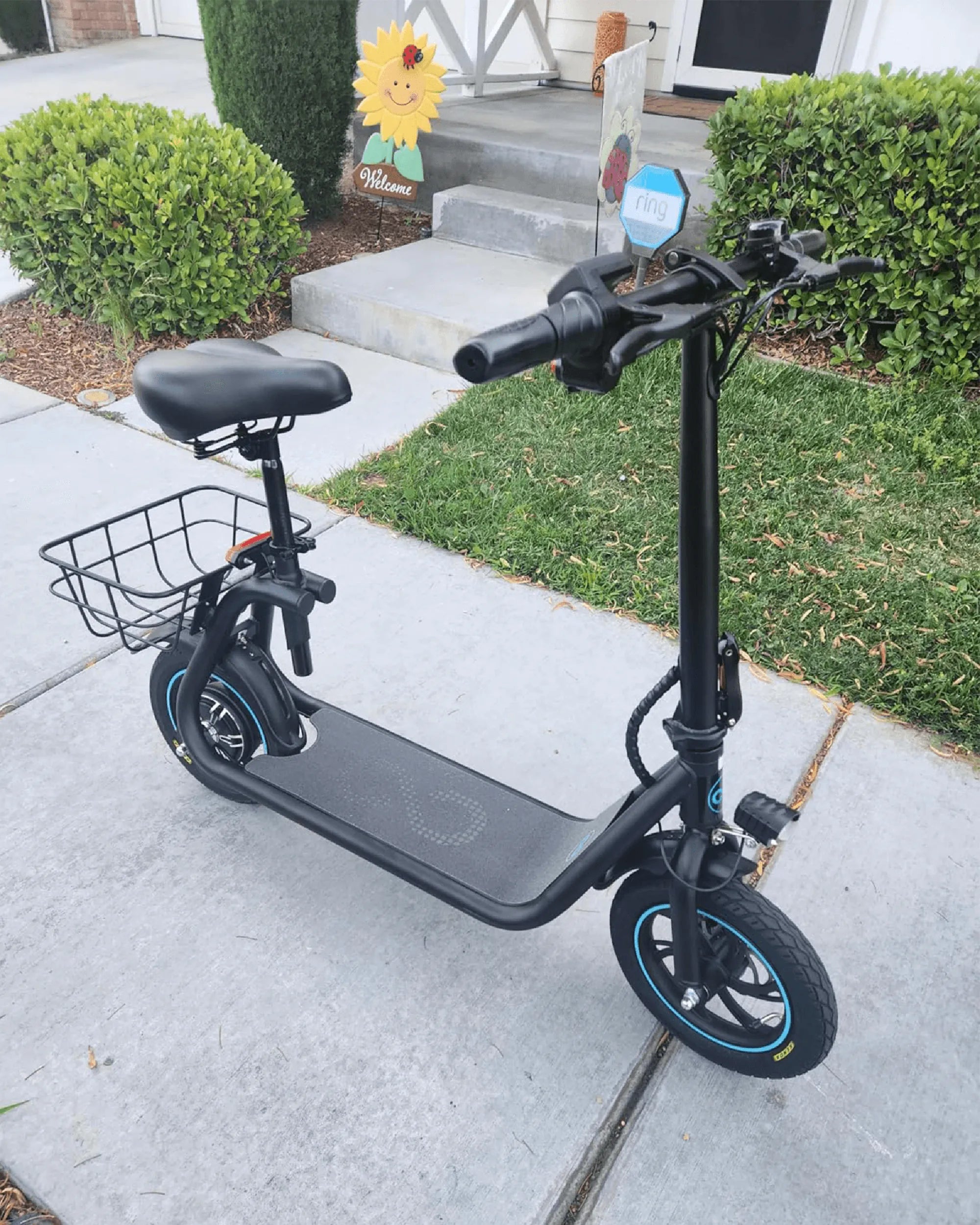
Introduction: Europe's Electric Scooter Revolution
European city streets are undergoing a silent transformation. The familiar hum of traffic is increasingly accompanied by the quiet whir of electric scooters, weaving through traffic and offering a nimble alternative for the daily commute. The market for Electric Scooters Europe: The Rise of Eco-Friendly Urban Mobility is not just a trend; it's a fundamental shift in how millions navigate urban environments.
This rapid adoption is driven by a powerful convergence of environmental urgency, economic pragmatism, and technological advancement. As cities from Berlin to Barcelona implement low-emission zones and push for '15-minute city' models, the personal electric vehicle (PEV) has emerged as a key piece of the sustainable urban transport puzzle.
This article will dissect the forces behind this mobility revolution. You will learn about the complex regulatory landscape across Europe, the essential features to look for in a reliable scooter, and how leading manufacturers are engineering vehicles to meet these specific demands.
For over 100,000 riders across North America and Europe, brands like Gyroor have become synonymous with this shift, offering UL-certified, durable options that prioritize safety without compromising on performance for the modern urbanite.
Why Europe is Embracing Electric Scooters
The continent's embrace of e-scooters is a direct response to its unique urban and policy challenges. European cities, many with medieval cores not designed for cars, face intense pressure from congestion, pollution, and the need to reclaim public space. The Electric Scooters Europe phenomenon is a practical solution to these intertwined issues.
Environmental policy is a primary catalyst. The European Union's Green Deal and ambitious carbon neutrality targets have trickled down to municipal levels, prompting investments in cycling infrastructure and restrictions on petrol and diesel vehicles. E-scooters offer a genuine last-mile solution that integrates seamlessly with public transit networks.
Economically, the equation is compelling. With fuel prices consistently high and urban parking often prohibitively expensive, the low operational cost of an e-scooter—mere pennies per charge—is a powerful incentive. For the individual commuter, the potential savings on monthly transit passes or fuel bills can justify the initial investment within a single season.
Finally, a post-pandemic cultural shift towards flexible, personalized, and outdoor-oriented mobility has cemented the e-scooter's place. It offers autonomy, a sense of enjoyment, and a direct connection to the city that a packed subway or bus cannot match.
The Regulatory Landscape: A Country-by-Country Snapshot
Navigating the patchwork of European e-scooter laws is crucial for safe and legal riding. Regulations are evolving rapidly, but key differences define the experience in each major market. Choosing a scooter that can be configured to comply is essential.
| Country | Max Speed Limit | Helmet Requirement | Where to Ride | Minimum Age | Insurance/Registration |
|---|---|---|---|---|---|
| Germany | 20 km/h | Recommended, not mandatory | Bike lanes/roads | 14 years | Compulsory insurance plate |
| France | 25 km/h (city) | Mandatory outside cities | Bike lanes/roads ≤50km/h | 12 years | Recommended civil liability |
| Spain | 25 km/h | Mandatory on interurban roads | Bike lanes/roads (local rules vary) | 15 years | Not required for private use |
| Italy | 20 km/h (6 km/h in pedestrian zones) | Mandatory for under 18s | Bike lanes, roads up to 50km/h limit | 14 years | Not mandatory, but recommended |
| United Kingdom | 15.5 mph (~25 km/h) | Recommended | Public roads (not sidewalks) | 16 years | Requires type approval; no insurance mandate for private e-scooters |
This snapshot underscores a critical point: a one-size-fits-all scooter may not be legal everywhere. Riders must prioritize models with speed modes that can be limited to local requirements and ensure their chosen vehicle meets any national type-approval standards.
Key Considerations When Choosing an E-Scooter in Europe
Selecting the right e-scooter for European use requires looking beyond flashy top speeds and theoretical range figures. Durability, compliance, and real-world performance in varied conditions are the metrics that matter for daily commuting.
First, assess your typical commute. Distance, terrain (cobblestones, hills, smooth bike paths), and whether you need to carry the scooter onto public transport or up stairs will dictate necessary features like motor power, battery capacity, suspension, and weight.
Second, understand that claimed range is often a best-case scenario tested under ideal conditions. For reliable European commuting, especially in colder climates, you should discount the manufacturer's claim by 20-30%. A scooter with a 25km claimed range might reliably deliver 18-20km in everyday use.
Finally, build quality is non-negotiable. European riders face rain, cobblestone vibrations, and daily wear-and-tear. A scooter built with inferior materials will quickly develop faults, making initial cost savings a false economy.
Safety and Certification: Non-Negotiables for Peace of Mind
Safety is the paramount concern, encompassing both rider protection and device integrity. The battery is the heart of the scooter and its greatest potential hazard. Incidents involving thermal runaway in poorly manufactured batteries have highlighted the need for rigorous certification.
This is where UL certification becomes a critical differentiator. A UL-certified battery pack, like those used across the Gyroor lineup, has undergone independent testing for electrical, mechanical, and environmental safety. It signifies a battery engineered to prevent overcharging, short-circuiting, and overheating over its entire lifecycle.
Beyond the battery, braking systems are vital. A combination of electronic (e-brake) and mechanical (disc or drum) braking provides redundancy. Bright, always-on front and rear lights, along with reflective elements, are essential for visibility in Europe's often grey and rainy conditions, not just an optional extra.
Performance for European Terrains and Commutes
European cities present a unique mix of terrains. A motor with at least 350W of continuous power is recommended for handling gentle hills and maintaining speed on inclines. For hillier cities like Lisbon or Sheffield, 500W or more provides necessary torque.
Suspension is often overlooked but critical for comfort and control on cobblestone streets or uneven pavement. Even a basic front spring or dual suspension system can dramatically reduce fatigue and improve handling, protecting both the rider and the scooter's internal components from constant vibration.
Portability remains key for multi-modal journeys. A scooter weighing between 13-16kg offers a good balance between stability and liftability. Look for folding mechanisms that are intuitive, secure, and don't require excessive force to operate, a feature thoughtfully designed into many commuter-focused models.
Gyroor: Engineered for the European Commuter
In a market flooded with options, Gyroor has established itself by focusing on the core demands of serious commuters: certified safety, all-weather durability, and reliable performance. This approach directly addresses the specific challenges outlined in the European Electric Scooters Europe landscape.
With a portfolio of over 20 models, including e-scooters and e-bikes, the brand's philosophy centers on building vehicles that last. This is evidenced by a customer base exceeding 100,000 riders and a consistent 4.5/5 average rating, reflecting satisfaction with real-world reliability.
Gyroor's design choices—from IP-rated water resistance to robust frames—are made with daily, year-round use in mind. This positions their scooters not as disposable gadgets, but as legitimate transportation tools capable of replacing car trips and withstanding the rigors of a daily urban commute.
UL-Certified Safety as a Standard
Gyroor treats UL certification not as a premium feature, but as a baseline standard for every battery pack. This commitment means each battery undergoes testing for over 500 charge cycles, ensuring long-term stability and significantly mitigating fire risk.
This certification aligns with a growing push for standardized safety regulations in Europe. By choosing a scooter with this level of verified safety, riders are not only protecting themselves but also investing in a product that is more likely to remain compliant as legislation evolves to prioritize battery safety standards.
The peace of mind offered by a certified electrical system is invaluable. It allows riders to focus on the journey, not on worrying about their scooter's integrity during a charge or on a long, demanding ride.
Built to Last: IPX5 Water Resistance and Warranty
European weather is unpredictable. An IPX5 water resistance rating, a standard on core Gyroor commuter models, means the scooter is protected against water jets from any direction. It can confidently handle rain showers, wet roads, and accidental splashes without compromising its electronics.
This durability is backed by a comprehensive 1-year warranty, covering manufacturing defects on the motor, battery, and controller. For European customers, this warranty is supported by accessible service networks, ensuring that support is available should it ever be needed, a level of after-sales care often absent from budget brands.
This combination of rugged construction and strong warranty underscores a total cost of ownership perspective. A slightly higher initial investment in a durable, well-supported scooter like a Gyroor often proves cheaper than replacing a failed budget model every year.
The Future of Urban Mobility in Europe
The trajectory for Electric Scooters Europe: The Rise of Eco-Friendly Urban Mobility points towards greater integration and sophistication. We are moving beyond the initial phase of adoption into an era of smarter, more connected personal mobility solutions.
Swappable battery networks could emerge, allowing riders to exchange depleted batteries for charged ones at kiosks in transit stations, eliminating range anxiety for longer journeys. This would decouple charging time from usage, making e-scooters even more convenient.
Infrastructure will adapt. We will see more dedicated micro-mobility parking and charging docks, reducing clutter on sidewalks. Technological integration with public transit apps will allow seamless multi-modal trip planning and payment.
Ultimately, the future is multi-modal. The personal e-scooter, particularly a reliable, certified model, will sit alongside bikes, e-bikes, and public transport as a fundamental tool in the urban mobility toolkit, reducing car dependency and making cities cleaner, quieter, and more livable.
Frequently Asked Questions (FAQ)
Q: Do I need insurance for my e-scooter in Germany or France?
A: In Germany, yes. All e-scooters require a mandatory insurance plate (€20-€40 per year). In France, while not legally mandatory for private scooters, third-party civil liability insurance is highly recommended to cover potential accident damages.
Q: Can I take my Gyroor scooter on a train or bus?
A> Policies vary by transit authority. Generally, folded e-scooters are allowed on most European regional and local trains and buses, often outside peak hours. Always check the specific carrier's rules, and ensure your scooter is folded and not obstructing aisles.
Q: How do I maintain my e-scooter battery in cold weather?
A> Lithium-ion batteries lose efficiency in cold. Store and charge the scooter indoors at room temperature when possible. Allow the battery to warm up before a ride, and expect a 20-30% reduction in range in temperatures below 10°C (50°F). Avoid charging a freezing-cold battery immediately.
Q: What is the true cost of ownership compared to public transport?
A> While upfront cost is higher (€500-€1000 for a quality scooter), operating costs are minimal (~€0.10 per charge). Compared to a monthly transit pass (often €60-€90 in major cities), the scooter can pay for itself in 6-12 months, after which you have virtually free personal transport.
Q: Are e-scooters allowed in pedestrian zones?
A> Almost universally, no. In most European countries, e-scooters are classified as vehicles and must be used on roads or designated bike lanes. In pedestrian zones, you must dismount and walk. Some cities, like Rome, enforce very low speed limits (e.g., 6 km/h) in such areas.
Your Next Ride Awaits
The evidence is clear: electric scooters are a permanent and growing feature of European urban life. Their rise is fueled by a powerful alignment of environmental necessity, economic sense, and a desire for flexible, enjoyable mobility. However, navigating this new landscape requires informed choices.
Success hinges on selecting a vehicle that is not only performant but also safe, durable, and compliant. Prioritizing UL-certified batteries, robust IP water resistance, and a reputable warranty from a brand with proven European support is the smartest investment you can make in your urban commute.
Don't settle for a gadget that might fail when you need it most. Choose a transportation tool engineered for the long haul. Explore a range built for real-world conditions and join over 100,000 riders who have made the switch to smarter mobility.
Ready to transform your commute? Browse the full Gyroor collection at gyroorboard.com and find the e-scooter engineered for your European city.
Best Electric Scooters India 2024 Top 5: Ultimate Buying Guide
Can Electric Scooters Be on the Road? A Complete Guide to Rules & Realities