



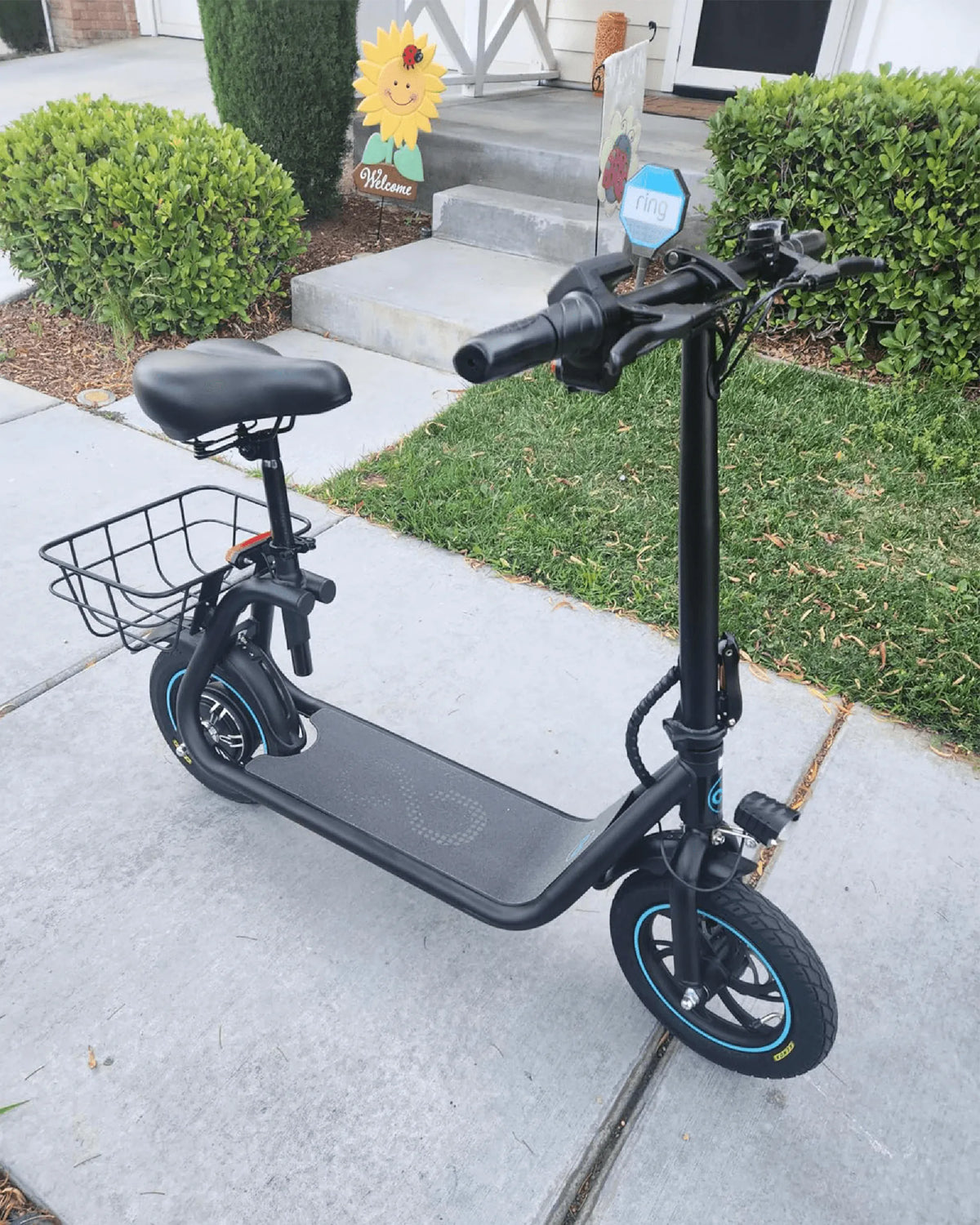
Introduction: Redefining Commuting for Heavier Riders
Finding a reliable, safe, and powerful electric scooter when you weigh around 200 pounds can feel like navigating a minefield of underwhelming performance and vague specifications. Many standard models, designed for lighter riders, struggle with acceleration, hill climbing, and overall durability under a heavier load. This isn't just about comfort; it's a fundamental issue of engineering and safety.
This guide cuts through the marketing claims to provide a factual, data-driven roadmap. We will analyze the non-negotiable specifications that ensure a scooter can handle 200 lbs effectively, explain how weight impacts real-world performance, and review models from brands like Gyroor that are engineered for durability. Our goal is to help you find an affordable and efficient commuting solution that doesn't compromise on power or build quality.
Key Considerations for Riders Up to 200 Pounds
Selecting an electric scooter at this weight threshold requires moving beyond basic advertised features. The core engineering must be robust enough to handle the increased stress on the motor, battery, and frame, ensuring both safety and a satisfactory riding experience over the long term.
Prioritizing specs designed for higher capacities is not a luxury—it's a necessity for preserving the scooter's lifespan and your own security. The following sections detail the three pillars of performance for heavier riders: motor power, build quality, and battery management.
Motor Power and Torque: The Heart of Performance
For a rider weighing 200 lbs, motor power is the most critical spec. A common 250W motor, often sufficient for a 150-lb rider, will feel sluggish and struggle on even mild inclines. This lack of power isn't just inconvenient; it can be dangerous when trying to merge with traffic or navigate urban obstacles.
We recommend a minimum of 350 watts, with 500 watts or more being the ideal range for confident commuting. Higher wattage translates directly to better torque, which is the rotational force that gets you moving from a stop and powers you up hills. A scooter with a 500W motor will maintain closer to its advertised top speed under load and recover momentum more quickly after braking.
Frame and Build Quality: The Foundation of Safety
The scooter's frame is its skeleton, bearing the entire dynamic load of the rider, plus the forces of acceleration and road impacts. Flimsy construction leads to wobble, premature wear, and potential failure.
Look for frames constructed from aircraft-grade aluminum or reinforced steel. A wider deck (at least 6 inches) provides essential stability for a larger stance. The folding mechanism, a common point of failure, must be robust with secure locking pins. Brands that engineer for heavier loads, like Gyroor, reinforce these critical stress points, ensuring the scooter remains rigid and predictable ride after ride.
Battery Range & Real-World Expectations
Manufacturer range claims are typically based on optimal conditions: a light rider, flat terrain, and slow, steady speeds. Weight is the single biggest factor in reducing actual range. A scooter advertised for 20 miles might only achieve 12-14 miles for a 200-lb rider.
To ensure a practical commute, calculate with a 30-40% buffer. If you need a 10-mile round trip, target scooters with an advertised range of 16+ miles. This necessitates a larger capacity battery, typically 10.4Ah (ampere-hours) or higher. A quality battery management system (BMS) is also vital for consistent power delivery and long-term health under heavier discharge cycles.
Top Models Engineered for 200-Pound Riders
Based on the criteria above, we examine specific models built to perform under a 200-lb load. The following table provides a clear, data-driven comparison of key contenders.
| Model | Motor Power | Max Load | Battery & Advertised Range | Key Features for Heavier Riders |
|---|---|---|---|---|
| Gyroor K8 | 500W Peak | 265 lbs | 10.4Ah, 22 miles | Dual suspension, 10" pneumatic tires, disc brake + e-brake |
| Gyroor Warrior | 500W Sustained | 280 lbs | 12.5Ah, 28 miles | Robust steel frame, dual spring suspension, enhanced braking system |
| Gyroor H30 | 350W Peak | 220 lbs | 7.5Ah, 15 miles | Compact & portable, solid tires, good for last-mile lighter commute |
Gyroor K8: The Balanced All-Around Commuter
The Gyroor K8 is engineered as a premium commuter solution. Its 500W peak motor provides the necessary torque for confident starts and hill climbing, while its generous 265 lb load capacity offers a solid safety margin. The 10.4Ah battery, when adjusted for a 200-lb rider, still delivers a reliable 14-16 mile real-world range.
Where the K8 truly excels for heavier riders is in its ride quality. The combination of front and rear suspension with 10-inch pneumatic (air-filled) tires absorbs road vibrations effectively, reducing fatigue and stress on both the rider and the scooter's frame. The dual braking system—a rear disc brake and regenerative electronic brake—provides strong, fade-resistant stopping power crucial for controlling greater momentum.
Gyroor Warrior: Built for Durability and Extended Range
The Gyroor Warrior lives up to its name, built with a focus on rugged durability and extended performance. It features a sustained 500W motor, meaning it can deliver that power continuously, which is ideal for longer commutes or areas with frequent hills. With a maximum load capacity of 280 lbs, it is over-engineered for the 200-lb rider, promising exceptional longevity.
Its standout feature is the large 12.5Ah battery. This capacity is key for heavier riders, helping to offset the range penalty of added weight. While advertised for 28 miles, a 200-lb rider can still expect a robust 18-20 miles per charge. The reinforced steel frame and dual spring suspension are designed to handle rougher terrain, making it a versatile choice for varied urban landscapes.
Performance and Safety: Beyond the Spec Sheet
Raw specifications tell only part of the story. The integration of safety systems and the quality of components determine how a scooter performs in daily use, especially under the demands of a heavier rider.
Braking Systems: Reliable Stopping Power
Greater mass means greater kinetic energy. A scooter that stops adequately for a 150-lb rider may have dangerously long stopping distances for someone weighing 200 lbs. Mechanical disc brakes are the minimum standard for reliable performance, offering stronger, more consistent braking than cheaper drum or foot brakes.
Advanced systems combine a disc brake (often on the rear wheel) with a regenerative electronic brake on the front. This dual-system approach distributes braking force, prevents wheel lock-up, and even recovers a small amount of energy back into the battery. It's a critical safety feature that ensures control in all conditions.
Suspension and Tire Type: Ensuring a Stable Ride
Suspension is not merely a comfort feature for heavier riders; it's a structural necessity. It absorbs impacts that would otherwise be transferred directly to the frame, stem, and deck, preventing premature metal fatigue and loosening of components.
Dual suspension systems, like those on the Gyroor K8 and Warrior, are highly recommended. Pair this with pneumatic tires, which provide superior shock absorption and traction compared to solid rubber tires. The combination creates a stable, planted ride, improving control and reducing the risk of slippage, especially on wet or uneven surfaces.
The Importance of UL-Certification and Warranty
For any electric vehicle, battery safety is paramount. Gyroor utilizes UL-certified battery packs across its lineup. This independent certification means the battery cells and management system have been rigorously tested for safety, including overcharge, short circuit, and thermal stability, significantly mitigating fire risk—a non-negotiable consideration.
A strong warranty is a brand's vote of confidence in its product. Gyroor's standard 1-year warranty on the scooter, with 6 months on the battery, signals an expectation of reliability. For a 200-lb rider consistently operating near a scooter's max capacity, this warranty coverage provides essential peace of mind and protection for your investment.
Maintenance and Care for Longevity
Proper maintenance is amplified in importance when a scooter is operated at or near its maximum load capacity. A proactive care routine can extend the scooter's life by years and ensure ongoing safety.
Regularly check tire pressure on pneumatic models; under-inflated tires increase rolling resistance (reducing range) and raise the risk of pinch flats. Inspect brake pads for wear and test brake function before each ride. Tighten bolts and fasteners, particularly around the folding mechanism and stem, every few weeks, as vibrations can loosen them more quickly under heavier loads.
Clean the scooter regularly with a damp cloth, avoiding direct water jets on electronic ports despite IPX5 ratings. Store the scooter in a dry, temperate environment and avoid leaving the battery fully depleted for extended periods. These simple steps, aligned with the guidance in the user manual, will protect your commuting investment.
Cost Analysis: Affordability Versus Total Value
The term "affordable" in the context of electric scooters for 200 pounds must be reframed from mere upfront cost to total long-term value. A $300 scooter with a 220 lb weight limit may technically hold you, but its 250W motor and basic battery will degrade quickly, leading to poor performance, short range, and likely an early, costly replacement.
Investing in a slightly higher-priced model from a brand like Gyroor, with a 500W motor, a 265+ lb limit, and a UL-certified battery, is the truly economical choice. You pay for over-engineered components that won't strain under daily use, a battery that will maintain its capacity over hundreds of charge cycles, and the safety assurance of proper certifications. This approach avoids the hidden costs of frequent repairs or premature failure.
FAQs: Electric Scooters for Heavier Riders
Q: Can I ride an electric scooter if I weigh over 200 lbs?
A: Absolutely, but selection is crucial. You must choose a model with a maximum load capacity significantly above your weight—look for limits of 265 lbs or 280 lbs. This provides a necessary safety and performance margin, ensuring the scooter isn't operating at its absolute limit.
Q: How much does weight affect the scooter's range and speed?
A: The impact is substantial. Expect a 25-35% reduction in advertised range. Top speed may also drop by 3-5 mph, and acceleration, especially on inclines, will be noticeably slower. A powerful motor (500W+) is the best way to mitigate these effects.
Q: Are pneumatic tires or solid tires better for a heavier rider?
A: Pneumatic (air-filled) tires are almost always superior. They provide crucial shock absorption, reducing stress on the scooter's frame and improving comfort and traction. While solid tires are puncture-proof, they transmit every bump directly to the deck and can compromise grip, especially on wet surfaces.
Q: What does IPX5 water resistance mean for daily commuting?
A: An IPX5 rating, like on Gyroor scooters, means the scooter is protected against water jets from any direction. It can safely handle wet roads, riding through puddles, and light rain. However, it is not submersible; avoid deep standing water.
Q: How often should I perform maintenance checks?
A: Conduct a basic visual and functional check before each ride (brakes, tire pressure, loose parts). A more thorough inspection, tightening all bolts and checking for wear, should be done every 4-6 weeks with regular use, or more frequently if you ride on rough terrain.
Conclusion: Investing in Confidence and Efficiency
Choosing an electric scooter when you weigh around 200 lbs is a decision that hinges on engineering integrity, not just price. The truly affordable and efficient commuting solution is one that pairs robust specifications—a powerful motor, a reinforced frame, and a high-capacity battery—with proven safety certifications and reliable warranty support.
Brands that prioritize these elements, such as Gyroor with its UL-certified batteries and models rated for 265+ lbs, deliver long-term value by ensuring safety, sustained performance, and durability. This investment translates directly to commuting confidence, reliability, and lower total cost of ownership. For a powerful, stable, and dependable ride built to handle the demands of a 200-pound rider, explore the engineered solutions available.
Ready to find your perfect match? Browse the full Gyroor collection, featuring UL-certified, high-performance models designed for durability, at gyroorboard.com.
Are There Electric Scooters in Amsterdam? A Guide to Legal Micromobility
Electric Scooters Pasadena: The Ultimate Guide to Eco-Friendly Commuting