



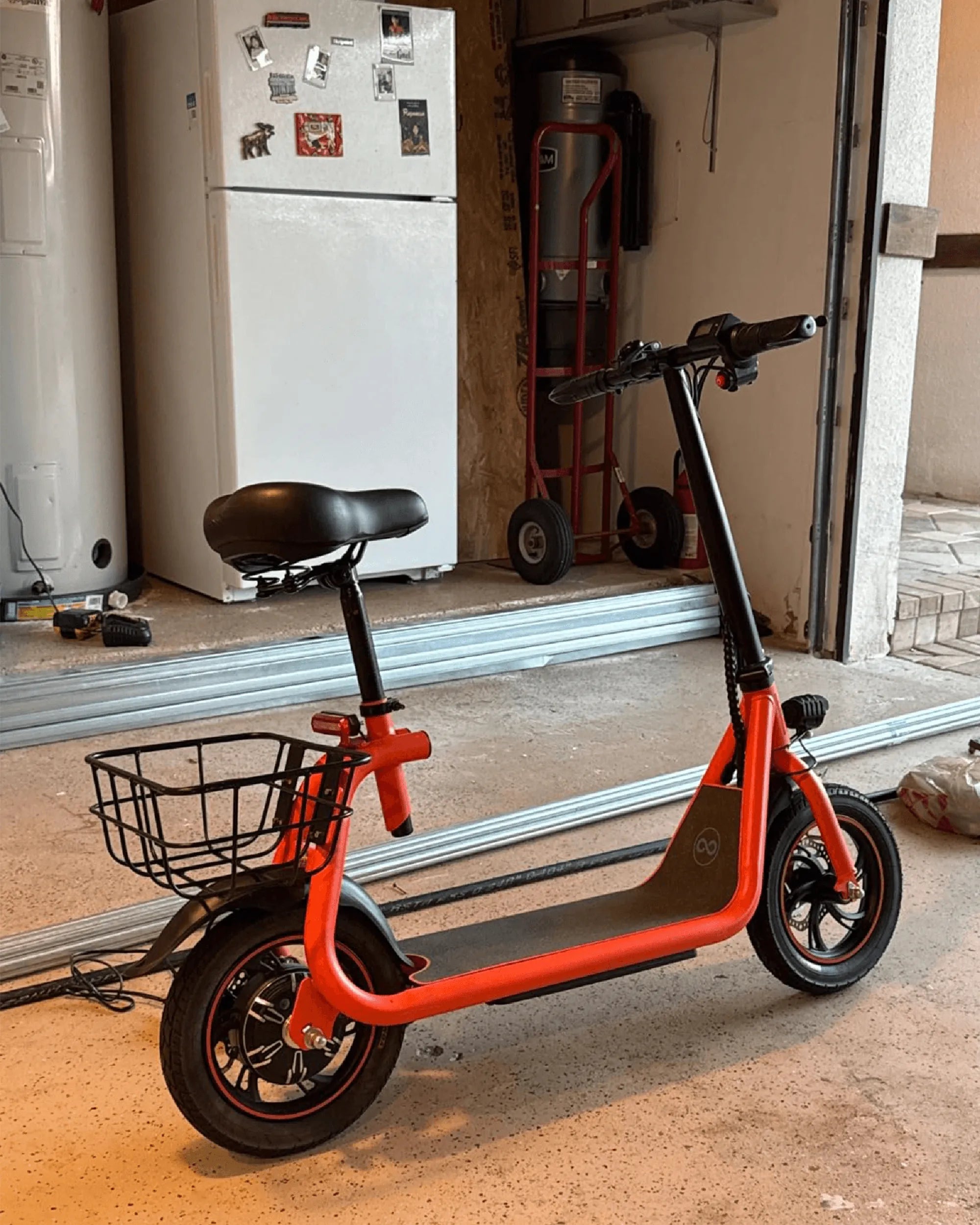
Introduction: Why Weight Capacity Matters in Electric Scooters
Choosing an electric scooter when you weigh 250 pounds or more requires moving beyond standard consumer models. It demands a focus on engineering built for durability, power, and safety. Standard scooters, often designed for riders around 165 pounds, can suffer from sluggish acceleration, poor hill climbing, reduced range, and even critical component failure under heavier loads.
This guide is dedicated to the unique needs of heavier riders. We will dissect the specifications that truly matter, from motor torque and frame construction to braking power and battery performance. Our goal is to equip you with the knowledge to select a scooter that offers not just functionality, but confidence and longevity. Selecting Electric Scooters for 250 Pounds is about finding a machine engineered for heavy-duty performance.
Key Features to Look for in a 250+ lb Electric Scooter
The difference between a frustrating ride and a fantastic one lies in understanding key specifications. For riders over 250 pounds, certain features transition from nice-to-have to non-negotiable. These components work in concert to handle the increased stress, ensuring the scooter performs as advertised and remains safe over time.
Ignoring these specs can lead to premature wear, safety hazards, and a disappointing investment. We will explore the five pillars of heavy-duty scooter design: motor power, frame construction, braking systems, battery capacity, and tire choice. Each element directly impacts your safety, comfort, and overall satisfaction.
Motor Power & Torque: The Heart of Heavy-Duty Performance
Motor wattage is the most critical spec for heavier riders. A 250W motor common on entry-level scooters will struggle profoundly with a 250+ lb load, resulting in dangerous slow acceleration, an inability to climb even moderate hills, and potential motor burnout from constant overwork.
For reliable performance, a minimum of 500W continuous power is essential. For true heavy-duty capability, especially for commuting or hilly terrain, look for 1000W single motors or dual-motor configurations (e.g., 500W x2). Dual motors provide exceptional torque for acceleration and hill climbing by distributing the load.
Torque, measured in Newton-meters (Nm), is the rotational force that gets you moving from a stop. Higher torque is more important than top speed for urban riding. A scooter with high torque will feel responsive and powerful under your weight, whereas a low-torque model will feel sluggish and strained.
Frame & Deck Construction: Built for Strength and Stability
The scooter's frame is its skeleton. For heavy-duty use, it must resist flexing and fatigue. Look for frames constructed from aircraft-grade aluminum alloy or reinforced steel. These materials offer an optimal strength-to-weight ratio and are often highlighted in product specifications for premium models.
The deck—the platform you stand on—must be both wide and long. A wider deck (8+ inches) provides better lateral stability, while a longer deck allows for a more comfortable, natural stance. The deck should also feature a robust, slip-resistant surface, as a secure footing is paramount for control.
Inspect the welding points in product images or in person. Clean, reinforced welds at the stem and deck junctions are indicators of quality construction. A wobbly stem under load is a major safety concern and a sign of inadequate engineering.
Braking System: Ensuring Reliable Stopping Power
Stopping 250+ pounds of combined rider and scooter mass requires a serious braking system. Electronic (regenerative) brakes alone are insufficient for safe, consistent stops, especially on declines or in emergencies.
A dual-brake system is mandatory. The gold standard is a hydraulic disc brake, typically on the front wheel, paired with a mechanical disc or drum brake on the rear. Hydraulic brakes offer superior modulation (control over braking pressure) and are less prone to fade under repeated heavy use.
Mechanical disc brakes are a good secondary option, offering strong stopping power but requiring more manual adjustment. Drum brakes are enclosed and low-maintenance but can overheat on long descents. Avoid scooters that rely solely on foot fenders or weak electronic brakes.
Battery & Range Realities: Managing Expectations
Advertised range figures are almost always based on a rider weighing approximately 165 lbs, riding on flat, smooth pavement at a moderate speed. For a rider over 250 lbs, physics dictates a significant reduction.
As a practical rule, expect 60-70% of the advertised range. A scooter marketed for 40 miles may deliver 24-28 miles for a heavier rider. To achieve a usable real-world range (e.g., 20+ miles), prioritize high-capacity batteries. Look for specifications like 48V 15.6Ah, 52V 18Ah, or higher.
The battery's quality is paramount. Reputable brands use UL-certified, name-brand lithium-ion cells (like LG or Samsung) arranged in robust battery packs. Gyroor, for instance, equips its heavy-duty models with UL-certified battery packs tested for over 500 charge cycles, ensuring longevity and safety under demanding conditions.
Tire Type: Air vs. Solid for Comfort and Puncture Resistance
Tires are your primary suspension. For heavier riders, the choice between pneumatic (air-filled) and solid (airless) tires has significant implications. Pneumatic tires provide vastly superior shock absorption, smoothing out cracks, bumps, and uneven pavement, which reduces fatigue and improves control.
The trade-off is the risk of punctures. Modern heavy-duty scooters often use larger (10-inch) tubeless pneumatic tires which are more resistant to flats and offer an even smoother ride. Keeping tires properly inflated is a critical maintenance task.
Solid rubber tires eliminate puncture worries entirely but transmit nearly every vibration from the road to the deck and your feet/body. They are suitable only for exceptionally smooth surfaces. For most urban environments with imperfect roads, pneumatic tires are the clear choice for comfort and safety.
Top Considerations for Safety and Comfort
Beyond raw specifications, the riding experience for a heavier rider hinges on thoughtful design elements that manage the physical demands of the ride. Comfort directly influences control and fatigue, while understanding engineering margins is key to long-term safety.
These considerations bridge the gap between the scooter's on-paper capabilities and its real-world behavior. They include the suspension system that cushions your ride, the critical difference between weight limits and payload, and the brand support that stands behind the product.
Suspension Systems: Smoothing Out the Urban Jungle
A suspension system is not a luxury for a 250+ lb rider; it's a critical component for control and comfort. Suspension absorbs impacts from potholes, curbs, and cracks, keeping the wheels in contact with the ground for better traction and preventing the jolts from traveling up the stem to your hands.
Look for scooters with front and rear suspension. Common types include spring-based, oil-based (hydraulic), or a combination (spring-hydraulic). Dual spring or hydraulic suspension offers the most balanced dampening. A good suspension system allows you to ride more confidently at higher speeds on varied terrain without sacrificing stability.
Weight Limit vs. Payload Capacity: Understanding the Margin of Safety
This is a crucial distinction. The Maximum Weight Limit is the absolute ceiling set by the manufacturer for safe operation. Exceeding it voids the warranty and risks immediate failure. Payload Capacity often refers to the additional weight you can carry (e.g., on a cargo rack).
For a rider weighing 250 lbs, do not choose a scooter with a 275 lb limit. This leaves no safety margin for your clothing, backpack, or the dynamic forces of riding (like going over a bump). Aim for a scooter with a maximum weight limit of at least 300-330 lbs. This buffer ensures the scooter operates within its designed safety parameters, preserving performance, battery life, and component integrity.
Warranty & Support: The Importance of Brand Trust
Heavy-duty use places continuous stress on every component. A strong warranty is your assurance that the manufacturer stands behind their engineering. Look for a comprehensive 1-year warranty that covers the frame, motor, battery, and controller.
Brands with a proven track record, like Gyroor—trusted by over 100,000 riders across North America and Europe—typically offer robust support. Their 1-year warranty and use of certified components indicate confidence in their product's durability. Accessible customer service for troubleshooting and obtaining replacement parts is equally important for maintaining your investment.
Data-Driven Comparison: Heavy-Duty Scooter Showdown
To illustrate how these features translate into real-world options, here is a comparison of three scooter categories suitable for riders over 250 lbs. This table focuses on the key data points that differentiate performance and value.
| Feature | Commuter Performance Model | High-Power All-Terrain Model | Premium Heavy-Duty Model (e.g., Gyroor F1 Pro) |
|---|---|---|---|
| Max Weight Limit | 265 - 280 lbs | 330 lbs | 330 lbs |
| Motor Power | 500W - 800W Single | 1000W+ Dual Motors | 1000W Dual Motor (500W x2) |
| Battery Capacity | 48V 13Ah | 52V 18Ah | 48V 15.6Ah UL-Certified |
| Brake System | Front Disc + Rear Drum | Dual Hydraulic Disc | Dual Mechanical Disc |
| Suspension | Front Spring Only | Dual Hydraulic | Dual Spring |
| Tire Type | 8.5" Pneumatic | 10" Tubeless Pneumatic | 10" Pneumatic |
| Realistic Range (250lb rider) | 15-20 miles | 25-35 miles | 22-28 miles |
| Key Value Prop | Affordable entry into heavy-duty | Max power & off-road capability | Balanced performance, safety certs, reliable warranty |
Maintenance and Care for Longevity
A heavy-duty scooter is an investment that requires proper care to maximize its lifespan. The increased loads mean that maintenance tasks are not just recommendations, but necessities for safe operation. A simple, regular checklist can prevent major issues.
First, check tire pressure weekly. Under-inflated tires increase rolling resistance (killing range), cause uneven wear, and make the scooter harder to control. Use a bicycle pump with a pressure gauge, inflating to the PSI specified on the tire sidewall. Inspect tires regularly for cuts or embedded debris.
Second, listen and feel for changes. Squealing brakes may need adjustment or pad replacement. New vibrations or wobbles could indicate a loose stem clamp, axle nut, or suspension bolt. Tighten all visible fasteners periodically with the provided tools. Keep the electrical components dry; while many heavy-duty models like those from Gyroor feature IPX5 water-resistant designs, they are not waterproof. Avoid deep puddles and do not pressure-wash the scooter.
Finally, practice proper battery care. Avoid draining the battery to 0%. Try to recharge when it drops to 20-30%. Use only the manufacturer-provided charger, and store the scooter in a cool, dry place when not in use for extended periods. Following these steps will ensure your Electric Scooters for 250 Pounds remains a dependable companion for years.
Frequently Asked Questions (FAQ) for Heavier Riders
Q: Can I ride an electric scooter if I'm over the weight limit?
A: No. You should never exceed the manufacturer's maximum weight limit. Doing so risks catastrophic failure. The motor can overheat and burn out, brakes can fail, the frame or stem can crack or snap, and the battery can be damaged. All warranties will be voided. Always choose a scooter rated for well above your actual weight.
Q: How much range will I actually get compared to the advertised number?
A: Plan for 60-70% of the advertised range. If a scooter claims 40 miles, a 250 lb rider can expect 24-28 miles under ideal conditions (flat terrain, moderate speed, warm weather). Hills, headwinds, frequent stops/starts, and cold temperatures will reduce this further. Always size your battery for your longest expected trip with a margin.
Q: Are these heavy-duty scooters suitable for daily commuting?
A: Absolutely, provided you select the right model. For commuting, prioritize a scooter with a realistic range that exceeds your round-trip distance, reliable dual brakes for traffic, and good suspension for comfort. Also consider portability: a folding mechanism is essential if you need to carry it on public transit or into an office. Always check local laws regarding scooter use on roads and bike paths.
Q: Do I really need dual motors?
A: For steep hills or off-road use, dual motors are highly recommended. For flat to moderately hilly urban commuting, a powerful single motor (800W-1000W) can be sufficient. However, dual motors provide superior acceleration, hill-climbing torque, and redundancy—if one motor has an issue, you can often disable it and ride home on the other. They represent the pinnacle of heavy-duty performance.
Q: What is the most important safety gear for a heavier rider?
A: A full-face helmet is the single most important piece of safety gear, regardless of weight. At higher speeds, protecting your head and face is critical. Additionally, sturdy closed-toe shoes, gloves for grip and hand protection, and consider knee/elbow pads, especially when learning. Your safety system is you plus the scooter; invest in both.
Conclusion: Investing in the Right Ride for Confidence and Performance
Selecting an electric scooter when you weigh 250 pounds or more is a decision that prioritizes engineering integrity over aesthetics. The right choice empowers you with reliable transportation, opens up new routes for commuting or recreation, and does so with a foundation of safety. It is an investment in freedom, built on specifications that matter: robust motor power, a rigid frame, professional-grade brakes, a high-capacity battery, and a suspension system designed to manage real-world terrain.
The journey to finding the perfect Electric Scooters for 250 Pounds ends with confidence when you choose a brand that validates its claims with certifications and strong customer support. Brands like Gyroor demonstrate this commitment through UL-certified batteries, IPX5 water-resistant designs, and a comprehensive 1-year warranty—backed by a community of over 100,000 riders. Your weight is not a limitation; it simply defines the category of performance vehicle you require. Choose wisely, ride safely, and enjoy the capability of a machine built for the task.
Ready to explore models engineered for strength and reliability? Browse the full Gyroor collection of heavy-duty electric scooters and e-bikes at gyroorboard.com.
Best Electric Scooters for Women in India 2025: Top Comfort & Style Picks
Health Benefits of Electric Scooters: A Modern Way to Stay Fit and Eco-Friendly