



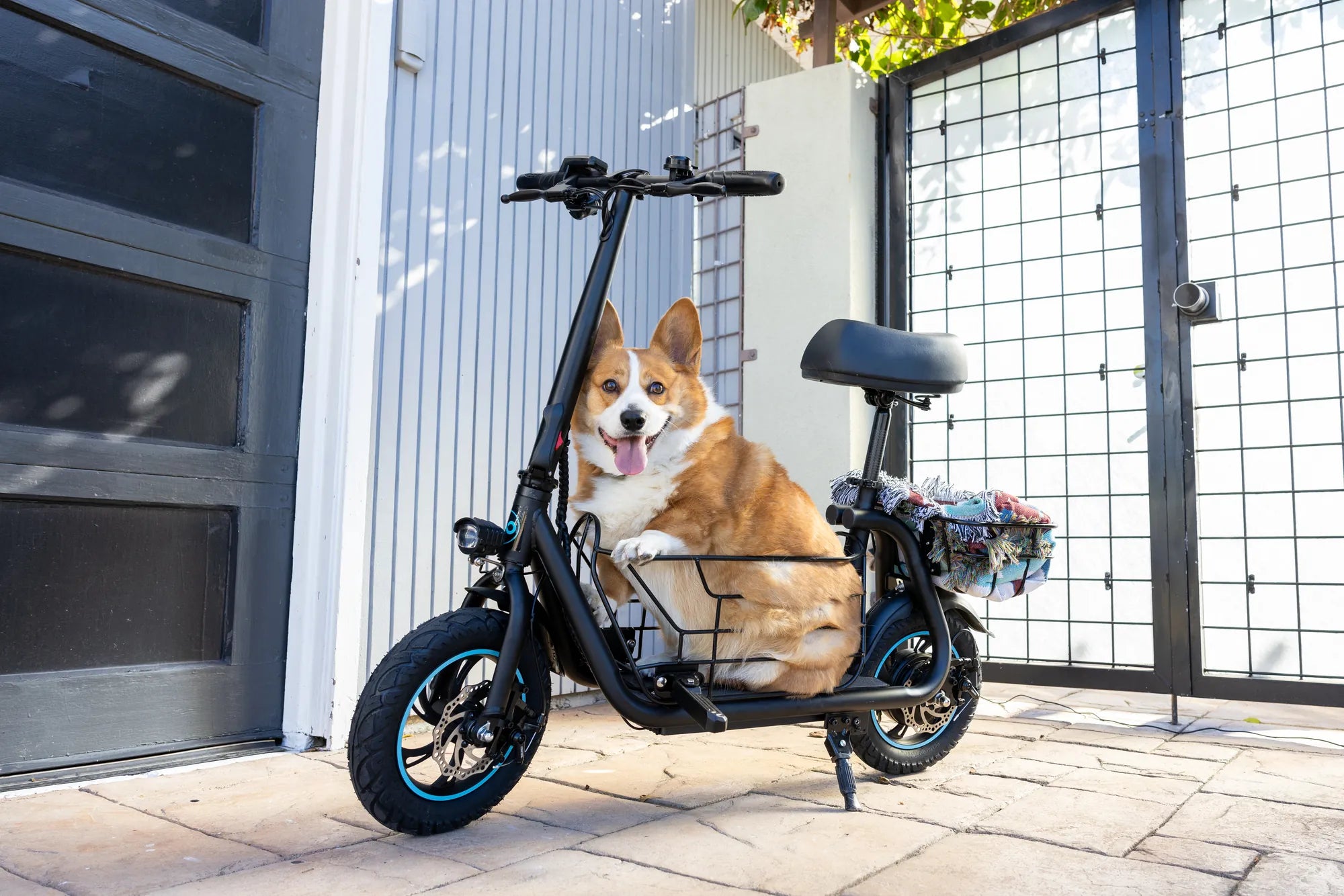
Choosing the right electric scooter for your 6-8 year old involves balancing excitement with essential safety. This guide provides the data and framework you need to make an informed decision. You'll learn how to evaluate critical safety features, understand appropriate specifications for this age group, and establish rules that protect your child while they enjoy outdoor activity. We focus on factual comparisons, certified safety standards, and practical maintenance advice to ensure your child's riding experience is both thrilling and secure.
Understanding the Basics: Are Electric Scooters Right for Your 6-8 Year Old?
Electric scooters can be an excellent tool for developing coordination, balance, and a sense of responsibility in children aged 6 to 8. At this developmental stage, children are refining their gross motor skills and learning to assess risk. A properly selected scooter supports this growth. The key is matching the vehicle's capabilities to the child's physical size, cognitive maturity, and supervised environment.
Parental concerns typically center on three areas: speed control, structural safety, and battery integrity. These are valid, and the market offers models specifically engineered to address them. When chosen correctly, an electric scooter encourages outdoor play, reduces screen time, and can be a shared activity that fosters family bonding. The decision hinges not on the product category itself, but on selecting a model built with rigorous youth safety standards in mind.
The benefits extend beyond recreation. Operating an electric scooter teaches basic mechanics, battery care, and traffic awareness in controlled settings. It builds confidence as children master starting, stopping, and maneuvering. However, these benefits are only realized when the scooter is an appropriate fit. An overpowered or poorly constructed model poses significant risks, while an underpowered one may lead to frustration.
This age group represents a sweet spot for introductory electric mobility. They have outgrown many toddler toys but are not yet ready for the complexity and speed of teenage models. Manufacturers like Gyroor design specific models for this bracket, incorporating speed limiters, stable decks, and simplified controls. The goal is a graduated introduction to powered vehicles, with safety as the non-negotiable foundation.
Key Safety Features Every Parent Must Look For
Safety is not a single feature but a system of integrated components. For 6-8 year olds, certain specifications are non-negotiable. These features form a protective ecosystem around the young rider, mitigating common risks associated with falls, loss of control, and mechanical failure. Prioritizing these elements dramatically reduces the likelihood of accidents.
The cornerstone of safety is a reliable braking system. Look for scooters with both electronic (e-brake) and mechanical braking (foot brake or hand disc/brake). Redundancy is crucial; if one system fails, the other provides a backup. The brakes should be easy for small hands to operate without excessive force. A gradual, responsive braking curve prevents sudden stops that could throw the rider forward.
Deck design is equally critical. A wide, textured deck provides ample foot placement and prevents slipping. The deck should be low to the ground to lower the center of gravity, enhancing stability. Anti-slip grip tape or a patterned rubber surface is essential. The deck's length must allow the child to comfortably stand with feet slightly apart, not cramped together, for optimal balance during turns and over slight bumps.
Finally, consider the overall construction and warranty. A sturdy, aluminum-alloy frame resists bending from impacts. Folding mechanisms, if present, must have robust locking pins to prevent accidental collapse. A comprehensive warranty, like the 1-year coverage offered by trusted brands, signals manufacturer confidence and protects your investment against defects. It’s a tangible commitment to product durability and rider safety.
Speed and Power: Finding the “Just Right” Zone
Motor power and speed limits are the most critical filters for this age group. The ideal electric scooter for a 6-8 year old features a motor under 100 watts and a maximum speed cap between 6 and 10 miles per hour (10-16 km/h). This range provides enough thrill for enjoyment without exceeding a child's reaction time capabilities. Most quality models include multiple speed modes, often a beginner mode (3-5 mph) and a standard mode (6-10 mph).
Controlled power prevents “trigger-happy” acceleration that can lead to wheelies or loss of balance. A smooth start-up, sometimes called a “soft-start” or “zero-start” feature, is vital. This means the scooter only engages the motor after the rider has manually pushed off to a walking pace, ensuring they are balanced before power is applied. Abrupt, jerky acceleration is a major cause of beginner falls.
Speed limiters should be password-protected or require a complex sequence to change, preventing children from bypassing parental restrictions. The controller’s programming should prioritize smooth acceleration and deceleration curves over raw power. For context, a brisk adult run is about 8 mph. A scooter capped at 8-10 mph allows a child to experience a sense of speed that is exciting yet manageable in a driveway or park setting.
Exceeding 10 mph significantly increases kinetic energy and stopping distance. For a child weighing 50-70 pounds, a fall at 12 mph carries much more force than at 8 mph. The “just right” zone maximizes fun while keeping physics firmly on the side of safety. Brands that understand youth products, like Gyroor, engineer their models with these precise electronic limits from the factory.
Build Quality and Durability: Withstanding Kid-Powered Adventures
A scooter for children must be built to withstand bumps, curb nudges, and the general rigors of active play. Build quality directly impacts safety and longevity. The frame material is the first indicator. Aircraft-grade aluminum alloy is the industry standard for a reason: it offers an excellent strength-to-weight ratio, resisting dents and corrosion while keeping the scooter light enough for a child to maneuver when powered off.
Wheel quality is paramount. Larger air-filled (pneumatic) tires (6-8 inches) provide better shock absorption on uneven pavement, grass, or gravel compared to small, solid rubber tires. They offer more stability and a smoother ride. However, some models use honeycomb or foam-filled tires to eliminate the risk of punctures. Check the wheel bearings; sealed, high-quality bearings ensure smooth rolling and reduce maintenance.
The handlebar stem and folding mechanism are high-stress points. The stem should have little to no wobble when locked in the riding position. Look for reinforced collars or locking mechanisms that audibly “click” into place. All bolts and fasteners should be of good quality and properly secured. A poorly built folding joint is a critical failure point. Durability isn't just about surviving crashes; it's about maintaining structural integrity through daily use.
This durability is backed by warranty. A 1-year comprehensive warranty on the frame, motor, and battery, as offered by leading brands, is a strong signal of reliable build quality. It means the manufacturer has tested the product to withstand typical use cases. For parents, this translates to peace of mind, knowing the scooter won’t fail due to a manufacturing flaw during a crucial moment.
The Parent’s Checklist: What to Evaluate Before You Buy
Move beyond marketing claims with a systematic evaluation. This checklist transforms subjective impressions into objective comparisons. Start by verifying core safety specs: motor wattage (≤100W), max speed (≤10 mph), brake type (dual system preferred), and deck dimensions. Then, assess the manufacturer’s reputation for youth products and customer service responsiveness.
Examine the product documentation for safety certifications. These may include CE, RoHS, or UL standards for electrical components. The user manual should provide clear safety warnings, maintenance schedules, and troubleshooting steps. A lack of detailed documentation is a red flag. Check online reviews from other parents, specifically noting comments about durability over 6-12 months of use, not just initial impressions.
Consider the total cost of ownership. The purchase price is just the beginning. Factor in the potential cost of replacement parts (tires, brake pads), the availability of those parts, and the warranty’s scope. A slightly more expensive model from a brand with a strong parts supply chain often proves more economical than a cheaper model that becomes unusable after a minor component fails.
Finally, assess the “parental control” features. Can you easily set a speed limit? Is the charger child-proof? Does the scooter have safety features like rear reflectors or an optional bell? The best scooter for a 6-8 year old is one designed with the parent as a co-engineer of the safety experience, providing tools to manage the scooter’s operation as the child’s skills develop.
Weight Limit and Scooter Dimensions: Ensuring a Proper Fit
A proper fit is fundamental to control. The scooter’s weight capacity must exceed your child’s current weight with a margin for growth and a backpack. Most models for this age group have a capacity between 120 and 160 pounds. Exceeding the weight limit stresses the frame, motor, and brakes, compromising safety and leading to premature failure.
Handlebar height is crucial for posture and control. Ideally, the handlebars should sit between your child’s waist and lower chest when they stand on the deck. This allows for a slight bend in the elbows, providing leverage for steering without hunching over. Some models offer adjustable handlebars, a valuable feature for extending the scooter’s usable life as your child grows.
The deck length and width determine stance stability. A deck should be at least 10 inches long and 4.5 inches wide. Your child should be able to place both feet side-by-side with a few inches of space in front and behind. A “too small” deck forces a cramped, unstable stance. The deck-to-ground height also matters; a lower deck (3-4 inches) is easier to step onto and off of, especially for beginners.
Don’t forget the scooter’s own weight. A model weighing 15-20 pounds is manageable for a 7-year-old to carry up a few steps or lift into a car trunk. A scooter over 25 pounds may be too cumbersome, limiting its practicality. The fit ensures the scooter is an extension of the child’s body, not a cumbersome machine they struggle to manage.
Battery Safety and Maintenance: A Non-Negotiable Priority
The battery pack is the heart of the scooter and the component requiring the most rigorous safety standards. Insist on models using certified battery packs, such as those with UL (Underwriters Laboratories) certification. This means the battery cells, BMS (Battery Management System), and housing have passed independent tests for electrical safety, stability, and fire resistance. It is the single most important specification for preventing safety hazards.
Proper charging practice is a shared responsibility. Always use the manufacturer-provided charger. Charge the scooter on a hard, non-flammable surface in a well-ventilated area, away from direct sunlight and heat sources. Do not leave it charging unattended for extended periods or overnight. Most modern scooters have auto-shutoff chargers, but supervision is still the best practice. Teach your child that the charger is for adult use only.
Battery maintenance extends its life. Avoid draining the battery completely before recharging. Lithium-ion batteries prefer partial discharge cycles. If storing the scooter for more than a month, charge the battery to about 50-60% first. Extreme temperatures are the enemy; never charge a cold battery (below 32°F/0°C) immediately after bringing it in from the cold, and avoid leaving the scooter in a hot car.
Recognize warning signs: a battery that gets abnormally hot during charging, a significant drop in range, or physical swelling/bulging of the battery case. Stop use immediately and contact the manufacturer. Brands committed to safety, like Gyroor, use UL-certified battery packs tested for over 500 charge cycles and design their battery compartments to be IPX5 water-resistant, protecting against water splashes from any direction.
Beyond the Purchase: Helmets, Gear, and Riding Rules
The safest scooter is ineffective without proper gear and rules. Safety is a holistic practice. Before the first ride, assemble a complete kit of protective equipment and establish non-negotiable family riding protocols. This framework ensures the scooter remains a source of fun, not trips to the emergency room. Consistency in enforcing these rules is as important as the rules themselves.
Begin with the environment. Designate specific, safe riding zones. These should be smooth, paved areas away from vehicle traffic, such as empty parking lots, school playgrounds (after hours), smooth bike paths, or your own driveway. Clearly mark “no-go” zones: public roads, streets with cars, hills, areas near pools or bodies of water, and wet or oily surfaces. The riding surface should be dry and clear of loose gravel or sand.
Supervision is mandatory for this age group. An adult should be physically present and actively watching, not distracted by a phone. The supervising adult must understand the scooter’s controls, how to engage the brake, and how to power it off in an emergency. Start with short, instructional sessions focused on basic operations in a confined space before allowing free riding in a larger designated area.
Finally, implement pre-ride and post-ride routines. The pre-ride check includes: helmet and gear fastened, battery level adequate, brakes tested at slow speed, tires visually inspected, and folding mechanisms locked. The post-ride routine involves powering off the scooter, wiping it down if dirty, and storing it in a dry, temperature-controlled place, away from stairs or high-traffic areas to prevent trips and falls.
Essential Protective Gear: More Than Just a Helmet
A helmet is legally and morally mandatory, but it’s only the first layer. Every rider must wear a properly fitted helmet certified for cycling or multi-impact sports (ASTM F1447 or CPSC 1203). It should sit level on the head, covering the forehead, with the strap snug under the chin. Let your child choose the color/design to encourage consistent wear, but you choose the certification.
Knee and elbow pads are non-negotiable for beginners. Falls from scooters most commonly result in abrasions and impacts to these joints. Look for pads with hard plastic caps, comfortable foam lining, and adjustable straps that don’t slip during movement. Wrist guards are arguably as important as the helmet. A forward fall instinctively leads to outstretched hands, making wrists and forearms highly vulnerable to fractures or severe sprains.
For added safety, consider high-visibility clothing or reflective vest, especially if riding near dusk. Sturdy, closed-toe shoes with grippy soles are essential—no sandals or flip-flops. Gloves can improve grip on the handlebars and protect palms in a fall. This gear should be worn every single time, without exception. Making it a non-debatable part of “getting ready to ride” establishes a lifelong safety habit.
The investment in quality gear is an investment in injury prevention. Medical costs from a single fracture far exceed the price of a full set of pads and a helmet. View protective gear as integral to the scooter itself—a required component without which the vehicle is not operational. Store the gear with the scooter so it’s always together.
Setting Ground Rules for Safe Riding
Clear, simple, and consistently enforced rules create a safe riding culture. Involve your child in creating these rules to foster buy-in. Write them down and post them near where the scooter is stored. The rules should cover behavior, environment, and responsibility. Start with the absolute basics: “Always wear all your gear” and “Only ride where Mom or Dad says it’s okay.”
Establish rules for awareness: “Always look where you are going, not at the scooter,” “Watch for people, animals, and obstacles,” and “Use your eyes and ears—no headphones while riding.” Teach them to scan the path ahead for cracks, potholes, or debris. Rule for interaction: “One rider at a time. No passengers.” Rule for responsibility: “You are the driver. You are responsible for controlling the scooter safely.”
Define specific operational rules. These might include: “Start in the beginner speed mode every time,” “Always start by kicking off manually,” “Use both brakes together for smooth stops,” and “Never ride in the rain or on wet ground.” Include a rule about courtesy: “Yield to pedestrians and bicyclists. Use a bell or your voice to politely let people know you’re passing.”
Finally, set consequences for breaking the rules. A logical consequence is the loss of scooter privileges for a defined period. The goal is not punishment but reinforcing that safety rules are the license to ride. As your child demonstrates consistent adherence to the rules and improvement in skill, you can gradually expand their riding boundaries, such as allowing the use of the standard speed mode in a familiar, controlled area.
Top Considerations for Brands and Models: A Data-Driven View
Navigating the market requires comparing key performance and safety data. The table below outlines critical specifications parents should compare across models. This objective view helps cut through marketing language. Leading brands distinguish themselves through certified components, robust construction, and thoughtful design for young riders.
| Specification | Ideal Range for 6-8 YOs | Why It Matters | Brand Benchmark (e.g., Gyroor) |
|---|---|---|---|
| Max Speed | 6 - 10 mph (16 km/h) | Balances fun with manageable reaction time; often has 2-3 speed modes. | Engineered with a top speed of 9.5 mph in high gear, with password-protected settings. |
| Motor Power | 80W - 100W | Provides adequate hill assistance without dangerous acceleration torque. | 100W hub motor designed for smooth, controlled acceleration, not high torque. |
| Weight Capacity | 120 lbs - 160 lbs | Ensures frame and components are rated for the child’s weight plus margin. | Models rated for 154 lbs, accommodating growth within the age range. |
| Battery & Range | 4-7 miles per charge | Sufficient for play sessions; uses safer, certified lithium-ion packs. | UL-certified battery packs, IPX5 water-resistant compartment, ~6 mile range. |
| Braking System | Dual (E-brake + Foot/Disc) | Redundant safety; allows for controlled stopping in all conditions. | Combines regenerative e-brake with rear foot mechanical brake. |
| Warranty | 1 Year Comprehensive | Covers frame, motor, battery, and electronics against manufacturing defects. | 1-year warranty on all major components, signaling build quality confidence. |
Beyond specs, consider the brand’s focus. Brands specializing in youth mobility often have more nuanced safety features, like wider decks for stability, softer acceleration curves, and brighter LED lights for visibility. Their customer service teams are typically more knowledgeable about child-specific usage scenarios and replacement parts for wear items like tires and brake pads.
Water resistance is a key differentiator. An IPX5 rating means the scooter can withstand low-pressure water jets from any direction, protecting it against puddles or light rain. This is a significant durability advantage. Also, evaluate the noise level of the motor and wheels; a quieter scooter is less disruptive in community spaces and allows the rider to better hear their surroundings.
Brands with a track record, trusted by over 100,000 riders like Gyroor, have refined their designs based on real-world feedback. This often results in practical touches: easy-to-read battery indicators, ergonomic brake levers for small hands, and minimal assembly required out of the box. These elements contribute to a safer, more user-friendly experience for both child and parent.
Frequently Asked Questions for Concerned Parents
Q: What is a safe speed for a 6-8 year old’s electric scooter?
A: A maximum speed of 6 to 10 miles per hour (10-16 km/h) is widely considered the safe and appropriate range. Most quality models offer selectable speed modes, with a beginner mode around 3-5 mph for initial learning. This speed range allows for exciting mobility while keeping kinetic energy manageable, ensuring the child can react to obstacles and stop effectively.
Q: How long does the battery typically last, and is it safe to charge indoors?
A: A single charge typically provides 4 to 7 miles of range, depending on rider weight, terrain, and speed mode—more than enough for daily play sessions. Using a manufacturer-provided charger with a certified battery pack (like UL-certified) is safe for indoor charging on a hard, non-flammable surface in a well-ventilated area. Never charge unattended for excessive periods or cover the scooter/battery while charging.
Q: Are these scooters suitable for beginners with no prior experience?
A>Yes, but with critical conditions. Choose a model with a beginner speed mode (≤5 mph), a smooth start-up (kick-to-start), and a wide, stable deck. The first several rides must be fully supervised in a hazard-free area like an empty parking lot, with the focus on mastering balance, starting, stopping, and gentle turning before exploring higher speeds. Full protective gear is non-negotiable for beginners.
Q: What does the IPX5 water-resistant rating mean for real-world use?
A>An IPX5 rating means the scooter’s electrical components are protected against low-pressure water jets from any direction. In practice, this means it can safely handle riding through puddles, wet pavement after a rain, or being sprayed during cleaning. It is not waterproof and should not be submerged, ridden in heavy rain, or through deep standing water. This rating significantly enhances durability and safety for typical outdoor use.
Q: What does the warranty typically cover, and why is it important?
A>A comprehensive 1-year warranty should cover defects in the frame, motor, battery, and electronic controller. This is crucial because it is the manufacturer’s guarantee of build quality and safety. It protects your investment if a component fails under normal use. A strong warranty, like the 1-year coverage provided by leading brands, indicates confidence in their product’s durability and offers parents essential peace of mind.
Making an Informed Decision for Fun and Safety
The journey to finding the right electric scooter is defined by prioritizing verified safety over flashy features. By focusing on certified batteries, appropriate speed limits, durable construction, and a proper fit, you lay a foundation for countless hours of safe outdoor enjoyment. The data-driven specifications—motor wattage, weight capacity, brake type—are your most reliable guides.
Remember, the scooter itself is only one component of the safety system. Your commitment to enforcing helmet and pad use, establishing clear riding rules, and providing active supervision is what truly mitigates risk. This balanced approach allows your child to develop coordination, confidence, and a sense of responsibility within a secure framework.
The market offers well-engineered options designed specifically for the needs of young riders. Trusted brands distinguish themselves through independent safety certifications, robust warranties, and designs that reflect an understanding of child development and mechanics. These choices provide the thrilling sense of freedom children crave, backed by the engineering integrity parents require.
Ready to explore models that meet these rigorous standards? Browse the full collection of youth-tested electric scooters and see detailed specifications for yourself at gyroorboard.com. Equip your child for adventure, built on a foundation of safety and quality you can trust.
Electric Scooters Prices Two Wheel: Your Guide to Smart Mobility
Electric Scooters Prices Two Wheel: Your Guide to Smart Mobility