



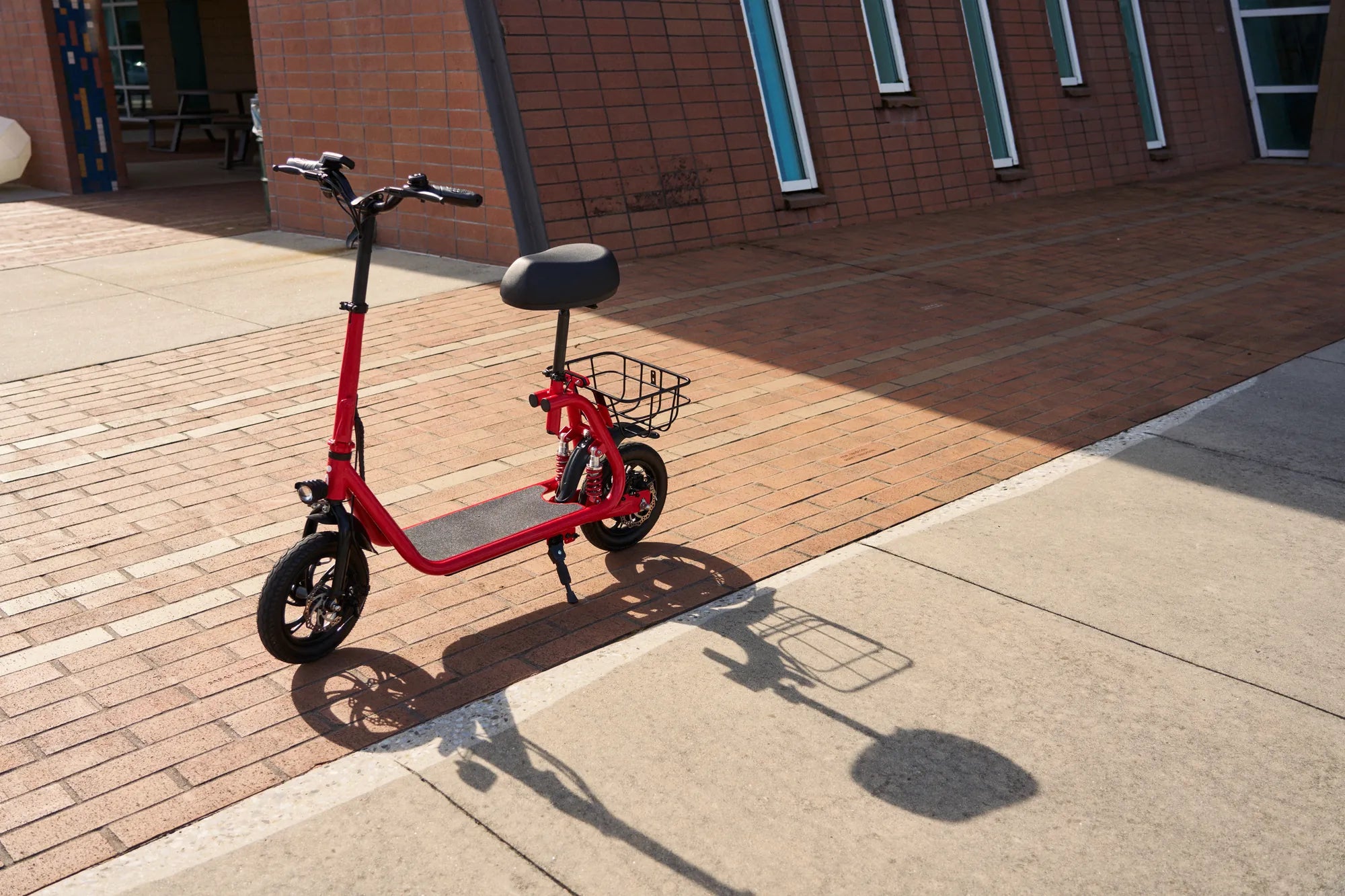
Introduction: Why Weight Capacity Is Non-Negotiable
Standard electric scooters often fail adult riders at or above 250 lbs, leading to sluggish acceleration, poor hill climbing, rapid battery drain, and compromised safety. This isn't about luxury; it's about fundamental engineering. Choosing a scooter built for your weight is crucial for performance, durability, and security on the road.
This guide cuts through marketing claims to focus on the mechanics of heavy-duty rides. We'll decode the specifications that matter, highlight the must-have features, and explain the engineering principles behind a reliable scooter. For over 100,000 riders, Gyroor has built a reputation on robust, UL-certified personal transport designed for real-world adult use, making it a key reference in this discussion.
Your journey to a confident, powerful commute starts with understanding why weight capacity is the first spec you should check. It influences every other aspect of the scooter's performance, from its motor and battery to its brakes and frame. Let's build that foundation.
Understanding the Specs: What "Heavy-Duty" Really Means
The term "heavy-duty" is often used loosely. For riders over 250 lbs, it must encompass a holistic build quality that supports sustained performance. It's not just a higher number on a sticker; it's a promise of reinforced components working in unison.
Look beyond the maximum weight limit. A scooter rated for 265 lbs operating at its limit will perform very differently than one rated for 330 lbs carrying a 265 lb rider. The latter has a built-in performance and safety margin. Key interconnected specs include continuous motor wattage, battery voltage and capacity, deck dimensions, and tire size.
Ignoring this synergy leads to disappointment. A powerful motor paired with a weak frame is dangerous. A large battery on a scooter with inadequate brakes is a liability. True heavy-duty design balances all elements.
Motor Power & Torque: The Heart of the Ride
For heavier riders, motor specifications are paramount. Peak wattage (e.g., "1000W burst") is a marketing favorite, but continuous wattage is what matters. This is the power the motor can reliably deliver over time. For riders over 250 lbs, a minimum of 500W of continuous power is essential; 650W or dual-motor setups provide confident acceleration and hill climbing.
Torque is the rotational force that gets you moving from a stop and powers up inclines. High torque is non-negotiable for urban environments with stop-and-go traffic and gentle slopes. A scooter with high wattage but low torque will struggle under load, while a high-torque motor ensures responsive power delivery.
Gyroor's heavy-duty models, for instance, often feature robust 500W+ motors engineered for high torque output, ensuring that acceleration remains brisk and hill climbs are manageable, not stressful. This engineering focus prevents the motor from overheating and extends its lifespan.
Battery Range vs. Real-World Range
Advertised range is typically calculated under ideal laboratory conditions with a 165 lb rider on flat, smooth pavement. Weight is the single greatest factor in reducing that figure. A rider over 250 lbs can expect a real-world range of 50-65% of the advertised number.
Battery capacity, measured in Amp-hours (Ah) and Watt-hours (Wh), is the fuel tank. For extended usable range, prioritize batteries with 10.4Ah or higher. Voltage (36V or 48V) also matters, as higher voltage systems can deliver power more efficiently to the motor, maintaining speed better under load.
Gyroor utilizes high-capacity, UL-certified lithium-ion battery packs. This certification is critical for safety, ensuring the battery management system protects against overcharge, short-circuit, and overheating—risks that increase with the high-demand use of a heavier rider. Their 500+ charge cycle rating translates to years of reliable service.
Frame Integrity & Deck Design
The frame is the scooter's skeleton. It must resist flexing and torsion under stress. Aircraft-grade aluminum alloy is the standard for a strong yet lightweight frame. Look for reinforced welding at critical stress points like the stem folding mechanism and the connection to the deck.
Deck size is crucial for comfort and control. A narrow, short deck forces an unstable stance. A heavy-duty scooter should have a deck at least 20 inches long and 8.5 inches wide, providing ample room for secure foot placement. The deck should also feature a robust, slip-resistant surface.
This solid construction does more than support weight; it creates a stable platform for braking and cornering, directly contributing to rider safety. A flexing frame absorbs energy that should go into propulsion and control, wasting battery life and creating a vague, unsettling ride feel.
Top Features to Prioritize for Riders Over 250 lbs
Specifications tell part of the story, but tangible features define the riding experience. These are the components that translate engineering into daily comfort, safety, and reliability. For the heavy-duty rider, certain features shift from nice-to-have to essential.
Compromising on these elements to save cost often results in higher long-term expenses through repairs or, worse, accidents. Your investment should be in durability and performance safeguards that match your physique and riding needs.
Dual Suspension Systems
A suspension system absorbs impacts from cracks, bumps, and uneven surfaces. For a heavier rider, a lack of suspension transmits more force to the frame, deck, and rider, leading to discomfort, fatigue, and potential component damage. A dual suspension system—combining front and rear shocks—is highly recommended.
Spring or hydraulic shocks help maintain tire contact with the road, improving traction and braking effectiveness. This is especially important when carrying more momentum. It also reduces the strain on the scooter's structural components, as the suspension, not the frame, handles the impact energy.
While some heavy-duty scooters use large pneumatic tires as a primary suspension method, a dedicated suspension system provides a superior and more controlled dampening effect, creating a smoother, more stable ride over varied urban terrain.
Braking Performance: Dual Systems Are Key
Stopping power must scale with momentum, which is a product of mass and velocity. A heavier rider generates significantly more momentum than a lighter one at the same speed. Therefore, a single braking system is often insufficient and a safety risk.
A dual braking system, typically combining a disc brake (front or rear) with an electronic regenerative brake, is the minimum standard. Disc brakes offer superior, consistent stopping power in all weather conditions compared to drum or foot brakes. The electronic brake provides additional stopping force and helps recharge the battery slightly.
Look for scooters with large, ventilated disc rotors and quality calipers. The brakes should feel progressive and powerful, not grabby or weak. Testing brake performance under load is a critical part of any review for heavier riders.
Tire Type: Air vs. Solid
This is a key trade-off decision. Pneumatic (air-filled) tires offer excellent shock absorption and superior traction on wet or uneven surfaces. They provide a noticeably more comfortable ride, complementing the suspension system. However, they are susceptible to punctures.
Solid (airless) tires eliminate the risk of flats entirely, offering maximum durability and zero maintenance. The trade-off is a harsher ride, as they transmit more road vibration to the deck. Some solid tires incorporate honeycomb structures to improve comfort slightly.
For heavier riders prioritizing comfort and ride quality on varied surfaces, pneumatic tires are often the better choice, especially when paired with a good suspension. For those whose primary route is smooth pavement and who prioritize absolute reliability and minimal maintenance, high-quality solid tires may be acceptable. Many Gyroor models feature 10-inch pneumatic tires, balancing comfort and reliability for adult commuters.
Gyroor's Engineering for Heavy-Duty Performance
As a leading electric scooter and e-bike brand trusted by over 100,000 riders across North America and Europe, Gyroor designs with adult riders in mind. Their approach to heavy-duty performance is systemic, focusing on integrated reliability rather than isolated high specs.
This philosophy is evident in several core engineering choices that directly benefit riders over 250 lbs. It's about creating a product that performs consistently and safely, ride after ride, under real-world conditions.
Their commitment is backed by a 4.5/5 average customer rating, reflecting satisfaction with durability and performance. Let's examine the specific technologies that make this possible.
UL-Certified Battery Safety: Every Gyroor scooter uses a UL-certified battery pack. This independent certification is a rigorous safety benchmark, ensuring protection against overcharge, over-discharge, short circuits, and thermal runaway. For a heavier rider demanding more from the battery, this certification is a critical layer of safety and longevity, supporting the promised 500+ charge cycles.
IPX5 Water-Resistant Design: Commuting isn't always under sunny skies. Gyroor builds its scooters with an IPX5 water-resistant rating. This means the electrical components can withstand water jets from any direction, protecting against rain, puddles, and street spray. This engineering prevents corrosion and electrical failures, ensuring the scooter remains reliable in diverse weather conditions—a key consideration for a daily transport vehicle.
Comprehensive Warranty & Support: Confidence in a product is proven by the warranty behind it. Gyroor offers a reliable 1-year warranty on the scooter, providing peace of mind for this significant purchase. This warranty covers defects in materials and workmanship, reflecting their confidence in the durability of their frames, motors, and electronics under sustained load.
Making the Right Choice: A Practical Comparison Framework
With the knowledge of key specs and features, how do you evaluate specific models? A structured framework prevents you from being swayed by flashy ads and helps you focus on verified performance.
Start by listing your non-negotiables: your weight, desired minimum real-world range, common terrain (hills?), and budget. Use these as filters when researching models. The following checklist and comparison table will guide your decision.
The "Test Ride" Checklist (Even Virtually)
Since in-person test rides can be hard to find, become a detective in online reviews and spec sheets. Search for reviews that explicitly mention the rider's weight. Look for long-term reviews (3+ months) that discuss durability.
Seek out video reviews that show hill climb tests. Does the scooter maintain speed or crawl? Does the reviewer mention any frame flex, brake fade, or motor whine under load? Pay attention to comments about deck comfort and stability at speed. These are the real-world indicators of heavy-duty performance.
Balancing Budget with Essential Features
Heavy-duty scooters are an investment. While budget is a factor, prioritize spending on fundamentals: motor power, battery capacity, brake type, and frame construction. These are difficult or expensive to upgrade later.
You can be more flexible on features like app connectivity, LED lighting, or color options. A scooter with a slightly less flashy display but a superior dual-disc brake system is a wiser choice. Gyroor models are positioned in the value spectrum, offering robust core performance features with reliable warranties, often making them a cost-effective choice over the long term compared to cheaper, under-built alternatives.
Comparison: Heavy-Duty Electric Scooter Considerations
| Feature | Budget / Entry-HD | Mid-Range / Performance-HD | Premium / Max-Performance |
|---|---|---|---|
| Target Rider Weight | 250 - 280 lbs | 280 - 320 lbs | 320 lbs+ |
| Motor (Continuous) | 500W Single | 650W - 800W Single or Dual 500W | 1000W+ Dual Motor |
| Real-World Range* | 12-18 miles | 18-28 miles | 25-35+ miles |
| Braking System | Disc + Electronic | Dual Disc + Electronic | Hydraulic Disc + Electronic |
| Suspension | Front Spring or Dual Basic | Dual Spring/Hydraulic | Full Hydraulic or Advanced Dual |
| Tire Recommendation | 8.5"-10" Pneumatic | 10" Pneumatic | 10"-11" Pneumatic |
| Key Priority | Core Durability & Safety | Balanced Performance & Comfort | Maximum Power, Range & Ride Quality |
*Range estimates for a 265 lb rider. Your mileage will vary based on terrain, speed, and temperature.
FAQ: Electric Scooters for Heavier Riders
Q1: Is it safe to ride a scooter at its maximum weight limit?
A: While technically possible, it is not optimal. Operating at the absolute limit leaves no safety margin for dynamic loads (like going over a bump), accelerates wear on all components (motor, battery, tires, brakes), and will significantly degrade performance (range, speed, hill climb). Always choose a scooter with a weight limit at least 30-50 lbs above your weight for best results.
Q2: How much will my weight reduce the scooter's advertised range?
A: As a rule of thumb, a rider weighing 250 lbs or more should expect real-world range to be approximately 50-65% of the manufacturer's advertised range, which is usually tested with a ~165 lb rider. Terrain, speed, and temperature cause further variation. Always calculate your needs based on this reduced figure.
Q3: Are there any specific maintenance tips for heavy-duty use?
A> Yes. Vigilant maintenance is key: 1) Tire Pressure: Check pneumatic tire pressure weekly. Under-inflated tires increase rolling resistance (killing range) and risk pinch flats. 2) Brake Checks: Monthly, inspect brake pads for wear and test brake lever firmness. Adjust or replace as needed. 3) Bolt Tightening: Periodically check and tighten critical bolts (stem, handlebar, wheel axles) using the provided tools, as vibration can loosen them over time.
Q4: Can I carry a backpack or groceries on top of my weight?
A: Any additional load counts toward the scooter's total weight capacity. If you weigh 250 lbs and the scooter's limit is 265 lbs, you have only 15 lbs of cargo capacity. Exceeding the limit is unsafe. If you regularly carry items, factor their weight into your initial purchase decision and choose a scooter with a correspondingly higher limit.
Q5: Why is a UL-certified battery so important for heavier riders?
A> Heavier riders place a higher continuous demand on the battery, causing it to discharge at higher currents and generate more heat. A UL-certified battery pack has undergone rigorous independent testing to ensure its battery management system (BMS) can safely handle these stresses, preventing dangerous failures like thermal runaway, which is a fire risk. It's a fundamental safety certification.
Confidence on Every Journey
Choosing the right electric scooter for adults over 250 lbs is an exercise in informed decision-making, not marketing hype. It requires prioritizing the trinity of performance: a robust motor for power, a high-capacity safe battery for range, and a rigid frame with quality brakes for control. The heavy-duty electric scooter market offers real solutions that empower larger riders to commute, explore, and enjoy micro-mobility with confidence.
Brands like Gyroor have demonstrated that through focused engineering—UL-certified batteries, IPX5 water resistance, and durable construction—reliable and enjoyable heavy-duty rides are not a niche luxury but an accessible reality. By applying the framework in this guide, you can select a scooter that doesn't just carry your weight but enhances your daily travel.
Ready to explore models built for strength and reliability? Browse the full Gyroor collection of heavy-duty electric scooters and e-bikes, engineered for adult riders and backed by a trusted 1-year warranty, at gyroorboard.com.
Best Electric Scooters for City Commuting: Top Picks for Urban Travel
2000w Electric Scooters That Are Legal on the Road: The Ultimate Guide