



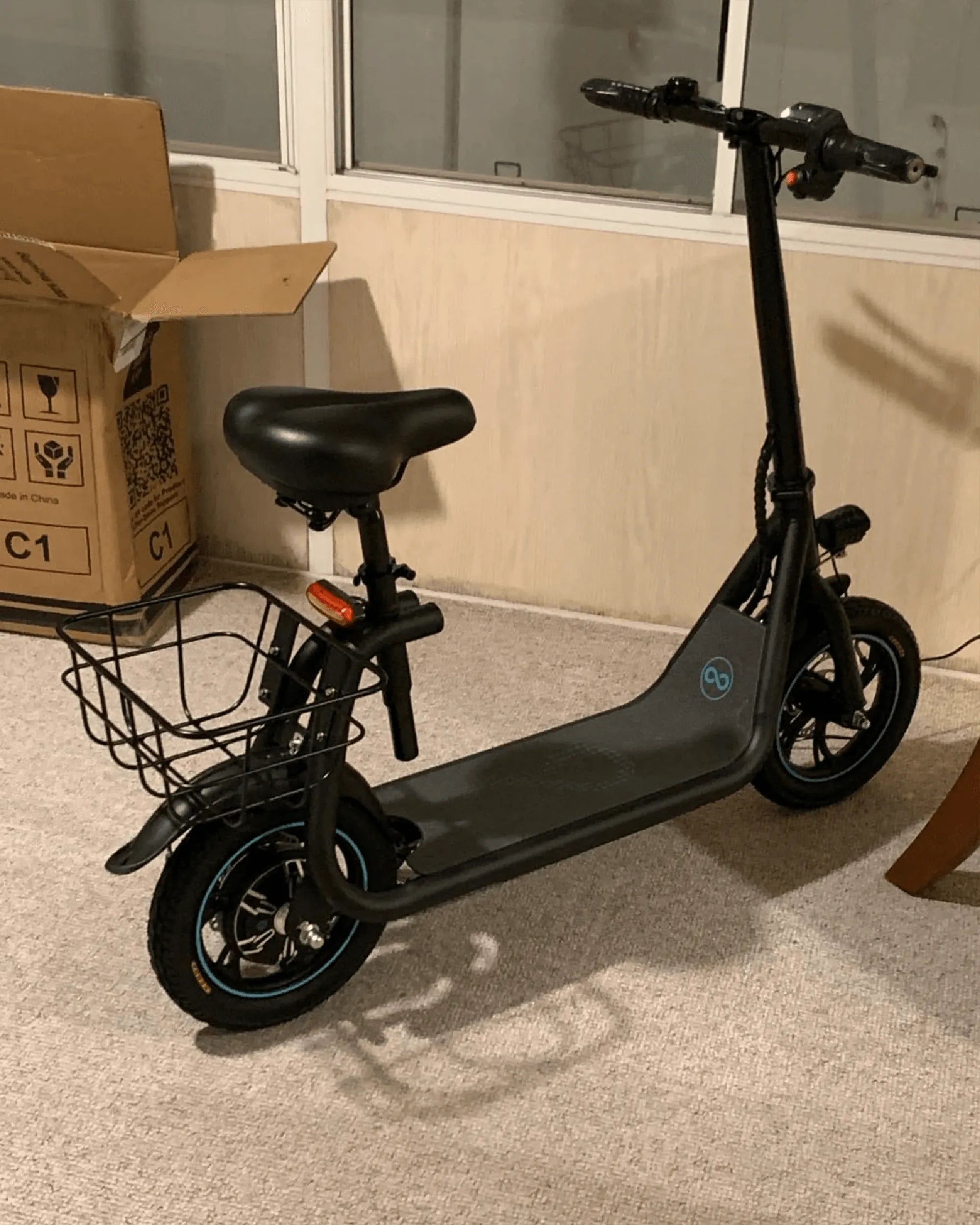
Introduction: Why Hill Climbing is the Ultimate Test for an E-Scooter
That familiar whine of a struggling motor, the sudden slowdown on a modest incline—it's the moment many scooter riders realize their vehicle isn't built for real-world terrain. Conquering steep hills separates casual commuter scooters from serious urban mobility solutions. The challenge isn't just about raw power; it's a complex equation balancing sustained torque, battery efficiency, thermal management, and rider weight.
This guide, Electric Scooters for Climbing Hills: The Ultimate Guide to Conquering Steep Terrains, provides the data-driven knowledge you need to choose and use a scooter that won't leave you walking uphill. We'll decode the critical specifications, explain the engineering behind a successful climb, and highlight the features that make brands like Gyroor, trusted by over 100,000 riders, reliable partners for elevated adventures. The right scooter transforms hills from obstacles into exhilarating features of your journey.
The Engineering Behind the Climb: Key Specs Decoded
Choosing a hill-capable scooter requires looking beyond top speed and range. The true metrics of climbing performance lie in the sustained delivery of power and the system's ability to handle intense loads without failure.
Motor Power & Torque: The Heart of the Ascent
Motor wattage is often advertised as a peak figure, but for hills, sustained torque is king. Think of torque as rotational force, measured in Newton-meters (Nm). A high-torque motor acts like a truck in a low gear, providing the grunt to push a heavy load up a slope at a steady pace, rather than a sports car's high-speed power.
A dual-motor configuration can be a game-changer. Engaging a second motor effectively doubles the available torque for the steepest sections, though it consumes battery power more rapidly. For consistent hill climbing, a high-wattage single motor (e.g., 500W continuous or more) with a design optimized for torque often provides the best balance of performance and efficiency for most riders.
Battery Voltage & Controller: The Sustained Power Delivery System
The battery and controller form the scooter's nervous system. Voltage (V) represents the potential power supply. A 48V or 52V system, compared to a standard 36V, can deliver more power to the motor with less electrical current, resulting in greater efficiency, less heat generation, and reduced voltage sag under heavy load—a critical factor when the motor is straining on an incline.
The controller is the brain that manages this power flow. A quality controller ensures smooth acceleration, prevents jerky power delivery, and includes safeguards to protect the motor and battery from overheating during prolonged climbs. Inadequate controllers can cause power cut-outs at the worst moment.
Wheel Size, Tire Type, and Traction
Traction is non-negotiable on a slope. Larger wheels (9-10 inches) roll over bumps and irregularities more easily than smaller ones, maintaining better contact with the road. Air-filled (pneumatic) tires offer superior shock absorption and a larger contact patch, which improves grip on asphalt, especially if the surface is slightly damp or loose.
Solid tires eliminate flats but provide a harsher ride and can slip more easily on smooth, steep surfaces. For serious hill terrain, pneumatic tires with a defined tread pattern are the recommended choice for safety and control, making the journey up and down more stable.
Gyroor's Hill-Climbing Advantage: Built for the Incline
Gyroor engineers its electric scooters and e-bikes with a focus on real-world performance, where flat, perfect pavement is the exception. This philosophy translates into specific design choices that directly enhance hill-climbing capability and long-term reliability.
UL-Certified Battery Packs: Reliability Under Load
Climbing a hill demands high, sustained current draw from the battery. Inferior batteries can experience significant voltage sag, reducing power output, or worse, overheat. Every Gyroor scooter uses UL-certified lithium-ion battery packs, tested for over 500 charge cycles.
This certification isn't just about safety; it's a guarantee of performance consistency. These batteries are built to deliver stable voltage even under the heavy load of a climb, ensuring the motor receives the power it needs and protecting the long-term health and capacity of the battery pack itself.
Robust Motor and Drive Train Engineering
Gyroor matches its robust batteries with high-torque motor systems. These motors are paired with precisely calibrated controllers that manage power delivery for smooth, linear acceleration without lag or sudden surges. This engineering is tested on inclines to ensure the system doesn't cut out or jerk when you need steady power most.
This integration of motor, controller, and battery is key. It's not just about high wattage numbers; it's about a drive train engineered to work harmoniously under stress, providing a confident and predictable climbing experience ride after ride.
IPX5 Water-Resistant Design: Confidence in All Conditions
Hill climbing often happens in less-than-ideal conditions—morning dew on the road, or a sudden drizzle during your commute. Water ingress can damage electronics and cause immediate failure. Gyroor's IPX5 water-resistant rating means the scooter's vital components are protected against low-pressure water jets from any direction.
This builds essential rider confidence. You can tackle that hill on a damp day without worrying about a splash from a puddle or light rain shutting down your motor or controller, a critical safety feature when navigating sloped terrain.
Choosing Your Hill Champion: A Rider's Weight & Terrain Guide
Manufacturer incline claims (e.g., "20% grade") are often based on ideal laboratory conditions with a lightweight rider. Your real-world performance depends heavily on your weight plus any cargo. Use this framework to match a scooter's capabilities to your profile.
The 220 lb / 100 kg Benchmark: Why It Matters
This weight is a crucial realistic benchmark for adult riders. A scooter that can handle a 10-15% incline with a 220 lb rider has a robust power system. Always consider the total load: your body weight, backpack, groceries, or work gear. A scooter that performs adequately for a 160 lb rider may struggle significantly at 220 lbs on the same hill.
Gyroor tests its performance scooters around this realistic weight benchmark, providing more honest data about what you can expect when you need to conquer a steep grade fully loaded.
Model Comparison: From Commuter Hills to Off-Road Trails
Not all hills are created equal. A paved city street at a 10% grade requires a different machine than a loose gravel fire road. Here’s a comparison of how different Gyroor models are suited to various challenges.
| Model Type | Best For Terrain | Key Hill-Climbing Features | Motor Power (Nominal) | Max Incline* |
|---|---|---|---|---|
| Gyroor F1 Pro | Urban commutes, paved hills | High-torque single motor, 48V system, pneumatic tires | 500W | Up to 15% |
| Gyroor Warrior | Steeper paved/gravel paths | Dual 500W motor option, dual suspension, disc brakes | 500W (1000W Dual) | Up to 20%+ |
| Gyroor E-Bikes | Long commutes, variable terrain | Pedal-assist + throttle, high-capacity battery, full-size tires | 750W | 25%+ with assist |
*Incline performance varies with total rider & cargo weight, battery charge, and riding technique.
Safety First: Braking and Stability on the Descent
What goes up must come down, and descent control is paramount. A strong, reliable braking system is non-negotiable. Hydraulic or mechanical disc brakes offer superior, consistent stopping power and better heat dissipation on long descents compared to drum or electronic brakes alone.
Stability is equally crucial. A wider deck provides a more secure footing, and a lower center of gravity (often aided by a deck-mounted battery) improves handling. Always test the brakes at low speed before attempting a steep downhill, and use a combination of braking and engine braking (if available) to control your speed without overheating the brakes.
Maximizing Performance and Battery Life on Hills
Owning a capable scooter is the first step. Using proper techniques and maintenance practices will maximize its hill-climbing performance and ensure long-term durability.
Riding Techniques for Efficient Climbing
Technique can significantly impact success. Maintain a steady, moderate speed before hitting the incline—a running start helps. Avoid stopping completely on a steep slope, as restarting requires maximum torque and can be difficult. If you must stop, be prepared to give a gentle kick-push to assist the motor off the line.
For scooters with multiple riding modes, use the highest power mode (often "Sport" or "Turbo") for steep climbs. This ensures the controller delivers full available power to the motor. Lean forward slightly to keep weight over the front wheel for traction, but keep your stance centered for control.
Battery Care for Demanding Rides
Hill climbing is energy-intensive. Expect your realistic range to be 30-50% less on a consistently hilly route compared to flat ground. Plan your trips and charges accordingly. After a long, demanding ride with significant climbing, allow the battery to cool to ambient temperature before charging.
For long-term health, avoid consistently draining the battery to 0%. Try to recharge when it drops to 20-30% capacity. If storing the scooter, keep the battery charge between 40-60%. These practices, combined with Gyroor's UL-certified cells, will maximize your battery's lifespan over hundreds of charge cycles.
The Role of the 1-Year Comprehensive Warranty
Pushing a scooter on hills tests its core components. Gyroor's 1-year warranty on the electric scooter and a 6-month warranty on the battery provides essential peace of mind. This warranty covers defects in materials and workmanship for the motor, controller, battery, and frame.
It's a testament to the brand's confidence in its build quality. When you invest in a scooter for challenging terrain, knowing that the drive train and power system are backed by a reputable warranty and accessible US-based customer support is a critical part of the purchase decision.
Beyond the Scooter: Accessories and Route Planning
Preparing for hilly terrain extends beyond the scooter itself. The right accessories and smart planning can make your rides safer, more efficient, and more enjoyable.
Essential Gear for Hilly Rides
Always wear a certified bicycle or multi-impact helmet. For steep or variable terrain, consider additional protection like knee and elbow pads. High-visibility clothing or accessories are crucial, especially if your hill route involves shared roads with vehicles.
A secure phone mount allows you to glance at navigation without losing focus on the path ahead. Use apps that feature elevation profiles to preview the climbs on your planned route, so you're never caught off guard by a mountain.
Understanding and Using Elevation Data
Modern mapping apps and fitness trackers can provide detailed elevation gain for a route. A "hill" can be misleading; a short, steep 20% grade is a different challenge than a long, gradual 5% slope. Look at the total elevation gain (in feet or meters) of your trip.
As a rule of thumb, for every 100 feet of elevation you climb, you can expect to consume the battery equivalent of traveling an extra 1,000 feet on flat ground. Use this to calibrate your range expectations and avoid being stranded with a dead battery far from home.
FAQ: Electric Scooters and Hill Climbing
Q: What is the minimum motor power I need for moderate hills?
A: For a rider under 200 lbs tackling paved hills up to 10-12% grade, a continuous (not peak) motor rating of at least 350W is a practical minimum. For more consistent performance or heavier riders, look for 500W or more.
Q: Can I ride my e-scooter in the rain on a hill?
A: With a properly rated scooter like Gyroor's IPX5 models, light rain and wet roads are manageable. However, reduce speed significantly, avoid sharp turns, and brake earlier and more gently. Never ride through deep puddles or flooded areas, and avoid hills during heavy downpours due to drastically reduced traction.
Q: How much will my range decrease on a hilly route?
A: Expect a 30-50% reduction in stated range. If your scooter gets 20 miles on flat ground, a hilly route with constant climbing may only provide 10-14 miles. Always plan for a reserve and charge based on your specific terrain, not the maximum advertised range.
Q: Are dual-motor scooters always better for hills?
A> They provide the maximum torque and are excellent for the steepest grades. However, a well-designed, high-torque single-motor scooter can be more than sufficient for typical urban hills and is often more energy-efficient. Dual motors are a benefit for extreme inclines or heavier riders.
Q: Is it bad for my scooter to climb hills regularly?
A> Not if it's designed for it. Regular hill climbing is a demanding use case, but scooters built with robust motors, quality controllers, and UL-certified batteries (like Gyroor's) are engineered to handle this stress. Proper maintenance and battery care are key to long-term health under these conditions.
Conclusion: Conquer Your Commute, Embrace the Adventure
Choosing an electric scooter for climbing hills is an investment in freedom—freedom from circuitous flat routes, freedom from public transport schedules, and the freedom to explore your city's topography. The key is prioritizing the engineering that delivers sustained torque, reliable power delivery, and safe control over raw speed.
Brands that build for this reality, like Gyroor, differentiate themselves through certified battery safety, water-resistant construction, and warranties that back their performance claims. By understanding the specs, employing smart riding techniques, and selecting a scooter matched to your weight and terrain, you can confidently turn steep inclines from daunting obstacles into the most rewarding part of your ride.
Ready to leave hill anxiety behind? Explore Gyroor's collection of electric scooters and e-bikes, engineered with UL-certified batteries, high-torque motors, and IPX5 water resistance to conquer your urban landscape. Browse the full Gyroor collection at gyroorboard.com and find your perfect hill-climbing partner today.
Can Electric Scooters Blow Up? The Truth About Battery Safety
Top Electric Scooters Vietnam 2025: The Future of Urban Mobility