


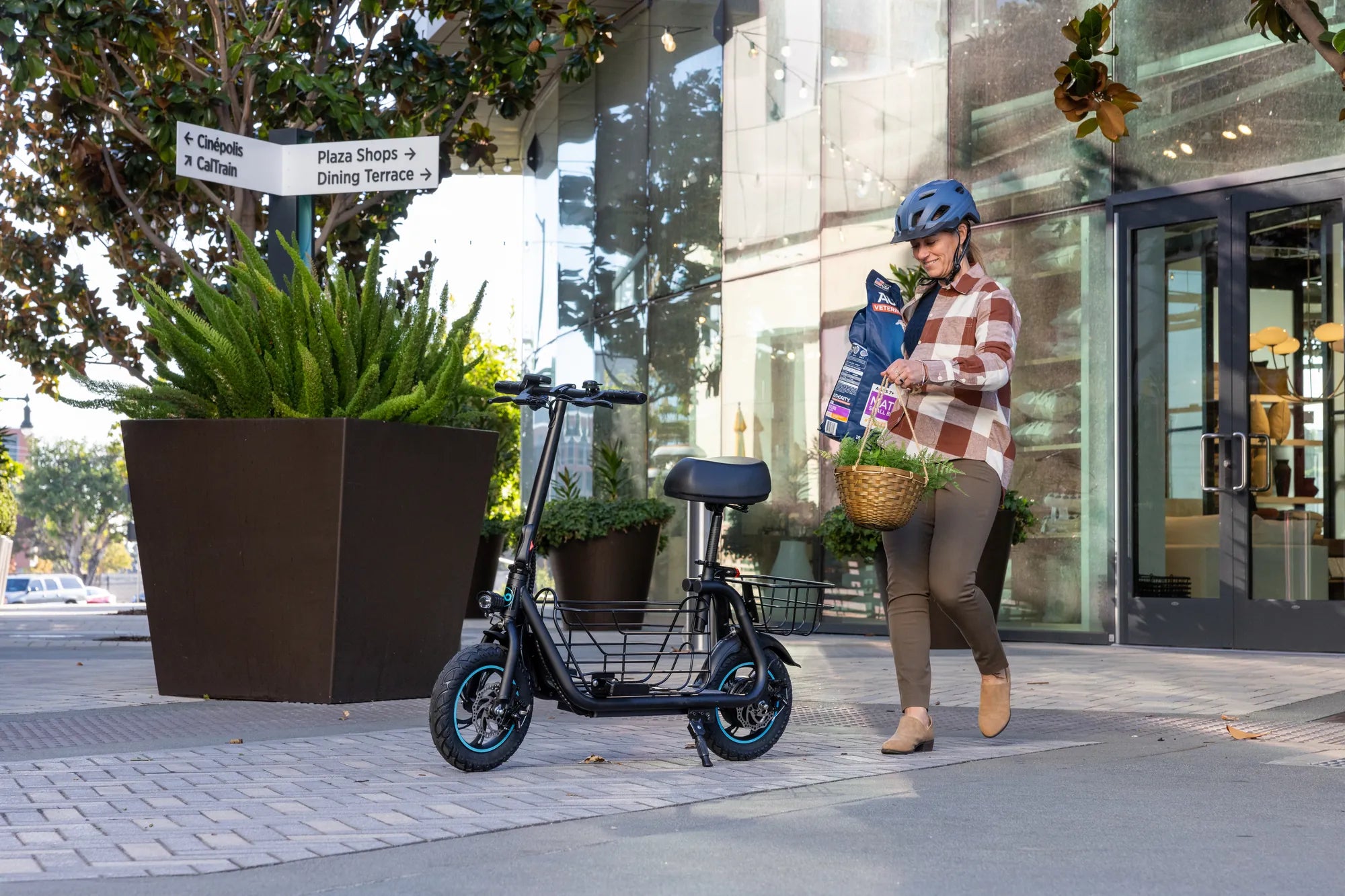
Forget gridlocked traffic and unpredictable bus schedules. The daily commute is undergoing a quiet revolution, powered by two wheels and a battery. Electric scooters for commuting represent more than a trendy gadget; they are a fundamental shift towards efficient, personal micro-mobility. This guide will dissect the anatomy of the perfect commuter scooter, quantify the tangible benefits of making the switch, navigate the crucial landscape of safety and law, and provide a clear roadmap for choosing a reliable model that fits your urban life. We’ll ground our analysis in practical data and feature insights from Gyroor, a leader in the space trusted by over 100,000 riders for its focus on safety-certified components and durable design.
The Anatomy of a Perfect Commuter Scooter: Key Features to Prioritize
Choosing an electric scooter for a daily commute isn't about finding the fastest or flashiest model. It's about identifying the tool that delivers consistent, reliable, and safe performance for your specific urban environment. The right combination of features turns a novelty into a legitimate transportation solution.
Range & Battery Life: Getting There and Back
Advertised range is a best-case scenario, often tested under ideal conditions. Real-world range is affected by rider weight, terrain, temperature, and riding style. For a reliable commute, your scooter's real-world range should comfortably exceed your round-trip distance by at least 30-40%. This buffer accounts for detours, headwinds, and battery degradation over time.
A 10-mile round-trip commute demands a scooter with a realistic 15-mile range. The heart of this capability is the battery. Prioritizing models with UL-certified battery packs, like those used by Gyroor, is non-negotiable for safety. These certified batteries undergo rigorous testing for stability and longevity, typically supporting 500+ charge cycles while minimizing risks of overheating or failure.
Portability & Weight: The Last-Mile Connection
The true power of an electric scooter for commuting shines in multi-modal travel. A lightweight, quickly foldable design allows you to seamlessly transition from scooter to subway or bus. Weight is critical if you need to carry it up stairs to an office or apartment.
Ultra-portable models weigh under 30 lbs, but may trade some power and suspension. Heavier performance models (40-50 lbs) offer more stability and power but are less ideal for frequent carrying. The best commuter scooter strikes a balance, offering a robust one-click folding mechanism and a manageable weight that fits your physical limits and storage space at work.
Power & Hill Climbing: Conquering Urban Inclines
Motor power, measured in watts, dictates acceleration and hill-climbing ability. A 250W motor is sufficient for flat terrain. For cities with bridges or hills, a 350W to 500W motor is recommended. Dual-motor setups provide exceptional torque for steep grades but consume battery faster.
Torque is the key metric for hill climbing. A scooter with high torque will maintain speed on an incline without straining the motor. Test specifications for grade climbing ability—a reliable commuter scooter should handle a 15-20% grade. Underpowered scooters will slow to a crawl on hills, disrupting traffic flow and your schedule.
Durability & Weather Resistance: Built for the Real World
Daily use demands a rugged build. Look for a frame constructed from aerospace-grade aluminum. Tire choice is crucial: pneumatic (air-filled) tires offer a smoother ride and better traction but risk punctures. Solid or honeycomb tires eliminate flats but provide a harsher ride.
Suspension systems (spring or hydraulic) greatly improve comfort on rough pavement. Weather resistance is rated by the IP (Ingress Protection) code. An IPX5 rating, a standard on Gyroor commuter models, means the scooter is protected against water jets from any direction. This allows you to confidently ride on wet streets or in light rain, ensuring your commute isn't canceled by a drizzle.
The Tangible Benefits: Why Your Commute Needs an E-Scooter
The case for adopting an electric scooter for commuting is built on measurable advantages in cost, time, and environmental impact. Moving beyond concept to calculation reveals a compelling personal and civic value proposition.
Cost Savings: A Financial Breakdown
The upfront cost of a quality scooter is offset rapidly by eliminating daily expenses. Consider a 5-mile each way commute. A car costs approximately $0.60 per mile (AAA estimate including fuel, maintenance, insurance, depreciation), or $12 per day. Public transit might cost $5-$10 daily. Ride-sharing could exceed $25 daily.
A mid-range electric scooter costs around $800. Electricity to charge it is negligible—roughly $0.10 for a full charge. With minimal maintenance, the cost-per-mile is cents. The scooter pays for itself in 4-6 months compared to ride-sharing, or in 8-10 months compared to driving and parking. Annual savings can easily surpass $2,000, representing a high-return personal infrastructure investment.
Time Efficiency & Predictability
Time is a non-renewable resource. Electric scooters provide point-to-point travel, eliminating wait times for buses or trains. They can legally use bike lanes, bypassing car traffic. The result is a consistent, predictable commute duration.
An unpredictable 30-60 minute car commute can become a reliable 20-minute scooter ride. App connectivity for route planning and diagnostics, featured on many modern scooters, adds a layer of smart efficiency. You gain control over your schedule, reducing the stress of variable travel times.
Environmental Impact: Reducing Your Carbon Tireprint
Transportation is a major source of urban CO2 emissions. A single-occupancy car emits roughly 0.96 lbs of CO2 per mile. For a 10-mile daily commute, that's over 2,400 lbs of CO2 annually. An electric scooter, charged on the average U.S. grid, is responsible for about 0.05 lbs of CO2 per mile—a 95% reduction.
Beyond tailpipe emissions, scooters have a vastly smaller manufacturing footprint than cars. They reduce traffic congestion, which lowers aggregate emissions from all vehicles. Adopting an electric scooter for commuting is one of the most effective individual actions to decrease urban transportation emissions and noise pollution.
Navigating Safety and Regulations: A Responsible Rider's Guide
Safe and legal operation is the foundation of sustainable micro-mobility adoption. Understanding and adhering to best practices and local laws protects you, pedestrians, and the reputation of this new transportation mode.
Essential Safety Gear and Riding Practices
A certified bicycle or multi-impact helmet is the absolute minimum safety requirement. Wrist guards, knee pads, and elbow pads are highly recommended, especially for new riders. Your scooter must have front and rear lights, and reflective clothing increases visibility at night.
Practice defensive riding: assume cars do not see you. Never use headphones. Maintain a safe speed for conditions, especially in crowded areas. Use hand signals for turns. Regularly check your brakes, tire pressure, and light functionality. Proper posture—feet staggered, knees slightly bent—improves control.
Understanding Local Laws and Where to Ride
Regulations vary significantly by city and state. Common rules include: a minimum rider age (often 16+), speed limits (15-20 mph in bike lanes), power caps (often 750W), and a ban on sidewalk riding in business districts. Helmet laws vary; wearing one is always wise.
Always check your city's Department of Transportation website. The ideal riding hierarchy is: protected bike lane > standard bike lane > slow residential street > sidewalk (only if legal and ridden at walking speed while yielding to all pedestrians). Riding responsibly in designated areas ensures better relations with the community and policymakers.
Maintenance and Care: Ensuring Long-Term Reliability
Treating your e-scooter as a vehicle, not a toy, is key to its longevity and safety. A simple, consistent maintenance routine prevents major issues and ensures optimal performance for your daily electric scooter commute.
Battery Care and Charging Best Practices
To maximize the lifespan of your UL-certified battery, avoid draining it to 0% regularly. Try to recharge when it drops to 20-30%. Use only the manufacturer-provided charger. Store the scooter in a cool, dry place, and avoid leaving it at full charge for extended periods (weeks). If storing long-term, maintain a 50-60% charge.
Extreme cold temporarily reduces range; store the scooter indoors when possible in winter. Extreme heat can damage the battery permanently; never leave it in a hot car. Following these steps helps achieve the full 500+ charge cycle potential.
Mechanical Checks and Troubleshooting
Conduct a pre-ride check: tire pressure and condition, brake lever tension and pad wear, bolt tightness (especially on folding mechanisms and stem), and light operation. Lubricate the folding mechanism and brake pivots periodically with appropriate lubricants.
For pneumatic tires, carry a small repair kit. Listen for unusual noises from motors or bearings. Keep the deck clean and free of debris. Most issues are addressed under a comprehensive warranty, like Gyroor's 1-year coverage, but basic upkeep is the owner's responsibility and is simple to learn.
Choosing Your Commuter: A Gyroor Model Comparison for Different Needs
With core principles established, selecting a specific model becomes a matter of matching features to your commute profile. Gyroor's lineup, built around UL-certified batteries and IPX5 water resistance, offers clear options for different urban riders.
For the Compact-City Commuter: Short Distances, Max Portability
This rider needs a scooter for trips under 4 miles each way, with frequent folding for mixed-mode transit. The priority is light weight and a compact fold. A model with a 300W motor, real-world 12-mile range, and a weight under 30 lbs is ideal. Gyroor's emphasis on a robust folding latch and reliable battery in this category ensures the scooter withstands daily use without becoming a burden.
For the Suburban Explorer: Longer Range, More Power
This rider faces a 6-10 mile each way commute, possibly with hills. Range anxiety is a real concern, demanding a larger battery. A 500W+ motor, dual suspension for comfort on longer rides, and a real-world range of 20+ miles are essential. The IPX5 rating ensures all-weather capability, and the UL-certified battery provides peace of mind for daily deep-cycle use.
Feature Comparison Table: Gyroor Commuter Series
| Model Type | Max Real-World Range | Top Speed | Weight | Motor Power | Key Commuter Feature |
|---|---|---|---|---|---|
| Urban Lightweight | 12-15 miles | 15 mph | 28 lbs | 300W | Ultra-Fast 3-second Fold, LED Display |
| All-Terrain Commuter | 22-25 miles | 19 mph | 42 lbs | 500W | Dual Suspension, 10" Pneumatic Tires |
| Performance Explorer | 28-32 miles | 24 mph | 48 lbs | 600W Dual Motor | Exceptional Hill Climb, Extended Range Battery |
The Broader Impact: E-Scooters and the Future Cityscape
The widespread adoption of electric scooters for commuting has implications beyond the individual rider. It is a catalyst for urban redesign, pushing cities to reconsider infrastructure and prioritize people over vehicles.
Cities like Paris and Barcelona have seen significant reductions in car traffic in zones with robust micro-mobility networks. This shift reduces noise pollution, frees up parking spaces for community use, and improves air quality. The demand for safe riding forces municipalities to accelerate the development of connected, protected bike lane networks.
This transition supports the "15-minute city" urban planning model, where daily needs are accessible within a short walk, bike, or scooter ride. Electric scooters fill the gap between walking distance and the range that justifies a car, making this model more feasible. They are a key piece of a multi-modal transportation ecosystem that includes walking, cycling, and public transit.
Frequently Asked Questions (FAQ) for New Commuter Riders
Q: How do I safely store my e-scooter at work?
A: If possible, fold it and store it under your desk or in a personal closet. Some workplaces have designated micro-mobility parking. Use a sturdy lock if locking it outside is unavoidable, securing the frame to a fixed object. Never block fire exits or pathways.
Q: Is the 1-year warranty comprehensive?
A> A reputable warranty, like Gyroor's, typically covers defects in materials and workmanship for the frame, motor, battery, and controller for one year from purchase. It does not cover damage from accidents, misuse, neglect, or normal wear items like tires and brake pads. Always read the warranty terms.
Q: Can I ride my IPX5-rated scooter in heavy rain?
A> IPX5 protects against water jets, making it safe for wet roads and light rain. It is not designed for submersion or torrential downpours. Riding through deep puddles can damage electronics. In heavy rain, seek alternative transport to protect your investment and safety.
Q: What is the most common maintenance task?
A> Regularly checking and maintaining proper tire pressure is crucial. Under-inflated tires increase rolling resistance (reducing range), cause uneven wear, and make the scooter harder to control. Over-inflated tires lead to a harsh ride and increased puncture risk. Invest in a good pressure gauge.
Q: How do I know when the battery needs replacing?
A> Significant loss of range is the primary indicator. If your scooter once completed your 10-mile commute but now struggles at 6 miles, the battery is likely degrading. Also watch for the battery not holding a full charge or the charge indicator behaving erratically. Replace only with a manufacturer-approved, UL-certified battery.
Conclusion: Your Smarter, Greener Commute Awaits
The evidence is clear: electric scooters for commuting offer a superior alternative for a significant portion of urban and suburban travel. They deliver unmatched efficiency, quantifiable savings, and a tangible reduction in environmental impact. The future of urban transportation is not about a single technology replacing the car, but about a diverse ecosystem of options where the electric scooter plays a starring role for short-to-medium distance trips. Success hinges on choosing a reliable partner built with safety-certified components, durable construction, and designed for the realities of daily use. This shift represents a practical step towards reclaiming your time, your money, and your city's streets.
Ready to transform your commute? Explore engineering built for the daily journey. Browse the full Gyroor collection of UL-certified, IPX5-rated commuter scooters and e-bikes at gyroorboard.com.
Electric Scooters for 11 Year Olds: A Safe and Fun Ride Guide
3 Wheel Electric Scooters for Adults: The Ultimate Guide to Safe and Efficient Commuting