



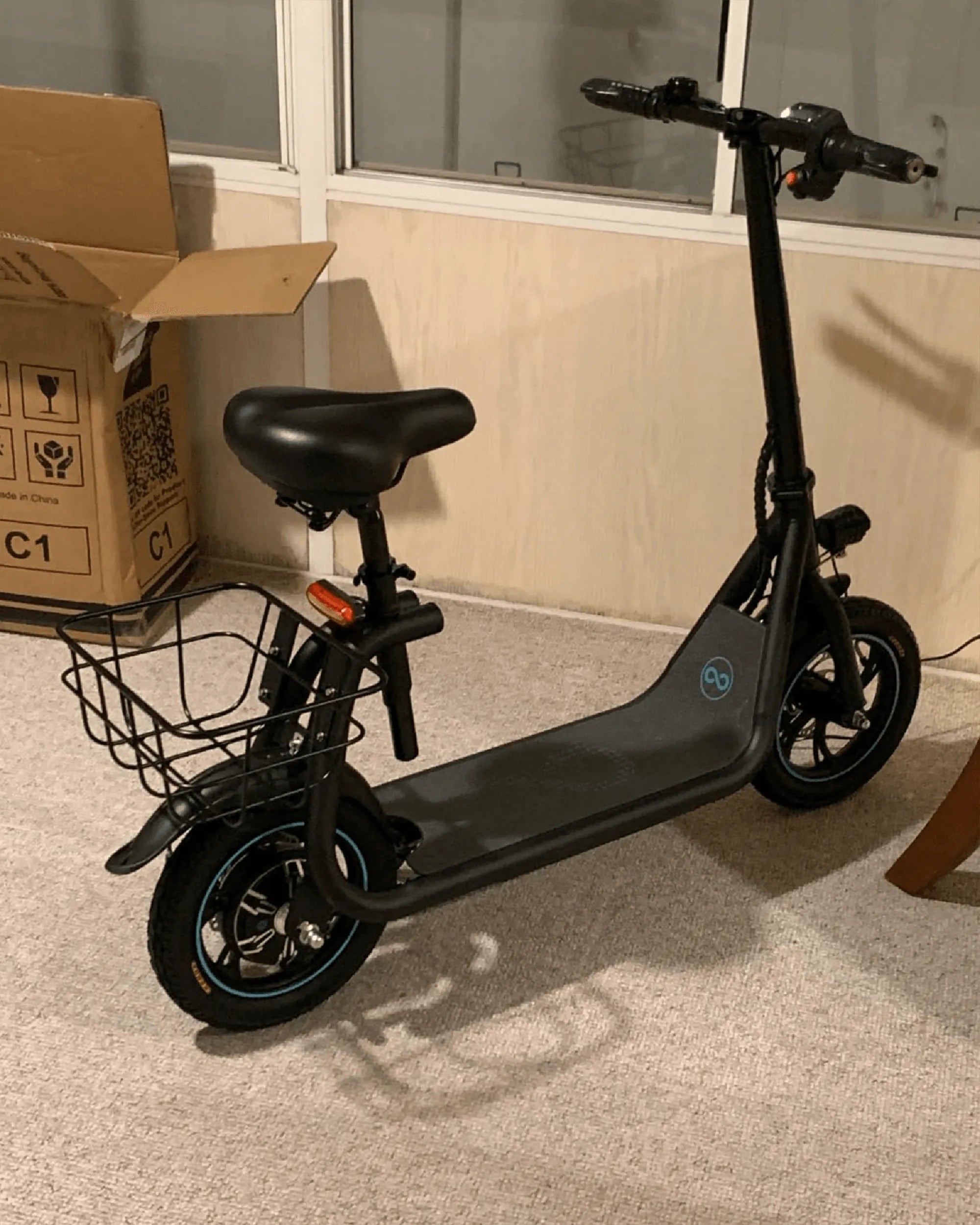
Redefining the Urban Commute
The urban commute is broken. Congestion, soaring costs, and environmental strain plague traditional transportation. A new, efficient solution has emerged not as a gadget, but as a legitimate vehicle: the road-legal electric scooter. This article explores how Electric Scooters for Road Use: The Future of Urban Mobility is becoming a reality, shifting from recreational use to a dependable, primary commuting option. You will learn what defines a truly road-worthy scooter, how it compares economically and environmentally to cars and transit, and how to navigate regulations safely. We'll examine the engineering that makes daily use feasible, focusing on the standards that separate serious commuter vehicles from toys.
The evolution is clear. Early electric scooters served short, last-mile trips. Today's advanced models are engineered for the main mile. They integrate into traffic flow, comply with local vehicle codes, and offer a reliable, sweat-free alternative for trips from 3 to 15 miles. This represents a fundamental shift in urban mobility infrastructure. Cities are adapting with dedicated lanes and parking, while riders gain unprecedented autonomy over their daily travel.
This transformation is powered by significant technological advancements. Modern motors, battery management systems, and robust construction have elevated the electric scooter's capabilities. Brands leading this charge, like Gyroor, focus on building vehicles, not toys. With over 100,000 riders across North America and Europe, Gyroor's approach centers on UL-certified safety, IPX5 water resistance, and comprehensive warranties. These features form the bedrock of a scooter you can trust on city roads, day after day.
The future of urban mobility is lightweight, electric, and personal. Electric scooters for road use sit at the forefront, offering a tangible solution to gridlock. They promise a faster, cheaper, and greener commute. Understanding the specifications, safety, and smart ownership practices is key to unlocking this future. Let's delve into what makes a scooter truly belong on the road.
What Makes an Electric Scooter "Road-Worthy"?
Not all electric scooters are created equal, especially when it comes to street legality and safety. A road-worthy scooter is a vehicle designed to coexist with urban traffic, adhering to specific legal and mechanical standards. The core distinction lies in its construction for predictable, safe operation in a public right-of-way, not just on private paths or sidewalks.
Legally, road-worthiness is defined by municipal and state regulations. Common requirements include a maximum speed limit (often 15-20 mph for bike lane use), functional lighting systems (front headlight, rear brake light, and sometimes side reflectors), and an audible warning device like a bell. Some jurisdictions mandate specific brake types, helmet use for certain ages, and prohibit sidewalk riding entirely. A true road scooter is built to meet or exceed these common baseline requirements.
Engineering for the road diverges sharply from recreational design. It prioritizes durability, stability, and communication. The frame must absorb vibrations from imperfect asphalt over thousands of cycles. The electrical system requires protection from rain and road spray. Components like brakes and tires are sized and specified for the higher stresses and safety demands of street riding, where stopping distance can be critical.
Ultimately, road-worthiness is a combination of compliance and capability. It's the difference between a product that is merely allowed on certain paths and one that is actively engineered to be a safe, reliable, and legal participant in urban traffic. This engineering philosophy is what separates commuter-focused brands from the rest of the market.
Key Safety Features for Street Riding
When sharing space with cars and cyclists, specific safety features transition from nice-to-have to non-negotiable. These systems protect the rider and make their intentions clear to others.
A dual or triple braking system is paramount. This often includes a front electronic anti-lock braking system (eABS) to prevent wheel lock-up and skidding, combined with a rear disc or drum brake. This redundancy ensures stopping power remains effective even if one system is compromised, a critical factor on wet roads.
Lighting and signaling are your communication tools. An ultra-bright headlight (500 lumens or more) illuminates the road ahead, while a dedicated brake light alerts traffic behind you when slowing. Increasingly, integrated electric turn signals are becoming a standard feature on road-worthy models, providing clear directional intent without requiring a hand signal.
Tire choice dramatically impacts safety and comfort. Wide, air-filled (pneumatic) tires, typically 10 inches in diameter or larger, provide essential shock absorption from potholes and cracks. They also offer superior traction and stability compared to smaller solid tires, especially on wet or uneven surfaces, making them a hallmark of scooters designed for serious road use.
The Gyroor Advantage: Engineered for the Daily Grind
In a market filled with options, Gyroor distinguishes itself by building electric scooters with the daily commuter as the primary user. This focus translates into a design and specification philosophy that directly addresses the rigors of road use. Every component, from the battery pack to the deck seal, is selected and tested for reliability, safety, and longevity on urban asphalt.
The brand's commitment is evidenced by its trust metrics: a 4.5/5 average customer rating from over 100,000 riders and a robust 1-year comprehensive warranty. This isn't incidental; it's the result of prioritizing core engineering principles that align perfectly with the requirements for road-worthiness. Gyroor scooters are built not just to perform on day one, but to endure the daily grind for years.
This engineering mindset considers real-world variables. It accounts for the rider who encounters a sudden downpour, the pothole that can't be avoided, and the need for consistent power delivery up a steep hill. By solving for these scenarios in the design phase, Gyroor creates vehicles that inspire confidence, turning a commute from a stressful chore into an enjoyable, efficient journey. Let's examine the specific technologies that enable this.
UL-Certified Power: Safety You Can Trust
The battery is the heart of an electric scooter and its most critical safety component. Gyroor's use of UL-certified battery packs is a fundamental differentiator. UL certification involves rigorous independent testing for electrical, mechanical, and fire safety. This means the battery's cells, management system, and enclosure are proven to prevent overcharging, short-circuiting, and thermal runaway—the primary causes of lithium-ion battery fires.
For the road commuter, this certification is not a luxury; it's a necessity. It ensures safety when charging at home overnight or in an office. Furthermore, UL-certified batteries are engineered for longevity, typically rated for 500+ full charge cycles while maintaining significant capacity. This translates to years of reliable range, preventing the performance degradation that can strand a rider. It's the foundation of a scooter you can depend on as a true vehicle.
Built to Endure: IPX5 Water Resistance & Robust Design
Urban weather is unpredictable. A road-worthy scooter must be ready for it. Gyroor's IPX5 water-resistant rating means the scooter's critical electrical components can withstand sustained water jets from any direction. In practical terms, this protects against heavy rain, road spray from wet streets, and accidental splashes, ensuring the scooter won't fail due to moisture ingress.
This resilience extends to physical construction. Frames are built from high-grade aluminum or reinforced steel, capable of handling the constant vibrations and occasional impacts of city roads. Deck coatings provide firm grip, and folding mechanisms are robust and secure. This durable design philosophy ensures the scooter remains a reliable asset through seasons of use, embodying the true spirit of a vehicle built for road use.
Confidence on Your Commute: The 1-Year Comprehensive Warranty
A strong warranty is a brand's promise of quality. Gyroor's 1-year comprehensive warranty on the motor, battery, controller, and frame directly reduces rider anxiety. It signals that the company stands behind its products as durable goods, not disposable electronics. For the commuter investing in a scooter as primary transport, this warranty is a safety net, covering defects in materials and workmanship.
This commitment is bolstered by accessible, US-based customer support. Should an issue arise, riders have a clear path to resolution. This ecosystem of product and support creates a ownership experience focused on long-term reliability, making the decision to replace a car trip with a scooter ride a confident and sustainable one.
Data-Driven Comparison: Scooter vs. Traditional Commute
To understand the transformative potential of electric scooters, a concrete comparison with traditional modes is essential. The following data, based on a typical 5-mile one-way urban commute, illustrates the compelling advantages.
| Factor | Electric Scooter (e.g., Gyroor Commuter Model) | Personal Car (Sedan) | Public Transit (Bus/Subway) |
|---|---|---|---|
| Door-to-Door Time | ~20-25 minutes | ~30-45 minutes (with traffic/parking) | ~40-60 minutes (incl. walk/wait time) |
| Cost per Trip (5 mi) | ~$0.05 (electricity) | ~$3.50 (fuel, deprec., parking*) | ~$2.50 - $5.00 (fare) |
| Annual Cost (250 days) | ~$25 | ~$1,750+ | ~$1,250 - $2,500 |
| CO2 Emissions per Trip | ~0.2 kg** | ~2.0 kg | ~0.5 kg (shared burden) |
| Parking Hassle | Minimal (compact) | High (cost/availability) | N/A |
| Route Flexibility | High (bike lanes, some roads) | Moderate (traffic-dependent) | Low (fixed routes/stops) |
*Estimates include national average fuel cost, depreciation, and average downtown parking fee. **Based on US grid average electricity generation.
Cost Per Mile Analysis
The economic argument for electric scooters for road use is staggering. The primary cost is electricity, averaging about $0.01 per mile. Maintenance costs are limited to occasional tire replacements and brake pad changes, amounting to perhaps $50 annually for a frequent rider. Contrast this with a car's cost per mile, which the AAA estimates can exceed $0.70 when factoring in fuel, insurance, maintenance, depreciation, and parking. For a daily 10-mile commute, this translates to $7/day for a car versus $0.10 for a scooter, saving thousands annually.
Time Efficiency in Urban Cores
In dense city centers, scooters often provide the fastest point-to-point travel. They bypass standstill traffic, utilize bike lanes and shared paths, and eliminate the "last-mile" problem from transit stops. Parking is instantaneous at bike racks or designated scooter parking, removing the 5-15 minute search for a car space. This time savings, compounded daily, reclaims hours per month for the rider, enhancing productivity and reducing commute-related stress.
Carbon Footprint: The Environmental Impact
Even when charged from the standard electrical grid, a modern electric scooter emits a fraction of the greenhouse gases of a gasoline car. Over a year, replacing a 10-mile daily car commute with a scooter can reduce an individual's transportation carbon footprint by over 500 kg of CO2. As grids become greener, this benefit amplifies. Furthermore, scooters reduce local air pollutants (NOx, particulates) and noise pollution, contributing directly to healthier, quieter cities.
Navigating Local Regulations: A Rider's Responsibility
Operating a road-legal electric scooter comes with the responsibility to know and follow local laws. Regulations are not uniform; they vary significantly by city, county, and state. Ignorance is not an excuse and can result in fines or confiscation of the scooter. A proactive rider treats understanding these rules as part of the ownership process.
Key areas to research include: Where you can ride: Most cities prohibit sidewalk riding and restrict scooters to bike lanes, shared paths, or roads with speed limits at or below 25-35 mph. Speed limits: Many jurisdictions impose a maximum speed for e-scooters, often 15-20 mph. Some scooters, including certain Gyroor models, offer speed modes to ensure compliance. Helmet laws: These vary by age and location. Even if not legally required for adults, wearing a helmet is the single most effective safety practice. Age minimums: Operators are typically required to be 16 or 18 years old. Equipment mandates: Lights (front white, rear red) are almost universally required for night riding; a bell or horn is common.
To stay compliant, start by searching for "[Your City Name] electric scooter laws" or checking your local Department of Transportation website. Ride defensively, signal your intentions, and yield to pedestrians. By being a lawful and courteous rider, you not only ensure your own safety but also help build positive public perception for this new mode of urban mobility.
Maximizing Your Ride: Safety and Maintenance Tips
Owning a road-worthy scooter is the first step; maintaining it and riding smartly ensure its longevity and your safety. Adopting a few key habits transforms you from a casual user into a savvy commuter.
Pre-ride checks should become second nature. Before each trip, inspect tire pressure (for pneumatic tires), test brake function, ensure lights are working, and verify the folding mechanism (if present) is locked securely. A quick 30-second inspection can prevent most mechanical failures on the road.
Riding defensively is crucial. Assume cars may not see you. Make eye contact with drivers at intersections. Avoid riding in a driver's blind spot. Use hand signals or electronic turn signals well in advance of a turn. Stick to designated lanes where available, and never ride against traffic. Your vigilance is your best protective gear alongside your helmet.
Proper maintenance extends scooter life. Keep the scooter clean, especially after wet rides, to prevent grit from damaging moving parts. Check and tighten bolts periodically, as vibrations can loosen them. Store the scooter in a dry, temperate place when not in use. Follow the manufacturer's guidelines for battery care: avoid leaving it at 0% or 100% charge for extended periods, and use only the provided charger.
FAQ: Electric Scooters for Road Use
Q: Are Gyroor electric scooters legal on city streets?
A: Gyroor designs its scooters to meet common road-legal specifications like lighting, speed capabilities, and reflectors. However, final legality is determined by your local laws regarding vehicle classification, speed limits, and required equipment. It is the rider's responsibility to check and comply with municipal and state regulations. Models with features like turn signals and robust braking systems are built to satisfy stricter ordinances.
Q: What is the real-world range I can expect on roads with stops and hills?
A> Manufacturer ranges are based on ideal lab conditions. Real-world range is affected by rider weight, hill frequency, stop-and-go traffic, temperature, and tire pressure. A scooter rated for 25 miles may reliably achieve 18-22 miles for a 180 lb rider in a city with moderate hills. To ensure your commute is covered, choose a scooter with a rated range at least 40% longer than your round-trip distance.
Q: How do I maintain my scooter for daily road use?
A> Regular maintenance is simple but vital. Monthly: Check and inflate pneumatic tires to the recommended PSI. Inspect brake pads for wear and adjust cable tension if needed. Every 3-6 months: Check all frame and stem bolts for tightness. Clean the deck and undercarriage to remove debris. Annually: Have a professional or experienced individual check bearing wear and the integrity of the electrical connections. Always keep it charged and store it indoors.
Q: Is riding an electric scooter on the road safe?
A> Safety is a combination of vehicle quality, rider behavior, and infrastructure. A road-worthy scooter with dual brakes, bright lights, and wide tires provides a safe platform. Rider safety is dramatically increased by always wearing a helmet, following traffic laws, riding defensively, and using bike lanes where available. While risks exist as with any form of transport, proper gear and prudent riding mitigate them significantly.
Q: Can I ride my electric scooter in the rain?
A> Scooters with a high water resistance rating (like IPX5) are designed to withstand rain and wet roads. However, caution is required. Braking distances increase on wet surfaces, visibility decreases, and painted road markings become slippery. Reduce speed, avoid sharp turns, and do not ride through deep puddles that could submerge the deck. Even with a water-resistant model, it's best to dry the scooter off after a wet ride.
Your Road to Smarter Urban Mobility
The evidence is conclusive: a well-engineered electric scooter is more than a fun diversion; it's a legitimate, efficient, and sustainable urban vehicle. Electric Scooters for Road Use: The Future of Urban Mobility is not a speculative headline—it's a present-day reality for a growing number of commuters. The combination of direct cost savings, time efficiency, and environmental benefit creates a compelling case for integrating this mode of transport into daily life.
This future is built on a foundation of safety and reliability. It requires scooters engineered with UL-certified batteries, water-resistant durability, and warranties that back their road-worthiness. It demands informed riders who understand local laws and practice defensive riding. When these elements align, the personal electric vehicle becomes a transformative tool for reclaiming time, money, and peace of mind from the congested urban commute.
The journey toward smarter cities is personal. It begins with a single decision to choose a mode of transport that aligns with modern needs. By selecting a scooter designed for the demand of the road, you invest in your own freedom and contribute to a less congested, cleaner urban environment. The road ahead is clear, efficient, and electric.
Ready to transform your commute? Explore Gyroor's range of UL-certified, road-ready electric scooters engineered for durability and safety. Find the model that matches your distance and terrain, and join over 100,000 riders who have chosen a smarter way to move. Browse the full Gyroor collection at gyroorboard.com.
Electric Scooters in Nottingham: The Future of Urban Mobility
Safe Electric Scooters for Toddlers: A Parent's Guide to Choosing the Best Ride