

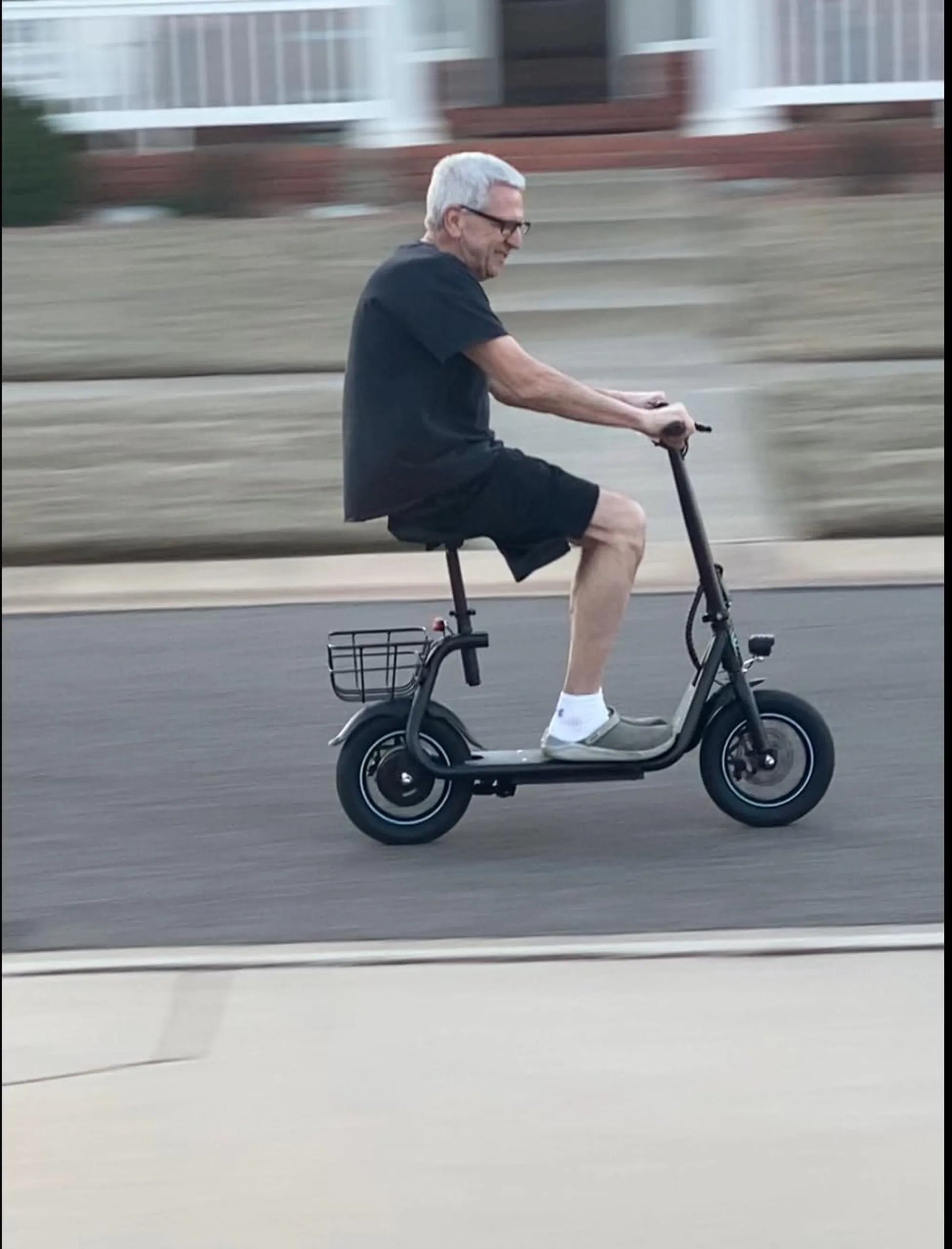
Introduction: Malta's Urban Mobility Revolution
Malta faces unique transportation challenges. Its historic urban centers, like Valletta and Mdina, feature narrow, winding streets not designed for modern car traffic. Congestion in Sliema, St. Julian's, and the central belt is a daily reality, compounded by limited parking and a high volume of tourist vehicles. Electric scooters in Malta are emerging not as a novelty, but as a critical, practical solution to these persistent problems.
These compact, electric-powered vehicles offer an efficient way to navigate dense urban environments. They provide a direct answer to the first-and-last-mile connectivity gap with buses and ferries. For residents and visitors alike, the adoption of personal electric mobility represents a shift towards more sustainable, flexible, and cost-effective urban travel. The future of urban mobility on the islands is being reshaped by two wheels and a quiet electric motor.
This article will provide a complete analysis of the e-scooter landscape in Malta. We will dissect the current legal regulations, examine why e-scooters are uniquely suited to Maltese life, and offer a detailed guide for choosing the right model. We will also explore the role of reputable brands like Gyroor, a leader known for UL-certified batteries and robust designs trusted by over 100,000 riders, in providing safe and reliable options for this market.
The Legal Landscape: Riding an E-Scooter in Malta
Transport Malta regulates the use of electric scooters under the ‘Powered Transporters’ framework. Understanding these rules is essential for safe and legal riding. The core principle is that e-scooters are treated similarly to bicycles in many contexts, but with specific restrictions to ensure public safety.
Riders must be at least 16 years old. Helmets are strongly recommended for all riders and are legally mandatory for those under 18. The use of lights – white at the front and red at the rear – is required for night-time riding or in poor visibility. Reflectors are also a legal necessity.
Insurance for privately-owned e-scooters is not currently a legal requirement in Malta, unlike in some other EU nations. However, third-party liability insurance is highly advisable to protect against potential claims in case of an accident. Riders are subject to the same rules of the road as cyclists, meaning they must not ride under the influence of alcohol or drugs.
Key Regulations to Know Before You Ride
Where you can and cannot ride is clearly defined. Electric scooters are permitted on bicycle lanes and tracks. They are also allowed on roads with a speed limit of 40km/h or less, provided they keep to the far-left side.
Critical prohibitions include sidewalks, pedestrian zones, and promenades. Riding in these areas can result in fines. The maximum designed speed of the e-scooter should not exceed 25km/h, though local enforcement typically focuses on the actual speed of the rider in context.
For tourist rentals, different rules may apply through specific operator permits in designated zones. Always verify the terms with the rental company. Ultimately, responsible riding that prioritizes pedestrian safety is the best way to ensure a positive future for electric scooters in Malta.
Why an Electric Scooter is Ideal for Maltese Life
The advantages of owning an e-scooter in Malta are multifaceted and directly address the islands' specific pain points. The most immediate benefit is the drastic reduction in commute time within urban areas. A journey from Gzira to Valletta that could take 30 minutes in traffic can be completed in under 10 minutes on an e-scooter, bypassing stationary cars.
Financial savings are substantial. Compared to car ownership (purchase, insurance, fuel, maintenance, parking fees) or daily ride-hailing services, an e-scooter offers an extremely low cost per kilometer. Parking transforms from a daily frustration to a non-issue, as e-scooters can be securely parked in minimal space.
From an environmental perspective, electric scooters in Malta contribute to cleaner air and reduced noise pollution. For a small island nation with urban air quality concerns and a commitment to EU sustainability goals, shifting short trips from internal combustion engines to zero-local-emission vehicles is a significant positive step.
The convenience for daily errands, commuting to work or university, or exploring leisure destinations is unparalleled. It offers a sense of freedom and flexibility that is often lost in Malta's congested transport network, making electric scooters in Malta a key part of the future of urban mobility.
Conquering Malta's Terrain: Performance Considerations
Malta's topography and infrastructure demand specific scooter features. The islands are not flat; navigating the slopes of Sliema, Msida, or parts of Rabat requires adequate motor power and torque.
A motor with a continuous rating of at least 350W is recommended for handling typical Maltese inclines with a single rider. Models with 500W or dual-motor setups provide effortless hill-climbing capability. This power directly impacts the practicality of using an e-scooter for daily commutes that involve hills.
Cobblestone streets and varied road surfaces necessitate good suspension and tire choice. Air-filled (pneumatic) tires or models with dual suspension absorb vibrations far better than small, solid tires, providing a safer and more comfortable ride on historic or poorly maintained roads.
Finally, the coastal Mediterranean climate requires robust construction. Look for a high Ingress Protection (IP) rating for water and dust resistance. An IPX5 rating, like that found on Gyroor scooters, means the scooter can withstand water jets from any direction, protecting it from sudden summer showers and road spray. Corrosion-resistant materials are also vital for longevity in a salty atmosphere.
Choosing the Right Electric Scooter for Malta: A Buyer's Guide
Selecting an e-scooter should be driven by your primary use case. The Maltese market caters to distinct rider profiles, each with different needs. A university student in Msida needs a portable, cost-effective model for short trips. A commuter traveling from Swieqi to St. Julian's requires more range, power for hills, and durability.
The leisure explorer or tourist might prioritize comfort, range for day trips, and a smooth ride for coastal paths. Identifying your profile is the first step. The following table compares key specifications for different use cases, highlighting the features that matter most for electric scooters in Malta.
| Rider Profile | Recommended Range | Motor Power | Key Features | Terrain Focus |
|---|---|---|---|---|
| Urban Student/Short Commuter | 15-25 km | 250W-350W | Lightweight, foldable, budget-friendly | Flat to moderate hills, paved roads |
| Daily Commuter (5-10km each way) | 30-50 km | 350W-500W+ | Dual suspension, pneumatic tires, good water resistance | Mixed hills, varied road surfaces |
| Leisure Explorer / Power User | 40-70 km+ | 500W Dual Motor | Long-range battery, superior suspension, enhanced braking (disc), high IP rating | Steep hills, longer coastal routes |
Beyond the table, consider real-world range, not just manufacturer claims. Hills, rider weight, and riding style can reduce range by 30-40%. Always factor in a safety buffer. Portability, measured by folded dimensions and weight, is crucial if you plan to carry it into offices, shops, or onto public transport.
The Safety & Reliability Checklist
Safety is the non-negotiable foundation of e-scooter ownership. This begins with the battery. Insist on UL-certified or similarly internationally recognized battery packs. These have undergone rigorous testing for thermal stability, overcharge protection, and durability, significantly reducing fire risk. Gyroor, for instance, uses UL-certified batteries tested for over 500 charge cycles.
Braking system performance is critical, especially on Malta's descents. A combination of electronic (regenerative) and mechanical (disc or drum) braking provides redundant stopping power. Disc brakes generally offer more consistent performance in varied conditions compared to drum brakes.
Build quality dictates longevity. A sturdy frame, secure folding mechanism, and quality wiring are essential. A minimum of IPX4 water resistance is advised, but IPX5 (protected against water jets) is the recommended standard for Malta's climate. Finally, a clear and accessible warranty from a reputable brand is not just a guarantee; it's a sign of the manufacturer's confidence in their product. A reliable 1-year warranty covering major components is a baseline expectation.
Gyroor in Malta: Engineered for Island Commuting
For riders seeking a balance of performance, safety, and durability, brands like Gyroor design products that align perfectly with Maltese demands. With a product range of over 20 models and a customer base of over 100,000 riders, their engineering focuses on core reliability factors.
The emphasis on UL-certified battery technology directly addresses safety concerns, providing peace of mind for home charging and daily use. The IPX5 water-resistant rating is a standout feature, ensuring scooters can handle Malta's occasional heavy downpours and coastal humidity without compromising electrical systems.
Models in their lineup often feature robust motors in the 350W to 500W range, suitable for local hills, paired with suspension systems and pneumatic tires designed to smooth out cobblestones and uneven pavements. This combination of hill-climbing power and ride comfort is specifically valuable for the Maltese context.
By offering a reliable 1-year warranty and building scooters with these mandatory features for challenging environments, Gyroor positions itself as a brand for serious commuters and explorers who view their electric scooter in Malta as a primary transport solution, not a toy. This engineering-first approach supports the sustainable future of urban mobility on the islands.
The Future of Mobility: E-Scooters and Malta's Infrastructure
The growing adoption of electric scooters in Malta will inevitably influence urban planning and infrastructure development. To fully realize their benefits and ensure safety, a proactive approach from authorities is needed. The most significant opportunity lies in the expansion and improvement of dedicated cycling and micro-mobility lanes.
Creating a more connected network of safe, continuous lanes separating riders from fast-moving traffic would encourage wider adoption. This could involve reallocating road space in congested corridors like the Regional Road or coastal arteries. Enhanced infrastructure is a direct investment in the future of urban mobility.
Integrated parking and charging hubs at key transport interchanges (e.g., ferry terminals, major bus stations, park-and-rides) would facilitate seamless multi-modal journeys. A rider could scoot to the Valletta ferry terminal, securely park and charge, then continue their journey by sea.
Public policy can further encourage this shift through incentives for private purchase of approved, safe models, or by integrating shared e-scooter schemes with the Tallinja card system for unified payment. As infrastructure evolves to accommodate micro-mobility, electric scooters in Malta will transition from an alternative to a mainstream component of a modern, efficient transport ecosystem.
FAQ: Electric Scooters in Malta
Q1: Do I need a license or insurance for a private e-scooter in Malta?
A1: No, a driving license is not currently required to ride a private e-scooter in Malta. Insurance is also not legally mandatory for private owners, but obtaining third-party liability insurance is highly recommended for financial protection.
Q2: Can I take my e-scooter on the Valletta ferry or a bus?
A2: Policies vary. The Valletta ferries generally permit folded e-scooters. Malta Public Transport (buses) typically allows folded e-scooters as luggage, at the driver's discretion, if space is available. It is always best to fold it and be courteous, especially during peak hours.
Q3: How do I maintain my scooter in Malta's salty, coastal environment?
A3: Regular maintenance is key. Wipe down the scooter with a damp cloth after riding near the sea to remove salt spray. Regularly check for corrosion on metal parts, especially the folding mechanism and brakes. Ensure tire pressure is correct. Store it in a dry place when not in use.
Q4: Where are the best places for leisure riding in Malta?
A4> Scenic leisure routes include the Sliema to St. Julian's coastal promenade (where riding is permitted), the quiet country lanes around Mgarr and the limits of Rabat, and the paved paths along parts of the Marsascala coast. Always verify that e-scooters are allowed on specific promenades.
Q5: What is the real cost of ownership for an e-scooter in Malta?
A5> Beyond the purchase price (€400-€1500+), the main costs are electricity for charging (extremely low, roughly €0.10 for a full charge), occasional tire replacements, and brake pad changes. Compared to a car, annual savings on fuel, parking, and insurance can be in the thousands of euros.
Embracing a Smarter Way to Move
The evidence is compelling: electric scooters in Malta offer a tangible solution to chronic congestion, high transport costs, and environmental pressures. They empower individuals with unprecedented flexibility for daily travel, turning tedious commutes into efficient, even enjoyable, journeys. The future of urban mobility on the islands is lightweight, electric, and personal.
This future, however, hinges on responsible choices. Selecting a well-engineered scooter from a reputable brand with proven safety credentials is an investment in your own safety and the longevity of your vehicle. Adhering to local laws and riding with respect for pedestrians and other road users is essential for fostering a positive culture around micro-mobility.
As Malta continues to evolve, integrating these vehicles into its transport planning will unlock greater efficiency. By choosing to ride an e-scooter, you are not just opting for convenience; you are participating in a practical movement towards a more sustainable and less congested Malta. The road ahead is clearer on two wheels.
Ready to explore Malta on two wheels? For a range of electric scooters built with UL-certified battery safety, IPX5 water resistance, and the durability required for island commuting, browse the full Gyroor collection at gyroorboard.com.
Top Ten Electric Scooters for Kids: The Ultimate Guide for Parents
Electric Scooters Safe Are Legal New: The Future of Urban Mobility