



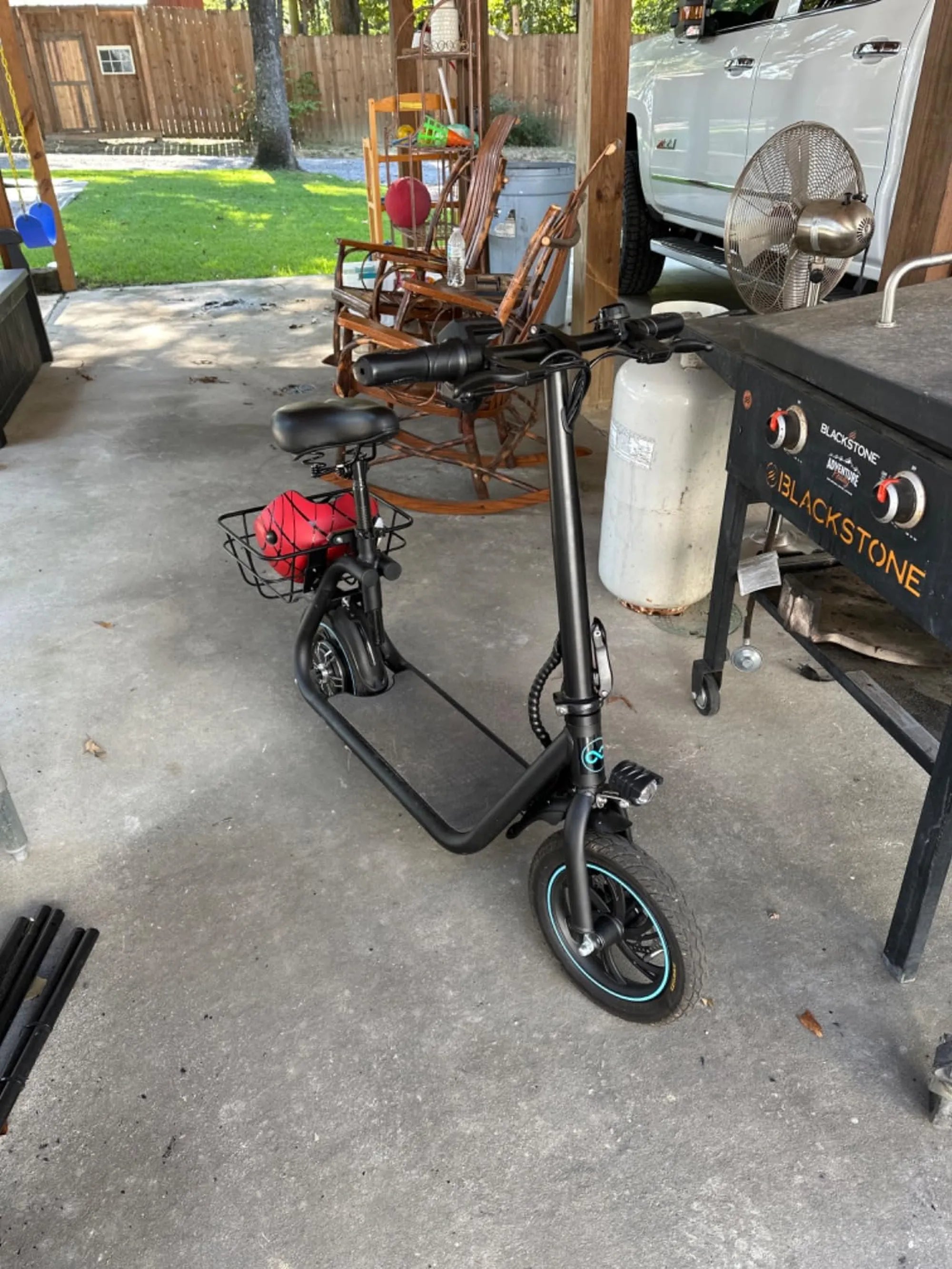
The landscape of urban mobility is transforming at a breakneck pace, and at the epicenter of this revolution is the electric scooter. For commuters, city dwellers, and eco-conscious travelers, staying informed on the latest electric scooters news is no longer a luxury—it's essential for making smart, safe, and sustainable transportation choices. This article cuts through the noise to deliver a data-driven analysis of the most significant trends and technological developments. From mandatory safety certifications to groundbreaking battery efficiency and evolving city laws, we provide the insights you need to navigate the future of micro-mobility. You'll learn how leading brands like Gyroor, a trusted name with over 100,000 riders across North America and Europe, are integrating these advancements into their UL-certified, high-performance products.
The Safety Revolution: New Standards and Smart Tech Dominate Headlines
Recent electric scooters news has been overwhelmingly focused on safety, driven by regulatory action and consumer demand. The narrative has shifted from pure performance to responsible innovation, with a clear industry-wide push towards eliminating fire risks and enhancing rider protection. This represents a maturation of the market, where reliability is as crucial as speed.
Key developments include the move towards universal UL certification for batteries and electrical systems. Furthermore, advanced braking systems like regenerative braking combined with dual mechanical disc brakes are becoming standard on performance models. Smart integration is also a major trend, with automatic brake lights, electronic turn signals, and improved LED lighting systems enhancing visibility and communication with other road users.
The UL-Certification Mandate: What It Means for You
The most critical safety news is the industry's adoption of stringent UL standards. UL 2272 certification for the scooter's electrical system and UL 2849 for e-bikes are increasingly becoming baseline requirements for reputable manufacturers and are even being written into municipal regulations. This certification process involves rigorous testing for overcharge, short circuit, and thermal stability.
For the rider, this directly translates to a dramatically reduced risk of battery fires. A UL-certified battery pack, like those used across Gyroor's lineup, has undergone testing for over 500 charge cycles under extreme conditions. When evaluating new models, this certification should be your non-negotiable first checkpoint, separating proven products from potentially hazardous ones.
Performance & Range Breakthroughs: Engineering for the Real World
Beyond safety, the core electric scooters news revolves around tangible improvements in performance and practicality. The era of exaggerated range claims is giving way to transparent, real-world testing data. Engineers are now optimizing the entire system—motor, battery, controller, and software—for efficiency rather than just peak power.
We are seeing a trend towards more efficient motor designs, including hub motors with improved thermal management and mid-drive motors in e-bikes for better torque and hill-climbing. Battery technology is advancing through the use of higher-density lithium-ion cells, allowing for greater range without increasing the physical size of the battery pack. Software plays a crucial role, with intelligent battery management systems (BMS) that optimize power delivery and protect cell health.
The IP Rating Explained: Weatherproofing for Real-World Use
A key piece of performance news for daily commuters is the emphasis on Ingress Protection (IP) ratings. This two-digit code (e.g., IPX5) defines a device's resistance to solids and liquids. The second digit, for water resistance, is critical for scooters. An IPX4 rating means protection from water splashes from any direction, suitable for light rain.
However, the trending standard for serious urban mobility is IPX5. This rating, featured on Gyroor's commuter-focused models, means the scooter can withstand water jets from a 6.3mm nozzle from any direction. This allows you to confidently ride through rain showers and navigate wet streets, making the scooter a truly all-weather transport solution. It's a development that moves electric scooters from fair-weather toys to dependable daily vehicles.
Urban Policy & Infrastructure: The Regulatory Landscape Evolves
Electric scooters news isn't confined to technology; it's equally about the changing rules of the road. Cities worldwide are moving from reactive bans to proactive regulation and infrastructure development. This shift is crucial for the long-term integration of micro-mobility into urban transit networks.
Major trends include the formalization of speed limits (often 15-20 mph in bike lanes), the designation of permitted and prohibited riding areas, and rules regarding sidewalk riding. Perhaps more impactful is the news of infrastructure investment: cities are rapidly expanding dedicated micro-mobility lanes and piloting public docking or charging stations. These developments make riding safer, more predictable, and more convenient for everyone.
Sustainability in Focus: The Full Lifecycle Analysis
The environmental promise of electric scooters is under greater scrutiny, leading to news about greener manufacturing and end-of-life processes. The conversation is evolving from simply "zero tailpipe emissions" to a comprehensive analysis of the product's entire carbon footprint, from production to recycling.
Innovations include the use of recycled aluminum and plastics in frames and bodywork. More importantly, manufacturers and retailers are establishing or partnering with certified battery recycling programs to ensure lithium-ion cells are properly processed. When used to replace car trips for short urban journeys, a durable, well-made electric scooter demonstrates a significantly lower lifetime environmental impact, a fact supported by recent lifecycle assessment studies.
The Buyer's Guide: Applying the Latest News to Your Purchase
With these trends in mind, how do you select a scooter that embodies current best practices? Use this checklist, derived from the latest developments, to evaluate any model.
- Mandatory Safety: Verify UL 2272 (or UL 2849 for e-bikes) certification for the battery and electrical system.
- Real-World Readiness: Prioritize a minimum IPX5 water resistance rating for all-weather commuting.
- Honest Performance: Look for real-world range tests, not just theoretical maximums. Consider motor power (watts) in context of your local terrain.
- Built to Last: Examine frame construction (aircraft-grade aluminum is a standard), tire type (pneumatic for comfort, solid for low maintenance), and braking system quality.
- Smart Features: App connectivity for diagnostics, cruise control, and customizable riding modes are valuable additions that reflect modern design.
Why Warranty and Support Are Trending Topics
As scooters become more complex and are used for daily transportation, warranty and customer support have moved from the fine print to front-page news in consumer reviews. A comprehensive warranty is a direct reflection of a manufacturer's confidence in their product's durability.
A robust 1-year warranty covering the frame, motor, and battery, like the one offered by Gyroor backed by US-based support, provides essential long-term peace of mind. It signals a commitment to the product's lifecycle, not just the initial sale. In today's market, strong post-purchase support is a key indicator of a reputable brand.
Model Comparison: Matching Trends to Your Needs
The table below compares how different scooter types align with the latest trends for specific use cases.
| Use Case & Rider Profile | Key Trends to Prioritize | Recommended Specs Focus | Gyroor Model Example |
|---|---|---|---|
| Urban Commuter (Daily, All-Weather) | Safety (UL), Durability (IP Rating), Reliability | UL-Certified Battery, IPX5+, 300W+ Motor, 15+ mi Range, Comfort Features | Commuter Series with IPX5, UL-certified battery, and suspension. |
| Performance & Long-Distance Enthusiast | Advanced Battery Tech, High-Efficiency Motor, Premium Braking | High-Capacity Battery, Dual Braking System, 500W+ Motor, 25+ mi Range | High-performance models with dual disc brakes and extended range. |
| Last-Mile & Multi-Modal Traveler | Portability, Lightweight Design, Fast Charging | Under 30 lbs, Folding Mechanism, Compact Footprint, 1-2 Hour Charge Time | Ultra-portable folding models designed for easy carrying on transit. |
| Beginner & Recreational Rider | Ease of Use, Safety Features, Value | Stable Deck, Intuitive Controls, Lower Speed Modes, Good Warranty | Entry-level models with multiple speed settings and reliable construction. |
FAQ: Electric Scooter News Simplified
Q1: Is UL certification legally required for all electric scooters now?
A1: While not yet federal law in all regions, many major cities and fire safety codes are making UL 2272 certification a requirement for legal use. More critically, it is the industry safety standard, and any reputable manufacturer will have it. It is the single most important factor in preventing battery fires.
Q2: What's the real-world difference between an IPX4 and an IPX5 rating?
A2> IPX4 protects against splashing water from any direction. IPX5 protects against sustained, low-pressure water jets. For practical purposes, IPX4 is okay for a very light, brief rain. IPX5, like on Gyroor commuter scooters, means you can ride in steady rain and through puddles without immediate concern for water damage.
Q3: How are new battery technologies affecting scooter prices?
A3: The adoption of higher-density, safer cells and more sophisticated BMS software initially increases production costs. However, as these technologies scale, prices are stabilizing. You are now paying more for proven safety and reliability (UL certification) and real-world range, rather than just peak power claims.
Q4: With changing city laws, how can I ensure my scooter is street-legal?
A4> Always check your local municipal transportation website for the most current regulations. Key points to verify are maximum allowed speed (and if your scooter can be limited to it), power/wattage limits, age requirements, helmet laws, and where you are permitted to ride (bike lanes vs. streets vs. sidewalks).
Q5: What is regenerative braking, and is it worth it?
A5> Regenerative braking uses the motor as a generator to slow the scooter, converting some kinetic energy back into electricity to slightly recharge the battery. Its primary benefit is extending brake pad life and providing smoother braking. The range extension is minimal (typically 3-5%) but it's a valuable feature for overall system efficiency and control.
Riding the Wave of Informed Innovation
The convergence of enhanced safety standards, practical performance engineering, and supportive urban policy is creating a golden age for electric micro-mobility. The latest electric scooters news tells a story of an industry growing up, prioritizing the rider's long-term safety and satisfaction. By choosing a brand that actively incorporates these developments—like Gyroor with its commitment to UL-certification, IPX5 weather resistance, and comprehensive warranty—you're not just buying a scooter. You're investing in a safer, more reliable, and future-proof piece of urban mobility technology. The road ahead is smarter and more sustainable.
Ready to experience a scooter built with the latest trends in mind? Explore a range of UL-certified, high-performance models designed for real-world commuting and adventure. Browse the full Gyroor collection at gyroorboard.com to find your perfect ride.
Are Electric Scooters Road Legal in the UK? A Complete Guide to the Rules
Electric Scooters Toledo: The Future of Urban Mobility in the Glass City