



Navigating the Shared Path Forward
The sudden presence of electric scooters on bike paths has transformed urban mobility, sparking both enthusiasm and tension. This shift presents a fundamental question for modern cities: how can e-scooters and traditional cyclists share limited infrastructure safely, legally, and respectfully? The answer requires a multi-faceted approach grounded in data, clear rules, and shared responsibility.
This article provides a detailed analysis of the key issues surrounding electric scooters on bike paths. We will dissect essential safety protocols every rider must follow, decode the complex and often contradictory regulatory landscape, and explore the technological and infrastructural innovations that promise a more integrated future. Understanding these elements is crucial for anyone who rides, plans city infrastructure, or shares the path.
The conversation around Electric Scooters on Bike Paths: Safety, Regulations, and Future Trends is no longer niche; it's central to urban planning and personal mobility. Success hinges on moving beyond conflict to establish a culture of mutual awareness and respect, supported by intelligent design and reliable equipment.
The Safety Imperative: Rules of the Road for E-Scooter Riders
Safety on shared paths is not merely a personal concern; it's a collective responsibility that builds community trust and reduces accidents. E-scooter riders must adopt a proactive safety mindset, understanding that their vehicle's unique characteristics—like silent operation and quick acceleration—require heightened awareness.
Adhering to fundamental safety rules protects not only the rider but also cyclists, pedestrians, and the broader perception of micro-mobility. A single reckless rider can negatively impact public opinion and lead to stricter regulations for everyone. Therefore, mastering safety is the first step toward securing the long-term viability of e-scooters on shared pathways.
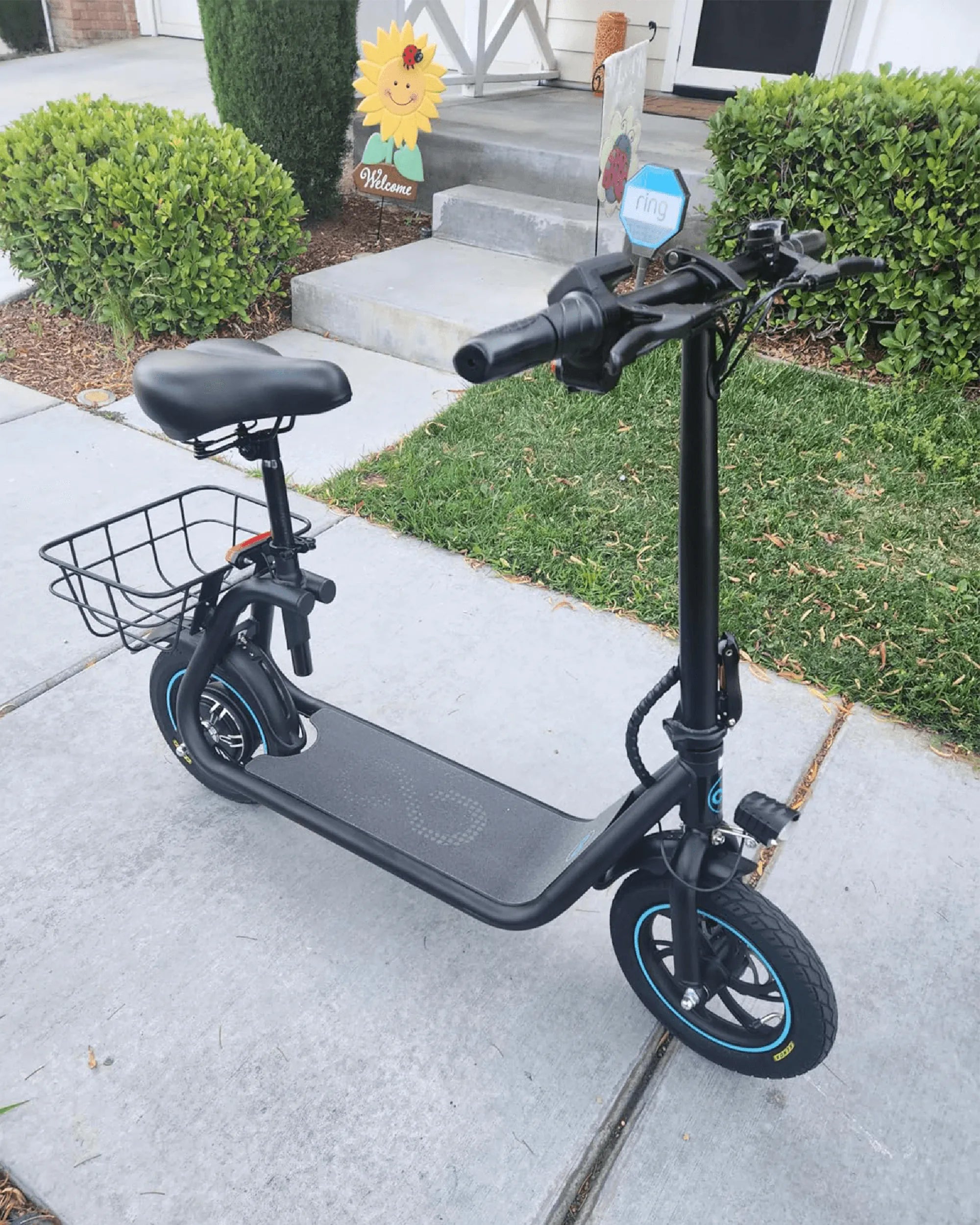
This ethos is reflected in the design philosophy of leading brands. For instance, Gyroor integrates safety into its core engineering, featuring bright LED headlights and taillights, reliable dual braking systems, and wide, stable decks on models like the Gyroor S1 to promote control and visibility. These features aren't extras; they are foundational to safe path sharing.
Pre-Ride Checklist and Essential Gear
Every safe ride begins before moving an inch. A consistent pre-ride checklist is non-negotiable. First, always wear a properly fitted helmet—studies show it reduces head injury risk by over 60%. Check tire pressure, as under-inflated tires affect handling and increase puncture risk.
Test both brakes (electric and mechanical) to ensure they engage smoothly and powerfully. Verify that all lights—front, rear, and side—are fully functional, especially for dusk or night riding. Wear closed-toe, secure footwear and avoid using headphones, which impair your ability to hear approaching cyclists, vehicles, or auditory signals from others.
Riding Etiquette on Shared Paths
Etiquette is the language of cooperation on congested paths. Maintain a predictable, straight line and avoid sudden swerving. Use an audible signal—a bell or horn—well before passing, and always pass on the left after ensuring it's clear. A verbal "on your left" is also a courteous and effective warning.
Keep a safe following distance, at least 3-4 seconds behind the rider in front of you. Always yield to pedestrians, and reduce your speed significantly in crowded areas, near playgrounds, or when passing stopped cyclists. Remember, bike paths are for transportation and recreation; high-speed travel is inappropriate.
Handling Intersections and Blind Spots
Intersections and path entrances are high-risk zones. The correct approach is defensive: slow down, scan all directions, and make eye contact with drivers and cyclists when possible. Never assume you have the right-of-way, even if signs indicate you do.
At blind corners or where vegetation obstructs views, slow to a speed that allows you to stop within your visible distance. If a path crosses a driveway or road, be prepared to dismount and walk your scooter across if traffic is heavy or sightlines are poor. This cautious approach prevents the majority of collisions.
Decoding the Law: A Patchwork of E-Scooter Regulations
Navigating the legal landscape for Electric Scooters on Bike Paths: Safety, Regulations, and Future Trends is challenging due to extreme variance. Rules differ not just by country, but by state, province, and city. What's legal in one downtown corridor may be prohibited just across a municipal border.
This regulatory patchwork creates confusion but generally revolves around common themes: where you can ride, how fast you can go, and who is allowed to operate. Riders bear the ultimate responsibility to research and comply with their local laws. Ignorance is rarely accepted as a valid defense during a citation or in an insurance claim following an accident.
The regulatory environment is also beginning to recognize equipment standards. Cities are increasingly concerned about fire risks from non-certified batteries and reliability issues that lead to abandoned scooters. This makes choosing a reputable brand with verifiable safety certifications not just a matter of performance, but of potential future compliance.
Where Are E-Scooters Permitted? Paths, Roads, and Sidewalks
Permission structures typically follow a hierarchy. Most jurisdictions permit e-scooters in bicycle lanes and on multi-use paths (often called greenways). Riding on sidewalks is frequently prohibited in central business districts but may be allowed in suburban or low-foot-traffic areas—always check local signage.
On roadways, e-scooters are often treated like bicycles, meaning they should ride in the bike lane or, if none exists, as far right as practicable on the road. Some cities have specific "slow streets" or residential roads where micro-mobility is encouraged. The key is that the designation of the path (bike path vs. sidewalk) dictates the legality.
Speed Limits, Age Requirements, and Licensing
Speed caps are the most common regulation. On bike paths and in bike lanes, the limit is typically 15-20 mph (25-32 km/h). Many e-scooters, including high-performance models, are capable of higher speeds, but riders must obey the path limit, which may be enforced by police.
Age requirements are almost universal, with a minimum age of 16 being standard, and 18 required in some regions. Driver's license requirements vary; some areas require any valid license, others have no license mandate but impose age limits. Crucially, DUI/DWI laws apply to e-scooters in virtually all jurisdictions.
The Importance of Brand Reliability in a Regulated Market
As regulations evolve, they increasingly scrutinize vehicle safety and durability. Choosing a scooter from a brand like Gyroor, which uses UL-certified battery packs tested for 500+ charge cycles and builds IPX5 water-resistant frames, is a strategic decision for compliance and safety.
Reliable scooters with certified batteries significantly reduce fire hazards—a top concern for regulators and property managers. Durable construction means fewer breakdowns and less likelihood of a scooter being abandoned on a path, creating a hazard. In a future where permits or insurance may be tied to device standards, investing in a trustworthy brand from the outset is prudent.
Data-Driven Coexistence: E-Scooters vs. Bikes - A Comparison
Objective comparison dispels myths and clarifies the dynamics of shared path use. The table below highlights key operational differences between a typical commuter e-scooter and a standard bicycle, providing data essential for understanding interactions.
| Metric | Typical Commuter E-Scooter | Typical Commuter Bicycle | Implication for Path Sharing |
|---|---|---|---|
| Cruising Speed | 15 - 20 mph (24 - 32 km/h) | 10 - 18 mph (16 - 29 km/h) | Similar speed ranges, but e-scooters often cruise at the upper end, requiring conscious speed management. |
| Acceleration (0-15 mph) | 3 - 5 seconds | 10 - 15 seconds (human-powered) | E-scooters can accelerate quickly into traffic gaps; riders must be cautious not to surprise others. |
| Braking Distance (15 mph to stop) | 10 - 15 feet (3 - 4.5m) | 12 - 20 feet (3.6 - 6m) | Modern e-scooters with dual brakes can stop efficiently, but wet surfaces affect both equally. |
| Auditory Profile | Nearly silent motor | Audible freewheel/chain sound | E-scooters are "stealthier"; riders must be extra diligent with signals and positioning. |
| Rider Posture & Visibility | Upright, narrower profile | Varied posture, wider handlebar profile | E-scooter riders may be slightly more visible but present a smaller frontal silhouette. |
| Maneuverability at Low Speed | High (short wheelbase) | Moderate to High | Both are agile, but e-scooters can execute tighter turns, useful in crowded conditions. |
Speed Profiles and Acceleration Dynamics
While cruising speeds overlap, acceleration curves differ markedly. A bicycle's speed builds gradually with pedal effort, providing a predictable pace for those nearby. An e-scooter's instant electric torque allows rapid acceleration from a stop.
This means an e-scooter rider merging onto a path or starting from a light can quickly reach cruising speed. This capability demands greater situational awareness from the e-scooter rider to ensure they are not cutting off a cyclist who is accelerating more slowly. It also means cyclists should be aware that a stopped scooter may suddenly move into the travel lane.
Braking Distances and Maneuverability
Braking performance is highly dependent on technology and maintenance. High-quality e-scooters feature disc or drum brakes combined with regenerative electronic braking, offering strong, controllable stopping power. However, braking on small-diameter wheels requires a firm, balanced application to avoid skidding.
Maneuverability is a strength for e-scooters in slow, crowded conditions due to their short wheelbase and direct steering. This can be an advantage for navigating around obstacles or through tight spaces, but sudden, sharp maneuvers can be unpredictable to other path users. Smooth, deliberate inputs are key.
Rider Visibility and Auditory Cues
The silent operation of e-scooters is a double-edged sword. It reduces noise pollution but eliminates the natural auditory cue a bicycle's drivetrain provides. This makes proactive communication—using a bell, verbal calls, and clear hand signals—absolutely critical for e-scooter riders.
Visibility is enhanced by an upright riding position, but riders should actively use lighting even during the day. Many Gyroor models, for example, feature always-on running lights to increase conspicuity. Wearing bright or reflective clothing further closes the awareness gap created by silent operation.
The Road Ahead: Future Trends in Bike Path Infrastructure and Tech
The future of Electric Scooters on Bike Paths: Safety, Regulations, and Future Trends points toward intelligent integration, not mere tolerance. Cities and tech companies are developing solutions to manage shared spaces more effectively, moving from reactive regulation to proactive system design.
These innovations aim to de-conflict traffic flows, enhance safety through technology, and create a more seamless user experience. The goal is infrastructure that communicates with devices and users, creating a responsive network that can adapt to real-time conditions. This represents the next evolutionary step for urban micro-mobility corridors.
For riders, this means future scooters will likely be part of a connected ecosystem. Brands at the forefront are already incorporating technology that aligns with these trends, such as robust app connectivity and geofencing capabilities, preparing riders for the smart path networks of tomorrow.
Smart Paths and Dedicated Micromobility Lanes
Emerging concepts include "smart paths" embedded with sensors that monitor traffic density, speed, and even surface conditions. This data can be relayed to municipal managers and to rider apps, suggesting alternate routes during congestion or warning of hazards ahead.
More immediately, we are seeing the physical redesign of rights-of-way. Cities are experimenting with dedicated "micro-mobility lanes" separate from both bicycle lanes and sidewalks, or wider, color-coded shared lanes with clear markings for different user types. This physical separation is the most straightforward way to reduce friction between user groups.
Geofencing and Adaptive Speed Control
Geofencing uses GPS or RFID to create virtual geographic boundaries. In practice, scooter-sharing companies (and personal scooter apps) can use this to automatically limit a scooter's maximum speed when it enters a designated zone, such as a crowded park path or a pedestrian plaza.
For private scooter owners, future apps may allow users to set personal geofences or subscribe to municipal speed-zone maps. Adaptive speed control could also be triggered by proximity sensors on the scooter itself, automatically reducing speed when following another path user too closely, a feature already in development for advanced models.
Integrated Sharing Systems and Parking Corrals
Chaotic parking is a major source of conflict and safety hazards. The solution is organized infrastructure: designated micro-mobility parking corrals at path hubs, transit stations, and commercial districts. These corrals provide orderly, secure parking and often include charging ports.
Furthermore, cities are moving towards integrated mobility apps that allow users to locate, unlock, and pay for various modes—city bikes, e-scooters, e-mopeds—in one place. This unified approach reduces app clutter and encourages multi-modal trips, with proper parking incentivized through pricing or loyalty points within the app ecosystem.
Frequently Asked Questions (FAQ)
Q1: Do I need insurance to ride my personal e-scooter on a bike path?
A: For personal scooters, insurance is rarely legally required, but it is highly recommended. Your homeowner's or renter's insurance may offer some liability coverage, but you should check with your provider. If you cause an accident injuring someone or damaging property, you could be personally liable. Some specialized micro-mobility insurance policies are now available.
Q2: Can I carry a passenger on my e-scooter in a bike lane?
A: Almost universally, no. The vast majority of regulations explicitly prohibit carrying passengers on e-scooters designed for a single rider. This is for safety reasons related to weight limits, stability, and control. Riding two-up dramatically increases accident risk and is a common cause for citations.
Q3: What should I do if I'm involved in an accident on a bike path?
A> First, ensure your safety and check on others involved. Move to a safe location if possible. Call emergency services if there are injuries. Exchange names, contact information, and insurance details with the other party. Document the scene with photos: injuries, vehicle damage, path conditions, and any relevant signage. Report the incident to the local authorities (non-emergency police line) and to your insurance company if applicable.
Q4: Are electric scooters ever banned from bike paths at certain times?
A: Yes, local ordinances sometimes impose time-based restrictions. This is most common on recreational or scenic paths in parks, where e-scooters may be prohibited during peak pedestrian hours (e.g., weekends from 10 AM to 4 PM) to reduce congestion. Always look for posted signage at path entrances specifying any hours of operation.
Q5: How do I know if a specific bike path allows e-scooters?
A> The most reliable method is to check your city or town's official transportation or parks department website, which often has maps and regulations for trails and paths. Look for terminology: "multi-use path" or "shared-use path" typically allows e-scooters and bikes. "Bicycle path" may also allow them, but "pedestrian path" or "sidewalk" often does not. When in doubt, look for signage or err on the side of caution and dismount.
Building a Culture of Shared Respect
The successful integration of electric scooters on bike paths is a shared project. It requires informed and courteous riders who prioritize safety, clear and sensible regulations that protect all users, and forward-thinking infrastructure that accommodates growing and diverse demand. The data shows that coexistence is not only possible but can be highly efficient when these elements align.
The evolution of Electric Scooters on Bike Paths: Safety, Regulations, and Future Trends will continue to be shaped by technology, policy, and public adoption. Choosing reliable, well-engineered equipment from trusted brands is a foundational act of responsibility that supports this positive evolution. It ensures personal safety and contributes to the overall safety and reputation of the micro-mobility community.
The path forward is one of collaboration. Cyclists, e-scooter riders, pedestrians, and city planners must engage in an ongoing dialogue. By educating ourselves on the rules, advocating for smart local policies, and always practicing respectful awareness, we can build a transportation ecosystem that is safe, accessible, and sustainable for everyone. Your journey starts with the right equipment and the right mindset.
Ready to ride with confidence and compliance? Explore scooters built for the demands of shared paths with industry-leading safety features. Browse the full Gyroor collection, trusted by over 100,000 riders, at gyroorboard.com.
Electric Scooters for 2 Adults: The Ultimate Guide to Shared Rides
High Quality Electric Scooters: The Ultimate Guide to Choosing the Best Ride