



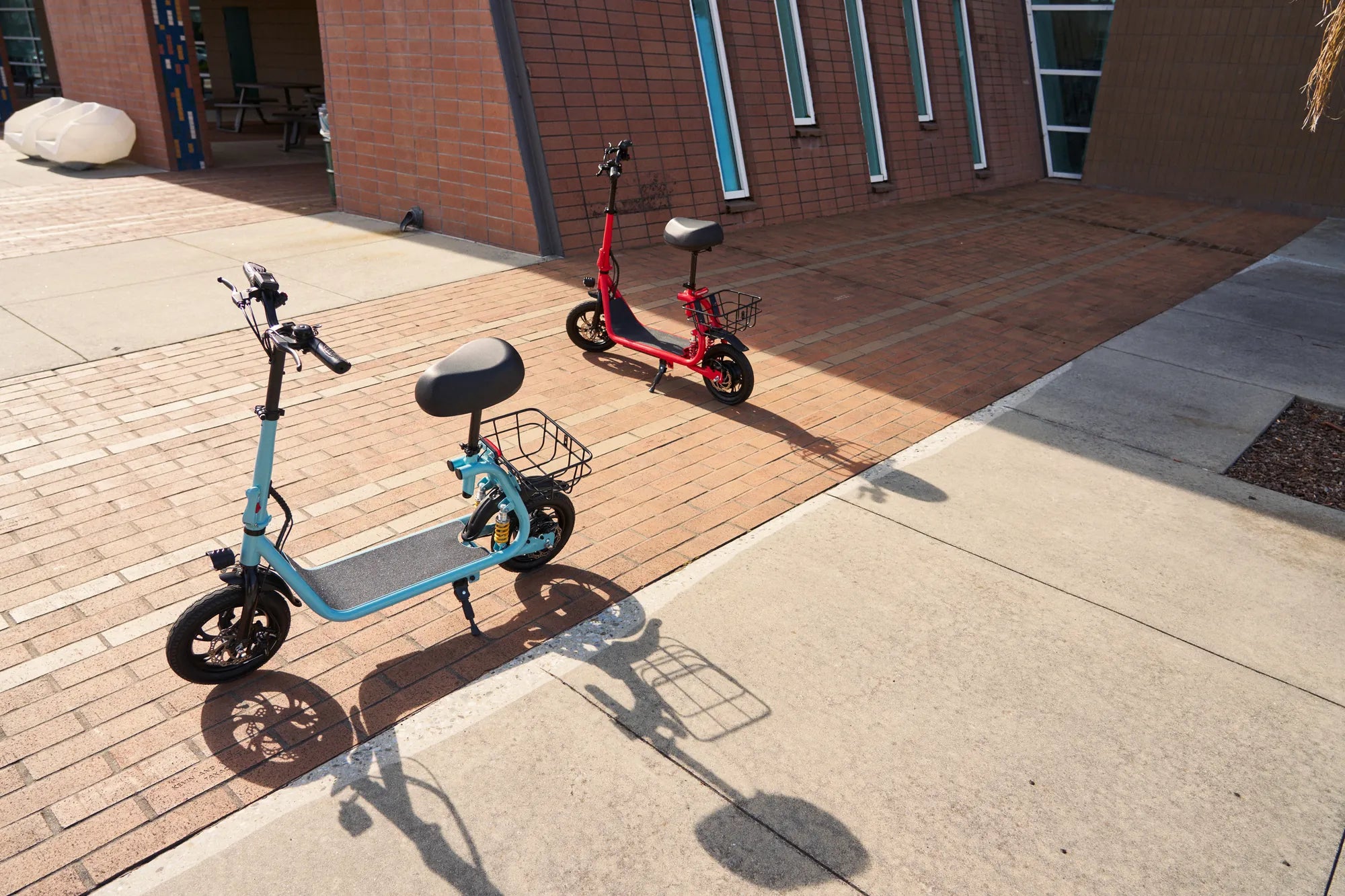
Introduction: Navigating the 2024 Electric Scooter Market in India
India's electric two-wheeler revolution is accelerating, with sales crossing 1.5 million units in 2023. For the 2024 buyer, navigating the Electric Scooters Price India 2024 landscape requires understanding a complex matrix of specifications, subsidies, and long-term value. This guide exists to demystify that process.
We will provide a detailed breakdown of current price brackets, explain the engineering and features that determine cost, and calculate the true cost of ownership beyond the sticker price. Our goal is to equip you with the data needed to make an informed investment in your daily commute, ensuring you get the best performance and reliability for your budget. The right purchase balances upfront cost with long-term savings and satisfaction.
Understanding Electric Scooter Price Brackets in India (2024)
The Indian market has stratified into three distinct price segments, each catering to different performance expectations and use cases. Recognizing where a model sits helps set realistic expectations for range, speed, and build quality. The Electric Scooters Price India 2024 spectrum is wider than ever, offering options for every type of rider.
Entry-Level (₹70,000 - ₹1,10,000)
This segment targets first-time EV buyers and those with very short, predictable urban commutes. Scooters here typically offer a certified range of 60-80 km on a single charge, with real-world figures often 15-20% lower. Top speeds are capped between 25 km/h and 45 km/h, adhering to regulations for some models.
Features are basic: analog or simple digital dashboards, lead-acid or smaller lithium batteries, and drum brakes. They are perfect for last-mile connectivity, college campuses, or market runs. However, build quality and component longevity can vary significantly, making brand reputation crucial even at this price point.
Mid-Range (₹1,10,000 - ₹1,60,000)
The most competitive and popular segment, this is the sweet spot for the average urban commuter. Here, the Electric Scooters Price India 2024 buys you a substantial upgrade. Expect ranges of 80-120 km, higher top speeds (60-80 km/h), and more powerful motors for better hill climb.
Features expand to include full-digital instrument clusters, smartphone connectivity, navigation, regenerative braking, and superior lithium-ion battery packs. Build quality sees improvements with better suspension, combined braking systems, and enhanced water and dust resistance (often IPX5 or higher). This bracket offers the best balance of performance, features, and value.
Premium & Performance (₹1,60,000+)
This tier is for riders seeking extended range, superior performance, and premium features. Scooters here boast ranges exceeding 120 km, with some models claiming 150-200 km. Acceleration is brisk, and top speeds can surpass 80-90 km/h, making them viable for highway use.
You'll find advanced technology like large TFT touchscreens, reverse mode, multiple riding modes, keyless operation, and sophisticated battery management systems. Build quality is top-notch, featuring alloy wheels, telescopic front forks, dual-disc brakes, and premium paint finishes. The Electric Scooters Price India 2024 in this bracket reflects cutting-edge EV technology and comfort.
Key Factors That Determine Electric Scooter Pricing
The final price tag is a direct sum of its components and engineering. Understanding these elements allows you to compare models objectively, seeing past marketing to the core value proposition. Two scooters with similar price tags can offer vastly different specifications.
Battery Capacity & Technology
The battery is the single most expensive component, accounting for 30-40% of the total cost. Capacity, measured in kWh or Ah, directly dictates range. A 2 kWh battery will cost significantly more than a 1.2 kWh unit. Beyond capacity, cell chemistry and brand are critical.
Scooters using cells from reputable manufacturers like LG, Samsung, or Panasonic command a premium due to proven longevity and safety. Crucially, look for UL-certified battery packs, a standard for safety and reliability that brands like Gyroor employ across their lineup. Certification ensures the battery has undergone rigorous testing for over 500 charge cycles, thermal stability, and short-circuit protection.
Motor Power & Performance
Motor power, measured in watts (W) or kilowatts (kW), governs acceleration, top speed, and hill-climbing ability. A 1500W hub motor will be more expensive and powerful than a 800W motor. Mid-drive motors, though rarer in scooters, offer even better efficiency and torque but at a higher cost.
Peak power versus continuous power ratings also matter. A scooter with a 3000W peak motor might accelerate quickly but could overheat on long climbs if its continuous rating is low. Performance-oriented scooters invest in higher-wattage motors with better cooling systems, which is reflected in the Electric Scooters Price India 2024.
Build Quality & Features
Materials and construction define durability and ride quality. A chassis made from high-grade aluminum or steel, coupled with telescopic hydraulic forks and rear mono-shock suspension, costs more than basic trailing link setups. Braking systems see a clear hierarchy: drum brakes are standard, but disc brakes (especially hydraulic) offer superior stopping power at a premium.
Features like full-color TFT displays, app-based diagnostics, geo-fencing, and ride analytics add cost. Water resistance is non-negotiable in India; a true IPX5 or IPX6 rating (like Gyroor's IPX5 water-resistant designs) requires sealed connectors and compartments, adding to manufacturing complexity and cost but ensuring monsoon readiness.
Brand Value, Warranty & After-Sales
A reputable brand's price includes intangible value: extensive R&D, rigorous quality control, and a reliable service network. A brand with a proven track record across continents, trusted by over 100,000 riders, inherently carries a value assurance. The warranty terms are a direct cost factor.
A comprehensive 1-year warranty on the vehicle, coupled with a 3-5 year warranty on the battery, provides long-term peace of mind but is factored into the initial price. A wide service network ensures spare parts availability and skilled technicians, reducing long-term ownership headaches. This ecosystem support justifies a marginally higher Electric Scooters Price India 2024 for many buyers.
Beyond the Sticker Price: Calculating the True Cost of Ownership
The showroom price is just the beginning. To understand the real economic advantage of an e-scooter, you must analyze the total cost incurred over, say, five years of ownership. This calculation often reveals electric scooters as the decisively cheaper option.
Government Incentives (FAME II & State Subsidies)
The FAME II (Faster Adoption and Manufacturing of Electric Vehicles) scheme provides a direct subsidy on the ex-factory price. As of 2024, the subsidy is ₹10,000 per kWh of battery capacity, with a cap of 15% of the ex-factory price. For a scooter with a 2 kWh battery, this translates to a ₹20,000 reduction.
Many state governments offer additional subsidies on top of FAME II. For example, Delhi offers up to ₹30,000, while Maharashtra offers ₹25,000. Some states also waive road tax and registration fees. These incentives can slash the effective Electric Scooters Price India 2024 by ₹30,000 to ₹50,000 or more, fundamentally changing the affordability equation.
Running & Maintenance Costs
This is where electric scooters dominate. The cost to charge a scooter with a 2 kWh battery (for ~80 km range) is approximately ₹10-₹20 (at ₹5-₹10 per kWh). This results in a running cost of about ₹0.15-₹0.30 per kilometer. Compare this to a petrol scooter at ₹4-₹5 per km (assuming 40 km/l and ₹100/l petrol).
Maintenance is drastically simpler and cheaper. There's no engine oil, spark plugs, air filters, or timing belts to replace. Regular costs are limited to brake pads, tires, and occasional suspension service. Over five years, the savings on fuel and maintenance can easily exceed ₹1,00,000, effectively paying for a significant portion of the scooter's initial cost.
Financing, Insurance, and Resale Value
Financing options for EVs are increasingly favorable, with banks offering lower interest rates on green loans. Calculate EMIs based on the post-subsidy price. Insurance for EVs can be slightly different; third-party insurance is mandatory, but comprehensive insurance premiums are often comparable to petrol vehicles.
Resale value is an emerging factor. As the market matures and battery technology becomes more trusted, well-maintained e-scooters from reputable brands are holding value better. A model with a known history of battery reliability (backed by a transferable warranty) will command a higher resale price, improving the total cost of ownership further.
2024 Buying Guide: How to Choose the Right Scooter for Your Budget
Armed with knowledge of prices and costs, follow this actionable framework to make your final decision. This process moves you from a confused buyer to a confident owner.
Step 1: Assess Your Daily Commute Needs
Map your exact daily travel distance, including detours. Add a 30-40% buffer to the round-trip distance to account for battery degradation over time, accessory use (like phone charging), and occasional longer trips. This gives your minimum required real-world range.
Evaluate your route's terrain. Frequent steep inclines demand a motor with higher wattage and torque. City traffic requires good low-speed acceleration. If your commute involves higher-speed roads, prioritize a scooter with a top speed of at least 60 km/h and stable handling.
Step 2: Set a Realistic Budget (Including Incentives)
Determine your maximum out-of-pocket expense. Then, research the applicable FAME II and state subsidies for models that meet your needs from Step 1. Add the subsidy amount to your budget—this becomes your effective purchasing power for the ex-showroom price.
For example, if you can spend ₹1,20,000 and are eligible for ₹30,000 in subsidies, you can look at scooters priced up to ₹1,50,000 (ex-showroom). Always confirm the final on-road price, which includes registration and insurance, to avoid last-minute surprises.
Step 3: Prioritize Non-Negotiable Features
Create two lists: 'Must-Haves' and 'Good-to-Haves'. Must-haves are critical for safety and daily function. These almost always include a minimum range, a water resistance rating of at least IPX5, adequate under-seat storage, and a robust braking system.
Good-to-haves might include a digital companion app, reverse mode, fast charging, or customizable riding modes. This exercise helps you quickly eliminate models that don't meet your core requirements, even if their Electric Scooters Price India 2024 is attractive.
Step 4: Research Brands & Test Ride
Investigate the brand's service network in your city and along your frequent routes. Read owner reviews focusing on after-sales service and long-term reliability. A brand with a strong track record, like Gyroor with its UL-certified batteries and 1-year warranty, minimizes long-term risk.
Finally, book test rides for your shortlisted models. Feel the acceleration, test the brakes, assess seat comfort, and check the suspension over rough patches. The perfect scooter must not only fit your budget on paper but also feel right in practice.
Electric Scooter Price & Specification Comparison Table (2024)
| Price Bracket | Expected Range (Real-World) | Top Speed | Key Features | Ideal For |
|---|---|---|---|---|
| Entry-Level (₹70K-₹1.1L) | 50-70 km | 25-45 km/h | Basic Display, Drum Brakes, Lead-Acid/Li-ion | Short City Commutes, Students |
| Mid-Range (₹1.1L-₹1.6L) | 70-100 km | 60-80 km/h | Digital Dash, App Connect, Disc Brakes, IPX5 Rating | Urban Commuters, Daily Office Goers |
| Premium (₹1.6L+) | 100-150 km+ | 80-95 km/h+ | TFT Touchscreen, Multiple Modes, Premium Suspension, Fast Charge | Performance Riders, Long-Distance Travel |
Frequently Asked Questions (FAQs)
What is the cheapest good-quality electric scooter available in 2024?
"Good-quality" implies reliable performance and basic safety standards. In 2024, several models in the ₹80,000 to ₹95,000 range (ex-showroom) offer decent quality. Look for scooters with a reputable lithium-ion battery pack (even if smaller), a known motor supplier, and a manufacturer with a visible service network. Avoid the absolute lowest-priced options that may compromise on battery safety or use substandard components.
How much subsidy can I expect under FAME II in 2024?
The central FAME II subsidy is ₹10,000 per kWh of battery capacity, capped at 15% of the vehicle's ex-factory price. For a typical scooter with a 2.5 kWh battery, the subsidy would be ₹25,000, provided this is not more than 15% of the ex-factory price. You must check the latest government notifications, as subsidy details can be updated. Always confirm with the dealer the exact subsidy amount applicable to your chosen model.
Is it worth paying more for a scooter with a removable battery?
It depends on your living situation. A removable battery is invaluable if you lack dedicated, secure parking with a charging point. It allows you to charge the battery indoors. However, removable battery systems can add to the cost and sometimes slightly reduce the structural rigidity or water resistance of the battery compartment. If you have a home charging setup, a fixed, well-sealed battery (with IPX5+ rating) is often more robust.
What hidden costs should I be aware of when buying an e-scooter?
Beyond the on-road price, budget for a good-quality helmet (₹2,000-₹5,000), a durable bike cover (₹500-₹1,000), and potentially a portable charger or faster home charging dock if not included. Annual insurance renewal is a recurring cost. Also, consider the cost of installing a dedicated EV charging point at home if needed, which can range from ₹3,000 to ₹10,000.
How does the long-term maintenance cost compare to a petrol scooter?
Long-term maintenance is significantly lower for e-scooters. A petrol scooter requires regular oil changes, filter replacements, belt changes, and periodic engine tune-ups, costing several thousand rupees per year. An e-scooter's maintenance is primarily focused on brakes, tires, suspension, and periodic battery health checks. Over 5 years, an e-scooter owner can save ₹40,000 to ₹80,000 on maintenance alone, not including the massive savings on fuel.
Conclusion: Investing in Your Smart, Sustainable Commute
The Electric Scooters Price India 2024 is not just a number but a gateway to a new mode of transportation. By looking beyond the initial investment to the substantial savings on fuel and maintenance, the economic case for switching to electric becomes compelling. Government subsidies further bridge the cost gap, making 2024 an ideal year to make the transition.
Your purchase decision should prioritize safety certifications, proven battery technology, and reliable after-sales support. These factors ensure your investment is protected for years. An informed choice leads to not only financial savings but also a quieter, cleaner, and more enjoyable daily commute. The right electric scooter is a smart investment in personal mobility and a sustainable future.
Ready to explore a range of electric scooters built with a focus on safety, performance, and reliability? Browse the full Gyroor collection at gyroorboard.com, featuring UL-certified batteries, IPX5 water-resistant designs, and the backing of a brand trusted by a global community of riders.
Electric Scooters Akron Ohio: The Future of Urban Mobility
Find Electric Scooters: The Ultimate Guide to Choosing Your Perfect Ride