



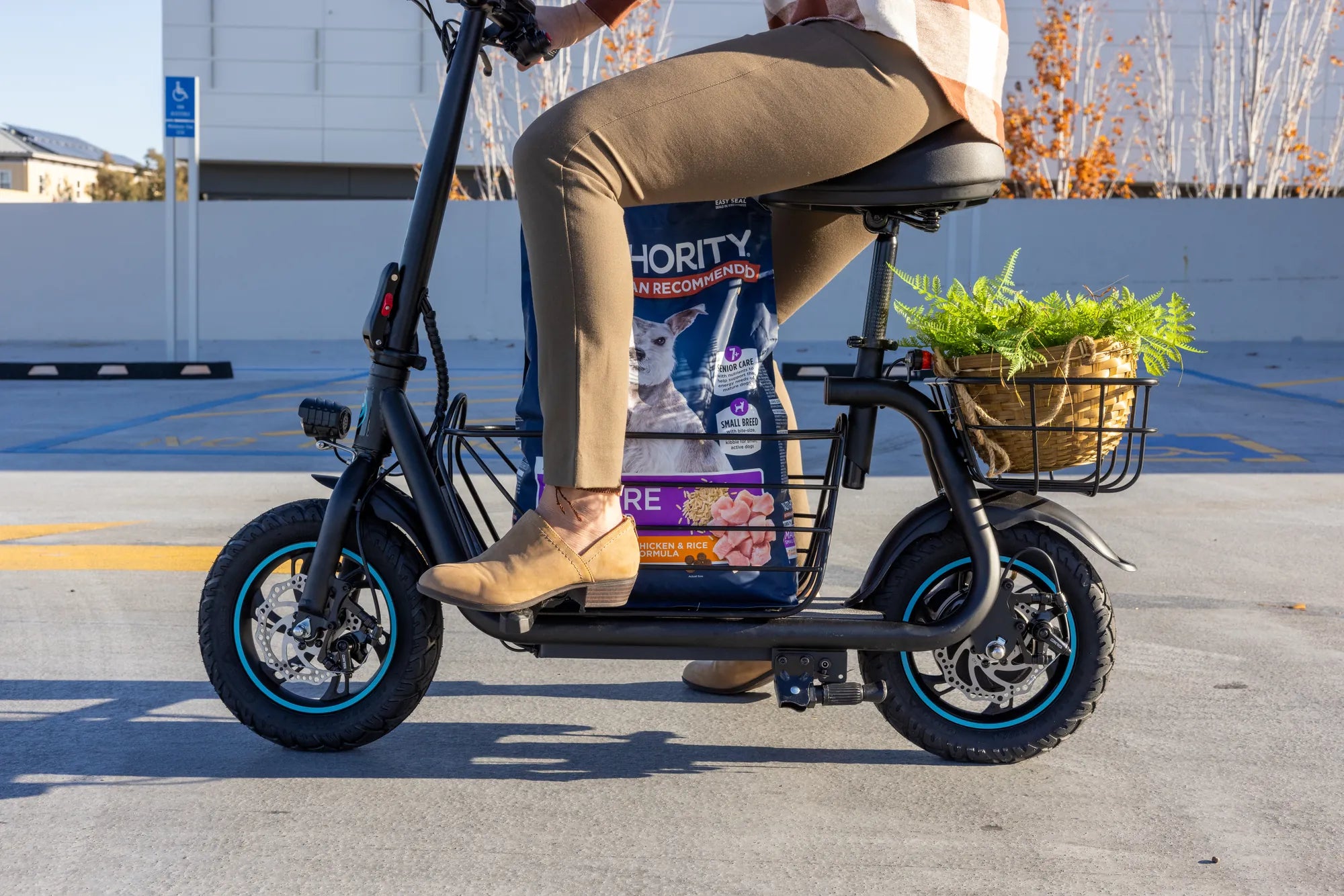
Navigating the New Era of E-Scooter Legality
The urban transportation landscape has fundamentally shifted. Electric scooters, once operating in a regulatory grey area, are now gaining full legal status in cities and states across the country. This pivotal change transforms them from novelty devices into legitimate, regulated vehicles. For current and prospective riders, this new era brings clarity but also significant responsibility.
Understanding what "Electric Scooters Safe Are Now Legal" means in practice is crucial. It's not just about permission; it's about integrating into a shared transportation ecosystem with defined rules for safety and conduct. This guide will walk you through the new legal frameworks, the enhanced safety standards that accompany them, and the practical knowledge you need to ride confidently and compliantly.
You'll learn how to select a scooter built for this new reality, master essential road etiquette, and ensure your riding habits align with both the letter and spirit of the law. The goal is to ensure that this wave of legalization leads to safer streets and more sustainable commuting options for everyone.
Understanding the New Legal Landscape: A State-by-State & City Primer
While the trend toward legalization is national, the specific rules are intensely local. There is no single federal law governing electric scooters; instead, a patchwork of state statutes and municipal ordinances defines where and how you can ride. This makes it the rider's primary duty to know the regulations in their specific city and state.
Generally, legal frameworks now classify e-scooters similarly to bicycles or a new class of "low-speed electric vehicles." Common provisions include allowing them on roads with speed limits up to 25-35 mph and in bicycle lanes. A critical and nearly universal rule is the prohibition of riding on sidewalks in business districts or crowded pedestrian areas, a major shift from earlier, unregulated use.
Ignorance of local law is not a defense and can result in fines, impoundment of your scooter, or even misdemeanor charges in severe cases. Before your first ride in a new area, a quick check of the city's transportation or police department website is a non-negotiable step for responsible ridership.
Key Legal Parameters Every Rider Must Check
When researching your local laws, focus on these specific, common requirements. First, age restrictions: most jurisdictions require riders to be at least 16 years old, and some mandate a valid driver's license or learner's permit.
Second, speed limits: legal e-scooters for public road use are typically capped at 15-20 mph when in public spaces. Many scooters can go faster, but using that higher speed on public roads may be illegal. Third, where to ride: laws precisely define permitted zones—often bike lanes and roads—and prohibited ones like sidewalks, highways, and certain parks.
Finally, DUI laws apply universally. Operating an e-scooter under the influence of alcohol or drugs carries the same severe legal penalties as driving a car. Understanding these four parameters forms the foundation of legal and safe e-scooter operation.
The Safety Mandate: How Legalization Drives Safer Rides
Legalization is intrinsically linked to enhanced safety. New laws codify what was once merely recommended practice, creating a formal safety mandate. This shift moves safety from a personal choice to a community standard, aiming to protect riders, pedestrians, and all road users.
The regulatory focus is on reducing accident rates by enforcing equipment standards and behavioral rules. This creates a safer environment for the rapid adoption of e-scooters as legitimate transit tools. For the rider, this means that adhering to safety protocols is no longer optional; it's a core part of being a lawful operator on public thoroughfares.
This mandate benefits everyone. It gives cities a framework to manage scooter share programs, gives riders clear guidelines, and gives pedestrians and drivers predictable behavior to anticipate. Embracing this safety-first mindset is the key to the long-term success and acceptance of e-scooter mobility.
Gear Up Right: Helmet Laws and Protective Equipment
Helmet use is the most visible and debated aspect of e-scooter safety law. Requirements vary: some cities mandate helmets for all riders, while others require them only for riders under 18. Regardless of the legal minimum, wearing a properly fitted bicycle or multi-sport helmet is the single most effective action you can take to prevent serious injury.
Beyond the helmet, responsible riders treat protective gear as essential, not optional. This includes sturdy, closed-toe shoes, gloves to protect hands in a fall, and consider elbow and knee pads, especially for new riders or those navigating challenging terrain. High-visibility clothing or reflective accessories are crucial for being seen, particularly in low-light conditions.
Viewing this gear as a non-negotiable part of your ride, much like a seatbelt in a car, marks you as a conscientious member of the new, legal e-scooter community. It's a direct investment in your personal safety.
Pre-Ride Safety Checklist: Inspired by UL-Certified Standards
Before every ride, conduct a quick but thorough inspection. This checklist, inspired by the high manufacturing standards of reputable brands, ensures your scooter is in safe operating condition. Start with the brakes: test them at low speed to ensure they engage smoothly and powerfully.
Check tire pressure (for pneumatic tires) and look for signs of wear or embedded debris. Ensure all lights are functioning—headlight, brake light, and any side reflectors. Verify the throttle and bell/horn are responsive. Finally, give the frame and stem a once-over for any unusual looseness or cracks.
This routine mirrors the quality control of leading brands. For instance, Gyroor's commitment to safety is evident in its use of UL-certified battery packs, tested for over 500 charge cycles for stability, and IPX5 water-resistant designs that guard against rain and splashes. Your pre-ride check ensures the scooter's built-in safety features are ready to perform.
Choosing a "Street-Legal" E-Scooter: Specifications Matter
With legalization, your choice of e-scooter must evolve. It's no longer just about power or range; it's about selecting a vehicle designed for compliant, reliable, and safe use on public infrastructure. A "street-legal" scooter is one whose specifications align with common regulations and whose build quality can withstand daily commuting demands.
This means prioritizing models from established brands that emphasize durability, safety certifications, and appropriate performance profiles. The scooter becomes a legitimate tool for transportation, and its design should reflect that serious purpose. Investing in a quality model from a trusted manufacturer is an investment in your safety and peace of mind.
Brands like Gyroor, trusted by over 100,000 riders, design their scooters with this new reality in mind, focusing on reliable performance, certified components, and rider safety features that meet the implicit standards of a legalized environment.
Power, Speed, and Compliance: Matching Your Scooter to the Law
Motor power and top speed are critical compliance factors. Many local laws specify a maximum speed limit of 20 mph for e-scooters on public roads. Therefore, choosing a scooter with a top speed of around 191-20 mph, like many commuter models, keeps you safely within legal bounds while providing ample speed for urban travel.
Motor power, measured in watts (W), influences hill-climbing ability and acceleration. A 350W motor is sufficient for flat terrain, while 500W or more is better for cities with hills. Crucially, do not modify your scooter to illegally "unlock" higher speeds. This voids warranties, compromises safety systems, and puts you at legal risk.
The goal is harmony between performance and legality. A compliant scooter from a reputable brand offers a controlled, safe, and legal riding experience that authorities are designed to accommodate.
Build Quality for Real-World Conditions: Water Resistance and Durability
A legal scooter must be a reliable all-weather partner. Look for a strong IP (Ingress Protection) water resistance rating. An IPX5 rating, as found on Gyroor scooters, means the scooter can withstand water jets from any direction, making it safe for riding in rain or on wet roads. This is essential for practical, daily commuting.
Braking system quality is paramount. Disc brakes (mechanical or hydraulic) generally offer superior stopping power and control compared to drum or foot brakes, especially in wet conditions. Finally, lighting is a legal and safety necessity. A bright front headlight, a visible rear brake light, and side reflectors are mandatory for night riding in most areas and critical for being seen.
Durable construction—a robust frame, secure folding mechanisms, and quality tires—ensures the scooter can handle potholes and curb cuts safely. These features aren't just luxuries; they are the hallmarks of a scooter built for the real world of legal street riding.
Rider Responsibility & Etiquette in a Shared Ecosystem
Legalization formalizes your role as a vehicle operator in a shared ecosystem. Your responsibility extends beyond personal safety to include the safety and convenience of pedestrians, cyclists, and drivers. Good etiquette is the grease that makes this shared system work smoothly and fosters positive public perception of e-scooter riders.
This means riding predictably, communicating your intentions, and respecting all other users of the road and pathway. The entitled or reckless rider jeopardizes not only themselves but the broader acceptance of e-scooters as a legitimate mode of transport. Every ride is an opportunity to represent the community positively.
Adopting a cooperative, defensive riding mindset is the hallmark of a seasoned and responsible rider in this new legal age.
Rules of the Road: Signaling, Right-of-Way, and Parking
On the road, you are generally subject to the same rules as bicycles. This means obeying all traffic signals and stop signs, riding in the direction of traffic, and using hand signals to indicate turns or stops. Clearly signaling your intentions is crucial for communication with drivers.
Understand right-of-way. Pedestrians in crosswalks have it. You must yield to them. When in a bike lane, be mindful of cyclists, and when moving into a traffic lane to avoid an obstacle, signal and check for cars first. Parking responsibly is equally important. Never block sidewalks, ramps, building entrances, or access points.
Use designated scooter parking zones when available, or park adjacent to bike racks in a tidy, upright position that doesn't obstruct pedestrian flow. Improper parking is a leading cause of complaints and can lead to fines or scooter removal.
Situational Awareness: Navigating Hazards and Inclement Weather
Advanced safe riding requires constant situational awareness. Actively scan the path ahead for hazards like potholes, sewer grates, wet leaves, gravel, and railroad tracks—approach these at a reduced speed and as straight-on as possible. Be hyper-aware of car blind spots, especially at intersections where right-turning vehicles may not see you.
In inclement weather, adjust your riding dramatically. Reduce speed, increase following distance, and brake earlier and more gently. Avoid painted road lines and metal surfaces like manhole covers when wet, as they become extremely slippery. While a water-resistant scooter like a Gyroor with an IPX5 rating can handle the weather, your riding technique must adapt to the reduced traction and visibility.
Riding defensively—anticipating the mistakes of others and leaving yourself an "out"—is the best strategy for navigating complex urban environments safely.
Comparing Commuter E-Scooter Features for Legal Road Use
Selecting the right scooter involves balancing legal compliance, safety features, and performance. The following table compares key specifications relevant to a legal, safe, and practical commuting experience.
| Feature | Importance for Legal/Safe Use | Ideal Specification for Commuting | Consideration |
|---|---|---|---|
| Max Speed | Must comply with local laws (often 20 mph cap). | 18-20 mph | Avoid models that exceed local limits or can be easily illegally modified. |
| Motor Power | Affects hill climbing and acceleration in traffic. | 350W - 500W | Higher wattage provides better performance on inclines. |
| Battery & Range | Determines reliable commute distance. | 15-25 miles (real-world) | Ensure battery is UL-certified for safety. Consider range with a 20-30% buffer. |
| Braking System | Critical for safe stopping in all conditions. | Dual braking (e.g., disc + electronic) | Redundant systems provide failsafe stopping power. |
| Water Resistance | Essential for all-weather reliability and safety. | IPX5 Rating or higher | Protects electrical components from rain and road spray. |
| Lighting | Legal requirement for night riding; crucial for visibility. | Bright headlight, brake light, reflectors | Integrated, automatic brake lights enhance safety. |
| Tire Type | Impacts comfort, traction, and puncture resistance. | Pneumatic (air-filled) 10" tires | Larger air tires better absorb bumps and provide stability. |
| Build Quality / Warranty | Indicates durability and manufacturer confidence. | Robust frame, reliable folding mechanism, 1-year warranty | A strong warranty, like Gyroor's 1-year coverage, supports long-term safe use. |
FAQ: Your Quick Guide to E-Scooter Legality & Safety
Q: Do I need a driver's license or insurance to ride a legal e-scooter?
A: Requirements vary. Many states require a valid driver's license or learner's permit, especially for riders under 18. Others have no license requirement. Personal insurance is rarely mandated by law for privately-owned scooters, but it's wise to check if your homeowner's or renter's policy covers liability. Rental scooter companies provide their own insurance.
Q: Can I ride my e-scooter at night, and what are the rules for lights?
A: Yes, in most places, but with strict conditions. You are almost always required to have a white front headlight visible from a certain distance (often 500 feet) and a red rear reflector or brake light. Some laws also require side reflectors. Riding at night without proper lighting is illegal and dangerously invisible to drivers.
Q: Where am I *not* allowed to park my e-scooter?
A: You cannot park where you block pedestrian access. This includes sidewalks (especially in narrow or high-traffic areas), wheelchair ramps, building entrances, bus stops, and in front of fire hydrants. Always look for designated parking corrals or park neatly next to bicycle racks without obstructing the path of travel.
Q: How does the 1-year warranty from a brand like Gyroor support safe, long-term use?
A: A comprehensive warranty ensures that any manufacturing defects in critical components like the battery, motor, or frame will be repaired or replaced. This is vital for safety, as it guarantees the scooter's core systems remain reliable. Gyroor's 1-year warranty, backing UL-certified batteries and water-resistant builds, gives riders confidence that their vehicle is built to last and perform safely over time.
Q: Are there places like parks or trails where e-scooters are still prohibited?
A> Absolutely. Multi-use recreational paths, parks, nature trails, and boardwalks often explicitly prohibit motorized vehicles, including e-scooters. Signs are usually posted at entrances. Always assume they are banned unless explicitly permitted. Riding on these paths can result in fines and damages the relationship between scooter riders and other recreational users.
Embrace the Ride Responsibly
The message is clear: the era of "Electric Scooters Safe Are Now Legal" is here, offering unprecedented freedom and a practical solution for urban mobility. This privilege, however, is directly tied to a new level of rider responsibility. The legal framework provides the structure, but it is up to each individual rider to fill that structure with safe, courteous, and informed behavior.
Your journey begins with the right tools: a compliant, well-built scooter from a reputable brand designed for the demands of legal road use. It is reinforced by the non-negotiable habit of wearing protective gear and conducting pre-ride checks. It is executed daily through a commitment to road rules, situational awareness, and respectful sharing of public space.
By embracing this comprehensive approach, you secure your own safety and contribute to a sustainable, positive future for electric scooter transportation. The road ahead is open—ride smart, ride safe, and enjoy the journey. Explore a range of scooters engineered for this new legal landscape, featuring UL-certified safety and robust warranties. Browse the full Gyroor collection at gyroorboard.com to find your perfect, compliant ride.
Best Electric Scooters 2025 Price Comparison: Top Picks for Every Budget
Electric Scooters Available in Kerala: The Future of Urban Mobility