

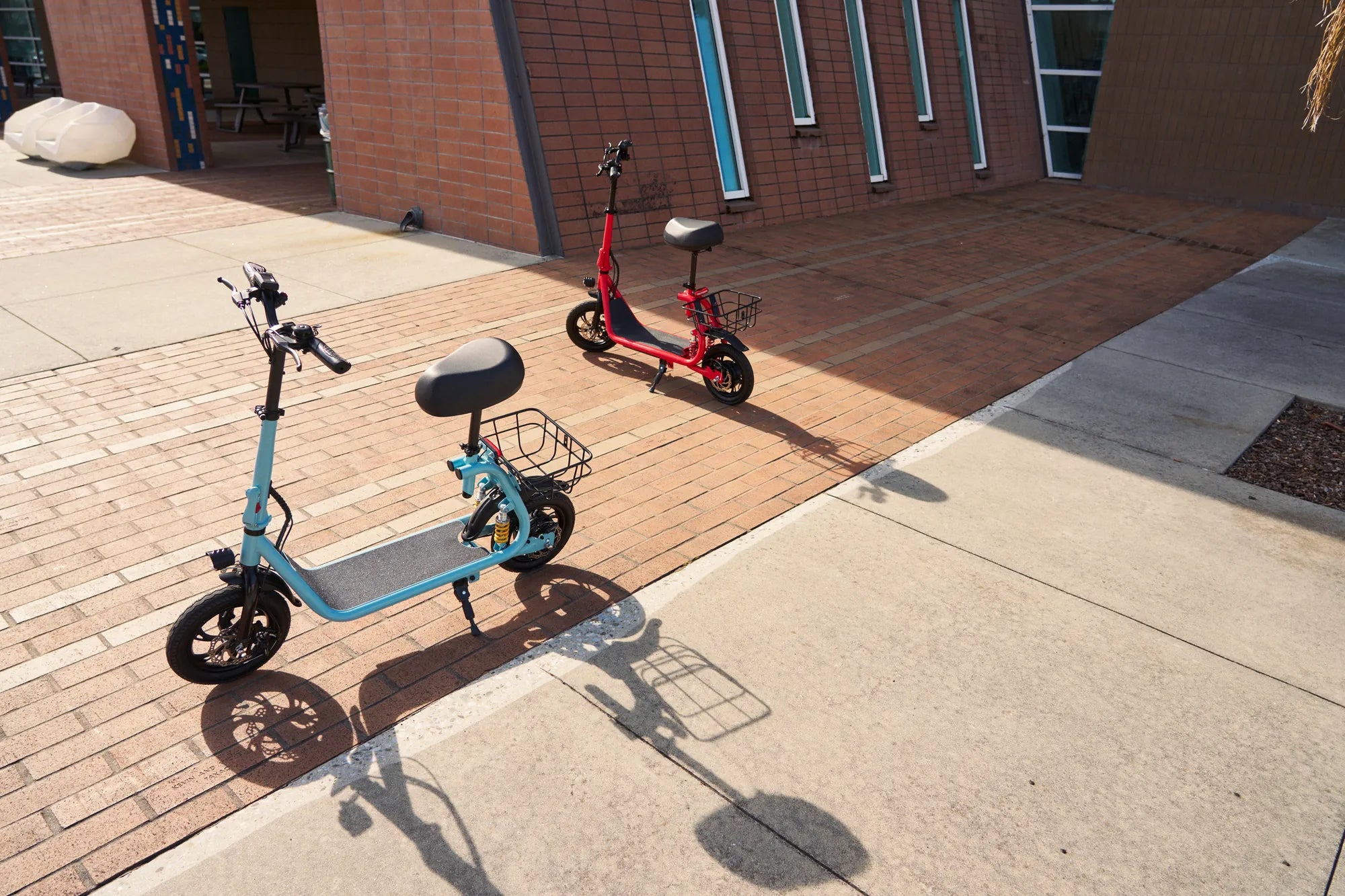
Electric scooters that go 30 MPH are no longer a novelty; they're a legitimate solution for urban commuters and thrill-seekers alike. This guide cuts through the hype to deliver the essential facts you need about performance, legality, and safety. You'll learn how 30 MPH scooters are engineered, what makes them safe at high speeds, and how to determine if one fits your lifestyle. We'll ground our analysis in technical data and real-world considerations, referencing the rigorous standards set by industry leaders like Gyroor, a brand trusted by over 100,000 riders for combining performance with foundational safety. The quest for electric scooters that go 30 MPH is driven by a desire for efficiency and capability, but it demands an informed approach.
Understanding the 30 MPH Benchmark: Engineering and Reality
When we talk about electric scooters that go 30 MPH, we're referring to a specific class of performance. This speed transforms a scooter from a last-mile solution to a primary vehicle for commutes of 5-15 miles. It's a threshold where engineering, safety, and rider skill converge.
Reaching and maintaining 30 MPH requires robust hardware. Typically, this means a motor with a sustained power output of 500W to 1000W, often powered by a 48V or 52V battery system. These systems provide the necessary torque and discharge rates. However, the advertised top speed is a laboratory ideal.
Real-world speed is affected by multiple variables. Rider weight, incline, wind resistance, tire pressure, and battery charge level all play a role. A scooter rated for 30 MPH might achieve 28 MPH for a 180-pound rider on a slight incline. Understanding this variance is key to setting realistic expectations for your commute time.
The electrical system must be designed to handle the sustained high current draw. This is where battery quality and motor controller efficiency become paramount. Inferior components can overheat, leading to reduced performance, potential failure, or safety hazards. The pursuit of reliable speed is fundamentally about electrical and thermal management.
The Gyroor Engineering Philosophy: Building Speed on a Foundation of Safety
For a brand like Gyroor, engineering electric scooters that go 30 MPH isn't just about hitting a number on a spec sheet. It's about creating a reliable, safe, and durable platform that performs consistently. This philosophy is built on core technological pillars that address the unique demands of higher-speed riding.
High-speed operation stresses every component. From the frame welds to the throttle response, each element must be over-engineered for the forces involved. Gyroor's approach integrates safety from the initial design phase, ensuring that speed is a benefit, not a liability. This results in scooters that inspire confidence rather than anxiety when the throttle is engaged.
The commitment extends to post-purchase support. With a customer base of over 100,000 riders and a 4.5/5 average rating, the focus is on long-term reliability. A scooter that goes 30 MPH must be built to withstand daily use, and that durability is a direct function of its initial construction quality and the standards applied to its core components.
The Non-Negotiable Core: UL-Certified Battery Systems
The battery is the heart of any electric scooter, and for models capable of 30 MPH, its safety is critical. Gyroor equips its performance models exclusively with UL-certified battery packs. This certification means the battery cells and assembly have undergone rigorous independent testing for electrical, mechanical, and fire safety.
Why does this matter at high speeds? A 30 MPH scooter demands high discharge rates from its battery. Low-quality, uncertified batteries can overheat, swell, or even experience thermal runaway under such demand. A UL-certified pack is engineered with superior thermal management, stable chemistry, and robust internal circuitry to handle these loads safely for 500+ charge cycles.
This certification is a direct investment in rider safety and product longevity. It mitigates the risk of battery-related failure, which is the most significant potential hazard in any high-power electric vehicle. When evaluating electric scooters that go 30 MPH, the presence of a UL, CE, or other reputable certification for the battery should be a primary filter.
Durability for the Real World: IPX5 Water-Resistant Design
Commuting at 30 MPH means you cannot always avoid wet roads, puddles, or light rain. An IPX5 water-resistance rating, a standard feature in Gyroor's design, is essential for this use case. It certifies that the scooter's critical electronics can withstand low-pressure water jets from any direction.
This protection safeguards the motor controller, display, wiring harness, and battery compartment from water ingress. Without it, a single encounter with a deep puddle could short-circuit the system, leading to sudden loss of power or permanent damage. For a vehicle used as daily transport, this level of environmental protection is not a luxury; it's a necessity for reliability.
IPX5 allows riders to proceed with confidence in common urban wet conditions. It ensures that the scooter's performance and safety systems remain operational when you need them most. While not a permit for riding in heavy downpours or through flooded streets, it provides a crucial margin of error for real-world commuting scenarios.
Control at Speed: Frame, Braking, and Suspension Systems
Speed magnifies every input and imperfection. Therefore, the chassis and control systems of a 30 MPH scooter must be exceptionally capable. A rigid, often aluminum alloy frame provides the foundational stability. A wobbly or flexible frame at high speed is a direct threat to control and safety.
Braking is the most critical safety system. Dual braking—typically a combination of a front disc brake and a rear disc or drum brake, supplemented by an electronic regenerative brake—is the minimum standard. This provides redundant stopping power and prevents brake fade. The ability to stop quickly and predictably from 30 MPH is what makes the speed usable in traffic.
Suspension is not merely for comfort; it's for control. A proper front and rear suspension system (spring or hydraulic) keeps the tires in contact with the road over bumps and imperfections. Maintained tire contact ensures effective braking and steering. A rigid scooter at 30 MPH can easily become unstable on rough pavement, compromising rider safety.
The Legal Landscape: Where and How You Can Ride a 30 MPH Scooter
The legality of operating electric scooters that go 30 MPH is a complex patchwork of local regulations. Unlike slower, share-style scooters (often capped at 15-20 MPH), higher-performance models often fall into a different regulatory category. Ignorance of the law is not a valid defense and can result in fines or confiscation.
In many jurisdictions in the United States and Europe, electric scooters are classified based on their maximum capable speed and/or motor power. A scooter that can exceed 20 or 25 MPH may be classified as a "motorized scooter" or "low-speed electric vehicle," subject to different rules. These can include age restrictions (18+), requirements for a driver's license, insurance, and even registration.
Most importantly, the permitted riding location changes. While 15 MPH scooters are often allowed on bike paths and sidewalks in some areas, 30 MPH models are frequently restricted to roads, and sometimes only to roads with speed limits at or below 35 MPH. They are almost universally prohibited on sidewalks due to the significant safety risk to pedestrians.
It is the rider's absolute responsibility to research and comply with their city, county, and state laws. This includes adhering to local helmet laws, which are mandatory for all riders in many places and strongly recommended everywhere. Riding a 30 MPH scooter responsibly means being a lawful road user.
The Essential Safety Gear Checklist for the 30 MPH Rider
Operating at 30 MPH necessitates gear that matches the potential risk. The asphalt is unforgiving at this speed. A proper helmet is the absolute minimum. For 30 MPH, a full-face bicycle or modular motorcycle helmet is strongly advised over a standard skate-style helmet to protect the chin and face.
Protective gloves are crucial. In a fall, your instinct is to put your hands out. Durable gloves with palm sliders can prevent debilitating road rash and broken bones. They also improve grip and control, especially in cold or wet weather. Consider them a necessary part of the control interface.
Additional gear should include durable, closed-toe shoes, long pants, and a sturdy jacket. For urban commuting, high-visibility elements—a reflective vest, strips on clothing, or lights—are vital for being seen by drivers, especially at dawn, dusk, or night. Your gear is your primary safety system beyond the scooter itself.
Is a 30 MPH Electric Scooter Right for You? A Practical Comparison
Choosing between a high-performance scooter and a standard model is a decision based on use case, rider profile, and environment. The following comparison table outlines the key decision factors to help you determine which category aligns with your needs.
| Decision Factor | 30 MPH Electric Scooter | 15-20 MPH Electric Scooter |
|---|---|---|
| Primary Use Case | Longer commutes (7+ miles), replacing car trips, recreational riding on open paths. | Last-mile transit from transit hubs, short errands (under 3 miles), casual neighborhood riding. |
| Ideal Rider Profile | Experienced rider comfortable with higher speeds, commuter seeking efficiency, adult rider (18+). | First-time or casual rider, younger rider (where legal), those prioritizing simplicity over performance. |
| Terrain Handling | Excels on hills, maintains speed on inclines, stable on open roads and paved paths. | Best for flat terrain; may struggle on steep hills, ideal for congested or mixed-use paths. |
| Legal & Practical Considerations | Often restricted to road use; requires knowledge of traffic laws; higher safety gear investment needed. | More likely to be permitted on bike lanes/paths; simpler legal landscape; lower gear requirements. |
| Investment & Maintenance | Higher upfront cost; greater awareness of brake, tire, and suspension maintenance required. | Lower upfront cost; generally lower maintenance demands and complexity. |
| Range at Top Speed | Real-world range may be 15-25 miles at full throttle, depending on battery capacity. | Can often achieve near-advertised range as speed is within optimal motor efficiency band. |
This comparison highlights that electric scooters that go 30 MPH are tools for specific tasks. They are not inherently "better" than slower models; they are more capable for certain scenarios. The increased performance comes with increased responsibility, investment, and regulatory scrutiny.
Performance in Practice: Range, Hills, and Daily Use
Owning a 30 MPH scooter involves understanding its performance characteristics in daily life. The advertised range is the first number to scrutinize. Manufacturers typically list a maximum range based on ideal conditions: a lightweight rider on flat ground at a moderate speed (often 15 MPH).
At a constant 30 MPH, aerodynamic drag increases exponentially, and the motor draws significantly more power. Therefore, your real-world range at top speed will be substantially lower—often 40-50% less than the advertised maximum. For a scooter with a 40-mile "max" range, expect 16-20 miles when riding at full throttle. Plan your commute and charging routine accordingly.
Hill-climbing ability is where the extra power shines. A robust 500W+ motor paired with a 48V system can maintain 15-20 MPH on moderate hills where a 250W scooter might slow to a crawl. This makes commuting in hilly cities far more practical. The scooter's torque, not just its top speed, becomes a critical quality-of-life feature.
Daily use also involves considerations like portability. High-performance scooters are heavier (often 40-70 lbs) due to larger batteries and sturdier frames. While some feature folding mechanisms, carrying them up stairs or onto public transit is more challenging. They are designed more as ride-to-work vehicles than carry-with-you accessories.
Maintenance Musts for High-Speed Reliability
Proactive maintenance is non-negotiable for safely operating electric scooters that go 30 MPH. The stresses of higher speeds accelerate wear on key components. A simple pre-ride check should become a habit: inspect tire pressure, test brake lever firmness, and ensure all folding mechanisms and quick-releases are securely locked.
Tire care is paramount. Under-inflated tires increase rolling resistance (hurting range), cause uneven wear, and can lead to pinch flats or blowouts—a dangerous event at speed. Check pressure weekly with a quality gauge. Also regularly inspect tires for embedded debris, cuts, or excessive wear, especially on the rear tire which bears more load.
Brake maintenance is your lifeline. Regularly check brake pad thickness and listen for grinding noises. Disc brakes may need occasional adjustment or pad replacement. Keep the brake rotors clean. Test your brakes at low speed at the start of each ride to ensure they are engaging properly. The braking system should be serviced annually or as needed based on use.
Beyond this, keep the scooter clean, especially after wet rides, and periodically check all bolts and fasteners for tightness. Vibration can loosen them over time. Store the scooter in a dry, temperate place and avoid leaving the battery fully depleted or at 100% charge for extended periods to maximize its lifespan.
Frequently Asked Questions (FAQ)
Q1: How far can I actually ride on a single charge at 30 MPH?
Real-world range at a constant 30 MPH is typically 40-60% of the manufacturer's advertised maximum range, which is usually calculated at a steady, efficient speed of around 15 MPH. For example, a scooter with a 40-mile "max range" might deliver 16-24 miles when ridden consistently at top speed. Factors like rider weight, hills, wind, and temperature will further affect this number. Always plan with a significant range buffer.
Q2: Are 30 MPH scooters significantly harder to control than slower ones?
They require more skill and attention. The higher speed means reactions must be quicker, braking distances are longer, and the consequences of a mistake are more severe. However, a well-designed 30 MPH scooter from a reputable brand will have the stability, braking power, and suspension to inspire confidence. The learning curve is steeper, but for an alert, responsible rider, control is very manageable with practice in safe environments.
Q3: What does the 1-year comprehensive warranty from Gyroor cover?
Gyroor's standard 1-year warranty covers defects in materials and workmanship under normal use. This typically includes the motor, controller, frame, and other core components. The UL-certified battery is often covered for a specific period (e.g., 6 months to 1 year) against defects. It's crucial to note that warranties do not cover damage from accidents, misuse, water damage beyond the IPX5 rating, or unauthorized modifications. Always register your product and review the specific warranty terms.
Q4: Can I modify a slower scooter to reach 30 MPH?
We strongly advise against it. Modifying a scooter's controller software ("hacking" or "de-restricting") or swapping components to increase speed voids the warranty and is extremely dangerous. The scooter's original design—including its frame, brakes, tires, and battery cooling—was not engineered for the stresses of higher speeds. This can lead to catastrophic failure, such as brake fade, motor burnout, or battery fire. If you need 30 MPH, purchase a scooter designed and certified for it from the ground up.
Q5: What is the most important safety feature on a 30 MPH scooter?
While dual mechanical brakes are the most critical operational safety feature, the most important foundational safety feature is a high-quality, certified battery pack (like a UL-certified battery). A reliable power source prevents thermal events and ensures consistent performance. The best brakes in the world are useless if the electrical system fails catastrophically. Always prioritize scooters with batteries from reputable cells (e.g., LG, Samsung, Panasonic) in certified assemblies.
Conclusion: Embracing Speed with Responsibility and the Right Tools
Electric scooters that go 30 MPH unlock a new level of freedom and utility in personal urban transport. They compress commute times, conquer hills, and make car-free living more viable for longer distances. This capability, however, is not a casual upgrade. It demands a commensurate commitment to safety, legality, and informed ownership.
The journey to a safe, high-speed ride begins with choosing a scooter built for the task—one with a robust frame, dual braking systems, proper suspension, and, fundamentally, a safe and certified battery. Brands like Gyroor build these features into their DNA, ensuring that performance is delivered on a platform designed for reliability. The presence of a UL-certified battery and an IPX5 rating are not mere spec-sheet items; they are your first line of defense.
Ultimately, the rider is the final safety component. Obeying local laws, wearing appropriate protective gear, and conducting regular maintenance are the responsibilities that come with the thrill of speed. When these elements align, a 30 MPH electric scooter becomes more than a toy; it becomes a powerful, efficient, and enjoyable tool for modern mobility.
If you're ready to explore high-performance electric scooters engineered with safety as a priority, browse the full Gyroor collection at gyroorboard.com. Discover models that combine the speed you want with the peace of mind you need, backed by a brand trusted by a global community of riders.
Electric Scooters for Girls: The Ultimate Guide to Stylish and Safe Rides
Portable Electric Scooters for Adults: The Ultimate Urban Commuting Solution