



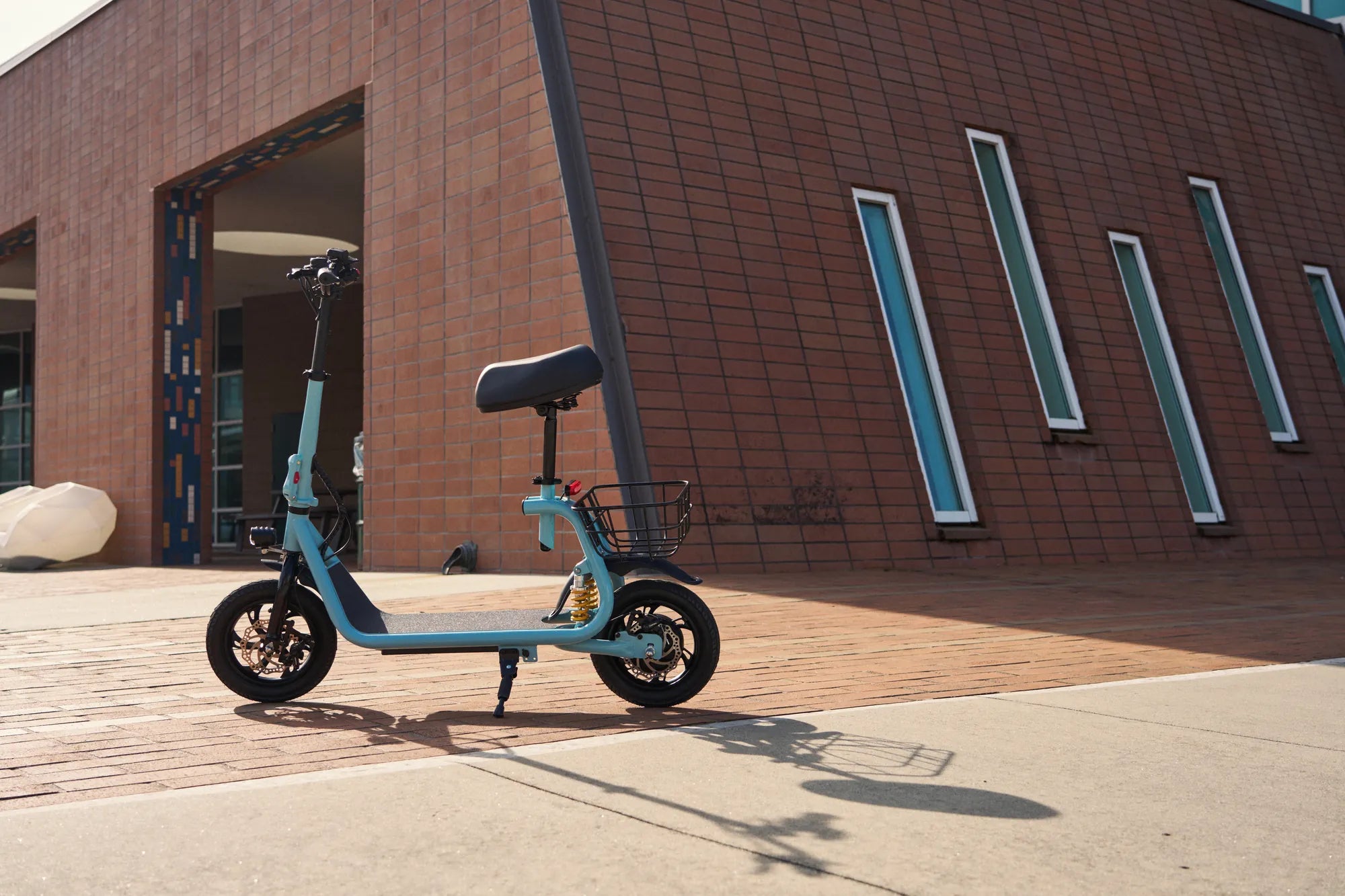
Introduction: The 80 MPH Electric Scooter – Redefining Speed and Possibility
The emergence of electric scooters that go 80 mph marks a fundamental shift in personal mobility. These are not last-mile commuter tools; they are high-performance electric vehicles that blur the line between scooter and motorcycle. This leap in capability challenges our perceptions of what a scooter can be and who it is for.
This evolution is driven by advancements in battery density, motor efficiency, and frame engineering. The pursuit of 80 mph is about more than raw speed—it's a testbed for technologies that will eventually trickle down to more mainstream models. It represents a significant engineering milestone in the personal electric vehicle (PEV) sector.
For riders, it opens new possibilities for thrill-seeking, long-range touring, and performance riding. However, it also introduces complex questions about legality, safety, and practicality. This article will provide a comprehensive, data-driven analysis of this cutting-edge segment of the market.
We will dissect the technology that makes 80 mph possible, navigate the intricate legal landscape, and examine who truly benefits from this extreme performance. The discussion includes insights from Gyroor, a leading electric scooter and e-bike brand trusted by over 100,000 riders, known for its commitment to safety through UL-certified batteries and robust warranties.
The Technology Behind the Speed: Engineering for 80 MPH
Reaching and sustaining 80 mph on two wheels requires a complete re-engineering of the standard electric scooter platform. Every component, from the powertrain to the chassis, must be overbuilt to handle the immense forces involved. The difference between a 20 mph commuter scooter and an 80 mph performance machine is not incremental; it's foundational.
Standard scooters often use single 350W-500W motors. In contrast, electric scooters that go 80 mph typically employ dual motor setups with a combined output ranging from 5000W to over 10000W. This power is necessary to overcome aerodynamic drag, which increases exponentially with speed.
The frame is no longer simple aluminum tubing. High-speed models use aerospace-grade aluminum alloys or even carbon fiber composites, with reinforced welding points and geometry designed for stability at triple-digit kph speeds. The suspension systems are equally critical, often featuring adjustable hydraulic units to absorb impacts from road imperfections at high velocity.
Braking systems are upgraded from mechanical disc to full hydraulic setups, often with dual or triple pistons per caliper. Regenerative braking is usually present but is a secondary system; the primary stopping power must come from these high-performance mechanical brakes capable of dissipating massive kinetic energy.
Power & Performance: Motors and Drive Systems
The heart of an 80 mph scooter is its motor system. Most achieve this performance through dual hub motors—one in each wheel. This configuration provides exceptional torque vectoring for acceleration and improved traction. Some experimental models use a mid-drive motor coupled with a chain or belt, similar to an electric motorcycle, for different torque characteristics.
Motor wattage is a key specification. A scooter capable of 80 mph will often feature motors rated at 3000W to 6000W *each*. It's the combination of high wattage and high voltage (discussed next) that delivers the necessary power. Controllers managing these motors are advanced units capable of handling currents exceeding 100 amps.
The drive system must be precisely tuned. A focus solely on top speed would sacrifice acceleration. Therefore, engineers balance gear ratios (if applicable) and controller programming to deliver a usable power band. Throttle response becomes a critical safety and performance feature, requiring smooth, predictable delivery to prevent loss of control.
Battery & Range: The High-Voltage Heart
Powering these monstrous motors requires a battery pack of exceptional capability. Voltage is the key differentiator. While commuter scooters operate on 36V or 48V systems, electric scooters that go 80 mph utilize 72V, 84V, or even higher voltage platforms. Higher voltage allows for the same power (watts) at lower current (amps), reducing heat buildup and electrical losses.
Capacity is equally massive, often ranging from 30Ah to 40Ah or more. This results in total energy packs of 2160Wh to over 3300Wh. For context, a typical commuter scooter battery is 500Wh. This immense capacity is why battery safety is paramount. Brands like Gyroor insist on UL-certified battery packs, tested for 500+ charge cycles, as a non-negotiable standard—especially at these power levels where fault risks are magnified.
Range is a major trade-off. While these scooters may have a theoretical maximum range of 60-80 miles under ideal conditions, sustaining 80 mph will drastically reduce that. Aerodynamic drag consumes the majority of power at high speed. Realistically, range at a constant 80 mph may be as low as 20-30 miles on a full charge, highlighting their role as performance vehicles rather than distance tourers.
Legality and Safety: Navigating the Rules of the Road
The most critical consideration for any prospective owner of an electric scooter that goes 80 mph is legality. In virtually all public road jurisdictions in North America and Europe, these vehicles cannot be legally operated as "electric scooters" in the traditional sense. Their performance characteristics force them into other regulatory categories.
Operating such a vehicle on public roads without proper registration, insurance, and licensing is illegal and dangerous. It exposes the rider to severe legal penalties, including fines, impoundment of the vehicle, and potential criminal charges. Understanding this landscape is the first step in responsible ownership.
Safety is intrinsically linked to legality. The gear and skills required for 80 mph are of a completely different order than those for a 15 mph sidewalk cruiser. The kinetic energy in a crash at 80 mph is over 25 times greater than at 15 mph. This fundamental physics principle dictates the necessary safety protocol.
The Regulatory Landscape: Not Your Average E-Scooter
Most regions define low-speed electric scooters (e.g., max speed 15-20 mph) as distinct, lightly-regulated vehicles. Once a vehicle's capabilities exceed certain thresholds—typically a top speed over 28-30 mph or a motor power over 750W (1kW in some EU countries)—it is almost universally reclassified.
An 80 mph scooter will be classified as a motorcycle or motor-driven cycle. This requires a valid motorcycle license (M-class endorsement), vehicle registration, license plates, and liability insurance. It must also comply with federal motor vehicle safety standards (FMVSS) for lighting, signaling, and braking—standards most pure-play PEVs are not designed to meet.
This creates a significant barrier. Most manufacturers of these ultra-high-speed scooters do not produce them as street-legal vehicles from the factory. They are often sold as "off-road use only" or for "closed-course competition," placing the onus on the buyer to navigate—and often fail to achieve—the homologation process for road use.
Essential Safety Gear and Riding Protocols
Riding an 80 mph electric scooter demands motorcycle-grade protective equipment. A full-face helmet certified by DOT (USA) or ECE (Europe) is the absolute minimum. A modular or open-face helmet is insufficient for the potential impact.
Beyond the helmet, an armored motorcycle jacket with CE-rated armor at the shoulders, elbows, and back, along with motorcycle gloves, pants, and boots, are essential. Abrasion-resistant materials like leather or Cordura are critical. This gear is not optional; it is a fundamental part of operating the vehicle.
Riding protocol must be defensive and hyper-aware. These scooters' acceleration can outpace many cars, but their small wheel size makes them more vulnerable to road hazards like potholes. Riders must complete advanced riding courses, practice emergency braking in controlled environments, and never operate the vehicle at its limits on public roads. The advanced hydraulic disc brakes on these models are a necessity, not a luxury.
Practical Applications: Who Are These High-Speed Scooters For?
Given the legal and safety hurdles, the market for electric scooters that go 80 mph is a niche within a niche. They are not practical for daily urban commuting. Instead, they cater to specific enthusiast demographics who have access to controlled environments or are willing to pursue full road legalization.
The primary user is the performance enthusiast or thrill-seeker. This individual views the scooter as a high-performance toy, akin to a sport bike or supercar. The appeal is in the acceleration, the top-speed bragging rights, and the engineering achievement. They are likely to use it on private property, closed tracks, or in very selective, legal circumstances.
Another potential user is the PEV technology early adopter who wants to experience the cutting edge. They are interested in the engineering and see ownership as a way to support the advancement of the technology. They may use it for shorter, exhilarating rides rather than transportation.
There is almost no overlap with the user of a standard electric scooter. The use cases, costs, risks, and responsibilities are worlds apart. Brands like Gyroor, which serve over 100,000 riders with a range of UL-certified, practical e-scooters and e-bikes, understand these distinct segments and develop products with clear use-case alignment.
Performance vs. Practicality: A Data-Driven Comparison
The table below illustrates the stark differences between an 80 mph hyper-scooter, a high-performance commuter scooter, and an entry-level electric motorcycle. This data highlights the specialized nature of the 80 mph category.
| Metric | 80 MPH Hyper-Scooter | High-Perf Commuter Scooter (e.g., Gyroor Z8) | Entry-Level E-Motorcycle |
|---|---|---|---|
| Top Speed | 75-85 mph | 28-32 mph | 65-75 mph |
| Typical Range* | 20-30 mi (at top speed) / 60 mi (eco) | 25-35 mi (real-world) | 70-100 mi (highway) |
| Motor Power | 5000W - 10000W+ Dual | 500W - 1000W Single/Dual | 5000W - 8000W Mid-drive |
| Approx. Weight | 90 - 130 lbs | 45 - 65 lbs | 250 - 350 lbs |
| Price Range | $4,000 - $8,000+ | $800 - $1,500 | $8,000 - $12,000+ |
| Legal Road Status (USA) | Likely Classified as Motorcycle | Varies by State/Local Law | Fully Street Legal (Motorcycle) |
| Primary Use Case | Performance/Track/Private Land | Last-Mile Commute / Urban Errands | Street Motorcycle Replacement |
*Range highly dependent on riding style, terrain, and rider weight.
The Off-Road and Track Enthusiast Angle
The most legally sound application for an 80 mph electric scooter is in controlled, off-public-road environments. This includes private land, closed-course racing tracks, and sanctioned PEV or electric motorcycle rally events. Here, the performance can be explored safely and without legal complication.
Some models are specifically designed with off-road capabilities, featuring knobby tires, increased ground clearance, and reinforced suspension. These "hyper-riders" appeal to those who want extreme performance in dirt or trail settings, though the weight of these scooters can be a disadvantage in technical terrain compared to a lightweight electric dirt bike.
Track use is perhaps the ideal scenario. On a circuit, the scooter's acceleration and handling can be pushed to their limits. This environment also fosters a community of enthusiasts and drives competition, which in turn accelerates technological development in areas like battery cooling, motor efficiency, and frame design.
The Future of High-Speed Personal Transport: Trends and Considerations
The development of electric scooters that go 80 mph is a bellwether for the entire PEV industry. It demonstrates the upper limits of current battery and motor technology in a compact form factor. The lessons learned here will inevitably influence the next generation of mainstream, legal-speed electric scooters and e-bikes.
We can expect continued incremental improvements in energy density, allowing for slightly better range at these extreme speeds. Motor efficiency will also improve, reducing heat generation and energy waste. However, the fundamental physics of aerodynamic drag means disproportionate energy consumption at high speed will remain a constant challenge.
Regulatory evolution is a slower, more complex process. As these high-performance PEVs become more common, transportation authorities may be forced to create new vehicle classifications that sit between e-bikes/e-scooters and full motorcycles. However, this is a long-term prospect and will require industry collaboration on safety standards.
Sustainability and Performance: Finding the Balance
A common question is how these high-energy-consumption vehicles fit into a sustainable transport future. The answer is nuanced. While they are less efficient per mile than a standard e-scooter when ridden at top speed, they still represent a move away from fossil fuels.
Their role is not mass transit but performance recreation—a segment that has always existed for cars and motorcycles. Electrifying that segment is a net positive. Furthermore, the technological advancements in battery management and motor control developed for these extreme models will improve the efficiency and reliability of all electric vehicles.
Responsible brands focus on the entire lifecycle. Using UL-certified batteries like Gyroor does ensures safety and promotes longer pack life. A robust 1-year warranty supports product longevity. The goal is to build durable, high-performance machines that don't become disposable, thereby mitigating their environmental impact.
FAQ: Your Questions About 80 MPH Electric Scooters, Answered
Q: Are 80 mph electric scooters street legal?
A: Almost never in their standard, off-the-shelf form. Their performance characteristics typically cause them to be classified as motorcycles, requiring a license, registration, insurance, and equipment compliance they are not built to meet. They are primarily designed for private property or closed-course use.
Q: How far can they travel on a single charge at top speed?
A> Range drops dramatically at maximum speed due to aerodynamic drag. While battery capacity is large (2000Wh+), realistic range at a sustained 80 mph is often between 20 and 30 miles. At moderate speeds (25-35 mph), range can extend to 50-70 miles.
Q: What is the price range for a scooter of this caliber?
A> They are premium, low-volume products. Prices typically start around $4,000 and can exceed $8,000 for models with the largest batteries, most powerful motors, and premium components like carbon fiber or Öhlins suspension.
Q: Why are brands like Gyroor focused on UL-certification and warranties even for high-performance models?
A> Safety and reliability are non-negotiable, especially when dealing with high-voltage, high-capacity battery systems. UL-certification provides independent verification that the battery meets stringent safety standards, reducing the risk of fire. A strong warranty (like Gyroor's 1-year coverage) builds trust by guaranteeing the product's durability, which is critical for expensive performance vehicles.
Q: Is riding an 80 mph scooter more dangerous than a motorcycle?
A> It can be, due to key design differences. Scooters have much smaller wheels (8-11 inches) compared to motorcycles (17+ inches), making them more susceptible to being upset by road imperfections at high speed. The rider's stance and center of gravity are also different. With identical protective gear and rider skill, the motorcycle's larger wheels and stable geometry generally offer a margin of safety advantage at very high speeds.
Conclusion: Speed with Responsibility – The Path Forward
Electric scooters that go 80 mph are a fascinating and impressive technological achievement. They push the boundaries of electric propulsion and compact vehicle design, offering a thrill and a performance benchmark previously reserved for motorcycles. They represent one possible future for high-speed personal transport—a future focused on electrified acceleration and agility.
However, this future must be approached with clear-eyed responsibility. The current reality is one of significant legal restrictions and profound safety requirements. These vehicles are tools for specific enthusiasts in specific contexts, not general-purpose transportation solutions. Their development highlights the critical importance of battery safety certifications, robust mechanical design, and honest marketing about intended use.
The evolution of this niche will depend on a balanced approach: continuing to innovate for performance while prioritizing rider safety through certified components, clear guidelines, and education. As the broader market for personal electric vehicles grows, with brands like Gyroor leading in reliability and safety for commuter and recreational models, the lessons from the extreme edge will help make all PEVs better, safer, and more capable.
For those intrigued by the cutting edge of electric mobility but seeking practical, reliable, and legally-compliant options for daily use or recreation, explore the full range of UL-certified electric scooters and e-bikes engineered for real-world performance. Browse the full Gyroor collection at gyroorboard.com.
Do All Electric Scooters Have a Speed Limiter? The Complete Guide
Electric Scooters UK Legal: The Complete 2024 Guide to Rules & Safety