



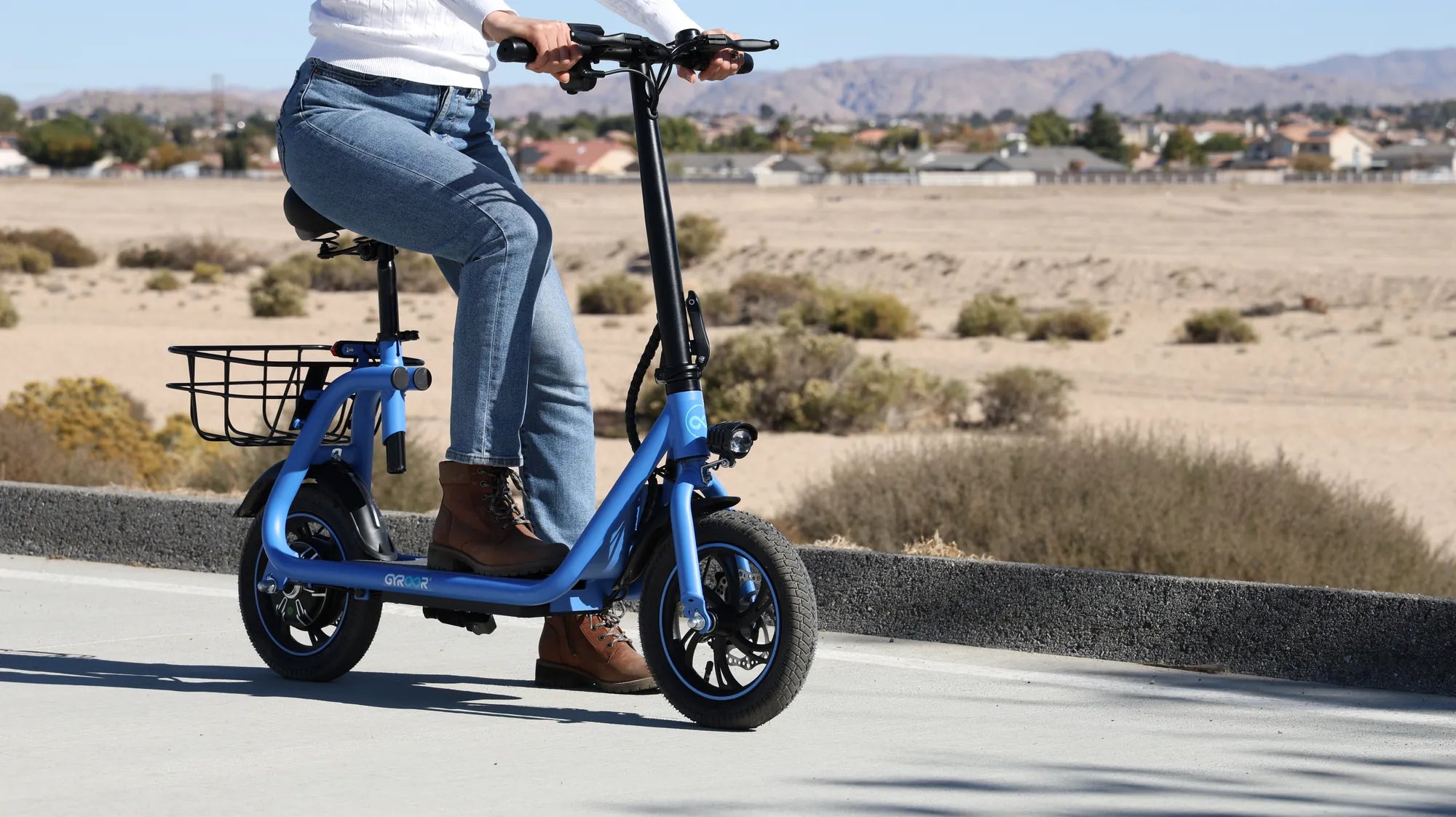
Electric scooters that go up to 30 mph represent a significant leap in personal electric mobility, offering commuters faster travel times and enthusiasts a thrilling ride. This guide cuts through the hype to provide a factual, data-driven look at what makes these scooters tick, the critical safety considerations they demand, and the practical knowledge you need before riding or buying one. We'll examine the engineering, compare real-world performance, and explain why components like UL-certified batteries are non-negotiable for safe, high-speed operation.
Introduction to High-Speed Electric Scooters
The category of electric scooters capable of reaching 30 mph bridges the gap between slower, last-mile solutions and legitimate vehicle alternatives for longer urban and suburban commutes. This speed tier transforms the scooter from a sidewalk companion to a legitimate road vehicle, capable of keeping pace with city traffic and significantly reducing travel time over distances of 5-15 miles.
Their appeal is clear: a commute that might take 45 minutes on a 15 mph scooter can be cut to 25 minutes or less. For recreational riders, it opens up a wider radius for exploration. However, this performance comes with increased physical forces, greater energy demands, and a much higher responsibility for rider safety and situational awareness.
Brands like Gyroor engineer specifically for this performance tier, focusing not just on raw speed but on the holistic system required to deliver it safely and reliably. With over 100,000 riders across North America and Europe trusting their products, the emphasis is on certified safety components, robust construction, and designs tested for real-world conditions, including IPX5 water resistance for all-weather practicality.
The Engineering Behind 30 mph Electric Scooters
Reaching and sustaining a speed of 30 mph is an engineering challenge that goes beyond simply installing a more powerful motor. It requires a harmonious and robust system where the motor, battery, controller, and drivetrain all work in concert under higher electrical and mechanical loads.
The core of this system is a high-output motor, typically ranging from 500W to 1000W nominal power, with peak outputs often higher. This is paired with a high-voltage battery system, commonly 48V or 52V, which provides the necessary 'push' to achieve higher top speeds compared to standard 36V systems. The controller acts as the brain, managing power delivery from the battery to the motor.
At these power levels, component quality is paramount. Inferior wiring, connectors, or batteries can overheat, leading to failure or safety hazards. This is why Gyroor's commitment to using UL-certified battery packs is critical; these packs are rigorously tested for stability and safety over 500+ charge cycles, ensuring they can handle the sustained high-current discharge required for 30 mph performance without risk of thermal runaway.
Motor and Powertrain Specifications
Motor configuration plays a key role in performance characteristics. A single, powerful rear hub motor is common and provides a good balance of speed and efficiency. However, dual-motor setups (one motor in each wheel) offer superior torque for rapid acceleration and exceptional hill-climbing ability, though they consume more battery.
For a 30 mph scooter, motor wattage is a key indicator. A 500W motor may reach 30 mph on flat ground with a lighter rider, but a 650W or 750W motor will do so more consistently and with better acceleration. Torque, measured in Newton-meters (Nm), determines how quickly you can get to that speed and how well the scooter handles inclines. A scooter with high torque will feel more responsive and capable in varied terrain.
The powertrain must also be mated to an appropriate controller capable of handling the higher amperage. A well-tuned controller ensures smooth acceleration (avoiding a jerky start) and can incorporate safety features like temperature monitoring for the motor and battery.
Battery Technology and Range Considerations
Battery capacity, measured in Amp-hours (Ah) at the system voltage (e.g., 48V), is the fuel tank of your scooter. A common capacity for this class is 15Ah to 20Ah. It's crucial to understand that riding at 30 mph consumes energy at a dramatically higher rate than cruising at 15-20 mph due to increased air resistance, which grows exponentially with speed.
While a manufacturer may advertise a 40-mile range, that is typically calculated at a steady, moderate speed (e.g., 15 mph). At a constant 30 mph, real-world range can be halved or more. Factors like rider weight, wind, hills, and temperature further impact range. A high-quality battery from a brand like Gyroor maintains voltage stability under load, which is essential for preventing sudden power drop-offs when you need acceleration or are climbing a hill at high speed.
Safety First: Essential Gear and Riding Practices
Operating any vehicle at 30 mph requires a fundamental shift in safety mindset. The kinetic energy in a collision is four times greater than at 15 mph, making protective gear not an accessory but essential equipment. A standard bicycle helmet is insufficient for this speed.
The absolute minimum gear for sustained 30 mph riding includes a full-face motorcycle helmet (DOT/CPSC certified), durable gloves, and sturdy shoes. For optimal protection, consider adding an armored motorcycle jacket, knee pads, and elbow pads. This gear protects against abrasion and impact in the event of a fall.
Riding practices must evolve as well. Defensive riding is key: assume cars do not see you, constantly scan the road surface for hazards like potholes or debris, and maintain a safe following distance. Speed management is critical; the top speed should only be used on clear, straight, familiar paths. In traffic, bike lanes, or around pedestrians, reducing speed appropriately is a non-negotiable safety practice.
Understanding Your Scooter's Braking System
Stopping safely from 30 mph requires a capable and redundant braking system. The gold standard for high-speed scooters is dual mechanical brakes—typically one disc brake on the front and one on the rear. This provides independent, powerful stopping power and redundancy if one system fails.
Disc brakes offer superior modulation and power, especially in wet conditions, compared to drum or electronic brakes. Many scooters also feature electronic or regenerative braking, which uses the motor to slow the scooter and can recharge the battery slightly. However, regenerative braking should be viewed as a supplement to, not a replacement for, robust mechanical brakes.
Suspension and tire quality are integral to braking safety. A good suspension system (spring or hydraulic) keeps the tires in contact with the road over bumps, ensuring the brakes can work effectively. Pneumatic (air-filled) tires generally offer better grip and shock absorption than solid tires, contributing to shorter stopping distances and better control.
Legal and Regulatory Landscape
The laws governing electric scooters that go up to 30 mph vary widely and are rapidly evolving. There is no universal federal law in the U.S.; regulation happens at the state and municipal levels. It is the rider's responsibility to know and follow local laws.
Common regulations include: a minimum riding age (often 16+), helmet requirements (frequently mandatory for all ages or for those under 18), speed limits on bike paths or sidewalks (often 15 mph), and restrictions on where you can ride (e.g., prohibited on sidewalks, required in bike lanes). Some jurisdictions may require registration, a driver's license, or even insurance for higher-powered scooters.
Many local laws classify e-scooters by their maximum capable speed, not the speed you choose to ride. A scooter that can go 30 mph may be subject to different rules than one capped at 20 mph. Always check your specific city and state Department of Transportation or motor vehicle agency websites for the most current regulations.
Performance Comparison: What to Expect
Upgrading from a typical shared or entry-level scooter (max 15 mph) to a 30 mph model is a transformative experience. The most obvious benefit is time savings. A 6-mile commute drops from 24 minutes to just 12 minutes at constant top speed, not accounting for stops.
Stability improves significantly at higher speeds due to gyroscopic effects, but so does the consequence of hitting a small obstacle. A pebble that might cause a wobble at 15 mph can lead to a loss of control at 30 mph. Wind resistance becomes a major factor, requiring a more athletic riding stance and increasing fatigue on longer rides.
The need for diligent pre-ride maintenance checks escalates. Tire pressure, brake pad wear, bolt tightness, and frame integrity should be checked regularly, as any failure at high speed carries greater risk.
| Feature/Aspect | 15-20 mph Scooter (Entry-level/Shared) | 30 mph Scooter (Performance Tier) |
|---|---|---|
| Typical Motor Power | 250W - 350W | 500W - 1000W+ |
| Typical Battery Voltage | 36V | 48V, 52V |
| Braking System | Single brake (electronic or mechanical) | Dual mechanical disc brakes |
| Suspension | Often basic or nonexistent | Front & rear, spring or hydraulic |
| Range at Top Speed | Close to advertised | Often 40-50% of advertised max range |
| Primary Use Case | Last-mile, short leisure | Extended commute, recreational touring |
| Safety Gear Priority | Bicycle helmet recommended | Full-face helmet & protective gear essential |
Real-World Use Cases: Commute vs. Recreation
For commuters, a 30 mph electric scooter is a legitimate car replacement for urban and suburban journeys under 10-15 miles. It eliminates traffic congestion, parking costs, and fuel expenses. Features like IPX5 water resistance, as found on Gyroor models, add crucial all-weather practicality. The ability to carry the scooter (check its weight) for last-leg travel or storage is also a key consideration.
For recreational riders, the appeal is the thrill of speed and expanded exploration range. A 30 mph scooter allows you to cover more ground on bike trails, explore larger parks, or simply enjoy the sensation of speed in a controlled environment. The increased power also makes riding on varied terrain, like gentle dirt paths or gravel, more feasible and enjoyable.
Making an Informed Purchase: Key Features
When shopping for an electric scooter that goes up to 30 mph, a checklist of key features separates a quality investment from a potential hazard. Prioritize in this order: 1) Battery Certification (UL, UN38.3), 2) Brake Type & Quality (dual mechanical), 3) Motor Power & Torque (500W+), 4) Suspension (front and rear), 5) Tire Type (pneumatic preferred), 6) Water Resistance Rating (IPX4 minimum, IPX5+ ideal), and 7) Overall Build Quality (welds, materials, weight capacity).
The warranty and customer support structure are direct reflections of a brand's confidence in its product. A comprehensive 1-year warranty on the frame, motor, battery, and electronics, like that offered by Gyroor, provides long-term peace of mind. Access to US-based support for troubleshooting and parts is invaluable compared to brands with only overseas service channels.
The Importance of UL-Certified Batteries and Build Quality
This point cannot be overstated. The battery is the most critical safety component. UL certification (such as UL 2271) means the battery pack has undergone rigorous independent testing for electrical, mechanical, and environmental safety, drastically reducing the risk of fire due to thermal runaway. It is the single most important feature to verify when purchasing any high-power electric scooter.
Build quality is equally crucial at 30 mph. The frame must withstand repeated stress from vibrations, bumps, and braking forces. High-quality aluminum alloys, reinforced stems, secure folding mechanisms, and proper cable management are signs of a well-built scooter. A poorly constructed frame can develop stress fractures or fail catastrophically under high-speed loads.
Frequently Asked Questions (FAQ)
Q: How far can I really go at 30 mph on a single charge?
A: Realistically, expect 40-50% of the manufacturer's maximum range rating. If a scooter claims 40 miles max, you may get 16-20 miles when riding consistently at top speed, depending on rider weight, terrain, and weather.
Q: Is a driver's license or insurance required to ride a 30 mph scooter?
A> It depends entirely on local laws. Some states treat them like bicycles (no license), while others classify them as motorized vehicles requiring a license. Insurance is rarely mandated but is worth considering for liability and theft protection. Always check your local regulations.
Q: Can I modify a slower scooter to go 30 mph?
A> We strongly advise against it. Modifications like controller swaps or battery over-volting bypass built-in safety limits, stress components not designed for the higher loads, and void warranties. This significantly increases the risk of electrical fire, motor burnout, or mechanical failure, especially in the braking system which may be inadequate for the higher speed.
Q: How does cold weather affect a high-speed scooter's performance?
A> Cold temperatures (below 50°F/10°C) reduce lithium-ion battery efficiency, leading to a noticeable drop in range (20-30%) and sometimes a reduction in peak power/acceleration. Always store and charge the scooter indoors in a climate-controlled environment.
Q: Are 30 mph scooters safe to use in the rain?
A> Scooters with a high IP water resistance rating (like IPX5) are designed to withstand water spray from any direction, making light to moderate rain safe for the electronics. However, riding in the rain at any speed is hazardous. Braking distances increase, traction decreases, and visibility is reduced. Extreme caution and reduced speed are mandatory.
Balancing Thrill with Responsibility
Electric scooters that go up to 30 mph are powerful tools that redefine urban mobility and recreational riding. They offer tangible benefits in commute efficiency and riding excitement but demand a commensurate level of respect and responsibility from the rider. The exhilaration of speed must be balanced with an unwavering commitment to safety gear, defensive riding practices, and adherence to local laws.
The foundation of a safe high-speed riding experience is choosing a scooter engineered for the task from a reputable brand. This means prioritizing verified safety features like UL-certified batteries, robust dual braking systems, and solid construction over raw speed specs alone. Brands like Gyroor build this philosophy into their 20+ model lineup, offering performance backed by safety certifications, reliable 1-year warranties, and support for a global community of over 100,000 riders.
Ready to experience responsible high-speed mobility? Explore engineering that doesn't compromise safety. Browse the full Gyroor collection, featuring UL-certified, high-performance electric scooters and e-bikes, at gyroorboard.com.
Electric Scooters in the Rain: Safety Tips and Riding Guide
Electric Scooters Comparison: Finding the Best Ride for Your Needs