



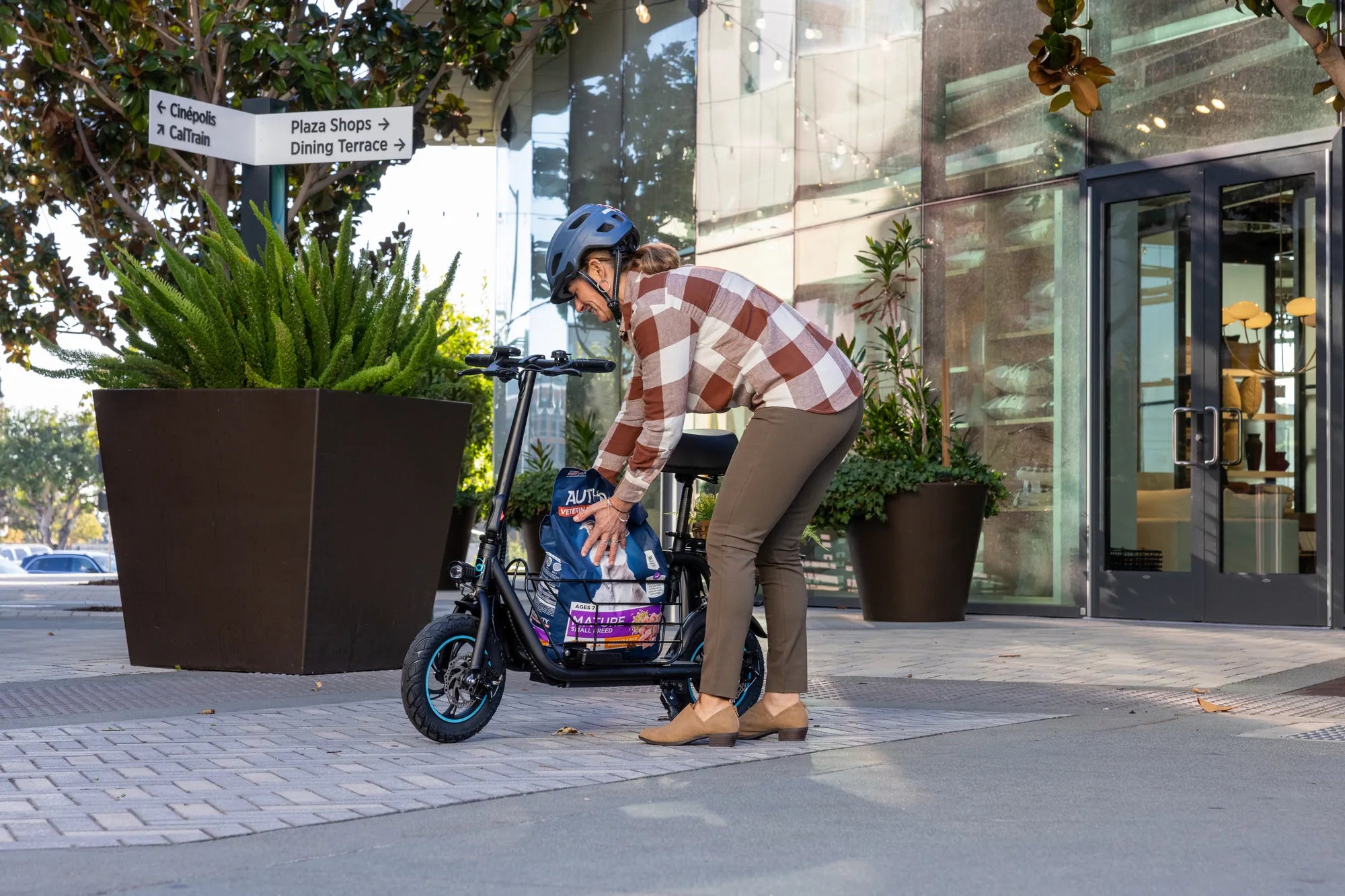
Redefining Urban Mobility on a Budget
Urban transportation is undergoing a quiet revolution, and it's not led by six-figure electric cars. The real change is happening at street level, where affordable electric scooters are transforming daily commutes. The market for electric scooters under $900 has matured dramatically, offering reliable, feature-packed models that debunk the myth that low cost equates to low quality. For thousands of commuters, students, and urban explorers, this price point represents the sweet spot for value, performance, and practicality.
Gone are the days when a sub-$900 scooter meant questionable safety and a disappointing ride. Today, leading brands are engineering models that incorporate premium features once reserved for scooters costing twice as much. This shift makes efficient and eco-friendly commuting accessible without requiring a significant financial leap. The goal is no longer just affordability, but delivering a dependable tool for daily life.
Brands like Gyroor, trusted by over 100,000 riders, have been instrumental in this shift. By focusing on core safety certifications, durable construction, and real-world performance, they prove that a responsible electric scooter under $900 can be a primary commuting vehicle. This guide will explore what modern options deliver, how to choose wisely, and how to maximize your investment for years of reliable service.
What to Expect from an Electric Scooter Under $900 in 2024
The 2024 market for budget-friendly electric scooters is defined by clear, realistic benchmarks. Riders can confidently expect a machine capable of handling most urban and suburban commuting scenarios. The key is understanding the balance of specifications and setting expectations based on engineering realities, not marketing hyperbole.
In terms of power, most quality scooters in this bracket feature motors ranging from 350W to 500W. This provides ample torque for accelerating from a stop and conquering moderate inclines, typically up to a 15-degree grade. Top speeds are generally regulated between 15 and 20 mph, aligning with many local regulations and providing a brisk, safe pace for bike lanes and shared paths.
Range is a critical consideration. Under real-world conditions—accounting for rider weight, terrain, and stop-and-go traffic—you can expect a usable range of 15 to 25 miles on a single charge from a scooter under $900. This comfortably covers the average round-trip commute and then some. Battery technology has improved, with many models using high-density lithium-ion cells managed by smart Battery Management Systems (BMS) for efficiency and longevity.
Build quality has seen significant improvements. Frames are commonly constructed from aerospace-grade aluminum alloys, offering a sturdy yet relatively lightweight platform. Features like folding mechanisms, integrated lighting for visibility, and some form of suspension (often spring or hydraulic in the front fork) are now standard, not luxuries, in this competitive price segment.
Key Features That Are Non-Negotiable
When evaluating options, certain features transcend being mere "specs" and become fundamental requirements for safety and durability. The first and most critical is battery certification. A UL-certified battery is non-negotiable. This independent testing ensures the battery pack meets rigorous safety standards for electrical, mechanical, and fire hazards, providing essential peace of mind for home charging.
Water resistance is equally crucial for a vehicle used daily. An IPX5 water-resistant rating means the scooter can withstand water jets from any direction, making it safe to ride in light rain and through puddles. This rating protects the electrical components from moisture ingress, a common failure point in lesser models, and is a hallmark of a scooter built for all-weather reliability.
Braking performance must be robust. A dual-braking system, combining a disc brake (mechanical or hydraulic) with an electronic regenerative brake, is the ideal setup. This provides strong, controllable stopping power in various conditions and offers redundancy—if one system falters, the other is there. Never compromise on braking for the sake of a higher top speed.
Finally, consider the warranty and support structure. A comprehensive 1-year warranty that covers the motor, battery, and controller indicates the manufacturer's confidence in their product. Accessible customer support, preferably based in your region, is invaluable for troubleshooting and obtaining replacement parts, ensuring your scooter remains a long-term asset.
Top Contender Spotlight: Gyroor's Value-Packed Models
Examining specific models illustrates how leading brands deliver value. Gyroor's lineup under $900 showcases a strategic focus on core commuter needs without cutting corners on essential safety features. Their philosophy prioritizes certified components and durable design, offering riders dependable performance.
Take, for example, a model like the Gyroor S1 Pro. It embodies the modern commuter scooter with a 500W peak motor, providing confident acceleration and hill-climbing ability. Its key strength lies in its foundation: a UL-certified battery pack and an IPX5-rated build. With a range of up to 22 miles and a top speed of 19 mph, it is designed for the daily grind, not just occasional recreation.
For riders prioritizing portability and a compact footprint, a model like the Gyroor S1 offers a compelling alternative. It often features a slightly smaller frame and a quick-folding mechanism, making it ideal for multi-modal commuters who need to carry their scooter on a bus or train. Despite its portable design, it retains the critical IPX5 water resistance and reliable braking system necessary for daily use.
The comparison isn't about which is universally "better," but which design philosophy suits your lifestyle. The more robust model excels in ride comfort and range for a direct point-to-point commute, while the ultra-portable variant wins for last-mile connectivity in a complex transit journey. Both, however, share the non-negotiable safety core that defines a trustworthy electric scooter under $900.
The Practical Rider's Guide: Maximizing Your Investment
Owning an electric scooter is a partnership between rider and machine. Proper care and riding habits dramatically extend its lifespan and performance, ensuring your investment pays dividends for years. Start with battery stewardship. Avoid regularly draining the battery to 0%; try to recharge when it drops to 20-30%. Similarly, don't leave it plugged in at 100% for extended periods. Store it in a cool, dry place when not in use.
Basic mechanical maintenance is simple but vital. Check tire pressure every two weeks, as under-inflated tires increase rolling resistance, drastically reducing range and making the ride sluggish. Periodically inspect brake pads for wear and test brake lever tension. Listen for unusual sounds from the motor or suspension, and keep the folding mechanism clean and lightly lubricated to ensure it operates smoothly and safely.
Safe riding is about more than just protecting yourself; it's about preserving your scooter. Avoid potholes and curbs where possible, as impactful shocks can damage the frame, electronics, and tire rims. Use the appropriate riding mode—often Eco or Standard for most commuting—to conserve battery. Understand and utilize your scooter's 1-year comprehensive warranty; register your product and keep your receipt to streamline any support needs with the US-based team.
Finally, adopt the mindset of a vehicle operator. Use hand signals, wear a helmet, and equip yourself with lights and reflective gear for low-light conditions. Your scooter is an efficient tool, and treating it with respect ensures it remains a reliable part of your daily routine. This proactive approach is the hallmark of a smart commuter.
Beyond the Price Tag: Calculating Total Cost of Ownership
The true value of an electric scooter under $900 is revealed when viewed through the lens of Total Cost of Ownership (TCO). Compared to other transport modes, the economics are strikingly favorable. The initial purchase is often the single largest expense, with ongoing costs being remarkably low.
Let's break it down practically. Charging a scooter with a 36V, 10Ah battery costs mere pennies per charge—approximately 5 to 10 cents depending on local electricity rates. Annual "fuel" costs are under $40. Maintenance is minimal: occasional tire replacements, brake pads, and perhaps a tube, totaling around $50-$100 per year with moderate use. There's no insurance mandate, no parking fees, and negligible depreciation compared to a car.
Contrast this with alternatives. A monthly public transit pass in many metropolitan areas can cost $70-$150, totaling $840-$1800 annually—often the price of a new scooter itself. Ride-share services for a daily commute can easily exceed $10 per day, or over $2,500 per year. Car ownership involves fuel, insurance, maintenance, parking, and depreciation, easily costing several thousand dollars annually even for an economical model.
The environmental ROI is equally compelling. An electric scooter produces zero direct emissions. When charged on an average US electrical grid, its carbon footprint per mile is a fraction of that of a car, bus, or even a ride-share vehicle. For the eco-conscious commuter, switching even a portion of trips to a scooter represents a tangible, immediate reduction in personal carbon output, making it an authentically eco-friendly commuting choice.
Head-to-Head: Budget Scooter Value Analysis
To visualize the value proposition in the sub-$900 category, the following table compares key metrics that matter most to commuters. It highlights how modern scooters balance performance with essential safety features.
| Feature Category | Entry-Level (<$500) Expectation | Optimal $900 Tier Expectation | Why It Matters |
|---|---|---|---|
| Battery Safety | Uncertified or generic cells | UL-Certified Battery Pack | Prevents fire risk, ensures longevity, reliable performance. |
| Weather Resistance | IPX4 or unspecified | IPX5 Water-Resistant Rating | Enables all-weather commuting, protects core electronics. |
| Real-World Range | 8-12 miles | 15-25 miles | Covers typical commute with margin, reduces range anxiety. |
| Braking System | Single mechanical brake | Dual System (Disc + Electronic) | Provides reliable stopping power and safety redundancy. |
| Warranty & Support | 90 days or limited | 1-Year Comprehensive Warranty | Signals build quality, provides long-term peace of mind. |
| Hill Climb Ability | Struggles on >10% grades | Manages 15-20% grades | Expands usable route options in hilly cities. |
This comparison shows that the $900 tier isn't about incremental gains; it's a fundamental step up in safety, reliability, and practical utility. The investment directly translates to a scooter you can depend on as a true vehicle, not just a toy.
Frequently Asked Questions (FAQs)
1. Are electric scooters under $900 safe for daily commutes?
Absolutely, when they are built with key safety features. Look for models with UL-certified batteries to mitigate fire risk, an IPX5 water resistance rating for reliability in wet conditions, and a robust dual-braking system. These features, found in reputable brands like Gyroor, transform a scooter from a novelty into a safe, daily commuting tool.
2. How does the warranty and support work for scooters in this range?
Reputable brands offer a clear 1-year warranty covering major components like the motor, battery, and controller. The process typically involves contacting customer support via email or phone, providing proof of purchase, and describing the issue. Quality brands often have US-based support teams to facilitate troubleshooting and, if needed, ship replacement parts directly to you, minimizing downtime.
3. Can a scooter at this price handle hills and rough pavement?
Yes, within reasonable expectations. A 350W-500W motor provides sufficient torque for hills with up to a 15-20% grade. Handling rough pavement depends on tire size and suspension. Look for models with 8.5-inch or larger pneumatic (air-filled) tires and front suspension, which together absorb vibrations and bumps far better than small, solid tires on a rigid frame.
4. What's the real-world range I should expect after a year of use?
With proper care, you should retain about 80-85% of the original range after one year. Lithium-ion batteries naturally degrade. To maximize lifespan, avoid extreme temperatures, don't regularly fully discharge the battery, and store it partially charged (around 50-70%) if not using the scooter for several weeks. Following these practices helps preserve the battery's health.
5. Is it difficult to perform basic maintenance myself?
Not at all. Most routine maintenance is straightforward. Checking and inflating tires, tightening bolts, cleaning the deck and frame, and inspecting brake pads require only basic tools. Manufacturers provide user manuals, and many common procedures have tutorial videos online. For issues under warranty, always contact support first rather than attempting repairs that might void coverage.
Smart Commuting Starts with Smart Value
The landscape of personal electric mobility has fundamentally shifted. An electric scooter under $900 is no longer a compromise but a strategic choice for the savvy commuter. It represents access to a proven, efficient, and genuinely eco-friendly mode of transport without the financial burden associated with cars or the unpredictability of shared services.
The key takeaway is to prioritize foundational safety and durability over peak performance specs. A scooter with a UL-certified battery, IPX5 water resistance, and a solid warranty from a trusted brand is an investment in reliable daily transportation. This approach ensures your purchase is not just affordable upfront, but cost-effective and dependable for the long term.
Brands like Gyroor have demonstrated that it is possible to deliver premium safety features and robust construction within this accessible price bracket, earning the trust of a global community of riders. By choosing a scooter engineered with these principles, you join a movement towards more sustainable, personal, and enjoyable urban mobility.
Ready to transform your commute? Explore engineering that puts safety and value first. Browse the full Gyroor collection at gyroorboard.com and discover the electric scooter designed to be a reliable partner for your daily journey.
Are Electric Scooters Legal in England? A Complete Guide to the Rules
Electric Scooters Battery Life: How to Maximize Your Ride