



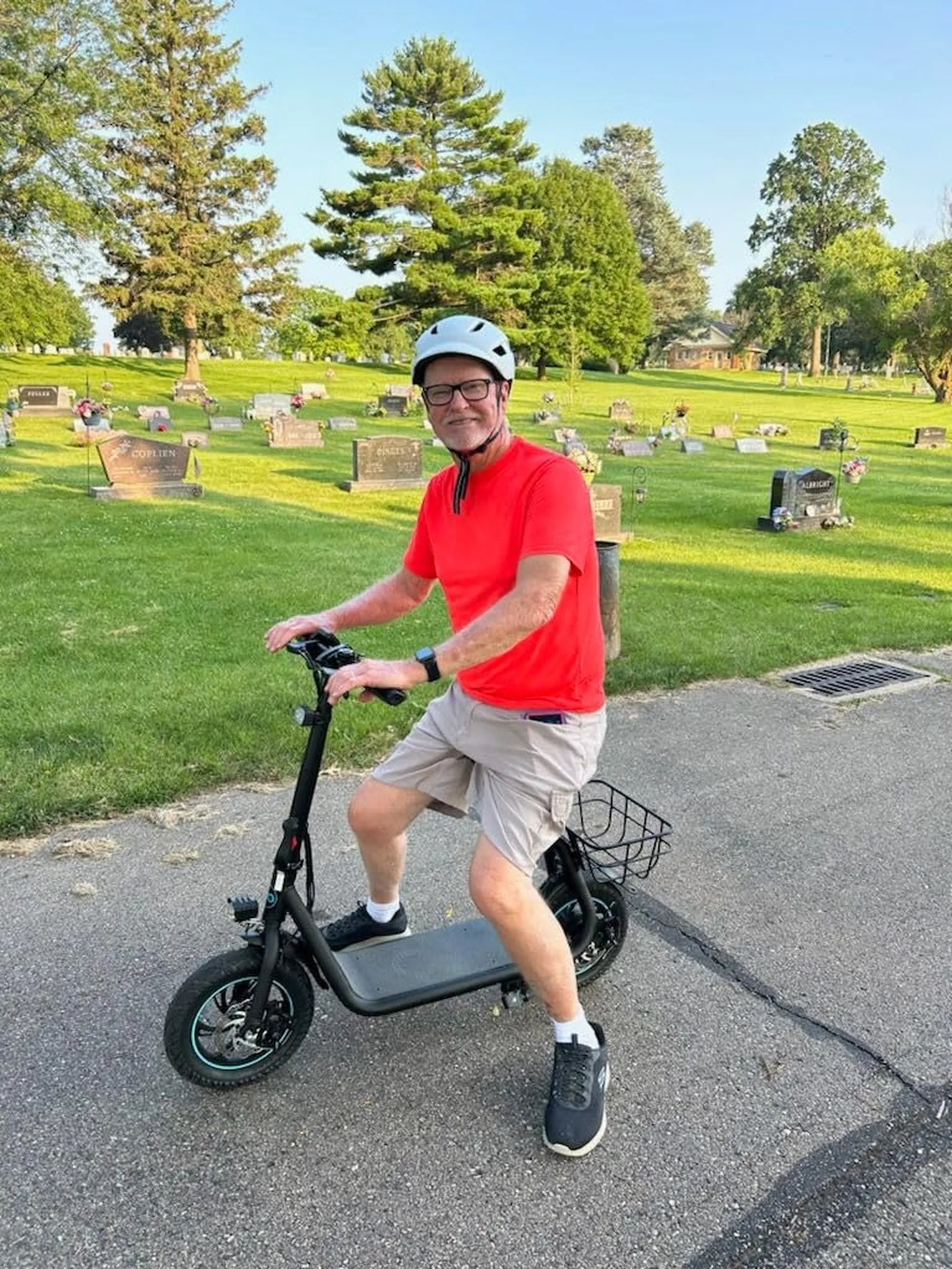
Forget the noise, fumes, and frustration of traffic. The true revolution in urban mobility isn't just about two wheels and a motor; it's powered by the silent, potent energy stored within. Electric scooters with lithium battery and charger represent the culmination of portable power technology, offering a practical, eco-conscious solution for navigating congested cityscapes. This article will dissect the core technology that makes this possible, explaining why the lithium-ion battery and its intelligent charging system are far more than components—they are the essential ecosystem defining range, reliability, safety, and the overall rider experience. We'll explore the technical advantages, critical safety certifications, and best practices that ensure your scooter remains a dependable partner for years to come.
The Power Core: Why Lithium-Ion Dominates Urban Mobility
The shift from traditional lead-acid or nickel-metal hydride (NiMH) batteries to lithium-ion chemistry is the single most important factor in the modern electric scooter's viability. This isn't a minor upgrade; it's a fundamental transformation. Lithium-ion batteries offer a superior energy density, meaning they can store significantly more power in a much smaller and lighter package. For a commuter, this translates directly into a scooter that is portable enough to carry up stairs or onto a train, yet powerful enough to cover a meaningful daily distance.
Consider the practical impact: a typical lithium-ion battery pack can be up to three times lighter than a lead-acid battery with equivalent capacity. This weight saving directly enhances maneuverability, acceleration, and overall efficiency. Furthermore, lithium-ion cells have a much lower self-discharge rate. You can leave your scooter unused for weeks and return to find most of its charge intact, unlike older technologies that would drain significantly. This reliability is crucial for spontaneous urban travel.
The longevity of the power system is another decisive advantage. A quality lithium-ion battery, when paired with a proper charging regimen, can reliably deliver 500 to 800 full charge cycles before its capacity degrades to about 80% of its original state. For a daily commuter, this equates to several years of consistent service. This durability, combined with the lack of memory effect (a problem with older NiMH batteries), allows users to charge their scooters after partial use without harming the battery's long-term health.
Ultimately, the dominance of lithium-ion technology in electric scooters with lithium battery and charger systems is a matter of physics meeting practicality. It enables the sleek, foldable designs we see today while delivering the range and quick recharge times that make micro-mobility a legitimate alternative to cars and public transport for short urban trips.
Safety First: The Non-Negotiable Role of UL Certification and BMS
With great power density comes a critical need for robust safety systems. This is where Underwriters Laboratories (UL) certification and the Battery Management System (BMS) become paramount. A UL-certified battery pack has undergone rigorous independent testing for electrical, mechanical, and environmental safety. It verifies protection against overcharging, short-circuiting, overheating, and other failure modes that could lead to fire hazards.
The BMS is the intelligent guardian within the battery pack. It continuously monitors individual cell voltage, temperature, and current flow. Its primary functions are to ensure balanced charging across all cells, prevent over-discharge (which can permanently damage cells), and shut down power delivery if unsafe temperatures are detected. Think of it as an always-on supervisor ensuring every part of the battery operates within its safe design limits.
Choosing a scooter without these protections is a significant risk. The market is flooded with options using uncertified, generic lithium cells bundled with basic chargers. These systems lack the sophisticated safeguards to handle real-world variables like pothole vibrations, temperature fluctuations, or using an incompatible charger. A UL-certified system from a reputable brand like Gyroor is an investment in peace of mind, ensuring the technology that empowers your ride is also designed to protect you and your surroundings.
This safety infrastructure is invisible during a perfect ride, but it is the most critical engineering feat in modern electric scooters with lithium battery and charger setups. It transforms the scooter from a potentially risky gadget into a trustworthy vehicle, a distinction that brands committed to quality, like Gyroor with its UL-certified packs, emphasize as a core standard.
The Intelligent Charger: Guardian of Your Battery's Lifespan
If the battery is the heart, the charger is the dedicated physician. Far from being a simple plug that shoves electricity into the pack, a quality smart charger is a sophisticated device that manages the charging curve. It communicates with the BMS to deliver the optimal voltage and current at each stage: bulk charging, absorption, and finally, a trickle or float charge to top off the cells without stress.
A generic, "fast" charger often operates on a brute-force principle, pushing maximum current to reduce plug-in time. This generates excessive heat and accelerates the chemical degradation inside the lithium cells, silently shortening the battery's total lifespan. The included charger with a quality scooter is specifically tuned to its battery's chemistry and capacity, prioritizing long-term health over marginally faster charge times.
The charger also plays a key role in safety. It should have built-in protections against power surges, incorrect voltage input, and output short circuits. Using the manufacturer-provided charger is not a suggestion—it is a requirement for maintaining your warranty and ensuring the integrated safety systems function as designed. Third-party chargers may not handshake correctly with the BMS, bypassing critical safeguards.
Therefore, when evaluating electric scooters with lithium battery and charger, the charger's quality is a direct indicator of the brand's overall commitment to product longevity and user safety. It completes the ecosystem, ensuring the advanced battery is nurtured correctly throughout its service life.
Charging Best Practices for Maximum Battery Health
How you charge is as important as what you charge with. Adopting simple habits can dramatically extend your battery's useful life. First, avoid regularly draining the battery to 0%. While modern BMS systems have cut-off points, consistently deep-discharging stresses the cells. Similarly, for long-term storage (over a month), do not leave the battery fully charged or completely empty. The ideal storage charge is between 40% and 60%.
Temperature is a major factor. Always charge your scooter in a cool, dry environment, away from direct sunlight or heating vents. Never charge a battery that is extremely hot from recent use; allow it to cool to near ambient temperature first. Charging in freezing conditions (below 32°F/0°C) can also cause permanent damage to the lithium cells.
While it's safe to use partial charges, it is beneficial to perform a full charge cycle (from a low state to 100%) periodically, perhaps once a month, to allow the BMS to recalibrate its capacity readings. Always use the official charger provided. If a replacement is needed, source it directly from the manufacturer to guarantee compatibility.
Following these practices ensures that the sophisticated technology inside your electric scooters with lithium battery and charger system delivers on its full promise of longevity, maintaining consistent range and performance season after season.
Real-World Impact: Battery Quality Defines the Riding Experience
The theoretical advantages of lithium-ion technology manifest in very tangible ways for the urban commuter. The most immediate is range confidence. A scooter with a high-quality, UL-certified battery from a brand like Gyroor will deliver remarkably consistent range that matches its specifications, even after dozens of charge cycles. In contrast, a scooter with generic cells may see significant range degradation within the first few months, leaving you stranded or anxious on longer commutes.
Performance is also directly linked. A robust battery maintains voltage under load, meaning you won't experience a noticeable drop in power when climbing a hill a year into ownership. The acceleration remains snappy, and the top speed stable. This consistent performance is a hallmark of a well-engineered power system with a capable BMS managing discharge rates.
From a ownership perspective, battery quality dictates long-term value and safety. A scooter known for its reliable, safe battery system holds its resale value better. More importantly, it eliminates the lurking worry of battery failure. The peace of mind that comes from riding a vehicle with certified safety components is invaluable, especially for daily use in diverse urban environments.
When you choose a premium electric scooters with lithium battery and charger ecosystem, you are investing in predictable, dependable urban mobility. The ride isn't just about getting from A to B today; it's about knowing your scooter will perform just as reliably tomorrow and for hundreds of trips to come.
The Gyroor Standard: Engineered for Reliability and Safety
Gyroor, a leading brand trusted by over 100,000 riders in North America and Europe, builds its reputation on this exact principle of reliable power. Every Gyroor electric scooter is equipped with a UL-certified lithium battery pack, subjected to rigorous testing for over 500 charge cycles. This certification is not a marketing checkbox but a foundational commitment to consumer safety, ensuring protection against the primary risks associated with lithium batteries.
Beyond the battery itself, Gyroor designs its scooters with holistic electrical protection. An IPX5 water-resistance rating safeguards the battery compartment and electrical connections from rain and road spray, a critical feature for all-weather urban commuting. This prevents moisture ingress that could lead to corrosion or short circuits in less robust models.
The brand's confidence in its power systems is backed by a comprehensive 1-year warranty, supported by a U.S.-based customer service team. This warranty covers the battery, charger, and motor, providing a significant safety net for your investment. It reflects a philosophy that the core propulsion system—the battery, charger, and motor—should be the most dependable part of the vehicle.
For riders seeking electric scooters with lithium battery and charger systems they can truly trust, Gyroor represents a standard where advanced technology meets proven durability and certified safety, delivering a worry-free urban mobility solution.
Choosing Your Ride: A Data-Driven Comparison
To make an informed decision, it's essential to compare how different levels of battery and charger technology translate into user experience. The following table contrasts key performance and ownership factors.
| Feature / Aspect | Generic Lithium System | Gyroor UL-Certified System |
|---|---|---|
| Battery Safety Certification | Often lacking or self-declared | UL 2271 Certified (Internationally recognized safety standard) |
| Range Consistency | Degrades noticeably within 6-12 months | Maintains >80% of original range for 500+ cycles |
| Charger Type | Basic, "dumb" charger | Smart charger with optimized charging curve |
| Weather Resistance | Minimal or unspecified (risk in wet conditions) | IPX5 rated for protection against water jets |
| Long-Term Value | Low resale value; potential battery replacement cost | Higher retained value; reliable long-term performance |
| Warranty & Support | Short or unclear warranty, often offshore support | 1-Year Comprehensive Warranty with US-based support |
This comparison highlights that the initial cost savings of a scooter with a generic system are often offset by shorter lifespan, potential safety concerns, and hidden costs down the line. Investing in a certified system from the start provides superior long-term value and a fundamentally safer, more reliable riding experience.
Frequently Asked Questions (FAQ)
1. How long does a lithium scooter battery last before needing replacement?
Lifespan is measured in both years and charge cycles. A quality battery like those in Gyroor scooters is rated for 500+ full charge cycles while maintaining over 80% capacity. For a daily commuter using 50% of the charge per day, this equates to roughly 3 years of use before noticeable range reduction. With proper care, the total functional life can extend to 4-5 years.
2. Is it safe to leave my electric scooter charging overnight?
With a smart charger and a proper Battery Management System (BMS), it is generally safe. The charger and BMS will switch to a maintenance or trickle charge mode once full, preventing overcharging. However, best practice for both safety and battery longevity is to charge during waking hours when possible and to avoid leaving it plugged in for extended periods (days) at 100%.
3. What does the IPX5 water resistance rating mean for my scooter's battery?
An IPX5 rating means the battery enclosure and electrical components are protected against water jets from any direction. In practical terms, your scooter can safely handle riding in light to moderate rain and over wet roads. It is not, however, submersible. You should avoid deep puddles and never pressure-wash the scooter.
4. Can I use a faster, third-party charger to reduce charging time?
We strongly advise against it. Using a non-OEM charger voids the warranty and poses significant risks. The charger must communicate with the scooter's BMS. An incompatible charger can deliver incorrect voltage/current, causing overheating, battery cell damage, or even fire. Always use the manufacturer-provided charger.
5. How should I store my electric scooter for the winter or extended periods?
Clean the scooter and ensure the battery is charged to between 40% and 60%. Store it in a cool, dry place, away from extreme temperatures. Check the battery charge every 2-3 months and give it a small top-up if it drops below 30%. Do not store it fully charged or completely depleted.
Powering Sustainable Urban Futures
The evolution of the electric scooters with lithium battery and charger is a microcosm of a larger shift towards smarter, cleaner urban transportation. These vehicles reduce traffic congestion, lower carbon emissions per mile, and decrease reliance on fossil fuels for short trips. The efficiency and longevity of lithium-ion technology make this form of micro-mobility not just convenient, but genuinely sustainable.
As cities adapt with more bike lanes and micro-mobility parking, the role of the reliable electric scooter will only grow. The technology's success hinges on user trust—trust that the vehicle is safe, that its range is predictable, and that it won't become electronic waste in two years. This trust is built through certified safety standards, transparent engineering, and brands that stand behind their products.
Choosing an electric scooter is, therefore, a vote for a certain kind of urban future. It's a choice for personal freedom, environmental consciousness, and technological progress. By selecting a scooter with a certified, reliable power system, you ensure that your personal contribution to this future is both effective and enduring.
The future of urban mobility is quiet, efficient, and electrified. It's powered by advanced lithium batteries and guarded by intelligent charging systems. When you invest in a scooter built to these standards, you're not just buying a product; you're acquiring a key to the city—a reliable, sustainable, and exhilarating way to claim your space in the modern urban landscape. Explore the difference that certified safety and reliable performance can make for your commute. Browse the full Gyroor collection at gyroorboard.com to find the electric scooter engineered to power your urban journey, day after day, year after year.
Best Quality Electric Scooters: The Ultimate Guide to Choosing the Right One
Top Electric Scooters in India: The Ultimate Guide for 2024