



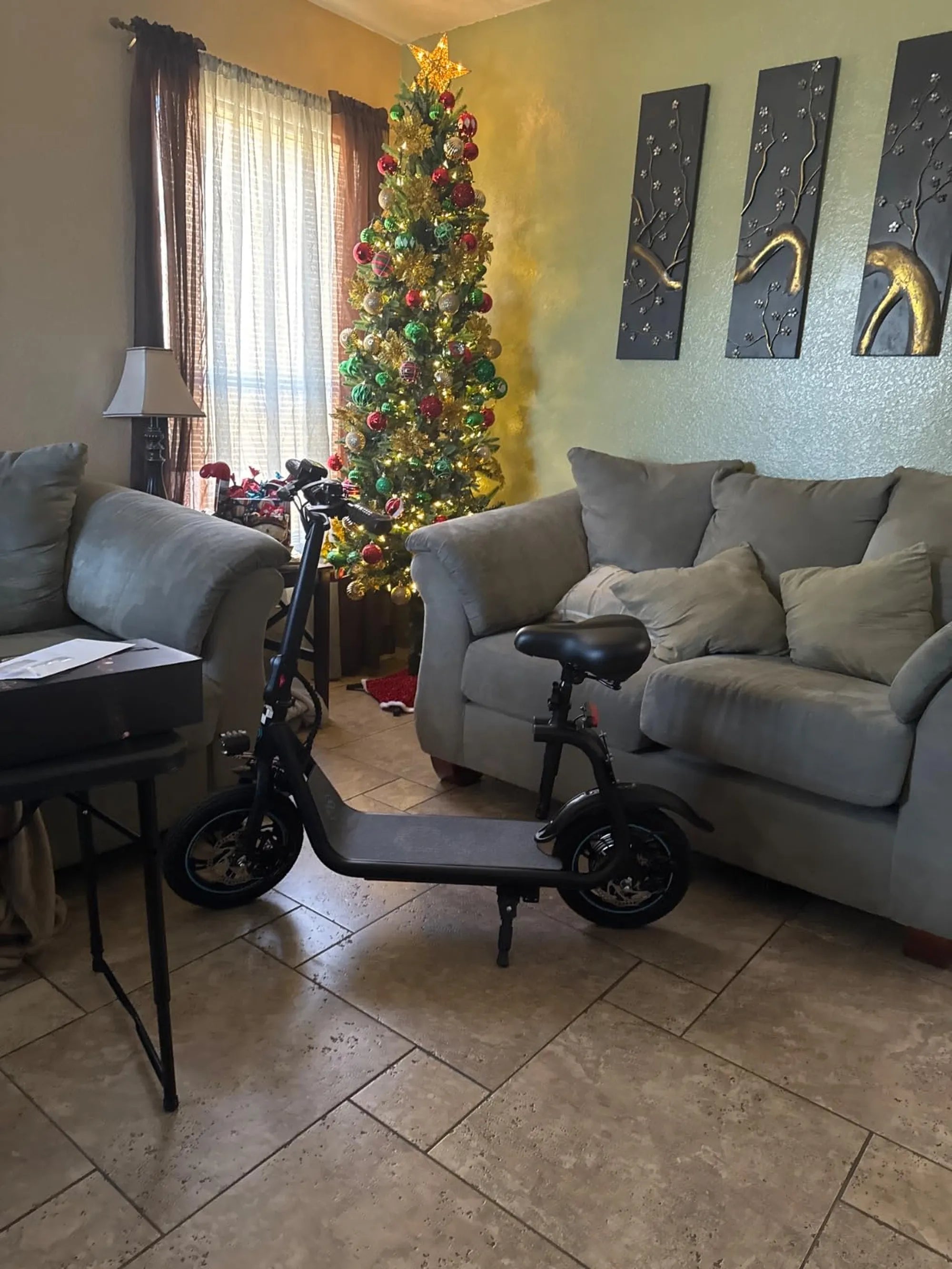
Introduction: The Power Shift in Urban Commuting
Urban landscapes are being reshaped by a quiet, electric revolution. At its core is the electric scooter with a lithium battery, a combination that has solved the historic challenges of personal electric transport: insufficient range, excessive weight, and slow charging. This isn't just a trend; it's a fundamental shift in how we navigate congested cities, offering a direct alternative to cars for short trips. The lithium-ion battery is the technological heart enabling this change, providing the energy density and reliability needed for daily use.
For over 100,000 riders across North America and Europe, brands like Gyroor have demonstrated that this future is already here. The adoption of electric scooters with lithium battery systems is driven by tangible benefits: reduced commute times, lower transportation costs, and a cleaner urban environment. This article will dissect the technology, safety, and practical considerations behind this mobility solution. You will learn how to evaluate scooter specifications, understand critical safety certifications, and make an informed choice for your urban travel needs.
Why Lithium-Ion? The Technical Edge Over Traditional Batteries
The dominance of lithium-ion chemistry in modern electric scooters is no accident. It represents a decisive leap over older battery technologies like sealed lead-acid (SLA) or Nickel-Metal Hydride (NiMH). The primary advantage is energy density, measured in watt-hours per kilogram (Wh/kg). Lithium-ion batteries typically offer 150-250 Wh/kg, compared to 30-50 Wh/kg for lead-acid. This means for the same weight, a lithium battery stores 3-5 times more energy.
This high energy density directly translates to the practical benefits riders experience. It allows for scooters that are light enough to carry up stairs yet powerful enough to cover meaningful distances. Furthermore, lithium-ion cells have a low self-discharge rate, meaning a scooter can sit for weeks and retain most of its charge. They also accept faster charging currents and suffer no "memory effect," allowing for partial charges without damaging capacity.
The shift to lithium is the single most important factor in the scooter's transition from a toy to a legitimate transport tool. It enables the compact, sleek designs we see today without sacrificing performance. When evaluating any modern scooter, the presence of a quality lithium-ion pack is the first indicator of serious engineering intent.
Key Performance Metrics: Range, Weight, and Longevity
Understanding the specific performance metrics unlocked by lithium technology is crucial for setting realistic expectations. These metrics form the core value proposition of any electric scooter with a lithium battery.
Range: Modern commuter scooters with lithium packs offer real-world ranges between 15 and 40 miles on a single charge. This is determined by battery capacity (Ah) and voltage (V), rider weight, terrain, and riding mode. For example, a 36V 10.4Ah battery provides roughly 374 watt-hours of energy, capable of supporting a 15-20 mile range for an average rider.
Weight: Lithium batteries can reduce the total weight of the scooter's power system by 50-70% compared to lead-acid equivalents. A typical commuter scooter battery might weigh 5-7 lbs, whereas a lead-acid battery with similar energy would weigh over 20 lbs. This makes the entire scooter portable, often under 30 lbs total.
Longevity: Quality lithium-ion cells, managed by a proper Battery Management System (BMS), are rated for 500 to over 1000 full charge cycles. A charge cycle is defined as using 100% of the battery's capacity, not necessarily from a single charge. With regular use, this translates to 2-5 years of reliable service before a noticeable degradation in range occurs.
Safety and Reliability: Beyond the Hype (A Gyroor Priority)
As lithium batteries power our devices and vehicles, safety is the paramount concern. High-profile incidents often stem from poorly manufactured cells, inadequate battery management, or physical damage. For urban mobility devices, safety is non-negotiable. It encompasses not just fire risk but also protection against electrical faults, water damage, and long-term reliability.
A safe electric scooter with a lithium battery is the result of a multi-layered engineering approach. It starts with sourcing high-grade, name-brand lithium cells that have consistent quality. These cells are then assembled into a pack with robust physical protection, temperature sensors, and carefully calibrated electronics. The entire system must be designed to handle the vibrations and impacts of daily riding on urban streets.
Brands that prioritize safety, like Gyroor, build these principles into their core design philosophy. This involves investing in independent safety certifications, implementing redundant protection systems, and designing for real-world conditions rather than just laboratory performance. For the rider, this translates to peace of mind, knowing their vehicle is as safe as it is efficient.
The Importance of UL Certification and Smart BMS
Two technical pillars define a safe battery system: third-party certification and intelligent management. Underwriters Laboratories (UL) certification, specifically standards like UL 2272 for the scooter system and UL 2849 for e-bikes, is the gold standard. This certification isn't a simple check; it involves rigorous testing for electrical, mechanical, and environmental safety, including overcharge, short circuit, crush, drop, and water exposure tests.
A scooter with a UL-certified battery, a standard feature across Gyroor's lineup, has passed these stringent tests. It provides independent verification that the product meets high safety benchmarks, reducing the risk of thermal runaway (fire) and electrical shock.
The second pillar is the Battery Management System (BMS). A smart BMS acts as the battery's brain and guardian. It continuously monitors each cell group for voltage and temperature. Its critical functions include:
- Cell Balancing: Ensures all cells charge and discharge evenly, preventing any single cell from being overstressed.
- Overcharge/Over-Discharge Protection: Cuts off power to prevent damage that can permanently reduce capacity or cause failure.
- Short-Circuit and Over-Current Protection: Instantly disconnects the battery in case of a fault to protect both the battery and the scooter's electronics.
- Thermal Monitoring: Reduces power or stops charging if temperatures exceed safe limits.
The Gyroor Advantage: Engineered for Real-World Riding
Translating advanced battery technology into a reliable daily rider requires a focus on real-world conditions. It's about more than just specs on a page; it's about how the scooter performs on a rainy morning commute, over potholed streets, and after months of daily use. This is where design philosophy and component choices create a tangible advantage for the rider.
Gyroor's approach centers on building scooters that serve as dependable transportation. This means engineering for durability, weather resistance, and rider support. By leveraging UL-certified battery packs tested for 500+ charge cycles and integrating them into robust chassis designs, the brand focuses on total ownership experience. The result is a vehicle that commuters can trust day in and day out, not just a fair-weather novelty.
The combination of high-energy-density lithium batteries with thoughtful mechanical design creates a synergy. The lightweight battery allows for a stronger frame and better suspension within a reasonable total weight. This holistic engineering is what separates a true commuter vehicle from a basic electric toy.
IPX5 Water Resistance: Confidence in All Conditions
Urban commuting is unpredictable. A sudden downpour or wet roads shouldn't end your ride or damage your vehicle. This is where the Ingress Protection (IP) rating becomes critical, specifically for the battery and electronic compartments. An IP rating consists of two numbers: the first for solid particle protection (dust), the second for liquid ingress.
An IPX5 rating, a key feature in Gyroor's water-resistant designs, means the scooter's critical components are protected against water jets from a nozzle (6.3mm) from any direction. In practical terms, this translates to safety when riding in rain, through puddles, or when cleaning the scooter. It protects the battery enclosure, motor controller, and connections from moisture that could cause corrosion, short circuits, or failure.
It's important to note that IPX5 does not mean the scooter is submersible or suitable for riding through deep standing water. However, it provides a significant margin of safety for everyday weather conditions, ensuring that a wet commute doesn't lead to a costly repair or a stranded rider.
Warranty and Support: Investing with Peace of Mind
The warranty offered by a manufacturer is a direct reflection of their confidence in the product's durability, especially its most critical and expensive component: the lithium battery. A comprehensive warranty acts as a risk-free trial period and a promise of long-term reliability.
Gyroor backs its electric scooters with a 1-year warranty covering the frame, battery, motor, and electronics. This warranty, supported by US-based customer service, provides a clear safety net for the consumer. For the battery, this means protection against defects in materials or workmanship that cause premature failure or significant capacity loss within the warranty period.
This commitment extends beyond the sale. Access to knowledgeable support, available replacement parts, and clear documentation empowers owners to maintain their scooters properly. This ecosystem of support ensures that the scooter remains a valuable asset for years, maximizing the return on the rider's investment and supporting the model of sustainable, long-term ownership.
Choosing Your Ride: Battery Specs as a Decision Matrix
Selecting the right electric scooter requires moving beyond marketing claims and understanding the key specifications that dictate performance. The battery is the most important of these. By learning to read the spec sheet, you can match a scooter's capabilities to your specific commute and riding needs.
Focus on three interconnected battery metrics: Voltage (V), Amp-hour capacity (Ah), and the resulting Watt-hour (Wh) rating. These numbers, combined with the motor's power rating, tell the story of the scooter's hill-climbing ability, top speed, and range. Your decision should be guided by your daily distance, the steepness of your route, and where you will store and charge the scooter.
Consider the following comparison table of common scooter configurations based on battery specs:
| Use Case | Typical Battery Spec | Estimated Real-World Range | Ideal For |
|---|---|---|---|
| Last-Mile / Campus | 36V, 7.5Ah (270Wh) | 10-15 miles | Short trips, flat terrain, portability priority |
| Urban Commuter | 36V, 10.4Ah (374Wh) | 15-22 miles | Average daily commute, moderate hills |
| Performance Commuter | 48V, 13Ah (624Wh) | 25-35+ miles | Longer commutes, steeper hills, higher speed |
Voltage, Amp-Hours, and Real-World Range
Voltage (V) is analogous to water pressure in a pipe. Higher voltage systems (36V, 48V, 52V) can deliver more power to the motor, which translates to better acceleration, higher top speed, and improved hill-climbing performance. A 48V scooter will typically handle inclines more comfortably than a 36V model with a similar motor.
Amp-hour (Ah) is a measure of capacity, like the size of a water tank. It indicates how much current the battery can deliver over time. A higher Ah rating means more energy is stored. To get the total energy capacity in Watt-hours (Wh), multiply Voltage (V) by Amp-hours (Ah): Wh = V x Ah. This Wh number is the best single figure for comparing potential range across different scooters.
Real-World Range is estimated by dividing the battery's Wh capacity by an average efficiency figure, often 15-20 Wh per mile for a typical rider. A 374Wh battery (36V x 10.4Ah) would thus provide 18-24 miles under ideal conditions. Manufacturers' maximum range claims are often based on ideal lab tests; a 20-30% reduction is realistic for average urban riding with stops, starts, and minor hills.
Charging Logistics: Time, Cost, and Convenience
The convenience of owning an electric scooter with a lithium battery is heavily influenced by charging logistics. Fortunately, lithium-ion technology makes this process straightforward and inexpensive.
Charge Time: Most commuter scooters come with a standard charger that replenishes the battery from empty to full in 4 to 6 hours. Some models offer optional fast chargers that can reduce this time to 2-3 hours. It's generally recommended to use the standard charger for daily use to promote long-term battery health, saving the fast charger for when you truly need it.
Energy Cost: Charging an electric scooter is remarkably cheap. The average cost of electricity in the US is about $0.15 per kilowatt-hour (kWh). A full charge for a large 624Wh (0.624 kWh) battery costs less than 10 cents. Even charging daily, the monthly cost is typically under $3, a fraction of the cost of public transit, fuel, or ride-sharing for similar trips.
Lifespan Tips: To maximize your battery's lifespan, follow these practices: Avoid regularly draining the battery to 0%; try to recharge when it drops to 20-30%. Store the scooter in a cool, dry place, and if storing for more than a month, leave the battery charged to about 50-60%. Use the manufacturer-provided charger, as it is specifically calibrated for your battery's BMS.
Frequently Asked Questions (FAQ)
Q1: How long does a lithium battery last in an electric scooter?
A quality lithium-ion battery in a well-managed system is rated for 500 to 1000 full charge cycles. With typical use (a partial cycle per day), this translates to 2-5 years before the capacity degrades to about 80% of its original state, at which point range will be noticeably reduced. Proper care, like avoiding extreme temperatures and deep discharges, can extend this lifespan.
Q2: Are lithium batteries in e-scooters safe to leave charging overnight?
While modern scooters with UL-certified batteries and smart BMS include overcharge protection, it is not recommended as a regular practice. The safest protocol is to charge the scooter while you are awake and present, and to unplug it once fully charged. This minimizes any risk and is a good general safety habit for all lithium-ion devices.
Q3: Can I ride my water-resistant scooter in heavy rain?
Scooters with an IPX5 rating are designed to withstand water jets and rain, making them safe for wet roads and light to moderate rain. However, they are not waterproof or submersible. Avoid riding through deep puddles that could submerge the deck or motor, and do not ride in torrential downpours or floods. Always dry the scooter after a wet ride.
Q4: What's the difference between a 36V and a 48V scooter battery?
The primary difference is power delivery and performance. A 48V system provides more power to the motor, resulting in better acceleration, a higher top speed, and superior hill-climbing ability compared to a 36V system with a similar motor. It can also be more efficient, potentially offering slightly more range for the same Wh capacity. However, 48V systems are often found on larger, more performance-oriented scooters.
Q5: How should I store my electric scooter for the winter?
For long-term storage (over a month), clean the scooter thoroughly and store it in a cool, dry place. The most critical step is battery care: charge (or discharge) the battery to a 50-60% state of charge before storing. Check the charge level every 1-2 months and top it up back to 50-60% if it has dropped significantly. Never store a fully depleted or a 100% charged battery for extended periods.
Conclusion: Embracing a Smarter, Cleaner Commute
The evolution of the electric scooter with a lithium battery represents a convergence of necessity and innovation. As cities grow denser and the need for sustainable transport becomes urgent, this technology offers a practical, efficient, and enjoyable solution. It democratizes personal mobility, reducing reliance on cars for short trips and reclaiming time lost in traffic.
The key to a positive experience lies in choosing a vehicle built on a foundation of safety and reliability. This means prioritizing certified battery systems, robust construction, and manufacturer support. The future of urban mobility is not just electric; it is intelligent, resilient, and accessible. By selecting a scooter engineered for real-world conditions, you invest in a cleaner commute and a more livable city.
Ready to experience the future of urban mobility? Explore a range of high-performance, UL-certified electric scooters and e-bikes designed for the daily commute. Browse the full Gyroor collection at gyroorboard.com and find the ride that transforms your journey.
Electric Wheelchairs and Scooters: The Ultimate Guide to Mobility Freedom
Electric Scooters With Suspension: The Ultimate Ride for Comfort and Performance