



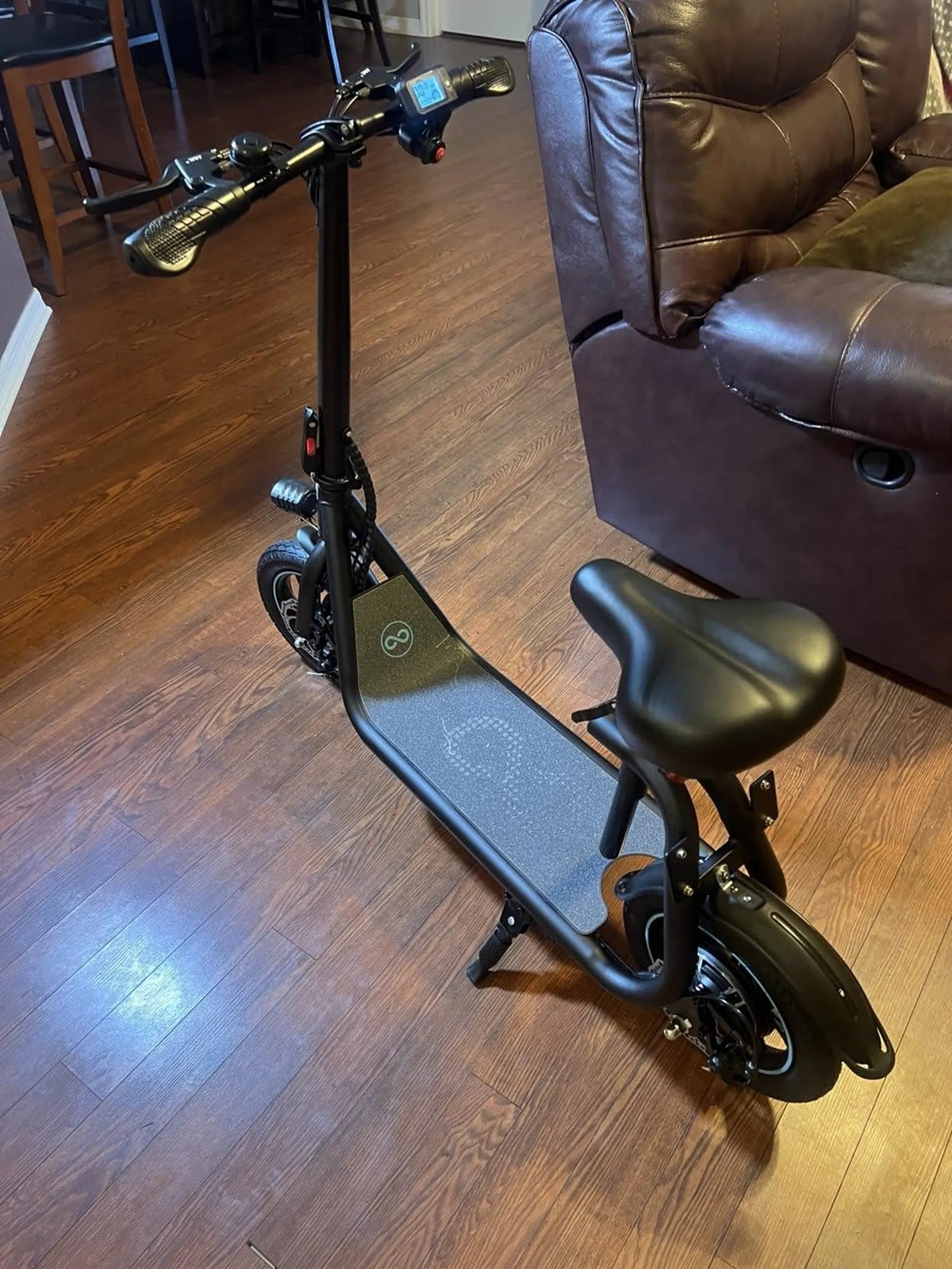
Introduction: Why Seated Electric Scooters Are Redefining Urban Mobility
Forget the fatigue of standing and the bulk of an e-bike. Electric scooters with seats are emerging as the definitive solution for comfortable, efficient, and practical personal transportation. This guide will provide a complete breakdown of seated e-scooters, from their core components and ideal use cases to essential buying criteria and safety practices. You will learn how this hybrid vehicle combines the best features of traditional scooters and e-bikes, why features like UL-certified batteries are non-negotiable, and how to choose a model that transforms your daily commute or leisure rides.
The rise of seated models addresses a critical gap in the micro-mobility market. While standing scooters excel for short, last-mile trips, they become impractical for longer commutes due to rider fatigue and instability. Seated electric scooters eliminate this barrier, enabling longer, more enjoyable journeys of 5 miles or more without discomfort.
This shift is powered by advancements in battery technology, motor efficiency, and ergonomic design. Leading brands like Gyroor, trusted by over 100,000 riders, have pioneered models that prioritize rider comfort without compromising on performance or safety. The result is a vehicle that is as suitable for a daily work commute as it is for a relaxed weekend exploration.
Understanding this product category is key to making an informed investment. This guide serves as your definitive resource, moving beyond marketing claims to focus on the data, features, and real-world considerations that matter most for a superior riding experience.
The Anatomy of a Seated Electric Scooter: Key Features Explained
A seated electric scooter is more than just a stand-up model with a seat bolted on. It represents a distinct vehicle class with specific engineering considerations. The integration of a seat necessitates a stronger, often step-through frame, a different center of gravity, and components designed for sustained, seated riding.
The fundamental design prioritizes rider ergonomics and stability. You'll typically find a longer wheelbase, larger wheels, and a reinforced deck and stem to handle the seated posture. This architecture provides a planted, confident feel on various terrains, from smooth pavement to slightly uneven bike paths.
Understanding these components is crucial. Each element—from the seat post clamp to the motor rating—contributes directly to the scooter's comfort, range, durability, and overall safety. Let's dissect the most important features that define a quality seated e-scooter.
The Seat: Comfort, Adjustability, and Ergonomics
The seat is the defining feature, and its design is paramount. Look for a well-padded, ergonomically shaped saddle that distributes weight evenly. A seat that is too narrow or hard will cause discomfort on longer rides, defeating the primary purpose of the vehicle.
Adjustability is equally critical. A high-quality, tool-free quick-release or lever-lock seat post allows riders of different heights to find their optimal riding position. Proper leg extension is essential for control and to prevent knee strain. Some advanced models even feature suspension within the seat post itself for an extra layer of comfort.
The seat's mounting system must be robust. It should attach securely to a dedicated seat tube or a reinforced section of the deck/frame, not a flimsy accessory mount. A wobbly seat compromises safety and ride quality. The best designs integrate the seat as a core structural element of the scooter.
Power & Performance: Motors, Batteries, and Range
Seated electric scooters generally require more robust power systems than their standing counterparts to accommodate the added weight and potential for longer trips. Motors typically range from 350W to 500W or more, providing ample torque for hill climbing and maintaining speed with a rider and potential cargo.
The battery is the heart of the scooter. For seated models designed for extended range, battery capacity is a top priority. Look for models with high-capacity, UL-certified battery packs. This certification, a standard feature in Gyroor's lineup, is a critical safety benchmark, ensuring the battery has passed rigorous tests for electrical, mechanical, and fire safety.
Real-world range varies based on rider weight, terrain, speed, and temperature. A quality seated scooter with a 10Ah-15Ah battery can reliably achieve 20-35 miles per charge under normal conditions. This makes them viable for round-trip commutes and extended leisure use without daily charging anxiety.
Build & Durability: Frame, Tires, and Water Resistance
The frame must be constructed from high-grade aluminum or steel to handle the stresses of seated riding. A step-through design is common and highly practical, allowing for easy mounting and dismounting. Welds should be clean and consistent, indicating quality manufacturing.
Tires significantly impact comfort and stability. Most seated scooters use larger (often 10-inch) pneumatic (air-filled) tires. These provide superior shock absorption compared to small solid tires, smoothing out cracks and bumps in the road. Some models feature front and/or rear suspension systems for an even plusher ride.
For a vehicle meant for daily use, water resistance is non-negotiable. An IPX5 rating means the scooter can withstand water jets from any direction, making it safe to ride in light rain and through puddles. This feature, standard on Gyroor models, protects the electrical components and ensures reliability in various weather conditions.
Seated vs. Standing: A Practical Comparison for Different Riders
Choosing between a seated and standing electric scooter depends entirely on your primary use case. This comparison highlights the fundamental trade-offs between comfort/convenience and portability/agility.
| Factor | Seated Electric Scooter | Standing Electric Scooter |
|---|---|---|
| Comfort & Distance | Excellent for long rides (5+ miles). Eliminates leg fatigue. | Best for short trips (1-3 miles). Standing can become tiring. |
| Stability & Control | Higher stability due to lower center of gravity and seated posture. | Good stability, but requires more active balancing, especially at speed. |
| Portability & Weight | Heavier (40-70 lbs). Folding is possible but less convenient for frequent carrying. | Lighter (25-40 lbs). Designed for easy folding and carrying. |
| Storage & Footprint | Larger when folded due to seat post. Requires more space. | Extremely compact when folded. Ideal for mixed-mode transit. |
| Ideal Use Case | Primary commute vehicle, leisure cruising, riders with mobility concerns, cargo transport. | Last-mile solution, urban errands, combining with public transport, compact storage needs. |
Seated models are the clear choice for commuters who travel beyond the "last mile" and for whom the scooter is the primary mode of transport. The seated position reduces physical strain, allowing for a fresh arrival at your destination. They are also superior for riders who may have balance issues or prefer a more relaxed, bicycle-like riding posture.
Standing scooters, however, maintain an advantage in logistics. Their lighter weight and more compact fold make them ideal for people who need to carry their scooter upstairs, onto a bus or train, or tuck it under a desk. For very short, point-to-point trips in dense urban areas, their agility is hard to beat.
The decision ultimately hinges on your priority: maximizing comfort and range for dedicated trips, or maximizing portability and flexibility for interconnected journeys. For those seeking a true car-alternative for distances of 3-10 miles, a seated electric scooter is overwhelmingly the more practical and enjoyable option.
Top Considerations Before You Buy: A Buyer’s Checklist
Navigating the market for a seated e-scooter requires a focused evaluation beyond just price and aesthetics. Use this checklist to assess models systematically and identify the one that offers the best long-term value, safety, and satisfaction.
First, define your needs clearly. What is your typical round-trip distance? What is your weight (plus any regular cargo like a backpack)? Will you encounter hills? Do you need to store it indoors or in a tight space? Answering these questions will narrow your search to models with appropriate range, motor power, and dimensions.
Second, prioritize verified performance and safety specs over marketing claims. A scooter advertised with a "30-mile range" but using a non-certified battery is a far riskier proposition than one with a 22-mile range and a UL-certified pack. Always dig into the details of the components.
Safety and Certification: Non-Negotiables
Safety must be your foremost concern. The single most important safety component is the battery. Insist on a UL 2271 or UL 2849 certified battery system. This independent testing verifies protection against overcharge, short circuit, and thermal runaway. Gyroor's commitment to UL-certified batteries across its lineup sets a critical industry standard.
Braking performance is equally vital. A dual-brake system—typically a disc brake (front or rear) combined with an electronic regenerative brake—provides reliable stopping power in all conditions. Check that the brakes are from a reputable manufacturer and that the levers offer good modulation and feel.
Finally, ensure the scooter has adequate lighting. A bright front headlight, a rear brake light, and side reflectors are essential for being seen in low-light conditions. Some models add turn signals and deck lighting for enhanced visibility.
Comfort and Practicality for Daily Use
Test the seat's comfort if possible, or rely on detailed reviews. Is the padding sufficient? Is the seat width appropriate? Can the height be adjusted easily to fit your inseam? A comfortable seat is the cornerstone of the seated scooter experience.
Evaluate the suspension and tires. Larger pneumatic tires provide inherent suspension. Models with additional front or rear suspension will handle rough roads even better. Consider the terrain of your regular routes and choose accordingly.
Examine practical features: maximum load capacity (should be well above your weight), the presence of a kickstand, and the availability of accessories like a rear cargo rack, basket, or phone mount. These elements transform the scooter from a fun toy into a legitimate utility vehicle.
Warranty and Support: Protecting Your Investment
A comprehensive warranty is a sign of manufacturer confidence. Look for a minimum of a 1-year warranty on the frame, motor, and battery. Gyroor's standard 1-year warranty provides peace of mind, covering defects in materials and workmanship.
Research the brand's customer support reputation. Are they responsive? Do they have a U.S.-based support team or detailed online resources? When you need a replacement part or have a technical question, accessible support is invaluable.
Check the availability of replacement parts like tires, inner tubes, brake pads, and seats. A scooter from a reputable brand with an established parts ecosystem will have a much longer and more cost-effective lifespan than a model from an obscure vendor.
Maximizing Your Ride: Maintenance, Safety, and Best Practices
Owning a seated electric scooter is a commitment to responsible operation and basic upkeep. Proper maintenance ensures longevity, reliability, and safety, protecting your investment and enhancing every ride.
Develop a simple pre-ride checklist: verify tire pressure, test brake function, ensure all lights are working, and check that folding mechanisms and quick-release levers are securely locked. This 30-second routine can prevent accidents and mechanical failures.
Adhere to the manufacturer's charging guidelines. Use only the provided charger, avoid leaving the scooter plugged in for extended periods after a full charge, and store the scooter (and battery, if removable) in a cool, dry place when not in use for long durations.
Routine Maintenance for Longevity
Tire Care: Maintain the recommended tire pressure (PSI). Under-inflated tires increase rolling resistance, reducing range and risking pinch flats. Over-inflated tires make the ride harsh and reduce traction. Check pressure weekly with a gauge.
Brake Adjustment: Mechanical disc brakes will require periodic adjustment as the pads wear. Learn how to tension the brake cable or recognize when pads need replacement. Squealing or reduced braking power are clear indicators.
Bolt Check: Vibration from riding can loosen bolts over time. Periodically (e.g., monthly) check and tighten key bolts, especially those on the stem, handlebars, seat post, and wheels. Use the correct tool to avoid stripping.
Battery Care: For optimal battery health, avoid fully draining it regularly. Try to recharge when it reaches 20-30% capacity. If storing the scooter for more than a month, charge the battery to about 60% first.
Safe Riding in an Urban Environment
Always wear a helmet. This is the most effective way to prevent serious head injury. Consider additional gear like gloves, knee pads, and reflective clothing for added protection and visibility.
Know and obey local laws. Regulations for e-scooters vary widely regarding where you can ride (bike lanes, roads, sidewalks), speed limits, age requirements, and helmet laws. It is your responsibility to be informed.
Practice defensive riding. Assume cars and pedestrians do not see you. Use hand signals for turns. Slow down at intersections and blind spots. Avoid riding in a vehicle's blind spot. Be predictable in your movements.
Use lights day and night. A daytime running light increases your visibility to drivers. At night, your headlight and taillight are legally required and critically important for being seen.
Storage and Security Solutions
When parking in public, use a high-quality U-lock or heavy-duty chain lock. Always lock the scooter through its frame to a fixed, immovable object. Avoid locking only by the wheel, which can be easily removed.
For home storage, if possible, store the scooter indoors. This protects it from the elements and theft. If outdoor storage is necessary, use a waterproof cover. Never store a scooter with a fully discharged battery for long periods.
Be mindful of temperature extremes. Do not leave the scooter or its battery in direct, hot sunlight for prolonged periods or in freezing conditions, as this can degrade battery performance and lifespan.
Frequently Asked Questions (FAQ) About Seated Electric Scooters
Q: Are seated electric scooters allowed on bike paths?
A: In most jurisdictions, electric scooters are treated similarly to e-bikes and are permitted on bike paths and in bike lanes. However, local laws differ, so it is essential to check your city or state's specific regulations regarding motor power, speed limits, and approved riding areas.
Q: How much weight can a seated electric scooter typically hold?
A: Weight capacities vary by model but generally range from 220 lbs to 330 lbs. Higher-end models built with reinforced frames can support more. Always check the manufacturer's stated maximum load capacity and choose a scooter rated for at least 20% more than your body weight for a safety margin and to account for cargo.
Q: Can the seat be removed if I want to stand sometimes?
A> On most dedicated seated scooters, the seat is a core component and not designed for frequent removal. The riding geometry is optimized for a seated position. However, some models feature a quick-release seat post, allowing for removal. Be aware that standing on a scooter designed for sitting may feel awkward due to the deck placement and handlebar height.
Q: Are they difficult to carry upstairs?
A> Seated scooters are significantly heavier and bulkier than standing models, often weighing 50-70 lbs. While most fold, they are not designed for frequent carrying up multiple flights of stairs. If your daily routine requires carrying the scooter, a lightweight standing model may be more practical. For the seated scooter, look for a model with a trolley wheel or carry handle to help with occasional maneuvering.
Q: What's the real-world range I can expect on a single charge?
A> Manufacturer range claims are based on ideal conditions (light rider, flat terrain, moderate speed, warm weather). Real-world range is typically 65-75% of the advertised maximum. For a scooter advertised for 30 miles, expect 20-22 miles in normal use. Factors that reduce range include hills, headwinds, cold temperatures, higher speeds, and heavier rider/cargo weight.
Conclusion: The Seated Scooter as Your Gateway to Effortless Exploration
Seated electric scooters represent a mature evolution in personal electric vehicles, squarely addressing the needs of the serious urban commuter and leisure rider. By merging the convenience of a scooter with the comfort and endurance of an e-bike, they unlock new possibilities for car-free travel. The key to a satisfying experience lies in choosing a model built with integrity—prioritizing UL-certified battery safety, a durable IPX5-rated construction, and backed by a substantive warranty.
The data is clear: for distances beyond a couple of miles, the seated position reduces fatigue, increases stability, and makes the journey itself enjoyable. This transforms the scooter from a niche gadget into a legitimate primary transportation tool. It's an investment in personal freedom, reducing commute stress, parking costs, and environmental impact.
Brands that champion these values, like Gyroor with its focus on certified safety and rider-centric design, are leading the market toward higher standards. By applying the insights from this guide—evaluating features, understanding maintenance, and practicing safe riding—you are equipped to select a vehicle that delivers reliable comfort and convenience for years to come.
Ready to experience the difference a purpose-built seated electric scooter can make? Explore engineering that puts safety and comfort first. Browse the full Gyroor collection at gyroorboard.com and discover models designed to power your journey with confidence and reliability.
Best Electric Scooters for Kids: A Parent's Guide to Safe and Fun Rides
Are Electric Scooters Waterproof? The Essential Rain Riding Guide