



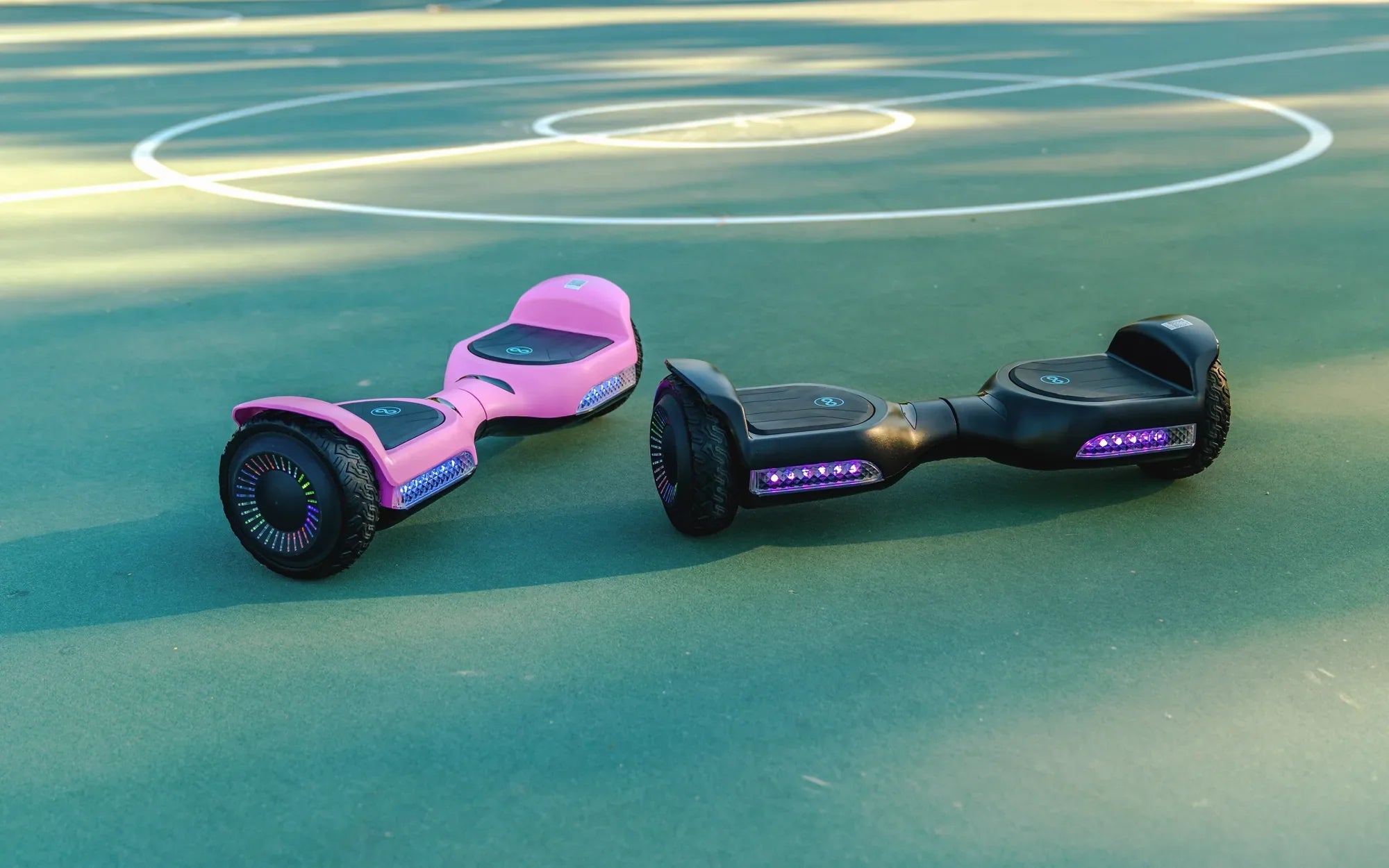
The electric self balancing scooter is no longer a futuristic novelty; it's a pragmatic answer to the daily grind of city traffic, parking woes, and the first-mile/last-mile transit gap. This article will dissect how this compact, intelligent device leverages gyroscopic technology to offer a sustainable, efficient, and surprisingly liberating mode of personal transport. You will learn the key specifications that matter for 2024, understand the critical safety standards that separate reliable brands from risky ones, and discover how leading manufacturers like Gyroor are engineering trust for over 100,000 riders. We will also project how this technology integrates into the broader smart city ecosystem.
Understanding the Electric Self-Balancing Scooter
An electric self-balancing scooter, commonly referred to as a hoverboard or smart scooter, is a two-wheeled, battery-powered personal transporter. The rider stands on a platform between two wheels, and the device uses a combination of gyroscopic sensors, microprocessors, and electric motors to automatically maintain balance. Leaning forward propels the scooter forward, while leaning back applies braking or reverse motion, creating an intuitive, hands-free riding experience.
The core technology hinges on an internal measurement unit (IMU) containing gyroscopes and accelerometers. These sensors detect the board's tilt angle and rotational velocity hundreds of times per second. This data is processed by a central microprocessor, which instantly commands the motors in each wheel to adjust speed and torque to counteract the tilt and keep the rider upright. This sophisticated feedback loop is what enables the characteristic self-balancing effect.
The evolution of this device is significant. From its early days marked by safety concerns due to uncertified components, the category has matured dramatically. Today, reputable brands focus on rigorous engineering, certified battery packs, and robust construction, transforming it from a gadget into a legitimate micro-mobility device. This shift is crucial for its adoption as a daily urban commute tool.
Modern iterations offer enhanced features like Bluetooth speakers, customizable LED lighting, and app connectivity for metrics tracking. However, the fundamental appeal remains its unparalleled combination of portability and intuitive control. It represents a convergence of sensor technology, battery efficiency, and compact design, solving specific urban transportation problems more effectively than many bulkier alternatives.
Why the Self-Balancing Scooter is a Game-Changer for Cities
Urban centers face chronic congestion, pollution, and inefficient short-distance travel. The electric self balancing scooter directly addresses these issues with a unique set of advantages. Its ultra-compact form factor allows for storage under a desk or in a closet, eliminating parking costs and hassles. It enables riders to weave through stalled traffic and navigate crowded sidewalks with a footprint smaller than a pedestrian's stride.
Operationally, it produces zero direct emissions, contributing to cleaner air and reduced noise pollution—a critical factor in dense residential areas. Economically, the cost per mile is remarkably low. With electricity costs far below gasoline and minimal maintenance requirements, it offers a highly efficient alternative for trips under five miles, often beating public transit on both time and cost for such distances.
The psychological benefit is also notable. It offers a fun, engaging commute that can reduce the stress associated with driving in traffic or waiting for delayed buses. This shift from a passive travel experience to an active, controlled one can positively impact the daily routine of urban dwellers. It democratizes quick, point-to-point mobility without the financial and bureaucratic barriers of car ownership.
Data supports this shift. Studies of micro-mobility patterns show that a significant portion of scooter trips replace car trips, particularly for short errands and social visits. This modal shift has tangible impacts on urban traffic volume and carbon emissions. The electric self balancing scooter, with its unique blend of portability and ride experience, is positioned at the forefront of this change.
The Commuter's Advantage: First & Last Mile Mastery
The "first-mile/last-mile" problem describes the inconvenient distance between a traveler's origin/destination and the nearest public transit hub. This gap, often too short to drive conveniently yet too long to walk quickly, is a major barrier to public transit use. The electric self-balancing scooter is arguably the ideal solution for this specific challenge.
It seamlessly connects a home to a subway station or a bus stop to an office. A rider can cover a one-mile distance in roughly 6-10 minutes, door-to-door, without breaking a sweat. This eliminates the "walking gap" and makes fixed-route public transportation a more viable and time-efficient option for a much larger geographic area around each station.
Unlike a bicycle, it requires no locking infrastructure at the transit station; the rider simply picks it up and carries it onto the train or bus, thanks to its manageable weight (typically 25-30 lbs). This end-to-end control over the commute chain reduces total travel time and increases reliability, as the rider is not dependent on feeder buses or ride-share availability.
For the urban commuter, this transforms a multi-modal journey into a fluid, integrated experience. The scooter becomes a personal mobility key that unlocks the full potential of a city's public transit network, extending its effective range and making car-free living not just possible, but practical and efficient.
The Eco-Conscious Choice: Reducing Your Urban Footprint
The environmental argument for the electric self balancing scooter is compelling when quantified. Compared to a passenger car, the energy consumption is minuscule. A typical scooter consumes about 0.5 kWh to travel 15 miles. An average compact car uses roughly 50 times more energy per passenger mile for a similar urban trip, not accounting for idling in traffic.
This translates directly to carbon footprint reduction. Even when accounting for the electricity generation mix, the emissions from charging a scooter are a fraction of those from a gasoline engine. For cities aiming to meet climate goals, encouraging the shift from internal combustion engines to efficient electric micro-mobility is a high-impact strategy.
Beyond tailpipe emissions, scooters contribute to reduced noise pollution—a significant yet often overlooked urban environmental stressor. Their near-silent operation makes neighborhoods quieter. Furthermore, their compact size reduces the demand for paved land for parking, allowing for more green space or pedestrian areas.
The use of rechargeable lithium-ion batteries also promotes a cycle of energy efficiency. With responsible end-of-life recycling programs, the lifecycle impact is managed. For the individual, choosing a scooter for daily short trips is one of the most effective personal actions to lower urban transportation emissions and congestion.
Key Features to Look for in a 2024 Self-Balancing Scooter
Selecting a scooter in 2024 requires moving beyond basic specs to a holistic view of safety, durability, and real-world performance. The market has stratified into budget-oriented models and premium, reliability-focused brands. For a device used for daily mobility, investment in the latter category is prudent.
Critical specifications include motor wattage (dual 300W motors are standard for adults), battery capacity measured in Watt-hours (Wh), and wheel size. A larger Wh number generally indicates longer potential range. Wheel size (typically 6.5", 8.5", or 10") directly affects ride comfort and obstacle handling; larger wheels better absorb bumps.
Essential features now include Bluetooth connectivity for firmware updates and ride statistics, LED headlights and taillights for visibility, and non-slip footpad surfaces. However, these conveniences should be built upon a foundation of paramount safety and robust construction. A sleek app is meaningless if the battery pack lacks proper certification.
The following comparison table outlines how different scooter configurations cater to distinct primary use cases, highlighting the importance of matching features to your specific urban environment.
| Primary Use Case | Recommended Wheel Size | Min. Battery (Wh) | Key Feature Priority | Ideal Terrain |
|---|---|---|---|---|
| Indoor / Campus Use | 6.5" - 8.5" | 130 Wh | Lightweight, Portability | Smooth Pavement, Floors |
| Urban Commuting (Paved) | 8.5" | 200 Wh | UL Certification, IPX5, Range | Sidewalks, Bike Lanes |
| All-Terrain / Parks | 10"+ | 300 Wh+ | Large Tires, High Torque, Durability | Grass, Gravel, Rough Paths |
Safety and Reliability: Non-Negotiable Features
Safety is the absolute priority. The single most important certification is UL 2272. This rigorous standard tests the entire electrical system—battery, charger, and circuitry—for fire and electrical shock risk. It was developed in response to early safety incidents and remains the benchmark. Never purchase a scooter without this certification.
Equally critical is a robust Battery Management System (BMS). This electronic system protects the lithium-ion battery pack by monitoring cell voltage, temperature, and current. It prevents overcharging, over-discharging, and short circuits, which are primary causes of battery failure. A quality BMS is essential for both safety and long-term battery health.
For real-world commuting, water resistance is not a luxury. An IPX5 rating signifies protection against water jets from any direction, meaning the scooter can safely handle wet streets, puddles, and light rain. This is crucial for daily reliability and prevents internal corrosion. Models with lower or no IP rating are unsuitable for all-weather use.
Finally, mechanical safety features include a low-battery warning system, non-slip footpads, and bright, always-on LED lights for visibility. These integrated features demonstrate a manufacturer's commitment to the rider's safety in dynamic urban environments, beyond just passing laboratory tests.
Performance Metrics: Range, Speed, and Terrain
Manufacturer-stated range (e.g., "15 miles") is a best-case scenario under ideal conditions: a lightweight rider on flat, smooth pavement at moderate speed. Real-world range is affected by rider weight, terrain hills, temperature, and riding style. A practical rule is to expect 60-70% of the advertised range for planning daily commutes.
Speed is typically capped between 9-12 mph for safety and regulatory reasons. This is an optimal speed for sidewalk-adjacent travel and bike lanes, balancing efficiency with control. More powerful motors (e.g., dual 400W) provide better torque for climbing moderate hills and accelerating from a stop, which is more important than top speed for urban navigation.
Terrain capability is dictated by wheel size and motor power. Standard 8.5" air-filled tires are excellent for paved surfaces and can handle minor cracks and bumps. For riders encountering cobblestones, brick paths, or packed gravel, 10" all-terrain tires with deeper treads are essential. They provide greater stability and comfort, expanding the scooter's usable geography.
Understanding these metrics in context prevents disappointment. A commuter should prioritize a reliable 10-mile real-world range and hill-climbing torque over a theoretical 20-mile range or a top speed that is unsafe and illegal for most shared paths. Performance must be balanced with practicality and safety.
Gyroor's Approach: Engineering Trust for the Modern Rider
Gyroor has positioned itself as a leader by directly addressing the core trust deficits that plagued the early self-balancing scooter market. As a brand trusted by over 100,000 riders across North America and Europe, its philosophy centers on safety, durability, and rider confidence. This is achieved not through marketing claims but through verifiable engineering standards and customer support.
The brand's product range includes over 20 models, from sleek commuter scooters to robust all-terrain e-bikes, allowing riders to choose the perfect tool for their mobility needs. Every model is built with a focus on the components that matter most: the battery, the motor, and the frame. This focus ensures that each scooter is a reliable daily companion, not a disposable toy.
Gyroor's commitment is reflected in its consistent 4.5/5 average customer rating, a metric that speaks to post-purchase satisfaction and product longevity. In a category where low-cost models frequently fail, Gyroor's investment in quality control and certified components builds long-term rider loyalty and turns customers into advocates for the micro-mobility lifestyle.
This approach transforms the scooter from a novelty into a legitimate tool for urban mobility. By guaranteeing safety and backing it with support, Gyroor removes the perceived risk, allowing riders to fully embrace the efficiency and freedom the technology offers for their daily lives.
The UL-Certified Battery Promise
Gyroor's foundational safety commitment is the use of UL 2272-certified battery packs across its entire lineup. This certification is non-negotiable. It means every battery cell, the assembly process, and the final pack have undergone stringent testing for overcharge, short circuit, imbalance, drop, crush, and fire exposure.
These battery packs are engineered for longevity, tested for 500+ charge cycles with minimal capacity degradation. This translates to years of daily use before any noticeable reduction in range. The integrated BMS provides an additional layer of protection, managing cell balance and temperature in real-time during both charging and discharging.
For the rider, this certification means peace of mind. It eliminates the fear of battery-related incidents that were associated with early, uncertified models. Charging the scooter at home or in the office becomes as routine as charging a smartphone. This psychological safety is essential for integrating the scooter into one's daily routine without hesitation.
Gyroor's transparent emphasis on this certification sets a clear industry benchmark. It educates consumers to demand this standard, raising the bar for the entire market and pushing out manufacturers who cut corners on the most critical safety component.
Built for the Real World: IPX5 Water Resistance & Durability
Commuting is an all-weather activity. Gyroor designs its core scooter models with a minimum of IPX5 water resistance. This rating is a practical necessity, not a speculative feature. It guarantees the scooter's electronics are sealed against water jets, making it resilient to riding through urban puddles, wet streets after a rain shower, or accidental spray.
This durability extends to the overall construction. The frame is built from high-grade aluminum alloys to withstand the vibrations and minor impacts of daily urban travel. The wiring harness is secured and protected, and connectors are sealed. This attention to detail ensures the scooter remains reliable over hundreds of miles and through changing seasons.
The benefit for the rider is operational confidence. There's no need to check a weather app anxiously before heading out; the scooter is ready to go. This reliability is what separates a true commuting tool from a fair-weather gadget. It ensures the scooter is a dependable asset, reducing the temptation to fall back on less efficient, more polluting transportation options.
By prioritizing IPX5 as a standard, Gyroor acknowledges the realities of urban life and builds products that are not just functional in theory, but robust enough for the unpredictable conditions of daily use.
Confidence on Every Ride: The 1-Year Comprehensive Warranty
Gyroor backs its engineering with a 1-year comprehensive warranty that covers the motor, battery, and frame. This warranty is a direct reflection of the brand's confidence in its product quality and manufacturing consistency. It shifts the risk from the consumer back to the manufacturer, where it belongs.
The scope of coverage is significant. A one-year period on the battery and motor protects against premature failure of the two most critical and expensive components. This is far more substantive than the limited 90-day or "motor-only" warranties offered by many competitors. It indicates an expectation that the product will perform reliably for a substantial period.
Supported by US-based customer service, this warranty provides tangible peace of mind. If an issue arises, the rider has a clear path to resolution. This support network is crucial for a product used in daily mobility, where downtime directly impacts the user's routine.
Ultimately, the warranty is more than a service agreement; it's a promise of partnership. It tells the rider that Gyroor is invested in their mobility solution for the long term, fostering trust and validating the decision to invest in a quality, safety-focused brand.
The Future of Urban Mobility: Integration and Innovation
The electric self balancing scooter is poised to become a more integrated component of the smart city ecosystem. Future developments will focus on connectivity and intelligence. Imagine scooters that communicate with traffic signals to request pedestrian crossing extensions, or that provide real-time density data to city planners for optimizing micro-mobility lane infrastructure.
Battery technology will continue to advance. Solid-state batteries promise higher energy density, potentially doubling range while reducing charge times and improving safety further. This would make scooters viable for even longer commutes and reduce range anxiety entirely. Wireless inductive charging pads at transit hubs could also become a reality.
Artificial Intelligence will enhance stability and safety. Onboard AI could analyze riding patterns, detect potential hazards like potholes via camera or sensor fusion, and make micro-adjustments to motor output for smoother handling. It could also implement geofencing to automatically reduce speed in crowded pedestrian zones or near schools.
The integration with multi-modal trip-planning apps will deepen. A single app could plan a route combining a scooter ride, a subway segment, and a shared e-bike, with seamless payment and real-time availability for each leg. The electric self balancing scooter, with its unique form factor, will be a key piece in this interconnected, efficient, and user-centric urban mobility puzzle.
Frequently Asked Questions (FAQ)
How long does it take to learn to ride an electric self-balancing scooter?
Most adults can achieve basic competency within 15-30 minutes of practice in a safe, open area. The key is to start by using a wall or railing for support, focusing on mounting and dismounting smoothly. The self-balancing technology does most of the work; the rider primarily learns to control acceleration and braking through subtle weight shifts. Full confidence for navigating urban obstacles typically comes within a few hours of total practice.
Are they legal on sidewalks and bike lanes?
Laws vary significantly by city, county, and state. Generally, they are often treated similarly to electric scooters. Many jurisdictions permit them in bike lanes but prohibit them on sidewalks for pedestrian safety. Some cities have specific speed limits for micro-mobility devices on shared paths. It is the rider's responsibility to check local regulations before commuting. Always yield to pedestrians and ride defensively.
How long does the battery last before needing replacement?
A high-quality, UL-certified battery like those used by Gyroor is rated for 500+ full charge cycles. With typical use (a full charge every 1-3 days), this translates to 2-4 years of service before the battery capacity may degrade to about 70-80% of its original range. Proper care—avoiding full discharges, storing in moderate temperatures, and using the official charger—maximizes battery lifespan.
What is the recommended maintenance routine?
Maintenance is minimal but crucial. Regularly check tire pressure (for air-filled tires), ensure all screws and bolts are tight, and clean the footpads and housing with a damp cloth. Inspect the tires for wear or damage. Store the scooter in a dry place and avoid exposing it to extreme heat or cold for prolonged periods. Periodically check the charger and port for any damage.
Can it handle hills?
Capability depends on motor power and rider weight. Most standard commuter models with dual 300W+ motors can handle moderate hills with slopes up to 15 degrees. Performance will be slower uphill and requires caution downhill as regenerative braking may have limits. For consistently hilly terrain, a model with higher wattage motors (400W+) or an all-terrain design is strongly recommended for both safety and battery longevity.
Your Next Step Towards Smarter Commuting
The electric self balancing scooter has matured into a legitimate, efficient, and sustainable pillar of urban mobility. It solves specific problems—congestion, cost, the first-mile gap—with elegant efficiency. The decision to adopt one hinges on choosing a device built on a foundation of verified safety, real-world durability, and reliable performance.
Brands like Gyroor have led this maturation by making UL certification, IPX5 water resistance, and comprehensive warranties standard, transforming consumer trust. As cities evolve, this mode of transport will only become more integrated and intelligent. Your choice today is not just for a product, but for a smarter, cleaner, and more agile way to navigate urban life.
Ready to experience the future of urban mobility? Evaluate your commute, prioritize safety-certified engineering, and choose a scooter designed for the demands of daily life. Browse the full Gyroor collection of UL-certified, IPX5-rated electric self-balancing scooters and e-bikes at gyroorboard.com to find the perfect model to redefine your city travel.
Christmas Gift Ideas for Kids 10-12: Fun, Educational, and Exciting Picks
Hoverboard for 9 Year Old: The Ultimate Guide to Safe and Fun Riding